Brazil's Lula da Silva, Vocal Critic Of Trump, Reelected For 4th Time
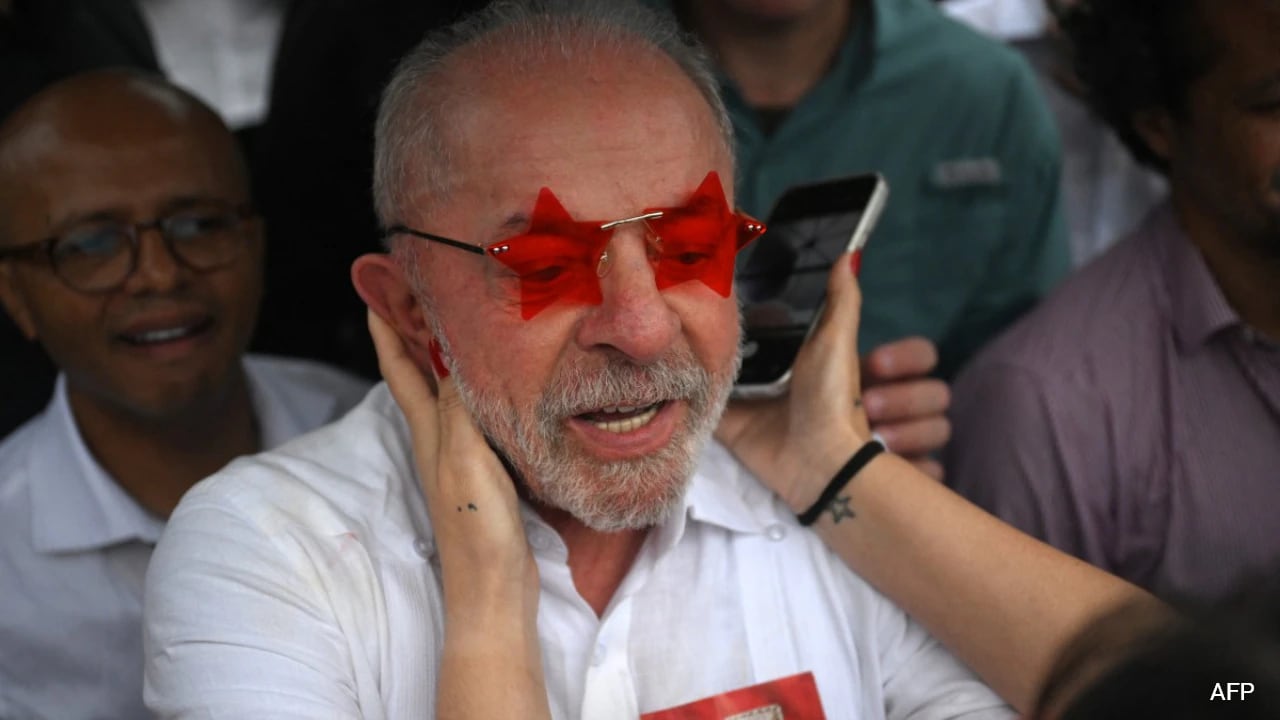
Brazil's President Luiz Inacio Lula da Silva, a defining figure of the Latin American left and a vocal critic of US President Donald Trump, has pulled off a dramatic comeback victory against right-wing senator Flavio Bolsonaro, son of former far-right president Jair Bolsonaro, who trounced him in the first round. Lula received 51.8 per cent of valid votes against Bolsonaro's 48.2 per cent, winning an unprecedented fourth term at the helm of Latin America's largest country, according to the Superior Electoral Court.
The result, which defied all projections, comes as a big relief to critics of widening US influence in Latin America. It leaves Mexico and Brazil, Latin America's two most populous nations, with left-of-center leaders.
A video published by Lula's campaign shows the veteran leader celebrating with First Lady Rosangela da Silva and allies after his runoff victory was confirmed by Brazil's electoral court. Wearing star-shaped red glasses, he kissed his wife. Hundreds of his supporters began gathering on Sao Paulo's main artery to celebrate the victory.
The victory of Brazil's leftist icon, who turns 81 on Tuesday, looked like a long shot, as voters soured on him and his Workers' Party after years of corruption scandals and rising prices, while sweeping societal changes left the former metalworker and union leader looking out of touch with an increasingly app-based economy and its growing ranks of informal workers.
The Comeback King
Lula's victory marks another remarkable comeback for the man who grew up dirt poor in the northeast in a family of illiterate farmers, in a career full of them. He becomes the first candidate since Brazil's return to democracy in the 1980s to be elected after finishing second in the first round.
Lula first served as president between 2003 and 2011. He was jailed from 2018 to 2019 on corruption charges that were later overturned, paving the way for him to beat Jair Bolsonaro in the 2022 election.
In his third term he has overseen a drop in inflation and unemployment and lifted millions out of hunger, but voters complain about the cost of living and a sense of insecurity. Lula's social policies became a point of tension as he expanded welfare programmes during the campaign.
He was blindsided after his first-round defeat to Bolsonaro. But the left soon swung into action with massive rallies declaring "Never Again Bolsonaro," where protesters recalled the former president's chaotic handling of the Covid pandemic, devastation of the Amazon rainforest and cuts to public programmes.
Lula also revamped his social media strategy, taking video selfies, and even bought his first cellphone, while supporters carried out a feverish campaign to change the minds of family, friends and neighbours and encourage them to vote after high levels of abstention.
He also campaigned on a potent mix of pragmatism and populism that has shaped his career in national politics for half a century, rolling out a slew of reforms aimed at improving the lives of workers and poor Brazilians. These gained steam with late-campaign pledges that ranged from free nationwide weekend public transport, which has to be formally submitted to Congress, to a 15 per cent increase in his trademark welfare programme that is already being implemented.
Lula also championed a constitutional amendment that became Brazil's biggest labour reform in decades, which passed with wide support in Congress.
The president's campaign leaned heavily on the theme of sovereignty in the face of commercial and diplomatic pressure from Trump's United States. Voters must "choose a country where the flag is respected," he said, his raspy voice more hoarse than ever after a tireless campaign. He accused his rival of wanting to "govern with the American flag."
Challanges Ahead
Still, Lula's fourth term could be his most difficult yet, after Brazil elected its most conservative Congress since returning to democracy in the 1980s. Combined, Bolsonaro's Liberal Party (PL) and allied parties could control over 280 seats in the lower house and up to 50 seats in the Senate, enough for comfortable majorities in both chambers.
"He is likely to be a lame duck from the start," Oliver Stuenkel, a professor of international relations at the Getulio Vargas Foundation in Sao Paulo, told news agency Reuters.
The incoming legislature will likely deepen recent trends of presidents ceding power to Congress, Stuenkel said, predicting Lula will face waning influence over Supreme Court nominations, unwieldy party coalitions, and even the threat of impeachment.
Age will be another factor working against him. Already one of the world's oldest leaders, Lula will be 85 by the end of his new term in 2030. He joins Trump and Nicaragua's President Daniel Ortega, all aged 80, as the oldest presidents in the Americas. He will thus have spent 16 years in power, following his first stint as president from 2003 to 2010.
He also heads into a fourth term with a country divided, with almost half of the nation voting against him and desperate for change.
"We're in a deep hole, things are dire. People can barely afford to eat -- buying meat is out of the question," Tereza Cristina Ramos, a 68-year-old retiree who voted in Rio de Janeiro, told news agency AFP.
He has also come under renewed pressure to confront rampant insecurity in a country plagued by criminal factions that sow terror in working-class neighbourhoods.
KioskNews shows a cleaned-up reading view extracted from the publisher’s page — the original always lives on their site, not ours.