75 years of 17 Squadron: Kargil to Sindoor, how the Indian Air Force owned the skies
On May 27, 1999, Wing Commander B S “Tony” Dhanoa was in the dining hall of the Officers’ Mess at Air Force Station, Srinagar, when Air Vice Marshal Tej Mohan Asthana called, “Tony, Nachiketa is safe. Ahuja is no more.”
With the Kargil war raging, hours earlier, Flight Lieutenant Kambampati Nachiketa’s MiG-27 had suffered an engine flameout while on a strike mission over the Batalik sector. Squadron Leader Ajay Ahuja, Flight Commander of No. 17 Squadron, had volunteered with his MiG-21 to locate the wreckage so that he could guide a helicopter to rescue Nachiketa. But while orbiting the crash site, Ahuja’s MiG was hit by a Pakistani Stinger missile and the aircraft went down in flames. Ahuja ejected and landed in Pakistani territory. His body was returned a day later.
Since then, for 27 years, every May 27, there is one call Dhanoa, who went on to be Air Chief, makes without fail — to Ahuja’s wife Alka Ahuja.
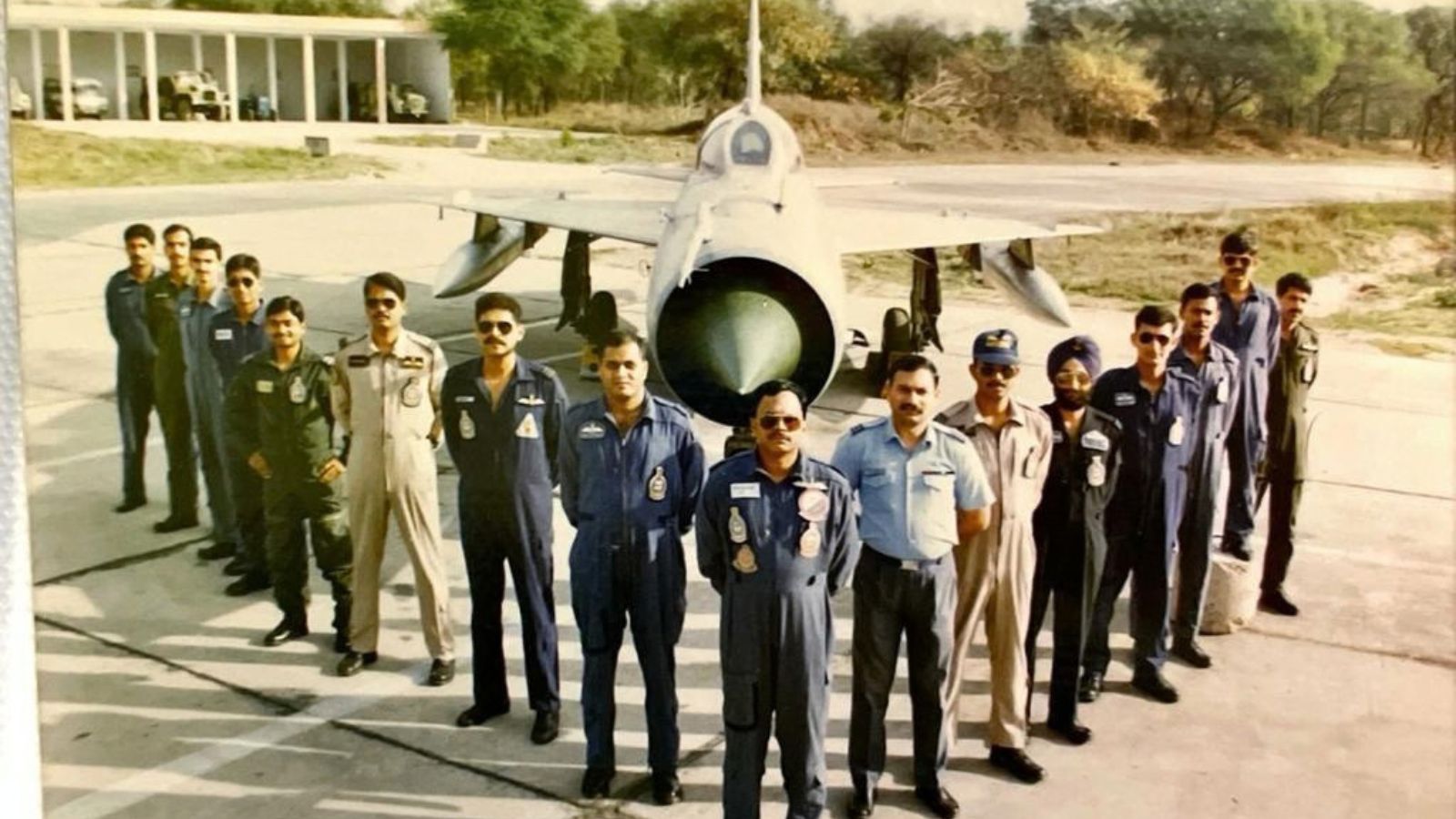
It’s a camaraderie that veterans and serving fighters of No. 17 Squadron, one of the most elite fighter units of the Indian Air Force, say is at the core of the many operations they have undertaken — from the 1961 Liberation of Goa to the dogfights that marked the India-Pakistan wars of 1965 and 1971, the high-altitude fury of Kargil, and more recently, the Balakot strikes and Operation Sindoor.
Few military units in India have fired the public imagination the way No. 17 has, with its legend most recently spilling into living rooms through Operation Safed Sagar, the Netflix series that was a dramatised representation of the IAF’s air campaign over Kargil in 1999.
This year, on October 1, the Golden Arrows, the nickname the squadron goes by, mark 75 years since they first took to the skies on a crisp autumn morning at Ambala in 1951.
Born in an emergency
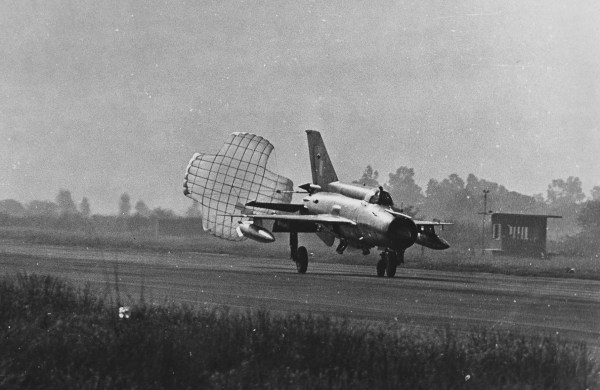 A MiG 21 deploying its braking parachute for landing (Express photo)
The No. 17 was raised at Ambala on October 1, 1951, the last of four squadrons created in an extraordinary eight-week expansion of the IAF.
Story continues below this ad
According to IAF historian Achint Gupta, by mid-1951, tensions with Pakistan over Kashmir were rising, but the IAF had only 10 operational squadrons (a squadron typically has 18-20 aircraft).
The 10 squadrons were numbered 1-12, skipping 5 and 11 because the British Royal Air Force, under whose umbrella the IAF operated in the early years of Independence, already had active No. 5 and 11 squadrons. And then, there was No. 13 Squadron.
Squadrons 14, 15, 16 and 17, what Gupta calls India’s “Emergency Teens”, were raised between August and October 1951, and assembled with limited men and machines as another war with Pakistan loomed.
Commanded initially by Anglo-Indian Flight Lieutenant D L Springett, No. 17 was designated for tactical reconnaissance with 12 ‘Harvard IIB’ aircraft, two-seat military trainers that the IAF operated during Independent India’s early years, but which were later weaponised and used for combat during the 1947 Kashmir war and the 1965 and 1971 wars against Pakistan. The squadron took years to become fully operational due to a shortage of jets, finally receiving the British fighter jet, the Vampires, in September 1955, marking the IAF’s formal entry into the jet age.
Story continues below this ad
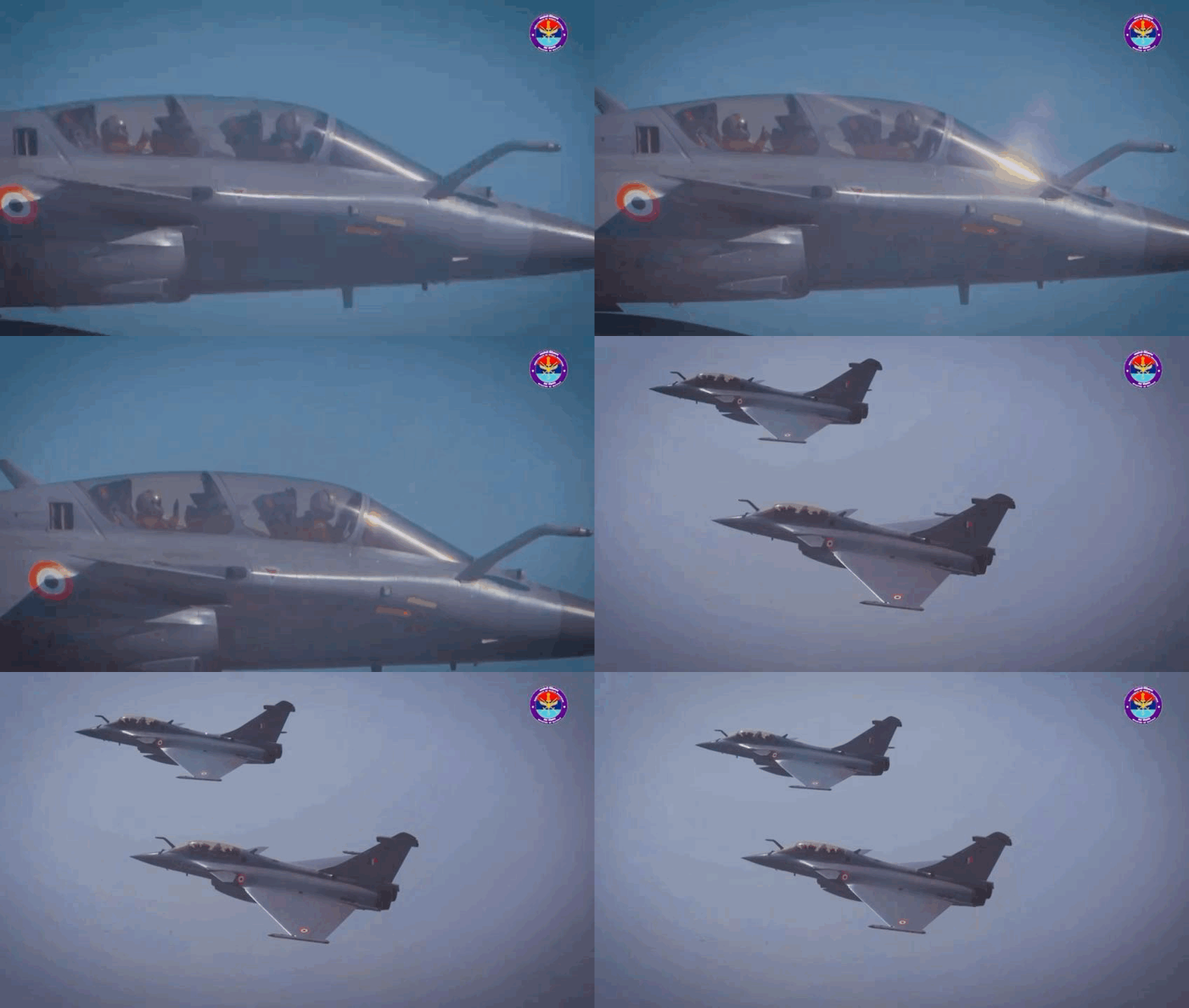
From then on, the No. 17 , currently based in Ambala, has flown some of the best aircraft in the IAF’s arsenal. In 1957, the Vampires gave way to a swept-wing fighter, the Hawker Hunter, with pilots sent to Britain for training. MiG-21s followed over the decades, and the Rafale arrived in September 2020.
For former Air Commodore A L Deoskar, who joined No. 17 in 1974 after flying the Hunters in another squadron, the move to the Soviet-era MiG-21 was a defining moment. “The MiG-21 was more challenging.”
He served two tenures with No. 17 , and remembers a culture of total readiness: two aircraft on the operational platform, armed, ready within two minutes. “There is no such thing as rest for a pilot. Either you are fighting a war or preparing for one.”
The squadron has given the IAF two chiefs: Air Chief Marshal LM Katre, who died in harness in 1985, and Air Chief Marshal Dhanoa, who commanded the No. 17 in Kargil — a period that marked what’s arguably the unit’s most defining moment.
Story continues below this ad
‘I have been hit.’ His engine flamed out
At his Mohali home, with his cosy study almost a shrine to the IAF, Dhanoa sits back to talk about his squadron of which he was Commanding Officer during the Kargil War.
Ask him what makes the Golden Arrows unforgettable, and Dhanoa speaks not just of gallantry awards but of a bond that the fighter pilots share with each other.
He recalls one such connection, the one he shared with Squadron Leader Ahuja. Both he and Ahuja had served together in No. 101 and No. 29 squadrons and were A2QFI, the highly skilled category for a flying instructor.
The following year, Ahuja and Dhanoa would find themselves in the thick of the Kargil war.
Story continues below this ad
For Alka Ahuja, Ahuja’s wife who now runs a petrol pump in New Delhi, that year in Bathinda, where the No. 17 had its base then, had seemed entirely ordinary. “We were there for only a year. I was teaching and my son Ankur was in Class 1. I was never worried about my husband, because he loved to fly, and he loved to help others.” Ahuja had already ejected once, in 1989, and knew the mountainous terrain. “So I had no fears when the Kargil war broke out.”
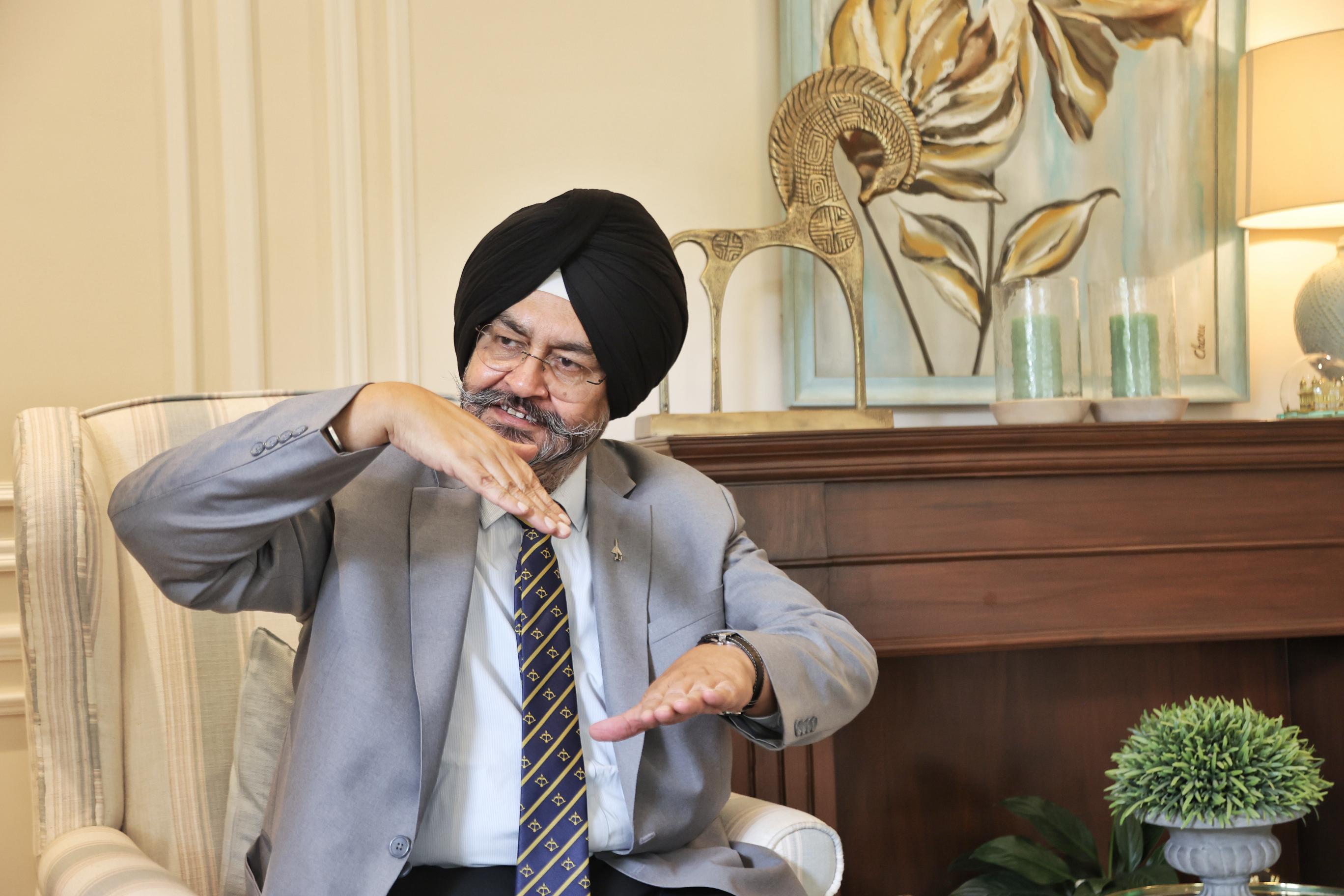 B S Dhanoa commanded the No. 17 Squadron in Kargil
After all, Ahuja and the others were prepared for every eventuality.
One of those days in Kargil, when a Canberra was hit by a Pakistani missile during a reconnaissance mission, the Golden Arrows ran their own internal debrief.
Their pilots typically flew in from Srinagar at over 18,000 feet. Their primary threat was the Stinger, a shoulder-fired missile with a small warhead fired by the Pakistan military. The squadron concluded a hit might damage an engine, even if it wouldn’t destroy the aircraft. But at that altitude, ejection itself could be fatal. “So we said, in case of any such eventuality, stay with the aircraft. Glide as much as you can. If you see a valley, go into it. Come as low as possible, then eject,” Dhanoa recalls. “Below 10,000 feet, you can walk away.” That’s what Ahuja did.
Story continues below this ad
On May 27, No. 9 Squadron’s Flight Lieutenant Kambampati Nachiketa’s MiG 27 was hit, and he ejected. His formation leader, Flight Lieutenant K Mandhot, radioed that his number two (the pilot who follows closely behind) was down and that he himself was low on fuel.
“Ahuja responded, ‘I have the coordinates. I will come’,” Dhanoa recalls him saying.
Ahuja took off from Srinagar, with Flight Lieutenant P G Reddy flying close behind as his number two. As Ahuja approached to conduct battle damage assessment, Mandhot warned him that missiles were being fired. “Roger,” came the reply from the cockpit. Ahuja kept orbiting the crash site, trying to locate the wreckage so that he could guide a helicopter to rescue Nachiketa. At one point, Reddy reported low fuel and turned back, and Ahuja was alone watching the site. It was then that a Stinger hit him. “He called out: ‘I have been hit.’ His engine had flamed out,” recounts Dhanoa.
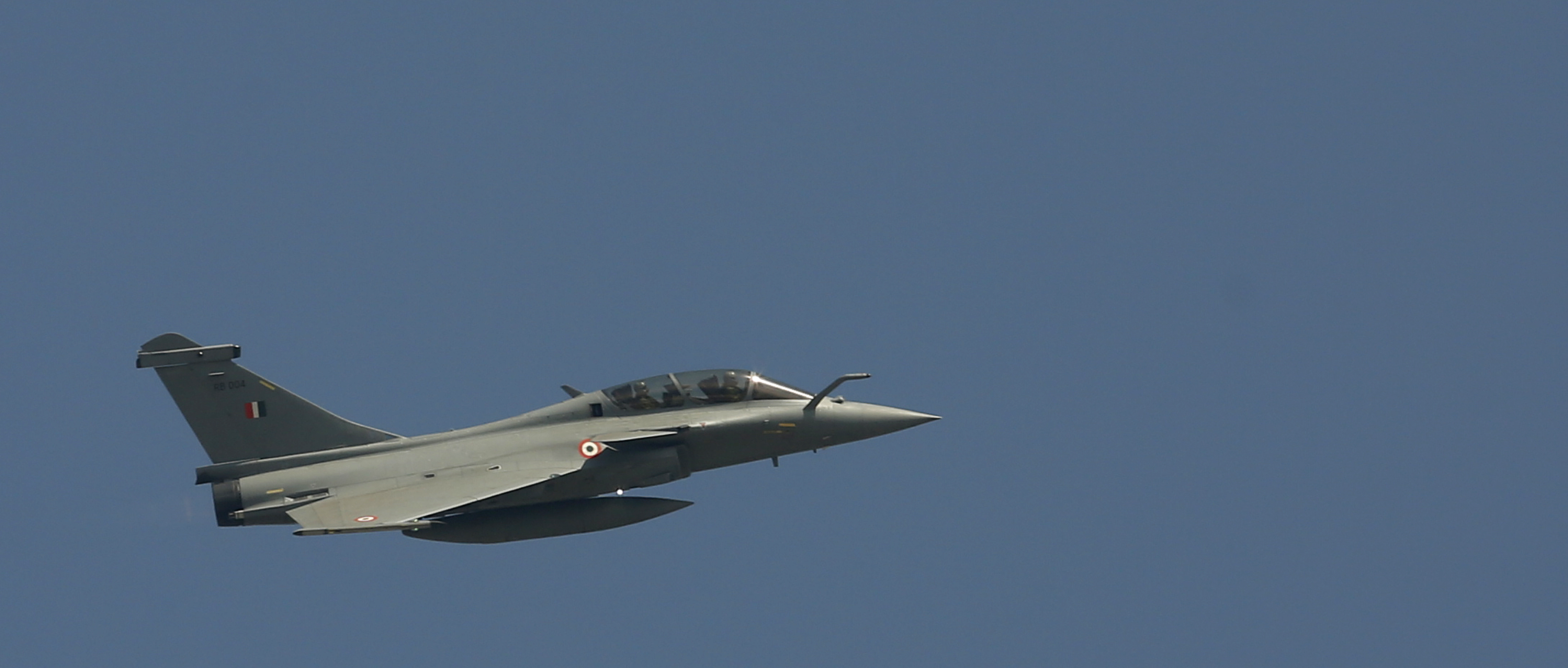 Rafale fighter aircraft during the rehearsal for the 88th Air Force Day parade at Hindon airbase in Uttar Pradesh in 2020 (Express Photo by Praveen Khanna)
An Indian post called Devil’s Eye watched Ahuja go down and be surrounded by enemy troops. This was before noon. Hours later, the news reached Dhanoa as he sat in the Srinagar Mess.
Story continues below this ad
Ahuja’s body was returned on May 28. The post-mortem revealed torture injuries and two bullet wounds. Dhanoa’s anger hasn’t faded. “He was a POW [Prisoner of War]. We don’t expect a civilised nation to torture and kill him. India and Pakistan are both signatories to the Geneva Convention.”
Nachiketa was freed following political pressure and sent back on June 5.
For Ahuja’s wife Alka, the shock was sharpened by the man she knew. “He loved helping others,” she says. “It has been almost three decades since my husband died, but the squadron officers remain in touch with me. They are like family.”
After Ahuja’s death, Group Captain Alok Choudhry took over as flight commander. The mood in the squadron was of raw anger. “Everybody wanted to strike back,” says Choudhry, who went on to command the Squadron from 2003 to 2005.
Story continues below this ad
Until then, No. 17 had been primarily a fighter-reconnaissance unit, flying low and fast with cameras to take pictures. Now they wanted to bomb but weren’t trained for the high-altitude bombing Kargil demanded, and were told they had to release weapons from at least 4 km above target, with no established tables (calculations) for these conditions. So Dhanoa built new ones. At 15,000-16,000 feet, the air was far thinner, meaning a bomb would overshoot its target. “We calculated the air-density ratio and worked out a new figure for the bomb’s forward throw. Then we tested it at a range near Srinagar,” Dhanoa says.
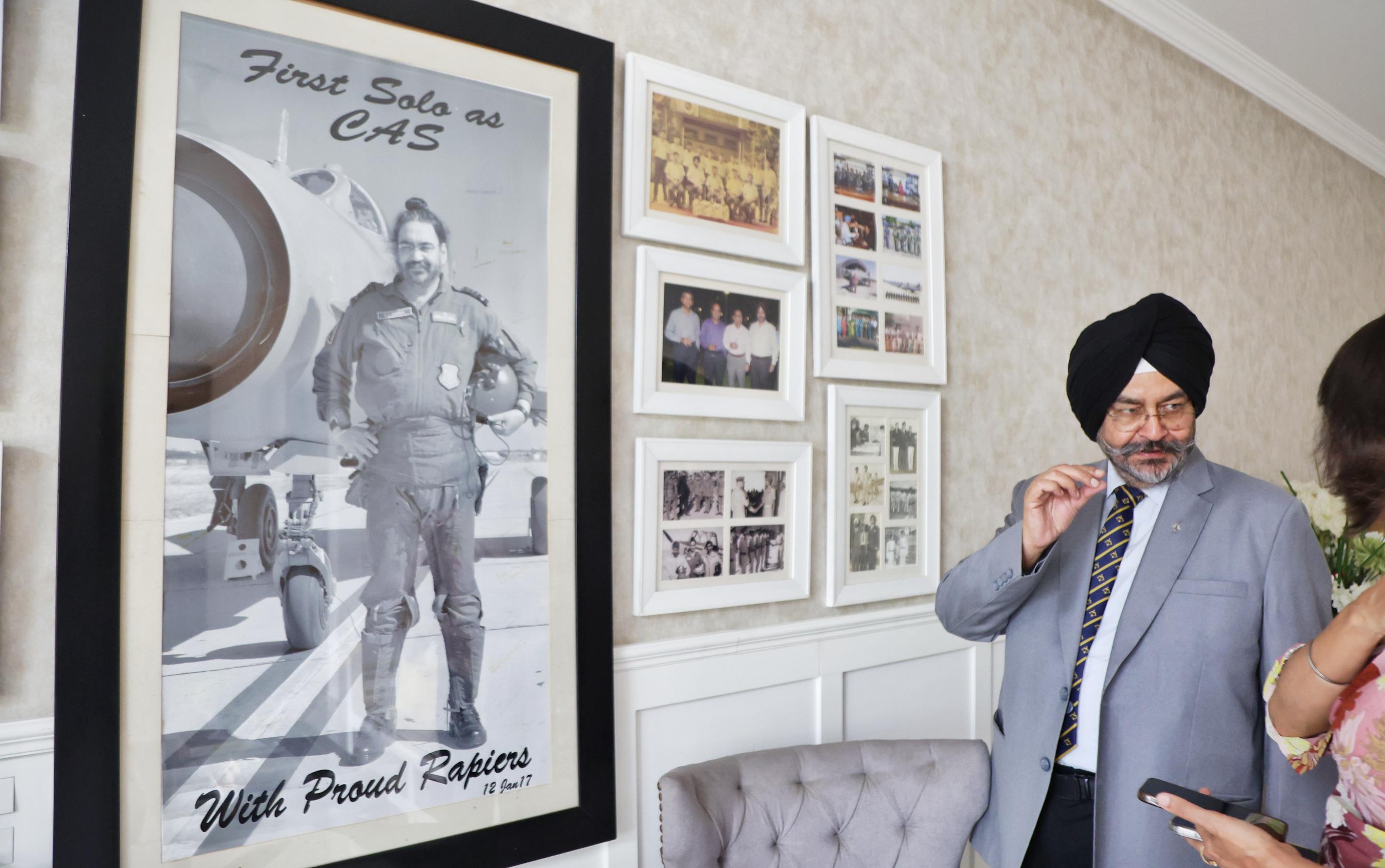 Dhanoa became the Air Chief Marshal on December 31, 2016
On June 3, Dhanoa and Reddy dropped bombs on Peak 5140 behind Tololing. “After that, we became more accurate,” says Dhanoa. The Army gave daily feedback. If a target wasn’t hit, the Golden Arrows went back. Their light MiG-21s could pull out of the dive, letting pilots watch impact and report back.
Air Marshal Vinod Patney later told the squadron that roughly 80% of its bombs had hit the target. This was so remarkably accurate that MiG-23 and MiG-27 units are said to come asking how they had done it. The answer was a formula built within the squadron itself.
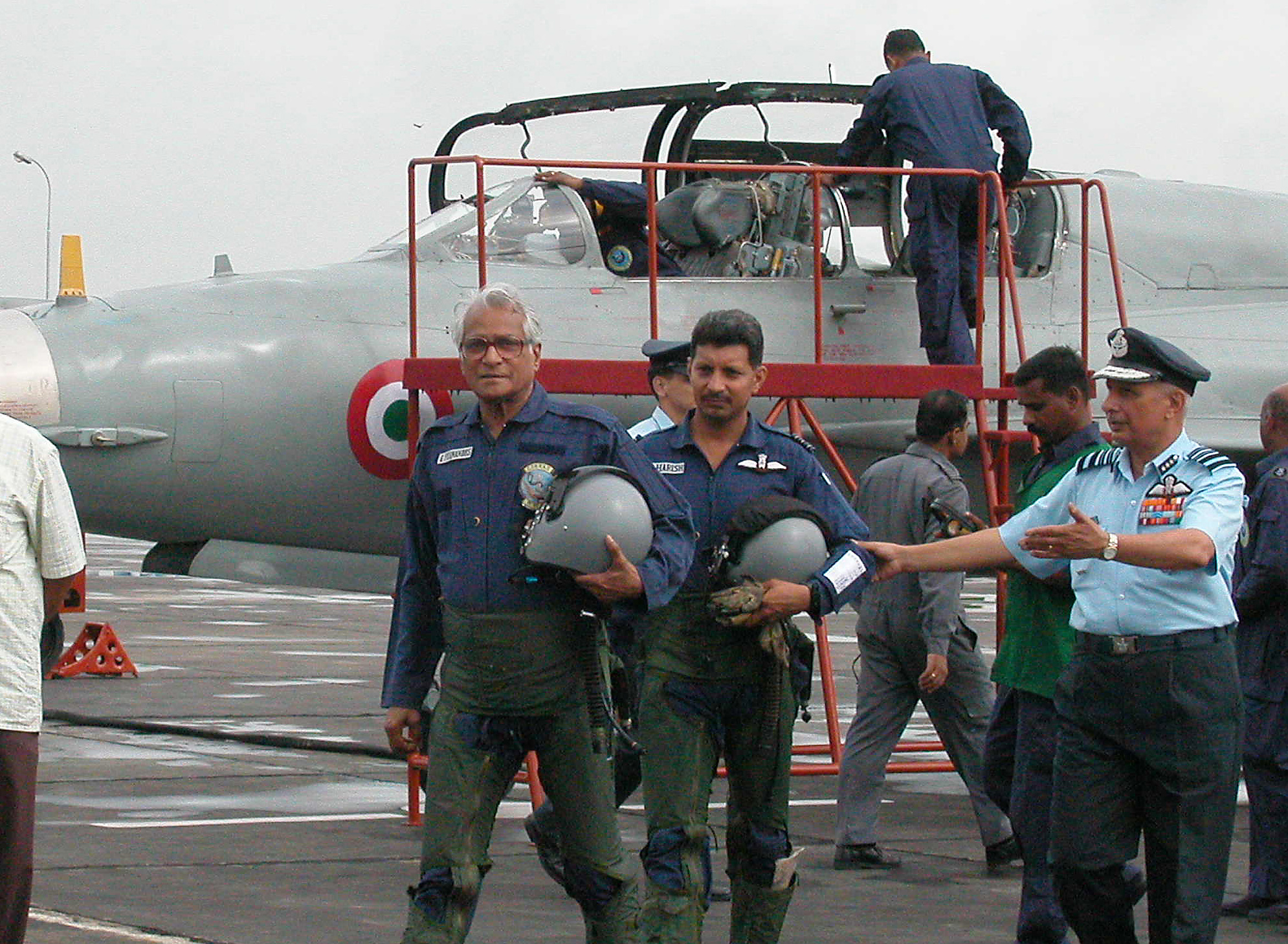 George Fernandes (left), then defence minister, during a historic sortie in an Indian Air Force MiG-21 fighter jet in August 2003 (Express photo)
They fought hard, partied harder
Beyond these stories of combat are those the pilots recount of each other. Of the 21-year-old “baby of the squadron” who worked as hard as he partied; the son of a shopkeeper from Palwal who soared to become Air Commodore; of a second-generation pilot who learnt early lessons in leadership from his father.
Air Commodore K A Muthanna (Retd) was 21 when he joined in 1982 as the youngest pilot on Bathinda’s MiG-21s. The four years he spent in the squadron, he says, became the foundation of a 33-year career that eventually made him chief test pilot at Hindustan Aeronautics Limited, flying the maiden test flight of the Tejas.
He says that as part of their training, the squadron would intentionally explore untried, highly hazardous conditions to master low-level night operations. They would fly extremely low over the desert, even at night, first by the phases of the moon, then pushed into total darkness.
And then there were the weekends. Saturday evenings meant hours at the bar and fancy-dress parties that became elaborate productions. Muthanna once welcomed guests in a grass skirt, another time he wore a hat with a glowing bulb and called himself “the enlightened one”. He once appeared covered in black shoe polish, in very short shorts, carrying a raw chicken leg. “Those were roaring times. No mobiles, no televisions. All we had was each other,” he says.
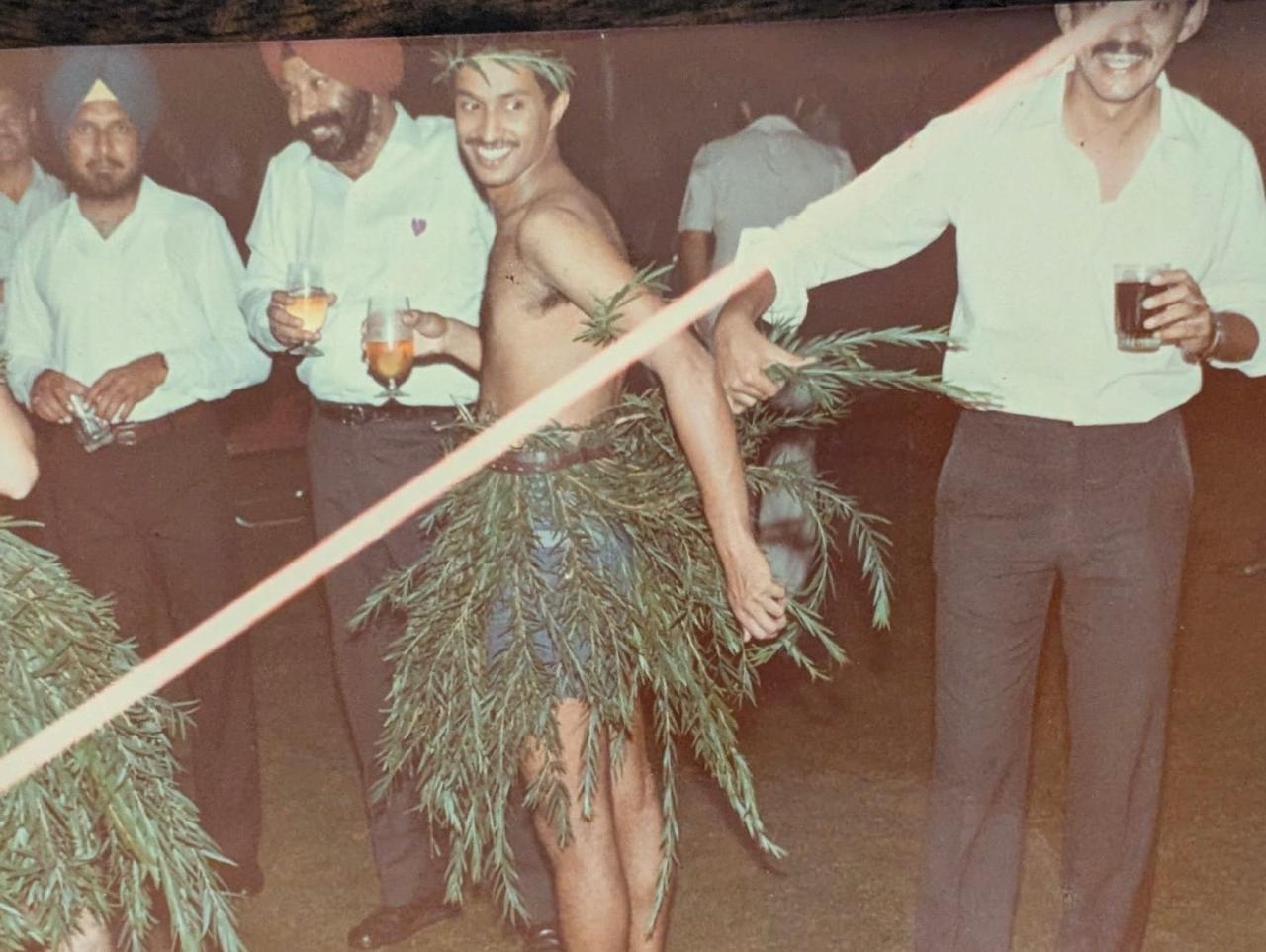 Air Commodore K A Muthanna (Retd) once welcomed guests at a party in a grass skirt
The nicknames survive too — Muthanna became “Muthu,” then “Mutts”; Suresh Malkani was “Malks”. All Guptas were Guffus, Grewals were Garry, tall pilots were “shorties,” short ones “lambu”. Even the jets sometimes got names.
Then there is Air Commodore (Retd) Ramesh Goyal, who took an unusual flight path to reach the cockpit. The son of a shopkeeper in Palwal, Goyal was the first in his family to attend a Sainik School, and the first in the Haryana town to reach the NDA. He joined the squadron as a young flying officer in 1978. “I was crazy about flying,” says the man who spent four-and-a-half years with the squadron and flew 1,000 sorties.
He remembers seniors like B B Soni, awarded a Vir Chakra for shooting down a Pakistani fighter over Jamnagar in 1971. That year, No. 17 did a stellar job, providing vital air support to the Army from Hashimara, West Bengal.
The squadron has always been fiercely competitive, Goyal says, ensuring each of its aircraft was fully ready to fly combat missions when needed.
Once, with 18 aircraft but only 14 or 15 pilots available, the station commander, Air Commodore Upkar Singh, a war veteran who was nearly 60, flew himself so that every aircraft could get airborne. They formed the number 17 in the sky. “It was quite a feat,” he says. Another memory: Prince Charles visiting the squadron at Halwara in 1979.
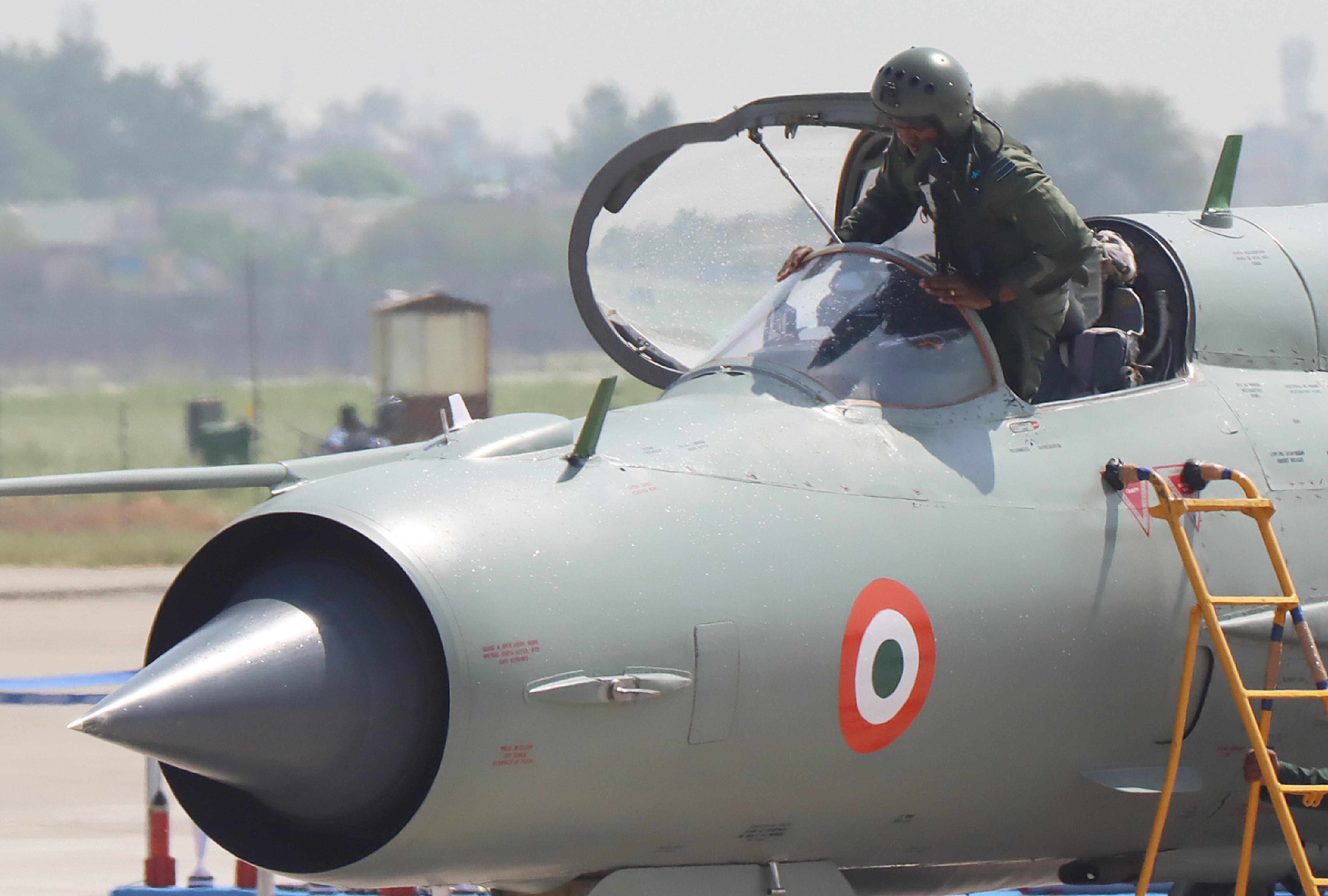 A pilot coming out from Mig 21 during the Culmination ceremony of MIG 21 at Airforce Station Chandigarh in 2025 (Express Photo by Kamleshwar Singh)
Group Captain (retd) Sanjay Dandapani’s childhood memories served him much later, when he commanded No. 17 from 1995 to 1997. His father, “Dandoo” had been the first commanding officer of the radar unit at Amritsar during the 1965 war with Pakistan. Dandapani was in Class 5 then, and his was the only family that stayed on in the city, he says. When Pakistani aircraft thundered in, he, along with his mother and younger brother, would run into a trench dug in their garden.
What he remembers most vividly, though, is how the city responded. “People would refuse to take money for milk and other things from my mother. They were amazing.” He drew two lessons from it: “We have to look out for each other, literally, in the air and on the ground. And as a commander, you have to lead from the front. I can’t sermonise and not do well myself.”
It’s a spirit, he says, that is also part of the squadron’s DNA. As Dhanoa puts it, “Your merit is tangible, your flights, hits, misses, all are recorded.”
Quite literally, that is. Like other IAF units, No. 17 keeps a detailed record of its operations and social life in a handwritten squadron diary, but with a distinction. Here, wartime events are written in red ink; everything else, in blue. The diary records battles, but also people, parties, wins, losses and reunions.
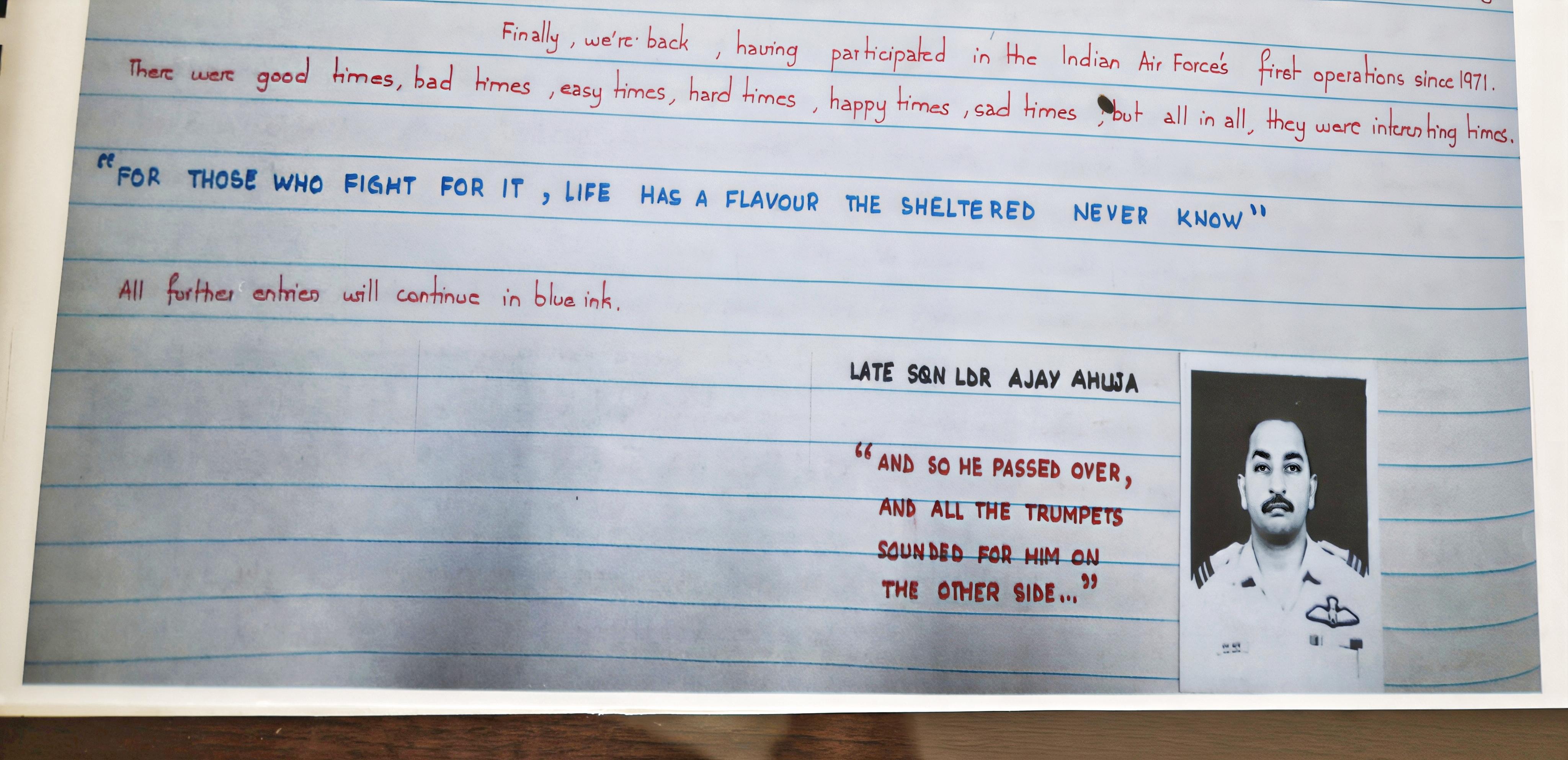 Late Squadron Leader Ajay Ahuja’s epitaph in a 1999 Kargil war entry
The 1999 Kargil War entry ends with a photograph of Ahuja, and an epitaph: “And so he passed over, and all the trumpets sounded for him on the other side…”
There are other rituals the diary mentions: “bouncing”, where bachelors descend uninvited on a married officer’s home for a late-night meal, and the slosh dance (present IAF chief A P Singh is known to enjoy it). “I don’t quite fancy all that jumping around, but everyone in the squadron, including my wife, loves it. They did it on my lawn when they called on me,” Dhanoa laughs.
75 years later
On September 10, 2020, the Golden Arrows were reborn as the IAF’s first Rafale squadron. Dhanoa had himself flown the Rafale in France in 2017, after India signed the deal in 2016.
In Operation Sindoor last year, the squadron’s Rafales were part of the IAF’s response. Dhanoa proudly states the squadron was subsequently awarded two Vir Chakras, four Vayu Sena Medals and 10 mentioned-in-dispatches.
The 25th anniversary of Kargil Vijay Diwas in 2024 brought former pilots and ground staff together at Subroto Park in Delhi. It’s unusual for a squadron to gather in such numbers a quarter-century after a war, says Dhanoa, but not for the Golden Arrows.
An old photograph of Ajay Ahuja with his wife Alka Ahuja
Alka Ahuja, wife of the late Squadron Leader Ajay Ahuja, remains part of that circle. She will meet the old squadron again on October 1, the 75th anniversary celebrations of the squadron. So will Dhanoa. So will the men who flew Hunters, MiG-21s and Rafales, and those who remember them. And there will also be memories of those no longer there.
Seventy-five years after the Golden Arrows were raised with a handful of Harvards, their story has travelled through every theatre of Indian military aviation, from Goa to Hashimara, Kargil, Balakot and Sindoor, from the Harvard to the Vampire, the Hunter, the MiG-21, and now the Rafale. But perhaps the most remarkable part of the story is that the men who once flew together still think of themselves as one squadron.
Every May 27, Dhanoa calls Alka. And every October 1, the Golden Arrows come home to one another.
KioskNews shows a cleaned-up reading view extracted from the publisher’s page — the original always lives on their site, not ours.