Shorter ties, sharper divide: Badminton split over BWF’s Thomas and Uber Cup overhaul
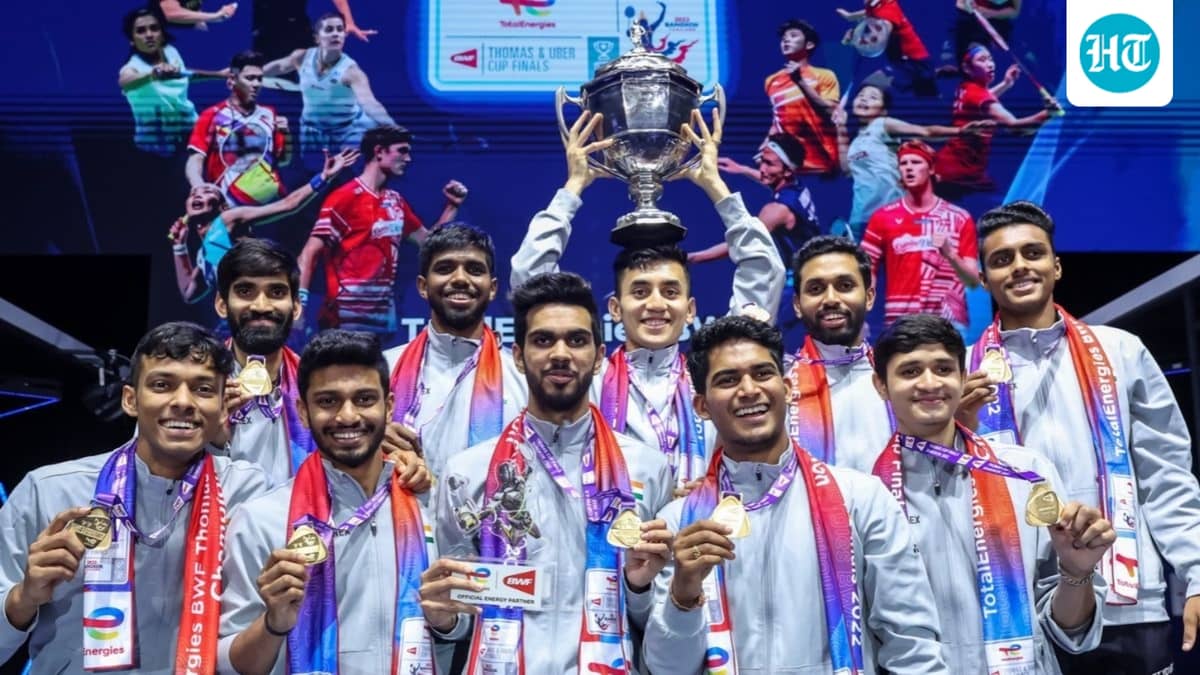
New Delhi: For decades, the prestige of the Thomas and Uber Cups rested on a gruelling, five-match test of national depth. Winning badminton’s World Men’s and Women’s Team Championships required assembling three strong singles players and two top doubles pairs, turning every tie into a marathon of strategy and endurance.
That tradition is coming to an end.
The Badminton World Federation (BWF) has unveiled a sweeping overhaul of its flagship events, confirming that with the 2028 Thomas and Uber Cup Finals here, ties will be decided by a best-of-three format consisting of just two singles and one doubles match.
Coupled with the rollout of the 3×15 scoring system in 2027, an expanded 24-team league-and-knockout structure, and a new points-based standings system, the changes represent one of the most dramatic shifts in badminton’s competitive landscape.
While BWF insists the revamp will inject drama and global representation, the reaction from the badminton community has been sharply divided with many experts warning that cutting down matches punishes the very nations that invest in building deep squads.
“This is a punishment for developing countries,” Badminton Association of Malaysia (BAM) secretary Datuk Kenny Goh told Malaysian daily The Star. “Nations like Malaysia have invested heavily in developing players. But now you are introducing a tournament format that reduces the number of players involved. Isn't that a punishment for countries that spend so much on player development?”
While Goh welcomed the expansion from 16 to 24 teams, he argued that simply widening the field does not raise the bar. “The question is whether the quality of the matches and the competition will improve, and whether the format will be fair,” he added.
Indian national selector U Vimal Kumar echoed the frustration, expressing bewilderment at both the reduced length of the ties and the new league points allocation, which awards five points for a 3–0 sweep, four for a 2–1 win, and one for a 1–2 loss.
“It is completely revamped. I don't know where we are heading. You want to cut down everything but what is the relevance? I am not able to understand. Three singles, two doubles; it was fantastic,” Vimal told HT.
“Taking the game backwards”
The former chief national coach raised alarms over how decisions are made within BWF, pointing out that coaches and players on the ground feel completely disconnected from the policy making process.
“You are literally taking the game backwards,” added Vimal, arguing that BWF should focus on grassroots clinics and player grading.
“It is really sad. Who are these people who are sitting and deciding all these things? I really don't understand. And the worst thing is nobody is saying anything.”
But not everyone is ready to write off the experiment, though even those urging patience admit their preference for best-of-five format.
“I wish BWF could have dwelled a little deeper on this conversation because I know that few countries have been against this. People who have larger bench strength, larger doubles investment, have a strong opinion against it,” India’s chief national coach Pullela Gopichand told HT.
"But for us, I would love to have more opportunities, in the sense best-of-five for India is good; we have a lot of depth in singles more than many countries. But it's a decision which is taken and I'm okay with it because there's no point giving an opinion on the negative side.”
Former India international and 2008 Thomas Cup captain Anup Sridhar struck a similar balance between nostalgia and pragmatism. While openly admitting he dislikes shrinking the ties, Sridhar believes the sport owes BWF vision a fair audition.
“I'm an old timer and I'll join the group of people that is saying that this is not a great idea,” Sridhar said. “If you ask me my personal preference, I will always prefer best-of-five. But we should be open to this change and shouldn't be too negative about it.
“We all complain, especially as players, that BWF doesn't do this or that. And if on the first opportunity they do something and if we only criticise, I feel we are missing a trick there. Let's see how well it works out. Let's give it a chance.”
As badminton prepares to step into this abbreviated era, the opinions are clearly drawn between a federation chasing faster, broader global appeal, and a generation fighting to preserve the depth that defined the game’s greatest team rivalry.
KioskNews shows a cleaned-up reading view extracted from the publisher’s page — the original always lives on their site, not ours.