BOK delivers back-to-back rate hikes, signals gradual tightening ahead
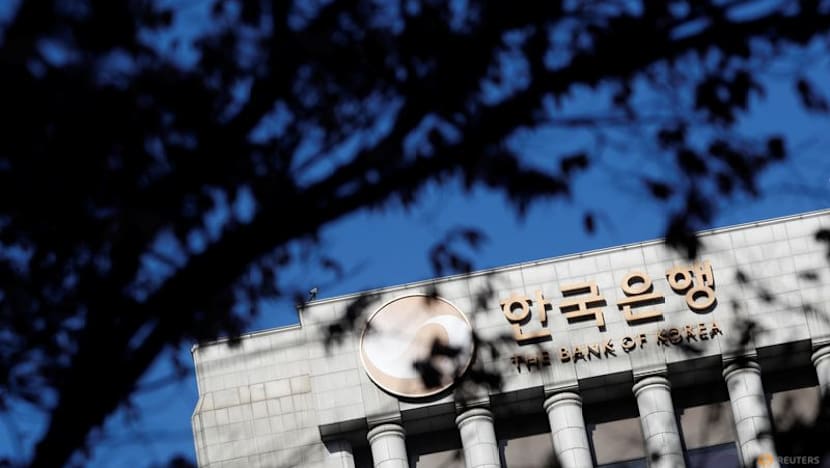
SEOUL, Aug 27 : The Bank of Korea on Thursday raised its benchmark interest rate by a quarter percentage point to 3.00 per cent, delivering a second straight increase as inflation stays above target and financial stability risks persist.
Following the decision, Governor Shin Hyun Song signaled that the bank would take its time assessing the back-to-back rate actions before it looks to do an additional 25 basis point hike.
The seven-member monetary policy board at the BOK voted to raise the seven-day repurchase rate to the highest level since February 2025, a decision predicted by 18 of 35 economists surveyed in a Reuters poll.
The BOK also revised up this year's growth estimate to 3.3 per cent from the 2.6 per cent projected in July. It left this year's inflation forecast unchanged at 2.7 per cent.
Governor Shin said back-to-back hikes were necessary now to minimise costs of managing financial stability and forex market predictability in the future, and signaled that tightening is not over.
"In a way, I'm expecting (rate increases) to be gradual, because we need to assess the impact of the two (rate) hikes in a row and also because we anticipate there to be expectations for us to pace (down) after our pre-emptive, early action," Shin said.
The median expectation is now for one more rate hike in the first quarter of 2027 and then a hold through to at least the end of next year.
Analysts expect policymakers to put more emphasis on managing financial stability amid an overheating housing market while strong growth feeds into underlying inflation.
In the updated six-month dot plot, refreshed for the first time since May, a policy rate of 3.25 per cent emerged as the most probable outcome for end-2026, with 10 of the 21 dots clustered at that level. Six dots pointed toward a higher peak of 3.50 per cent. The remaining five dots favored holding steady at 3.00 per cent.
"I expected a unanimous decision, but for a meeting where the growth forecast was upgraded, it felt quite dovish, and the market reaction reflects that. It now seems clear that the board will hold steady in October," Ahn Jae-kyun, an analyst at Korea Investment Securities.
Local bond markets had already priced in much of Thursday's move, and yields reflect a market bracing for a more drawn out tightening campaign.
South Korea's policy-sensitive treasury bond futures rose 0.2 points to 103.52 as of 0319 GMT.
"Considering that the exchange rate is likely to stabilise and that they need to watch financial stability closely, I think it is reasonable to expect a pause in the fourth quarter," added Ahn, who sees the BOK lifting interest rates to 3.25 per cent in the first quarter of next year.
The BOK's hawkish hike to 3.00 per cent aligns with a global central bank environment marked by severe division, with the Federal Reserve maintaining restrictive rates and the Bank of Japan taking a cautious approach to a fragile recovery.
The BOK is fighting domestic inflationary pressures and a hot housing market, just as geopolitical tensions threaten to push global import costs higher.
Investors in the coming weeks will be focused on Chinese and U.S. demand indicators and emerging inflation data to determine if the BOK's extended tightening cycle becomes the global norm.
KioskNews shows a cleaned-up reading view extracted from the publisher’s page — the original always lives on their site, not ours.