Prosecution: Setting lower threshold for conviction in impeachment won't amend Constitution
Make this your preferred source to get more updates from this publisher on Google.
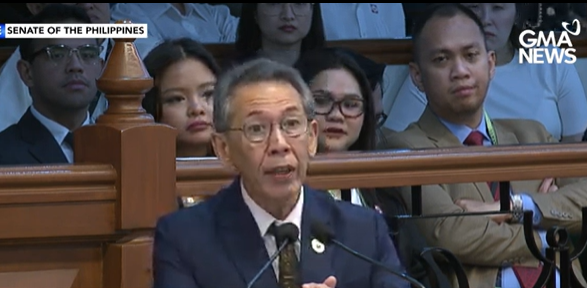
The Senate impeachment court’s decision to lower the threshold of votes needed to convict an impeachable official, if it comes to that, will not affect other thresholds involving the legislative function of the Senate and Congress, House prosecutor Chel Diokno said Wednesday.
Diokno made the position during the questioning of Senator Joel Villanueva, considering that Article 11 Section 3.6 of the Constitution states that “the Senate shall have the sole power to try and decide all cases of impeachment,” while other Constitutional provisions set other fractional thresholds needed for Congress in approving a bill, a request for Martial law, an expulsion of a House or Senate member, impeachment, or amending the Constitution.
“Will the threshold for these things change if we change the denominator here [for the threshold needed to convict in an impeachment proceeding]?” Villanueva asked.
Diokno replied, “Nothing would change in so far as those other provisions are concerned because we are talking about Article 11 of the Constitution which is on public accountability. We are talking specifically of one of the primary accountability mechanisms, which is [the] impeachment [process].”
“[And] so any decision by this Honorable body as an impeachment court will not affect the other provisions of the Constitution,” he added.
Villanueva also asked defense counsel Michael Poa as to their position that 16 is the threshold needed for conviction, given that the Constitution does not state a number but “two-thirds of all the members of the Senate.”
Poa replied that the defense does not argue for a fixed 16, but a fixed membership of the Senate.
“What we’re saying it is fixed at the membership [of the Senate]. So if it is 24, it (base) should be 24,” he said.
Poa, however, said that the framers of the Constitution were cognizant that the members of Congress can change through addition of districts for members of the House, or due to death, resignation, disqualification, permanent disability or expulsion.
“I could only surmise might be stylistic,” he said, referring to the lack of a number and the fraction language stated in the Constitution. —AOL, GMA News
KioskNews shows a cleaned-up reading view extracted from the publisher’s page — the original always lives on their site, not ours.