6 Hard Sci-Fi Movies That Rival 'Interstellar'

Sign in to your Collider account
Every genre has a leading film. In animation, for instance, we have The Lion King. In kaiju-like-monsters, there’s the original Jurassic Park films. Interstellar is that for sci-fi. It has become the movie people reach for when they want to prove hard sci-fi can still make a packed theater shut up and lean forward. Fair enough. It gives you orbital mechanics, time dilation, black holes, docking at suicidal speeds, and a father trying to get back to his kids before physics steals their entire lives from him. The science is part of the drama instead of decorative homework, which is a much rarer achievement than the genre likes admitting.
However, there are other movies that hit just as hard but got slipped under the rug. The really great hard sci-fi movies that do something similar in completely different ways. They give the story rules and then force human beings to live inside them. Sometimes that means solving a problem with duct tape and math. Sometimes it means realizing your own memory cannot be trusted. Sometimes it means discovering that biology, language, or technology has already changed the definition of being human. The best part is when you stop admiring the idea and start worrying about the person trapped inside it.
6 'Primer' (2004)

Two engineers, Abe (David Sullivan) and Aaron (Shane Carruth), are building a device in a garage when they accidentally discover that an object placed inside their machine can experience time differently from the world outside it. That discovery in Primer does not arrive with swelling music or somebody shouting that they have invented time travel. They stare at the data, run another experiment, and slowly realize they have built something far more dangerous than the project they started with.
Then they do exactly what two smart, ambitious men probably would do. They try to exploit it before they fully understand it. Abe creates a larger box, climbs inside, waits several hours, exits earlier in the day, and uses advance knowledge of the stock market. Aaron follows. Soon there are failsafe machines running in secret, overlapping versions of people, drugged doubles, altered timelines, and a man named Thomas Granger (Chip Carruth) appearing where he absolutely should not be. The movie never pauses to rescue you with a clean diagram. You have to keep up with people who are themselves losing track of how many times events have been changed. Primer cost almost nothing and still makes most time-travel movies look timid.
5 'Moon' (2009)
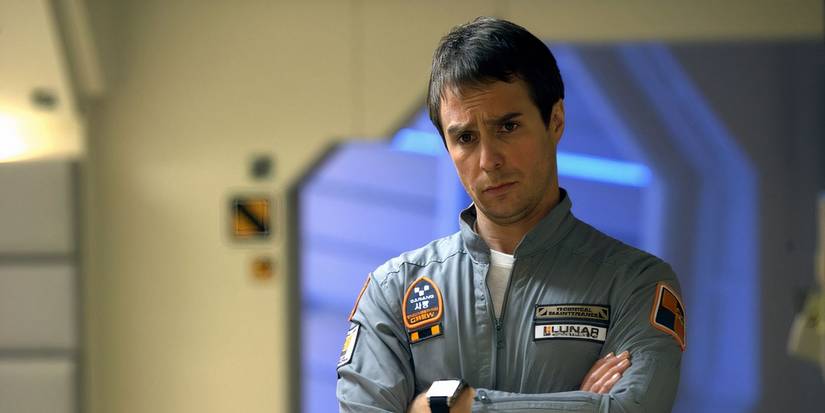
Sam Bell (Sam Rockwell) is nearing the end of a three-year contract mining helium-3 on the far side of the Moon. His only regular company is GERTY (Kevin Spacey), an artificial intelligence with a little screen that displays cheerful faces while helping run the base. Sam is exhausted, lonely, and desperate to get home to his wife and daughter. Then he crashes a lunar rover and wakes up back at the station with pieces of his memory refusing to line up properly.
The movie gets much stranger once Sam returns to the crash site and finds another Sam Bell inside the wrecked rover. From there, Moon becomes less interested in the surprise than in the horrible practical questions created by it. Who remembers the real life? Who owns those memories? Why are prerecorded messages replacing live communication with Earth? Why does the company need each Sam for only three years? Even GERTY becomes more complicated than the obvious HAL comparison suggests. The little robot may be following instructions, but Sam eventually discovers that corporate programming and loyalty are not always the same thing. This is science fiction built around a workplace policy so cruel it becomes existential horror.
4 'Gattaca' (1997)
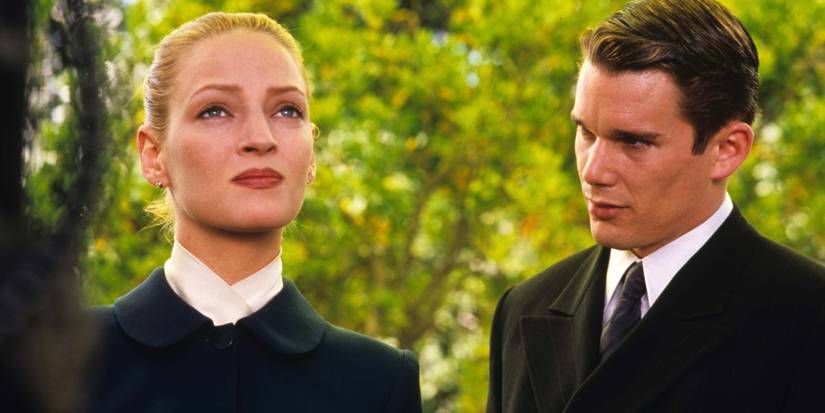
Vincent Freeman (Ethan Hawke) is born naturally in a society where parents can select embryos for desirable genetic traits. His DNA immediately marks him as a bad investment. Doctors predict heart problems and a shortened life expectancy, while genetically selected children grow up with doors already open for them. Vincent wants to travel to space anyway, so he buys the identity of Jerome Eugene Morrow (Jude Law), a genetically exceptional man whose spinal injury has left him unable to use the future his genes supposedly guaranteed.
The fraud requires astonishing discipline. Vincent scrubs loose skin from his body every morning. He carries Jerome’s blood for finger-prick tests, urine for workplace screenings, and hair samples to scatter around his desk. One eyelash can destroy everything. That daily routine gives Gattaca its tension long before a murder investigation brings police into the aerospace company. The cruelest detail is how much the system has convinced everyone that DNA equals destiny. Vincent’s brother Anton (Loren Dean) believes that too, until their old swimming contest returns and Vincent explains why he keeps beating him. He never saved anything for the swim back. That line hits harder than a thousand speeches about human potential.
Collider Exclusive · Sci-Fi Survival Quiz Which Sci-Fi World Would You Survive? The Matrix · Mad Max · Blade Runner · Dune · Star Wars
Five universes. Five completely different ways the future went wrong — or sideways, or up in flames. Only one of them is the world your instincts were built for. Eight questions will figure out which dystopia, galaxy, or desert wasteland you'd actually make it out of alive.
💊The Matrix
🔥Mad Max
🌧️Blade Runner
🏜️Dune
🚀Star Wars
01
You sense something is deeply wrong with the world around you. What do you do? The first instinct is often the truest one.
02
In a world of scarcity, what resource do you guard most fiercely? What we protect reveals what we believe survival actually requires.
03
What kind of threat keeps you up at night? Fear is useful data — if you're honest about what you're actually afraid of.
04
How do you deal with authority you don't trust? Every dystopia has a power structure. Your approach to it determines everything.
05
Which environment could you actually endure long-term? Survival isn't just tactical — it's physical, psychological, and very much about where you are.
06
Who do you want in your corner when things fall apart? The company you keep is the clearest signal of who you actually are.
07
Where do you draw the line — if you draw one at all? Every survivor eventually faces a moment that tests what they're actually made of.
08
What would actually make survival worth it? Staying alive is one thing. Having a reason to is another.
Your Fate Has Been Calculated You'd Survive In…
Your answers point to the world your instincts were built for. This is the universe your temperament, your survival instincts, and your particular brand of stubbornness were made for.
The Matrix
You took the red pill a long time ago — probably before anyone offered it to you. You're a systems thinker who can't help but notice the seams in things.
- You're drawn to understanding how the system works before figuring out how to break it.
- You'd find the Resistance, or it would find you — your instinct for spotting constructed realities is the machines' worst nightmare.
- You function best when you have access to information and the freedom to act on it.
- The Matrix built an airtight prison. You'd be the one probing the walls for the door.
Mad Max
The wasteland doesn't reward the clever or the well-connected — it rewards those who are hard to kill and harder to break. That's you.
- You don't need comfort, community, or a cause larger than the next horizon.
- You need a vehicle, a clear threat, and enough fuel to outrun it — and you're good at all three.
- You are unsentimental enough to survive that world, and decent enough — just barely — to be something more than another raider.
- In the wasteland, that distinction is everything.
Blade Runner
You'd survive here because you know how to exist in moral grey areas without losing yourself completely.
- You read people accurately, keep your circle small, and ask the questions others prefer not to answer.
- In a city where humanity is a legal designation rather than a feeling, you hold onto something that keeps you functional.
- You're not a hero. But you're not lost, either.
- In Blade Runner's world, that distinction is everything.
Dune
Arrakis is the most hostile environment in the known universe — and you are precisely the kind of person it rewards.
- Patience, discipline, and political awareness are your core strengths — and on Arrakis, they're survival tools.
- You understand that the long game matters more than any single victory.
- Others come to Dune and are consumed by it. You'd learn its logic and earn its respect.
- In time, you wouldn't just survive Arrakis — you'd begin to reshape it.
Star Wars
The galaxy far, far away is vast, loud, and in a constant state of violent political upheaval — and you wouldn't have it any other way.
- You find meaning in being part of something larger than yourself — a cause, a crew, a rebellion.
- You'd gravitate toward the Rebellion, or the fringes, or whatever pocket of the galaxy still believes the Empire's grip can be broken.
- You fight — not because you have to, but because standing aside isn't something you're capable of.
- In Star Wars, that willingness is what makes all the difference.
3 'The Martian' (2015)

A violent storm forces the Ares III crew to evacuate Mars, and astronaut Mark Watney (Matt Damon) is struck by debris and presumed dead. He wakes up alone with limited food, no direct communication with Earth, and years to survive before another crew could possibly reach him. The Martian turns that nightmare into one of the most enjoyable engineering problems ever put on screen.
Watney starts with calories. He counts the food, realizes it will not last, and grows potatoes inside the habitat using Martian soil, packaged potatoes intended for Thanksgiving, and waste from the crew. He manufactures water by burning hydrazine and nearly blows himself up when his chemistry gets sloppy. Later, he digs up the old Pathfinder probe so he can communicate with NASA using a rotating camera and hexadecimal. Each solution creates another problem, which is exactly why the movie stays fun. Back on Earth, orbital mathematician Rich Purnell (Donald Glover) eventually figures out a gravity-assist maneuver that can send Hermes back to Mars, forcing the crew to decide whether they are willing to add hundreds of days to their mission for one man. Science becomes teamwork on a planetary scale.
2 'Arrival' (2016)

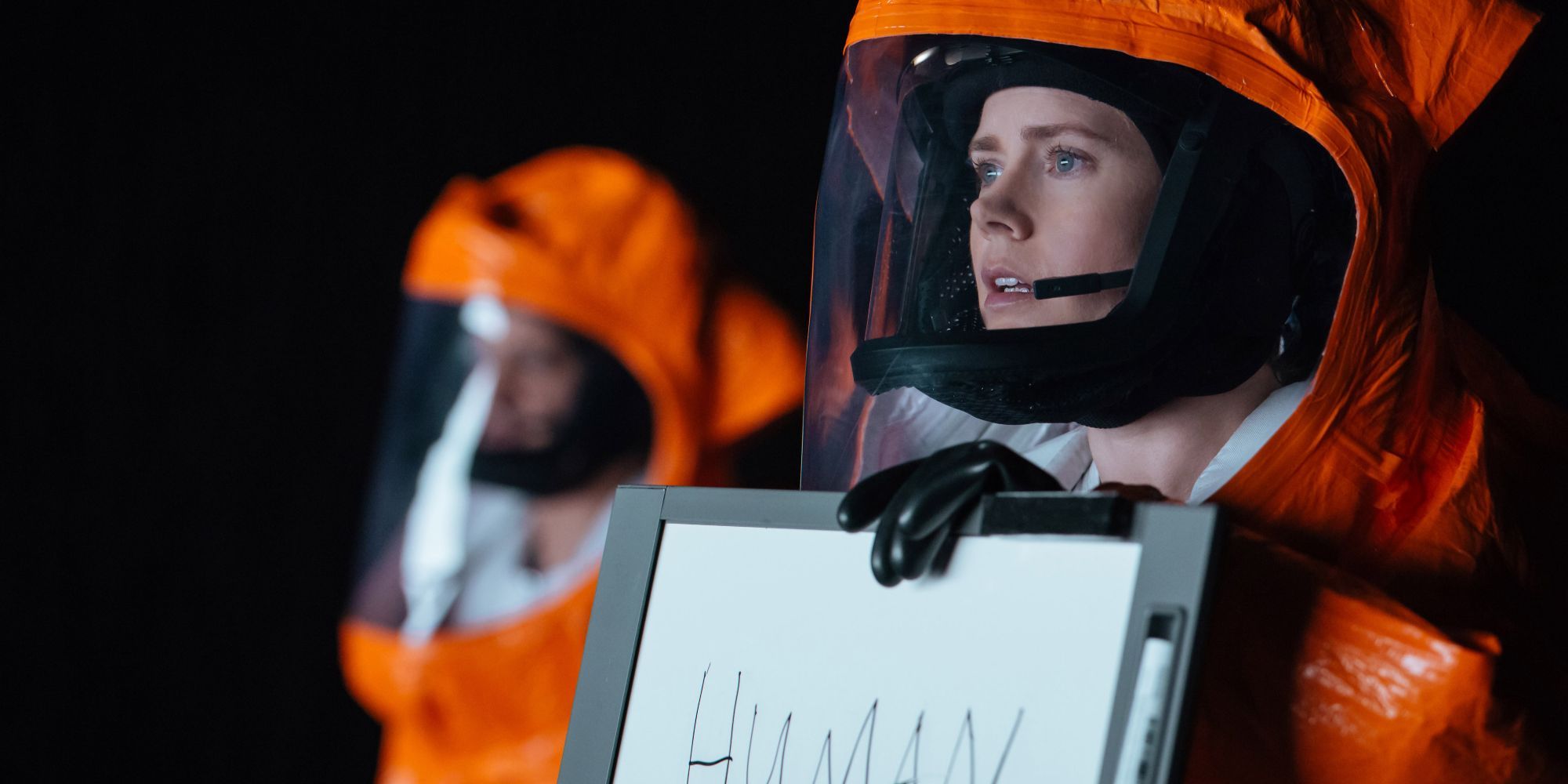
Twelve enormous alien craft appear at different locations around Earth, and linguist Louise Banks (Amy Adams) is brought in to communicate with the beings inside one of them. The aliens, eventually called heptapods, do not speak or write in anything resembling ordinary human language. Their written symbols arrive as complete circular forms, with the beginning and end effectively conceived together.
That idea gradually changes the entire structure of Arrival. Louise begins by teaching basic concepts with a whiteboard, separating herself from Ian (Jeremy Renner), identifying individual heptapods, and painstakingly building enough shared vocabulary to ask why they came. Governments get nervous when one symbol is translated as “weapon,” even though the same concept may also mean “tool.” That linguistic ambiguity almost becomes a global catastrophe. Then Louise starts experiencing memories that are not behaving like memories at all. The movie takes its central idea seriously enough to let language change the way a person experiences time, and that shift turns an alien-contact story into something painfully intimate. Once you understand what Louise knows, every choice she makes becomes harder to judge.
1 '2001: A Space Odyssey' (1968)
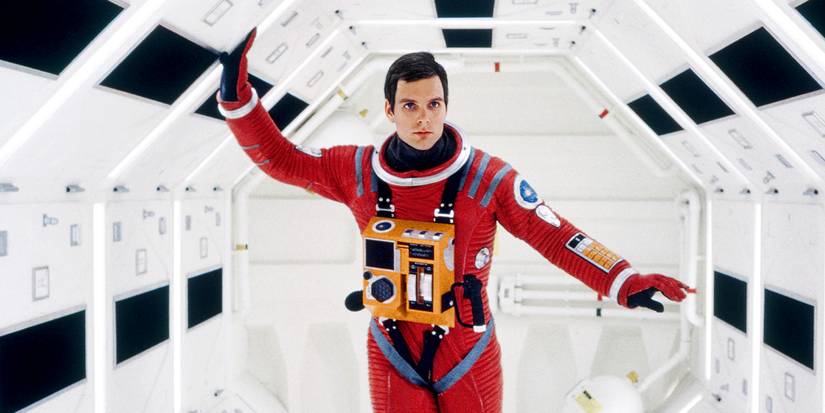
A group of prehistoric hominids encounters a perfectly smooth black monolith, and shortly afterward one of them understands that a bone can become a weapon. Stanley Kubrick then cuts from that bone flying through the air to a spacecraft orbiting Earth millions of years later. 2001: A Space Odyssey tells you almost everything about its view of humanity in that one edit. Technology changes. The impulse behind it is much older.
The Jupiter mission gives the movie its most famous conflict. Astronauts Dave Bowman (Keir Dullea) and Frank Poole (Gary Lockwood) trust HAL 9000 (Douglas Rain) to operate the ship, and HAL calmly insists that a communications component is about to fail. When the hardware appears fine, the astronauts privately discuss disconnecting him. HAL reads their lips through the pod window. From there, an artificial intelligence famous for being incapable of error begins protecting the mission in increasingly terrifying ways, including refusing Dave entry with that maddeningly polite voice. Then 2001 leaves ordinary explanation behind entirely with the Star Gate and that impossible room near Jupiter. More than half a century later, it still feels like science fiction from a civilization slightly ahead of ours. Interstellar reached for the same huge question in its own language. Kubrick had already shown how frightening and beautiful the question itself could be.
KioskNews shows a cleaned-up reading view extracted from the publisher’s page — the original always lives on their site, not ours.