10 Greatest Agatha Christie Hercule Poirot Books, Ranked

Dyah (pronounced Dee-yah) is a Senior Author at Collider, responsible for both writing and transcription duties. She joined the website in 2022 as a Resource Writer before stepping into her current role in April 2023. As a Senior Author, she writes Features and Lists covering TV, music, and movies, making her a true Jill of all trades. In addition to her writing, Dyah also serves as an interview transcriber, primarily for events such as San Diego Comic-Con, the Toronto International Film Festival, and the Sundance Film Festival.
Dyah graduated from Satya Wacana Christian University in October 2019 with a Bachelor's degree in English Literature, concentrating on Creative Writing. She is currently completing her Master's degree in English Literature Studies, with a thesis on intersectionality in postcolonial-feminist studies in Asian literary works, and is expected to graduate in 2026.
Born and raised between Indonesia and Singapore, Dyah is no stranger to different cultures. She now resides in the small town of Kendal with her husband and four cats, where she spends her free time cooking or cycling.
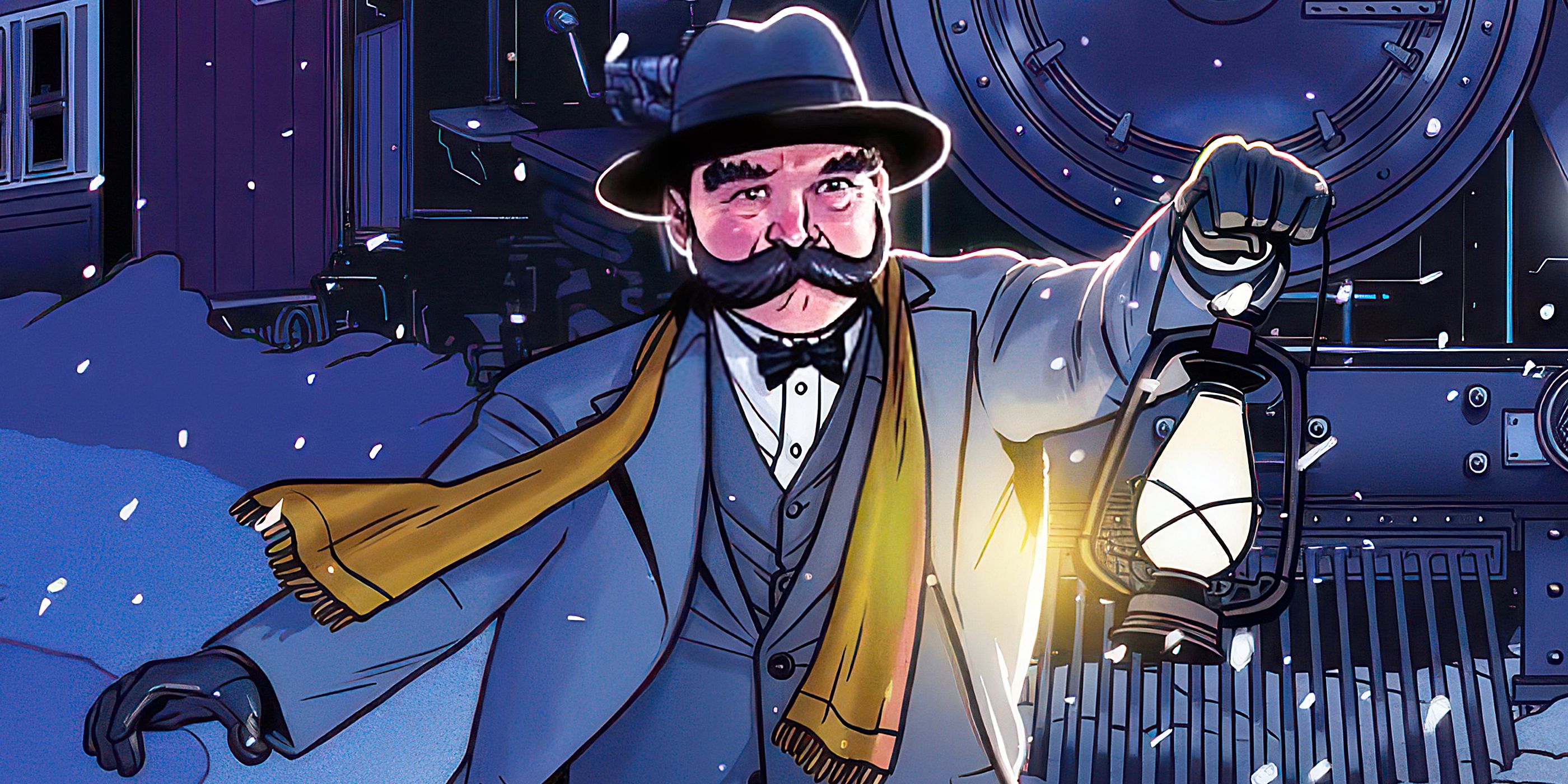
Sir Arthur Conan Doyle might have Sherlock Holmes, but Agatha Christie has Hercule Poirot. Detective Poirot is just one of the few characters who make recurring appearances in Christie's novels, so much so that she featured him in 33 novels and 51 short stories. Best known for his crisp sense of fashion and, not to mention, his famous eccentric mustache, Poirot calls himself the greatest detective in the world.
One might try to argue with that, but his cockiness is well justified by his impeccable sleuthing techniques. Having been the face of popular Christie book-to-television adaptations, Poirot's novels are essential reading for mystery fans. From a love triangle gone wrong on the Nile to a train murder in the middle of a snowstorm, here are the greatest Agatha Christie Hercule Poirot books, ranked.
10 'After the Funeral' (1953)

Following Richard Abernethie's funeral, his family gathers for the reading of his will, only for his sister Cora to casually suggest that he was murdered. The next day, Cora is brutally killed in her sleep. With the family's inheritance suddenly under suspicion, Poirot is called in to investigate Richard's death.
Dysfunctional families make the best recipe for murder. After the Funeral is no exception. Instead, there's a cruel irony in knowing that another death happens after the literal death of someone else. Because everyone has their own set of personal baggage, it's hard to decide who the suspect is with all the layers to each character.
9 'Five Little Pigs' (1942)

Cold cases are a tough nut to crack. In Five Little Pigs, Poirot revisits the sixteen-year-old murder of painter Amyas Crale after his daughter, Carla, brings him a letter from her imprisoned mother. Convicted of the crime, Caroline maintains in the letter that she was innocent, prompting Poirot to uncover the truth.
Cold cases rarely leave enough physical evidence behind to crack the mystery. Fortunately, Poirot has something arguably more useful: five surviving witnesses with their own versions of what happened. It's a Rashomon effect at its finest, as every account offers a slightly different perspective. Poirot must nitpick through their contradictions, memories, and missing details to see which version is the most accurate.
8 'Cards on the Table' (1936)

It's a party to die for in Cards on the Table. Flamboyant collector Mr. Shaitana invites Poirot and three other crime experts to dinner, along with four guests he suspects of getting away with murder. After the evening ends with Shaitana dead from a stab wound, everyone becomes a suspect.
The reason why the book is called Cards on the Table becomes clear when someone is murdered during a game of bridge. It's an uncanny murder situation, but even more high-stakes, since Poirot isn't the only one investigating. With a police officer, a secret agent, and a crime writer on the case, there's plenty of work to be done.
7 'The Murder on the Links' (1923)

Poirot and Captain Hastings arrive in France to help millionaire Paul Renauld, only to find him stabbed and buried beside a golf course. His wife claims masked men abducted him, but suspicious neighbors, a hidden past, and a mysterious woman complicate the investigation. When Renauld's son is accused, Poirot is on the case.
The Murder on the Links features one of Christie's finest rivalries between Poirot and Inspector Giraud of the Paris Sûreté. Their investigation becomes a generational clash, pitting Poirot's old-fashioned talent for getting inside a killer's mind against Giraud's fixation on physical evidence. It's a battle between little grey cells and hard facts.
Collider Exclusive · Villain Personality Quiz Which Criminal Mastermind Would Be Your Nemesis? Lecter · Joker · Moriarty · Chigurh
Four of the finest criminal minds ever put on screen. One of them would look at you and see something worth their time. Eight questions decide which one comes for you, why they picked you, and what they would want when they arrived.
🍷Lecter
🃏Joker
♟️Moriarty
🪙Chigurh
01
What would a criminal mastermind notice about you first? Great villains choose their opponents carefully. Something about you got their attention.
02
How do they make first contact? The introduction tells you everything about what is coming next.
03
What do you actually believe about right and wrong? Every nemesis is really an argument about the thing you believe most.
04
What finally gets under your skin? Everybody has a pressure point. Finding yours is the whole plan.
05
They have made their move. How do you fight back? This is the part of the film where the audience finds out who you are.
06
What would they use against you? A good villain never brings a weapon you have not already handed them.
07
What do they actually want from you? The money is never the point. Something else always is.
08
How does it end between the two of you? Eight questions in, this is the one that decides who comes for you.
The Case File Is Complete Your Nemesis Is…
Four criminal masterminds. One of them was always going to be yours. Here is who comes for you, why they picked you out of everyone available, and what they want from the encounter.
Hannibal Lecter
Your nemesis does not want to beat you. He wants to know you completely, and he is patient enough to wait for it. The frightening part is how good the conversation is.
- Lecter is the most dangerous kind of opponent: the one who finds you interesting. He never raises his voice, because he has never needed to.
- You keep a great deal to yourself and you are careful about what you show. That reserve is exactly the door he would knock on.
- The films understood something other thrillers missed. The horror is not the violence. It is being perfectly understood by the wrong person.
- He would be unfailingly polite about all of it. That is the worst part.
The Joker
Your nemesis is not after money, territory or revenge. He is after a demonstration, and you are the person he has chosen to prove his point on.
- The Joker only picks opponents who believe in something. Your decency is not a defence against him. It is the entire reason he showed up.
- He has no plan you can predict and nothing you can take away, which removes every tool you would normally reach for.
- His whole argument is that you are one bad day away from being him, and you would spend the rest of your life proving him wrong.
- He would call it a magic trick. You would call it the worst night of your life.
Moriarty
Your nemesis respects you, which sounds flattering until you work out what it means. He chose you because nobody else was worth his time.
- Moriarty is the original criminal mastermind, the template every later one borrows from: a mind the equal of the hero's, pointed the wrong way.
- You enjoy being the cleverest person in the room. He is counting on exactly that, and he has already built the room.
- This is the rare nemesis who would be genuinely disappointed if you lost badly. He needs the game to be worth playing.
- It ends the way these things always end. Two people, one problem, and only one way down.
Anton Chigurh
Your nemesis has no personal interest in you whatsoever, and that is precisely what makes him unsurvivable. You are not a rival. You are a stop on the way.
- Chigurh does not negotiate, gloat or explain. He arrives, he asks one question, and the answer was decided long before you opened your mouth.
- You trust yourself to handle things. He is the one problem in the world that has no interest in how capable you are.
- No Country for Old Men rewrote the screen villain by removing the thing audiences quietly rely on: the sense that talking might work.
- Call it. He will wait.
6 'Hercule Poirot's Christmas' (1938)

If there's one thing detectives and killers have in common, it's that they don't catch a break during the holidays. Hercule Poirot's Christmas begins with bitter multimillionaire Simeon Lee inviting his family to his mansion for Christmas. With pent-up resentment boiling over a will, the celebrations are cut short when Lee is found murdered in his locked bedroom.
For a long time, Christie was known for popularizing the cozy country mysteries, which rarely lacked bloodshed beyond the murder itself. The genius of Hercule Poirot's Christmas is how she uses the snowy white setting to contrast with her increasingly descriptive blood and gore, showing just how willing Christie was to spice things up.
5 'The A.B.C. Murders' (1936)

Nothing irks Poirot more than being underestimated, especially by an anonymous killer. The A.B.C. Murders begins in almost Sherlockian fashion, with Poirot receiving a taunting letter signed "A.B.C." that names a specific date and location. Sure enough, on the appointed day, an elderly shopkeeper is found murdered inside her tobacco shop, with an ABC Railway Guide placed beside her body.
Long before Squid Game turned childhood games and familiar systems into deadly challenges, Christie was already transforming something as innocent as the alphabet into a sinister form of psychological torment. With no obvious suspects to interrogate, Poirot has little more than his intellect to rely on, carefully examining seemingly insignificant details.
4 'The Murder of Roger Ackroyd' (1926)

In the peaceful village of King's Abbot, Dr. James Sheppard becomes involved in the investigation after wealthy widower Roger Ackroyd is discovered murdered in his study. Ackroyd had recently disclosed that he knew the identity of someone blackmailing him. As suspicion falls on his stepson, Ralph Paton, the retired Poirot steps in.
The Murder of Roger Ackroyd changed the course of crime thrillers. Christie lays the clues out on a platter but is relentless enough to pull the rug out from under her readers. While her creative decisions were considered atrocious at the time, Christie's unconventional approach to storytelling created one of the most shocking plot twists in literary history.
3 'Peril at End House' (1932)

Peril at End House begins with one of Poirot's rare attempts to take a holiday, this time accompanied by Captain Hastings. Their getaway takes a dangerous turn after meeting Magdala "Nick" Buckley, the young owner of the cliff side End House. Nick soon becomes the target of a series of increasingly bizarre, near-fatal accidents.
Although not the strongest Christie mystery, Peril at End House is one of the writer's attempts to amp up a little insanity in the circumstances. It seems like a twisted sense of serendipity that one person is nearly killed a little too many times, and whether readers believe it or not, the uncanniness of the events is just as entertaining as the mystery itself.
2 'Murder on the Orient Express' (1934)

Poirot's ride back to London is abruptly halted when the Orient Express becomes stranded in the snow. With the train unable to move and American passenger Samuel Ratchett found murdered in his compartment, Poirot has no shortage of suspects to question. With a carriage full of strangers, and twelve stab wounds on Ratchett, Poirot has his work cut out.
Inside this claustrophobic carriage, Murder on the Orient Express is also a lesson in the social hierarchies of the 1930s. A compartment full of international passengers also means prejudices about one another. It's Poirot's job to look past these biased assumptions to find out who the murderer is.
1 'Death on the Nile' (1937)

Death on the Nile is essentially the Christie version of The White Lotus. A love triangle gets out of hand between Linnet Ridgeway, Simon Doyle, and Jacqueline de Bellefort. Married couple Linnet and Simon are cruising on the Nile for their honeymoon, but Jacqueline—who isn't pleased with their marital bliss—decides to tag along.
The tension between the three is pure, juicy melodrama, almost like watching a reality TV show unfold on a luxury vacation. Yet beneath the romantic drama lies a darker, more calculated murder. Christie makes the Nile more than just a backdrop, using its ancient surroundings to emphasize how greed, jealousy, and wounded pride have long existed since ancient times.

Death on the Nile
- Release Date
- February 9, 2022
- Runtime
- 127 minutes
- Director
- Kenneth Branagh
- Writers
- Michael Green
-

Hercule Poirot
-

Tom Bateman
Bouc
- Producers
- Judy Hofflund, Kevin J. Walsh, Ridley Scott, Kenneth Branagh
- Budget
- 90 million
- Studio(s)
- 20th Century
- Distributor(s)
- 20th Century
- Executive Producer(s)
- James Prichard, Mark Gordon, Mathew Prichard, Matthew Jenkins, Simon Kinberg
KioskNews shows a cleaned-up reading view extracted from the publisher’s page — the original always lives on their site, not ours.