‘Crocodiles are possible, but hunger is certain’: Malawi’s foragers forced into infested waters
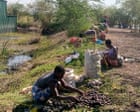
The mid-morning heat in Malawi’s lower Shire River basin is already suffocating, but Beatrice Maseko cannot afford to look away from the water’s edge. Coated in grey, foul-smelling mud up to her thighs, the 34-year-old mother of four plunges both arms deep into the heavy sediment of a sprawling marsh. Her fingers feel blindly through the silt for the rough, bulbous roots of wild water lilies, known as nyika.
Around her, a dozen other women move with deliberate, hushed slowness. No one splashes; no one speaks above a tense whisper. Just 50 yards away, where the marsh opens into the main artery of the Shire River, the silhouette of a Nile crocodile glides silently beneath the surface.
“Every time you reach down into the mud, you wonder if your hand will come back up,” Maseko says. She spends up to five hours a day searching through these waters.
The danger is not abstract. In the villages of Maseya and neighbouring Kasisi, in southern Malawi’s Chikwawa district, people talk about foragers who have gone into the deeper channels looking for larger roots and never returned.
In 2024, Isaac Kenneth, a 28-year-old from a neighbouring settlement, was attacked while harvesting in the same stretch of water. The crocodile seized his leg and dragged him under. Fellow foragers managed to pull him free, but he suffered deep puncture wounds and a broken ankle.
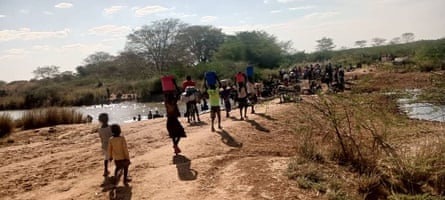
“The crocodile is a possibility, but hunger is a certainty,” Maseko says, hoisting a heavy wet sack on to her shoulder. “If I do not come into this water, my children will not eat tonight.”
Nyika foraging is not new. For decades, communities in the lower Shire have harvested the tubers of the water lily (Nymphaea petersiana) during severe shortages, as documented in accounts from the 2005 food crisis and later lean seasons.
What has changed is the scale and regularity. Once reserved for the worst drought years, the harvest has become weekly and commercial for many families across Malawi’s flood-prone southern lowlands, as extreme weather, weak support systems and rising food prices have combined to lock vulnerable households out of basic nutrition.
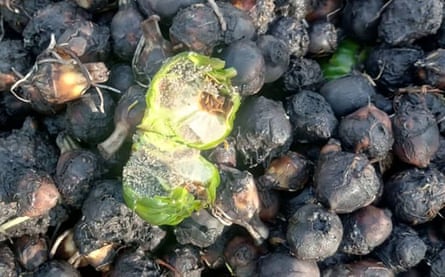
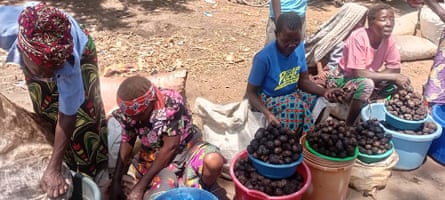
Every Monday and Thursday, the tracks leading to Sorgin Market fill with vendors carrying heavy wet bundles. Women sit on colourful cloths spread over the dry earth, surrounded by plastic basins piled high with mud-encrusted lily bulbs. For buyers priced out of the maize market, one basin can mean three days of basic survival for a family. The roots are boiled, dried and pounded into a gritty grey flour used to make porridge.
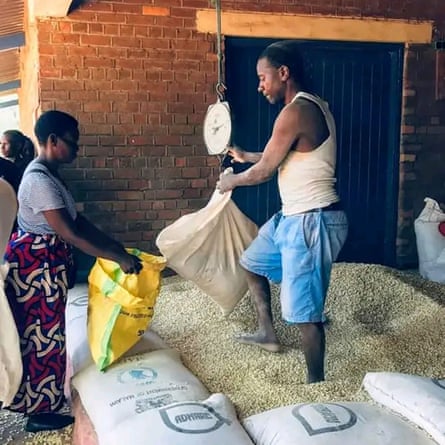
The state-backed Agricultural Development and Marketing Corporation (Admarc) is mandated to buy maize from farmers at a fixed price to help steady markets and maintain emergency reserves. However, logistical bottlenecks, warehouse losses and funding shortfalls mean that cheaper public supplies are often heavily rationed or absent when communities need them most.
In July, Admarc was selling maize at 39,500 kwacha (£17) for a 50kg bag. Sales were limited to a maximum of 20kg a person to prevent hoarding and resale. A small basin of nyika sells for roughly 2,500 Malawian kwacha (£1.10).
With official reserves under strain, the only supplies of maize are on the open market, where prices swing wildly. In some markets the cost of a 50kg bag has reached between 69,000 and 72,000 kwacha, far beyond the reach of most rural households.
The underlying cause of maize shortages is a combination of weather and economic shocks. Regional El Niño conditions disrupted planting seasons, delayed the annual rainy season and damaged maize fields across southern Malawi.
A weakened local currency, expensive fuel and high fertiliser costs have made traditional farming inputs prohibitive, leaving rural households with empty granaries and no savings. When rain-fed farming fails in Chikwawa, formal employment options are scarce, leaving the river basin as the last buffer against starvation.
after newsletter promotion
The physical environment of the lower Shire basin is also changing, heightening the risk. Heavy rainfall upstream has pushed Lake Malawi’s water levels to highs not seen in decades, reaching 475 metres above sea level in early 2026, among the highest in 45 years.
To protect infrastructure and upstream communities, authorities open the control gates at the Kamuzu barrage in Liwonde, releasing large volumes of water – sometimes more than 1.45m litres a second – into the Shire system.
These surges cause the lower stretches of the river to rise rapidly, flooding the shallower embankments where women once foraged in relative safety. Crocodiles are pushed into the newly expanded marsh zones. To reach mature nyika tubers, people have to wade deeper into murky, faster-moving channels, the hunting grounds of the predators. Thick reeds that once offered some cover have been washed away.
According to Levious Mafuta, environmental officer for Chikwawa district, crocodile attacks have surged over the past two years. Data reveals a sharp increase in encounters over that period as desperate foragers are forced into deeper parts of the river.
“Economic pressures are pushing people directly into dangerous river channels but our logistical shortfalls in vehicles and field equipment severely impact our capacity to respond, leaving communities highly exposed,” says Mafuta.
As the afternoon sun dips towards the horizon, Maseko adjusts the weight of her sack. Her legs are crisscrossed with scratches from submerged reeds; her clothing is damp. She glances once more at the dark current before turning to begin the long walk home.
“Tomorrow the pot will be empty again,” she says. “So tomorrow I will have to go right back into the water.”
This is the daily calculation now faced by families across the lower Shire: the known risk of the crocodile against the certain risk of hunger. For Maseko and thousands like her, the bitter root has become lifeline and daily gamble.
KioskNews shows a cleaned-up reading view extracted from the publisher’s page — the original always lives on their site, not ours.