The 8 Scariest Monsters in Books, Ranked

Sign in to your Collider account
Monsters are a staple of numerous genres of fiction, particularly horror, fantasy, and science-fiction. Some of the most famous monsters, like Frankenstein's monster and Dracula, for example, have cemented their place in literary legend, becoming renowned figures from classic books. However, while they might be iconic, they aren't necessarily the most inherently frightening compared to other creatures out there.
Indeed, many fantasy and horror novels have produced creatures so terrifying that they're enough to keep their readers awake for days. Sometimes, they are complex, god-like beings of cosmic proportions, other times they are extra-terrestrials or beasts of unknown origin. Either way, these are the scariest monsters that literature has to offer, ranked not just based on their appearance, but also on their natures.
8 The Others
'A Game of Thrones' (1996)

The Others are a race of ice-cold undead in A Song of Ice and Fire. However, in the TV adaptation, they are known as the White Walkers. The Others are introduced in the first novel, A Game of Thrones. They prowl the Haunted Forest and the frozen lands beyond the Wall, killing Wildlings and reanimating their corpses to serve in their growing army of the undead. The Others were first created by the Children of the Forest, a nymph-like people who spawned the Others as a means of defending themselves against human invasion. However, they found they could not control their creation.
The Others are invulnerable to pretty much everything except for fire, as well as two exceptionally rare materials: dragonglass and Valyrian steel. Perhaps what is so chilling about them (pun intended) is that they do not have any basic biological needs to eat, drink, or breathe air. All they must do to survive is kill. It is their only purpose. The more they kill, the larger their army grows. There's just something so immeasurably off-putting about these beings. They might not be in-your-face scary, but their behaviour and appearance is certainly a step beyond creepy.
7 Myrddraal
'The Eye of the World' (1990)

Myrddraal, also known as Fades, are the mysterious lieutenants of the Dark One in The Wheel of Time series, first being introduced in the first novel, The Eye of the World. These creatures are a species of Shadowspawn born in the shadowy region of the Blight, and are known for being very tough to kill. The reason these are so frightening is because everything about them feels so inexplicably wrong, like a kitten hatching from an egg. There are some things that just should not be.
They have no eyes, nose, or facial features, just a gaping maw filled with razor sharp teeth, which opens larger than any normal animal's should. Though they are humanoid in stature, they have exceptionally pale, almost translucent skin. They also have long, greasy black hair and are swathed in black robes. However, their hair and robes do not move with the wind, and hang unnaturally still. Moreover, it is said that they are so thin that if one is facing you and it turns to the side, it will appear to vanish entirely. Not only do they use this ability to avoid detection, but they can also teleport between patches of shadows. Everything about these faceless phantoms is highly unnerving. They might not have eyes, but you'd certainly be able to feel when one is staring at you.
6 The Beast
'Those Who Went Remain There Still' (2008)

Those Who Went Remain There Still is a criminally-underrated horror novella by Cherle Priest that is set in rural Kentucky in the 19th Century. After a rich landowner dies, he leaves his last will and testament deep within the mines at the edge of his property. As the man's prospective heirs journey into the cave, the uncover a monster that has been biding its time for the last 100 years.
In 1775, the beast was wounded by frontiersman and thrown into the mines. Crippled and lost, it remained there in the dark for a century. The scariest part about this unnamed creature is that it isn't really described--its fear factor comes from the natural human fear of the unknown. It is known to be large and vaguely bird-like in design, but it prefers sticking to the shadows, picking people off one by one and flitting through the darkness. Perhaps the worst part about it is it appears to be unkillable--evidently, since it lived over 100 years and didn't die after being axed and thrown down a mineshaft. Still, this one is so disturbing because it preys upon common phobias like tight spaces, darkness, and isolation in order to kill its victims.
5 Dementors
'Harry Potter and the Prisoner of Azkaban' (2004)

Whoever decided Harry Potter and the Prisoner of Azkaban should be a YA novel seriously messed up. Sure, the stories are mostly family-friendly, but the Dementors introduced in this third installment are the stuff of nightmares. Despite their distinctly phantom-like appearance, they are not true ghosts. Rather, they are unseen monsters who fly around, wearing dark cloaks and hoods that obscure their faces. It is said that underneath the hood, there is no face at all, just a wide, gaping mouth on mottled, grey, bony flesh.
Their nature is even scarier. They feed on misery and negative emotions, and amplify feelings of despair in people whenever they come near. Wherever they go, lights go out, windows freeze over, and the air gets considerably colder, almost as if they were sucking the happiness out of the world. Dementors are used to guard the wizard prison Azkaban, often causing madness in the inmates after they spend so long around them. Perhaps scariest of all, Dementors are capable of something known as the "Dementor's Kiss," which is when they literally suck the soul out of someone. That person will still be alive, but they will be reduced to an emotionless, vegetative state, which is actually worse than death. These beings are incredibly terrifying, and would have been at home in a horror novel rather than a YA fantasy novel.
4 The Thing
'Who Goes There?' (1938)

The Thing originates from Don A. Stuart's horror novella Who Goes There?, but it's most commonly associated with John Carpenter's 80s horror movie The Thing. Not a lot of people realize the movie had literary origins. The Thing is an unnamed, extra-terrestrial, parasitic entity that makes its way to a research base in Antarctica. It is able to infect the staff on duty there, turning them into monsters in turn.
The Thing has no real shape or form--it is an amorphous blob of flesh and tissue, and cannot be detected in the early stages of infection. Once someone is fully infected, they begin mutating and turning against their peers, becoming horrific fleshy masses right in front of their eyes. Perhaps what makes this disgusting creature so scary is the fact that it's impossible to tell who's infected until it's too late, meaning the monster could be anyone at any time.
3 Pennywise
'It' (1986)

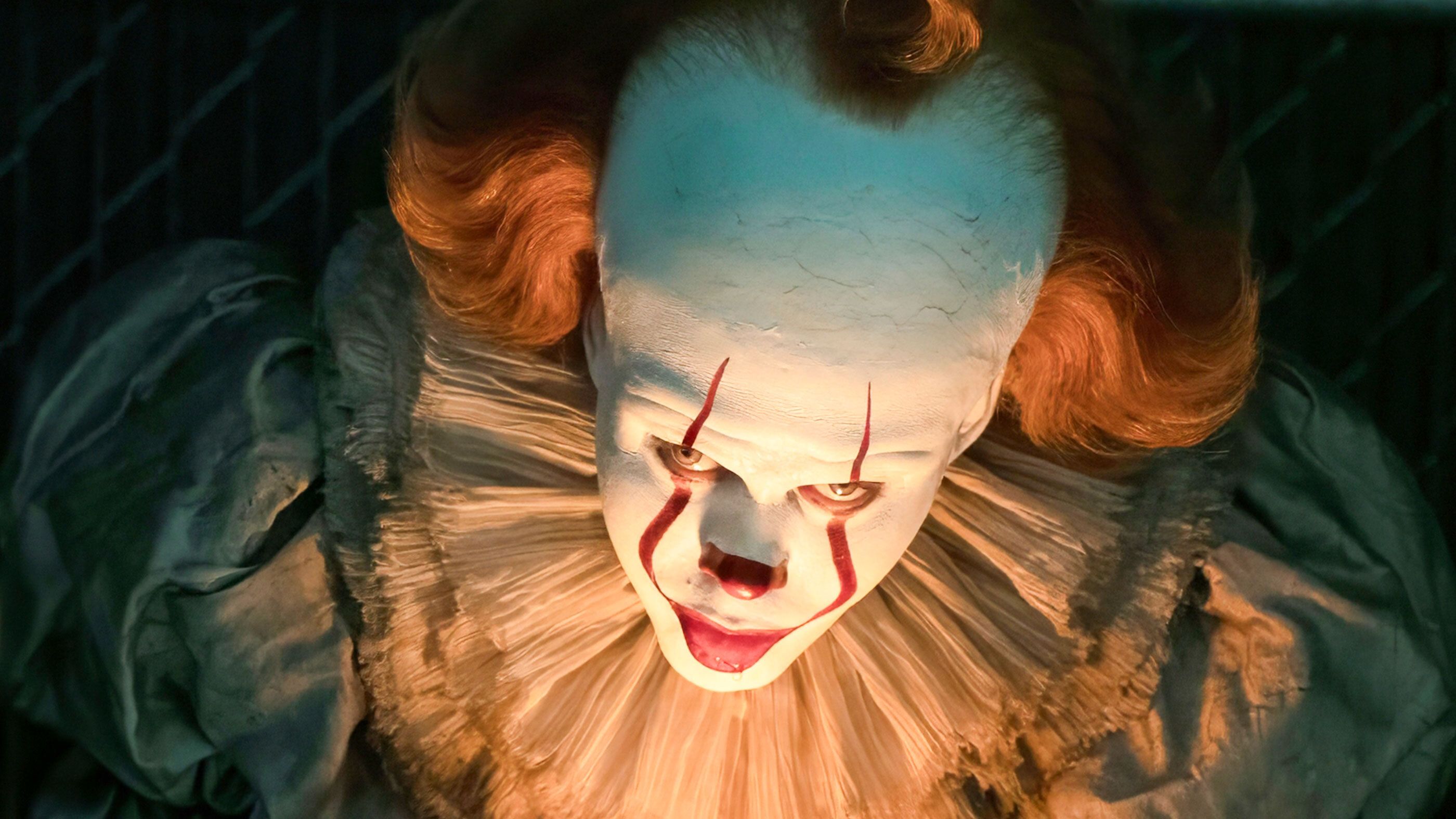
Pennywise the Dancing Clown is the iconic main antagonist of Stephen King's critically-acclaimed horror novel It. At first glance, Pennywise looks like a random guy in a super creepy clown outfit that happens to live in a sewer. That's already a major red flag. However, it quickly becomes apparent that Pennywise is so much more than a human being. He can shapeshift into all sorts of monstrous forms, and bears a set of sharp, pointed teeth reminiscent of a shark's.
Moreover, he feeds almost exclusively on children, choosing to present himself as a clown as a means of luring kids to his subterranean lair. When children begin to go missing in the town of Derry, no one suspects a killer clown monster. No one, except for a fellow group of kids, that is. Pennywise and his live-action adaptations from 1990 and 2017 have caused so many cases of coulrophobia over the years, especially for impressionable young audiences who stumbled upon the adaptations by accident.
Collider Exclusive · Horror Survival Quiz Which Horror Villain Do You Have the Best Chance of Surviving? Jason Voorhees · Michael Myers · Freddy Krueger · Pennywise · Chucky
Five killers. Five completely different ways to die — if you're not smart enough, fast enough, or self-aware enough to avoid it. Only one of them is the villain your particular set of instincts gives you a fighting chance against. Eight questions will figure out which one.
🏕️Jason
🔪Michael
💤Freddy
🎈Pennywise
🪆Chucky
01
Something feels wrong. You can't explain it — you just know. What do you do? First instincts are the difference between the survivor and the first act casualty.
02
Where are you most likely to find yourself when things go wrong? Setting is everything in horror. Where you are determines which rules apply.
03
What is your most reliable survival asset? Every survivor has a quality the villain didn't account for. What's yours?
04
What kind of fear is hardest for you to fight through? Knowing your weakness is the first step to not dying because of it.
05
You're with a group when things start going wrong. What's your role? Horror movies are brutally clear about who survives group situations and who doesn't.
06
What's the horror movie mistake you're most likely to make? Honest self-assessment is a survival skill. Denial is not.
07
What's your best weapon against something that can't be stopped by conventional means? Every horror villain has a weakness. The survivors are always the ones who find it.
08
It's the final scene. You're the last one standing. How did you make it? The final survivor always has a reason. What's yours?
Your Survival Odds Have Been Calculated Your Best Chance Is Against…
Your instincts, your strengths, and your particular way of thinking under pressure point to one villain you actually have a fighting chance against. Everyone else — good luck.
Jason Voorhees
Jason is relentless, but he is also predictable — and that is the gap you would exploit.
- He moves in straight lines toward his target. He doesn't strategise, doesn't adapt, doesn't outsmart. He simply pursues.
- Your ability to keep moving, use the environment, and resist the panic that freezes most victims gives you a genuine edge.
- The Crystal Lake survivors were always the ones who stopped running in circles and started thinking about terrain, water, and distance.
- You think like that. Which means Jason, for all his indestructibility, would face someone who simply refused to be where he expected.
Michael Myers
Michael watches before he moves. He is patient, methodical, and almost impossible to detect — until it's too late for anyone who isn't paying close enough attention.
- But you are paying attention. You notice the shape in the window, the car parked slightly wrong, the silence where there should be sound.
- Michael's power lies in the invisibility of ordinary suburbia — the fact that nothing ever looks wrong until it already is.
- Your spatial awareness and instinct to map every room, every exit, and every shadow before you need them is precisely the quality Laurie Strode had.
- You are not a victim waiting to happen. You are someone who already suspects something is wrong — and acts on it.
Freddy Krueger
Freddy wins by getting inside your head — using your own fears, your own memories, your own subconscious as weapons against you. That strategy requires a target who can be destabilised.
- You are harder to destabilise than most. You've faced uncomfortable truths about yourself and you haven't looked away.
- The survivors on Elm Street were always the ones who understood what was happening and chose to face it rather than flee from it.
- Freddy's greatest weakness is that his power evaporates in the presence of someone who refuses to give him the fear he feeds on.
- Your psychological resilience — the ability to stay grounded when reality itself becomes unreliable — is exactly the quality that keeps you alive here.
Pennywise
Pennywise is ancient, shapeshifting, and feeds on terror — but it has one critical vulnerability: it cannot function against someone who genuinely stops being afraid of it.
- The Losers Club didn't survive because they were braver than everyone else. They survived because they faced their fears together, and faced them honestly.
- You ask the questions others avoid. You look directly at what frightens you rather than turning away.
- That directness — the refusal to let fear fester in the dark — is Pennywise's worst nightmare.
- It chose the wrong target when it chose you. You are exactly the kind of person whose fear tastes like nothing at all.
Chucky
Chucky's greatest advantage is that nobody takes him seriously until it's already too late. He exploits the gap between how something looks and what it actually is.
- You don't have that gap. You take threats seriously regardless of how they present — and you never make the mistake of underestimating something because of its size or appearance.
- Chucky relies on surprise, on the delay between recognition and response. You close that delay faster than almost anyone.
- Your instinct to treat every unfamiliar thing with appropriate scepticism — rather than dismissing it because it seems absurd — is the exact quality that keeps you breathing.
- Against Chucky, not laughing is already winning. You are very good at not laughing.
2 The Leviathan
'The Fisherman' (2016)

John Langan's The Fisherman might just have one of the most terrifying entities to ever exist in the horror genre. The story follows two widowed fisherman taking a trip to a small creek in upstate New York, who become intrigued by local legends of another fisherman who once tried to catch the cosmic being called the Leviathan using ropes woven from the hair of thousands of corpses.
The Leviathan lives in an endless, black ocean beneath the surface of reality itself. It doesn't have much of a physical appearance. It is described only as a seething mass of teeth and claws, churning up white water in its endless domain. It is also known for being absolutely immense, so immense in fact that seeing its full size is wont to break the human brain entirely. It is literally beyond anything our brains can comprehend. It is a physical representation of nothingness, of death, and of the void, which is why many horror fans find this beast so terrifying.
1 Cthulhu
'The Call of Cthulhu' (1928)

Cthulhu is the famous god-like extra-terrestrial entity from H. P. Lovecraft's short story/novella The Call of Cthulhu. He is described as being a scaly, reptilian being that stands hundreds of feet tall. He has a humanoid posture, with bat-like wings and a face full of tentacles. Coming from a distant planet, Cthulhu was imprisoned by a race of aliens in the subaquatic city of R'lyeh, far beneath the surface of the Pacific. However, he is able to send out psychic waves, influencing humans, creating cults determined to free him.
What makes Cthulhu so scary is that he is so far beyond human comprehension. Expecting humans to understand Cthulhu's nature and true motives would be like asking a fly to understand quantum physics. Cthulhu isn't inherently evil--he is far above human morals. If breaking free of R'lyeh means the destruction of humanity, he would feel no different than a person accidentally stepping on a bug while they walk down the street. To Cthulhu, humanity and planet Earth are utterly insignificant. The scariness of Cthulhu comes from the idea that humans are far from the most intelligent or powerful things in the universe, and that we could easily be crushed under the feet of higher beings.

The Call of Cthulhu
- Release Date
- October 7, 2005
- Runtime
- 47 minutes
- Director
- Andrew Leman
- Writers
- Sean Branney
-

John Bolen
The Listener
-
Matt Foyer
The Man
-
Ralph Lucas
Professor Angell
-
Chad Fifer
Henry Wilcox
KioskNews shows a cleaned-up reading view extracted from the publisher’s page — the original always lives on their site, not ours.