The laundry miracle: how to solve 10 stubborn problems – from stains to rough towels to ‘permastank’

It started with a sunscreen stain – a yellowed collar on a white T-shirt that persisted wash after wash. A spray of stain remover did nothing; drying the shirt in the sun made it worse. An internet rabbit hole took me to the r/laundry subreddit, where I found my people: 995,000 of them, nerding out over the chemistry of clothes-washing.
“People want to take better care of their stuff, but don’t have the knowledge,” says Eric Thompson, a former management consultant based near Seattle who moderates the forum under the name KismaiAesthetics. He took on the mantle after seeing someone suggest white vinegar to treat a burrito stain on an anorak. “If you pour vinegar on a burrito grease stain on white nylon, you now have orange nylon for eternity,” he says. “Acids bind colour to dye sites on nylon.”
The r/laundry community speaks reverently of “Kismai”. Users defer to his lengthy, technical guides on the properties of different enzymes or the benefits of a citric acid rinse. They laud his detailed method for a clothing deep-clean, which he refers to as a “spa day”.
Thompson characterises his approach as slow and science-driven – an antidote to the questionable quick fixes you might see on Instagram and TikTok. “I don’t do hacks,” he says. “I don’t do: ‘Let’s squeeze lemons to get rid of lipstick stains.’ Not my style. What I do is: ‘Let’s use biotech and green chemistry and the magic of water and time to gently take care of our clothes.’” Looking after clothes properly, Thompson points out, has economic and sustainability benefits: you buy less and wear items for longer.
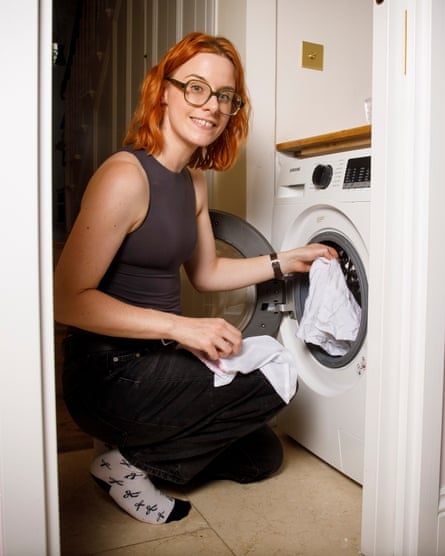
Companies are getting in on the trend. New direct-to-consumer brands such as Febu and Dirty Labs in the US and Garame Cleaning Co in Australia produce laundry boosters with a focus on utilising science to improve your washing results.
Inspired, I tried to harness the science of clothes-washing – along with some internet crowd wisdom – to tackle 10 common stains and other washing complaints. First, a couple of warnings: household chemicals can be dangerous. Follow safety instructions and wear protective clothing when advised, and do not mix products without checking it’s safe to do so. Also, products will work differently on different fabrics. Check the care labels in your clothes; the tips below are mainly designed for materials such as cotton and polyester.
Cooking oil stains
People on r/laundry are evangelical about enzymes – the “bio” part of bio detergents. Clare Mahon, a professor of polymer chemistry at Durham University whose lab has partnered with Procter & Gamble on laundry research, says that different enzymes target different types of molecule. For an oil stain, you want lipases, which break down fats. Many detergents contain lipase, although a lot of UK packaging simply cites “enzymes”. I had to delve deep into a manufacturer’s website to check mine was up to the task.
Before washing, Mahon suggests applying a paste of bicarbonate of soda and water to the oily patch. “Fats or oils contain ester linkages [a type of chemical bond] and that mixture can hydrolyse those” – in other words, break them down with water. “Then you get water-soluble products that can then be removed from the fabric,” she says.
To test, I spill a blob of olive oil on to an old shirt and let it sink in. I let the bicarb paste sit for an hour before chucking it into the machine with a lipase-containing washing powder. It comes out spotless.
Be warned, though: the longer you leave an oil stain, the harder it can be to remove. Mahon explains that the lipids in oil can become oxidised and form links with one another that substances like bicarb won’t break, “so the stains can be really persistent”.
Black oil stains
Oil stains from a bike chain or similar look rather different. I take the other side of the same shirt and scrunch it around my chain. It comes out covered in greasy black marks. For this, Mahon shares a tip from a colleague: before washing, spray the stain with WD-40. “Because it’s a more oily organic solvent, it can release the residue from the fabric a bit more, then the surfactants are able to lift it up in the wash,” she says.
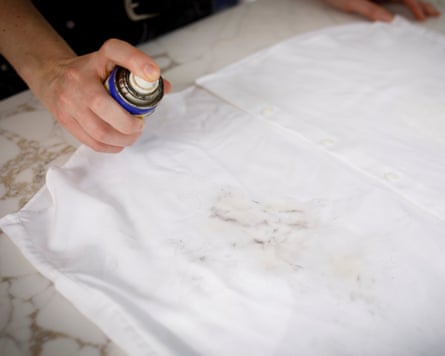
Surfactants – molecules that essentially bind to dirt and make it water-soluble – are another critical component of detergents. This is why you can’t wash with an enzyme-based stain remover alone. I find an old bottle of WD-40 and, rather sceptically, spray the black marks. I leave the shirt for 10 minutes before putting it in the wash. It comes out looking brand new.
Tomato sauce stains
Thanks to a bolognese-loving one-year-old, tomato-based stains are a common occurrence in my household. I have a white baby vest covered in red lasagne splotches ready to experiment on.
Before addressing the red pigment, I use an old toothbrush to apply washing-up liquid and a little water to lift any oil that may also have been in the sauce. I then throw the vest into the washing machine with a load of whites as usual, again using an enzyme-containing detergent.

The orange stains persist. I place the vest on a garden chair to dry in the sun. The red colour in tomatoes is caused by a pigment called lycopene; UV light breaks the chemical bonds in a natural bleaching process. Even on an overcast autumn day, the effect is dazzling: the stains completely disappear. (I can attest that the sun-drying trick also works wonders on baby poo marks.)
Armpit stains
Emboldened, I move to a more challenging problem: persistent armpit stains caused by a mix of deodorant and sweat. A colleague donates a red T-shirt that has white marks deeply encrusted into the pits. The stained fabric feels rigid, like cardboard. Mahon doesn’t fill me with optimism. “They’re actually a nightmare,” she says.


Online, I find advice to make a paste out of an oxygen stain remover and leave for a while before washing (with an enzyme-containing detergent, of course). When the shirt comes out, the marks have improved a bit, but I instantly realise I made a mistake. Although I used a stain remover designed for coloured clothes, I left it for too long; the fabric has slightly bleached. It’s a rookie error – one I can’t resolve.
Determined at least to get rid of the original stains, I move on to another suggestion and soak the pits of the shirt in a solution of water and citric acid; the acid, I read, may help dissolve aluminium deposits from deodorant. I wash again and see more improvement. A couple more washes and the fabric feels like fabric once more. At least it should be comfortable, even if the underarm area is now slightly glowing.
Sunscreen stains
It’s time to tackle my nemesis. To test, I take an already-stained T-shirt and smudge it with factor 50+ SPF. It turns yellow as turmeric.
I use bicarb paste and washing-up liquid to tackle any greasiness, then wash. The stain remains. I learn from posts on r/laundry that the cause is likely a chemical UV filter such as avobenzone – very effective at making sunscreen work, but notorious for staining. One post explains that avobenzone interacts with metal ions, which then oxidise. This brings me to an unexpected suggestion: rust stain remover.
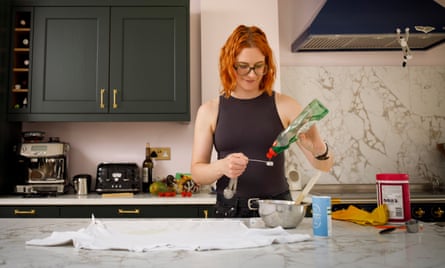
I liberally pour on a specialist rust stain remover. Seeing no change, I add more and rub it with my trusty toothbrush. I check again and double-take. The stain is gone. I put the shirt in the wash, adding water softener. The shirt comes out pristine, but I celebrate too early. When it dries, the stain reappears.
I seek advice from Thompson, who says I’m on the right track. I de-oxidised the metal ions, he explains, but they’re still there – and they’ve oxidised again. “What I end up doing is pretreating, waiting, washing, rust-removing and then washing again,” he says. I may be stuck in this cycle for a while.
Crunchy towels
Not all laundry issues are visible. I don’t have a tumble dryer and I struggle to keep my towels feeling soft. Fabric softener is a no-no: it can leave a coating on towels that reduces their absorbency.
Upon researching, I find that stiff towels may be a result of detergent overdosing (using too much detergent for the size of the load and washing conditions). Hard water can also play a role. I test mine and it measures at the very hardest end of the test strip. I put some clean towels back in the wash, but without any washing powder. Instead, I add water softener and a healthy tablespoon of citric acid crystals, dissolved with a little hot water, in the fabric softener compartment.


“I am a huge proponent of using citric acid in the rinse,” Thompson says. He explains that it binds to calcium in hard water, which can improve texture and neutralise the alkaline pH of detergents.
In the wash, my towels release a large amount of suds, indicating a buildup of soap residue. When they come out, I employ another trick and shake them sharply, supposedly loosening and lifting the fibres. Once dry, they’re not exactly fluffy, but they do seem improved. Where previously the fibres clumped together, now each loop stands proud.
Odour rebloom
Just as important as texture is smell. A common complaint comes from gym clothes and their persistent whiff of sweat – “permastank”, as some delightfully call it. It’s caused by a buildup of oils and bacteria; heat can reactivate the scent.
Steve Brown, who works in product design in Sydney, Australia, noticed this problem with his Brazilian jiujitsu kit: “I just couldn’t get the smell out of my rash guards; I had to throw a couple of them out.” So, he created a laundry booster called Gear Guard. Its key ingredient is deoxyribonuclease, or DNAse, an enzyme that is not often found in laundry detergents. Brown explains that it targets extracellular DNA, a microscopic substance that doesn’t smell itself, but can bind other soils to fabric.
I add a capful of Gear Guard into a wash with one of my regular laundry pods. Once it’s dry, I sniff the armpits of a previously permastanky gym top and don’t recoil. I drape it on a radiator to see if heat unleashes any nasties, but there’s just a whiff of washing detergent.
Stinky washing machine
Manufacturers recommend that you run a cleaning cycle every month and clean the parts of your machine every few months. I had never thought to do this until recently, when a load of washing came out smelly and I traced the stink back to the machine. Thankfully, no photographer was there to witness the incredible buildup of filth when I pulled back the rubber door seal. I wiped it and ran an empty cycle on the hottest temperature, after which the drum smelled reassuringly of nothing.
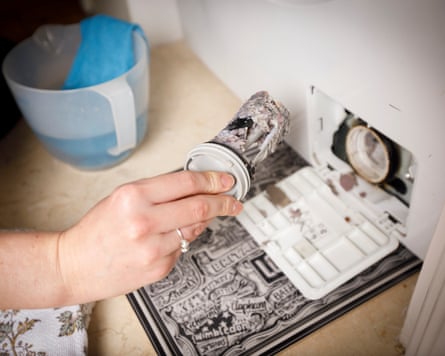
Now, I decide to tackle the drain pump filter, which catches lint and foreign objects. Following my machine’s manual, I uncap the small emergency drain hose and let it empty water into a tray. Next, I unscrew the filter to wash it. It’s completely clogged with … stuff. Lint, plastic and paper, plus a whole lot of unidentifiable goo.
Polyquat stains
Hang around r/laundry and you’ll inevitably see someone despair over a mystery mark that wasn’t there before – one that seems to have appeared in the wash. Polyquat stains are caused by polyquaterniums, found in hair products, contact lens solution and children’s bubble mix, among other things. In the wash, these polymers attract and bind dirt and dyes to fabric. Removing them is incredibly tricky; you’ve basically turned your item of clothing into a colour-catcher sheet, Mahon explains.
It seems perverse to make a polyquat stain on purpose, but in the name of science I smear bubble mix on to an old white T-shirt, then wash it with a load of darks. It leaves an ugly grey blob. I treat the stain using a colour-remover product, also called a reductive bleach. In the manufacturer’s video, pink-stained fabric turns white in seconds. I dip my shirt into the solution, expecting it to transform in front of my eyes. Nothing happens. I leave it submerged for a while then wash it with a colour-catcher sheet. The blob remains.
I learn too late that colour removers don’t work on indigo dyes. Was there a pair of jeans in this particular wash, which could have transferred a little of their colour to the absorbent stain? The T-shirt is likely a lost cause.
Persistent issues
I’ve been working up to KismaiAesthetics’ famous spa day, an intense, enzyme-powered reset designed for clothes with persistent staining or odours (it won’t work for dye transfer or sunscreen). It reflects Thompson’s deep respect for the labour and resources that go into making clothes. “It’s incumbent on all of us to keep textiles in the productive-use space as long as possible,” he says. “Spa day is the last-ditch effort to do so when previous care has failed.”
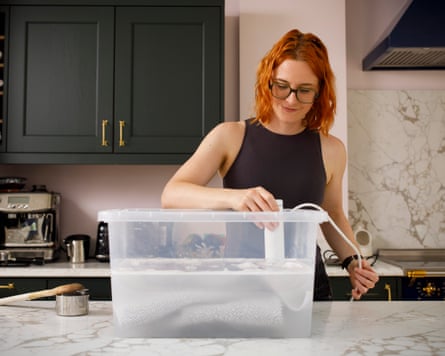
My candidates are a bath mat that was once white and a bunch of athletic socks with permanently brown soles. Following detailed instructions, I fill a plastic tub with water and a carefully measured scoop of bio powder. The key is heat and time. Some people use an insulated cool box to keep the water warm. I go further: I dig out a sous-vide wand and set it to keep my tub of laundry at 50C for eight hours.
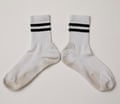
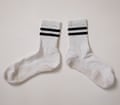
Redditors love to share pictures of the gross “soup” they’re left with. Mine is a cloudy greige consomme. I try hard not to think about feet as I drain the liquid.
I dump the items into the washer and add household ammonia, which Thompson says helps with degreasing. The smell is off-puttingly strong. (A warning: ammonia must never be mixed with chlorine bleach, as the resulting gas can be extremely harmful.) When the wash is done, I’m fairly certain the bath mat is whiter, although there may be a placebo effect. The socks, however, are clearly improved.
Buoyed by my successes, I commit to making some lasting tweaks to my washing routine. I sheepishly tell Thompson that I used to just throw everything into the machine and hit the “mixed load” setting. “And let’s be clear, that makes you socially acceptable, right?” he reassures me, ever the gentleman. It’s “good enough”. There’s a balance to be struck: overwashing can damage fabrics, and there are environmental considerations, too. Shorter cycles and lower temperatures are more eco-friendly.
It’s possible to overthink things, says Mahon: “To be honest with you, most people’s clothes aren’t actually that dirty.” My one-year-old, happily smearing a chunk of avocado into her onesie, begs to differ.
KioskNews shows a cleaned-up reading view extracted from the publisher’s page — the original always lives on their site, not ours.