Hong Kong extends smart fire alarm scheme to another 6,000 old buildings

Hong Kong’s Fire Services Department has extended a scheme allowing property owners to install smart fire alarm systems rather than traditional safety equipment to another 6,000 old buildings, but conceded that no installations had been completed although the policy was rolled out over five months ago for 3,600 blocks.
Lai Kin-mo, acting deputy chief fire officer for building improvement, said on Wednesday that while 300 buildings had expressed interest in installing the system, which can send alerts within 10 seconds of detecting smoke, owners were still trying to reach a consensus on related issues.
“Different service providers will provide different installation plans that involve work fees. I think it’s mostly prices that they are negotiating as the technology is already there and space is not a concern,” Lai said.
The department previously authorised 3,600 old buildings of six storeys or under that were built or submitted building plans before March 1987 to install the system from April 30 this year.
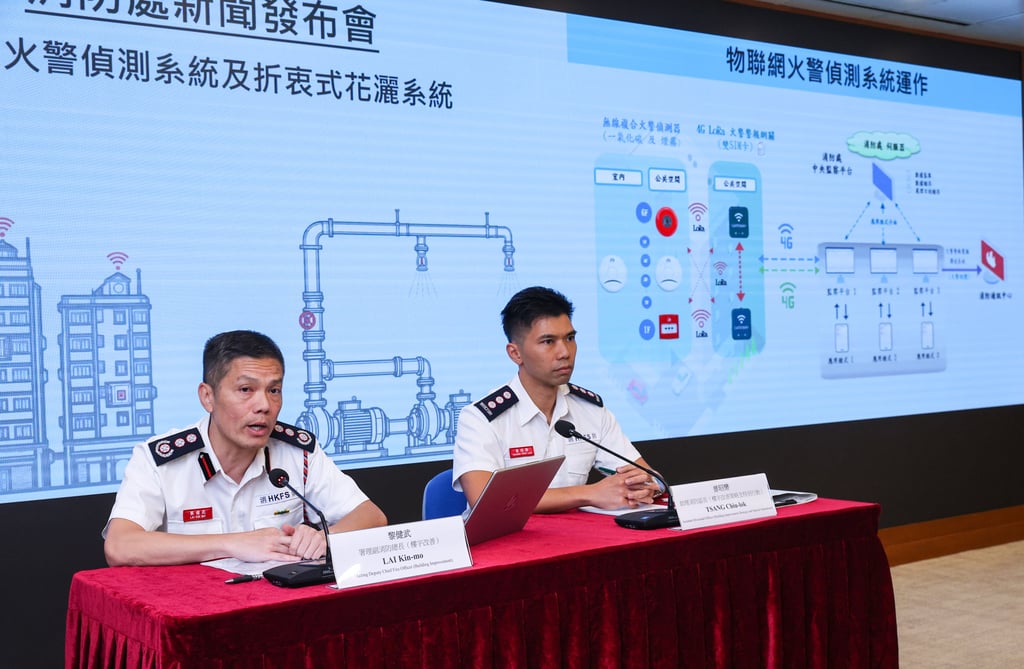
To expand the scheme, 6,000 composite and residential buildings of seven floors and above built or with building plans submitted before March 1987 would be authorised to install an alarm system starting this month to satisfy fire safety requirements, Lai said.
The system uses Internet of Things (IoT) technology to connect smoke and carbon monoxide detectors installed inside a building to a central monitoring system operated by a service provider, which then alerts authorities to fires.
Lai said the detectors’ signal could be transmitted to the service provider within 10 seconds.
“With this new fire alarm system installed, when a fire breaks out, the system will be able to automatically detect the hazard and alert authorities for us to respond within a shorter time,” Lai said.
For newly eligible buildings of seven to 12 storeys, installing the system means these buildings would no longer have to rely on hosepipe reels or manual fire alarms that are triggered by a person breaking a glass panel or pulling a handle to activate a detector.
However, these buildings would need to place two 5kg powder extinguishers on each floor and ensure a dry riser was functional inside the building.
Eligible buildings of 13 storeys or above would need to install IoT detectors on existing fire safety pumps and water tanks, in addition to removing any existing manual fire safety systems.
Lai estimated that installing the smart system would take two to four weeks, compared with one to two years for hosepipe reel and manual systems. The cost would be between HK$500,000 and HK$2 million, as opposed to a range from HK$1.3 to HK$2.6 million for conventional works.
In addition to expanding the eligibility for the smart system, the department will also authorise up to 900 eligible old commercial and industrial buildings to install an improvised sprinkler system with a direct pumping design instead of a water tank.
Lai said the department had noticed limited space in these buildings for a tank, structural concerns over the additional weight and difficulties in gathering owners to agree to start works.
This improvised system would take three to five years to install, less than the six to eight years required for traditional sprinkler systems with a tank.
With sprinklers connected directly to the public water supply, the Water Supplies Department would notify the fire service when locations with buildings using the system faced water shortages for emergency planning, Lai said.
“We will ramp up our deployment of vehicles and manpower to deploy more resources should a fire break out in that area,” he said.
KioskNews shows a cleaned-up reading view extracted from the publisher’s page — the original always lives on their site, not ours.