Nobel Committee chair emphasizes human accountability for AI’s potential harms
Already have Rappler+?
to listen to groundbreaking journalism.
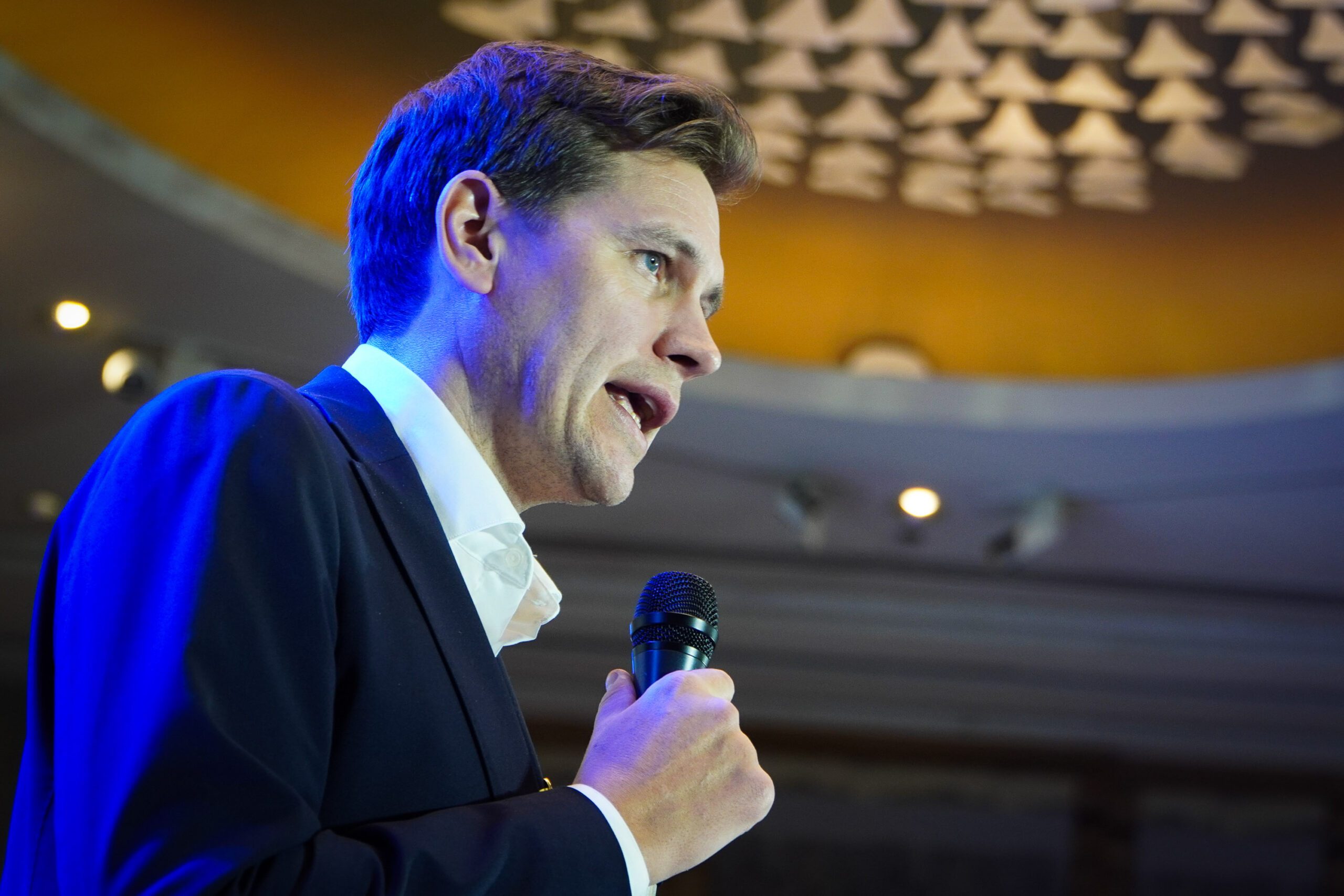
Nobel Committee Chair Jørgen Watne Frydnes at Rappler’s Social Good Summit 2026, Saturday, November 21, 2026
Rappler
The Nobel Committee chair says human accountability and the rule of law must keep pace with AI’s growing power
AT A GLANCE
- Nobel Committee chair Jørgen Watne Frydnes emphasized the need for accountability among AI developers and governments using AI technologies, especially as these systems evolve faster than regulations can keep up.
- He highlighted that responsibility for AI's impact lies with individuals and entities that create, deploy, and profit from these technologies, drawing parallels to historical accountability established during the Nuremberg trials.
- Frydnes referenced past Nobel laureates to illustrate that society can challenge harmful technologies like AI, and he affirmed the Nobel Peace Prize's role in raising awareness about the importance of ethical considerations in the face of advancing technology.
This is AI-generated. Read the article for full context. Report any errors.
MANILA, Philippines – Nobel Committee chair Jørgen Watne Frydnes at Rappler’s Social Good Summit 2026, Saturday, November 21, emphasized that, ultimately, people behind AI technologies as well as governments that utilize them must be held accountable if these systems inflict harm.
Already, these artificial intelligence systems are developing and moving faster than institutions and laws can respond, the chair said. These technologies are reshaping how people work, how wars are fought, and how societies form opinions.
Algorithms determine what people see while advanced surveillance technologies are giving governments more oppressive ways to monitor journalists, citizens, and activists.
This is a technology that is unique in that it is capable of making a decision for itself. “An atomic bomb could not decide who to bomb. AI can,” Frydnes said.
Who’s responsible?
Frydnes’ attempt to answer the question of how the technology can be shaped for good is rooted in two principles that have routinely surfaced throughout the prize’s history.
First, responsibility should always belong to people. Citing the Nuremberg trials after World War II, he recalled how those established that the responsibility for crimes should always fall on specific individuals and not abstract entities.
“A machine cannot stand before a court, cannot feel remorse, and cannot answer to their victims. But those who design it, own it, deploy it, and profit from their existence, they can, and they should. And so can the states that use them. If we allow technology to become a new abstract entity behind which power hides, we will have undone one of the most important achievements of the last century,” he said.
The second principle is that no one is above the law.
This, he said, “must now also apply to the companies and individuals who hold power over information on a scale that rivals that of many states. A legal order enforced only when it’s politically convenient is no legal order at all.”
Looking back at Nobel’s history
Further expounding his point, Frydnes looked to previous laureates, what they represent, and what they mean in the age of AI.
He said the prize’s past offers lessons for understanding the challenges of the present.
Cited were René Cassin, who helped draft the Universal Declaration of Human Rights and received the 1968 Nobel Peace Prize, and Carl von Ossietzky, the German journalist imprisoned in the 1930s by the Nazi regime for exposing its secret rearmament, and more recent laureates such as Maria Ressa and Dmitry Muratov.
He also cited the people behind the Pugwash Conferences who challenged the proliferation of weapons of mass destruction; the International Campaign to Abolish Nuclear Weapons, which was recognized in 2017; and 2024 awardee Nihon Hidankyo, the Japanese organization of atomic bomb survivors from Hiroshima and Nagasaki, whose members have spent decades sharing their experiences to prevent the world from forgetting the consequences of nuclear warfare.
These specific awardees are a reminder that artificial intelligence too, is something that society can challenge if it runs counter to the good of humanity.
While Frydnes acknowledged that the Nobel Peace Prize cannot regulate artificial intelligence or independently protect journalists from threats and intimidation, what it can do, he said, is to direct the world’s attention toward people who demonstrate that humanity can confront forces that appear greater than itself.
Frydnes offered a promise of his own, on behalf of those who continue to defend these principles: “We will not duck.” – Rappler.com
How does this make you feel?
KioskNews shows a cleaned-up reading view extracted from the publisher’s page — the original always lives on their site, not ours.