Kevin Vuong: How Canada stacks up against its peers
A company that grows by 15 per cent in a year when its competitors grew by 25 per cent has not had a good year, despite how its press release may try to spin it. This is why benchmarking is a commonly used business tool. You pick a comparable set of peers, select the indicators that you’re going to measure and honestly compare yourself. After all, it’s hard to improve if you don’t know where or what your deficiencies are, and harder still when you don’t even know that you need to do better.
Sign In or Create an Account
Unfortunately, public debate in Canada rarely works this way. Spending is measured against last year’s spending, announcements are built on previous announcements and progress is evaluated against intentions rather than outcomes. The result is that almost everything is presented as a success and Canadians have no reference point to objectively judge if what we’re being told is accurate.

Columnist Jesse Kline keeps you up to date with what’s happening in Israel and the effects of antisemitism on life here in Canada. Friday mornings.
By signing up you consent to receive the above newsletter from Postmedia Network Inc.
A welcome email is on its way. If you don't see it, please check your junk folder.
The next issue of Channel Israel will soon be in your inbox.
We encountered an issue signing you up. Please try again
I saw this play out in two major ways during my time in Parliament. The first was on House standing committees, where assignments did not necessarily track with a member’s expertise. Sometimes, people with limited to no background were assigned and expected to hold a department to account or deliberate on relevant legislation within days.
So what typically happened is people would go to the government’s own press release, the department’s own framing of its record and their caucus research bureau. This isn’t to say these sources are bad, but that each of them has an incentive to present the information in a way that reflects positively on themselves.
Members also had access to the Library of Parliament, a tremendous resource with skilled researchers, but they answer the questions they are asked. This requires a member to know enough about the subject to ask the right questions.
The second way this played out was through knowing where to find the information and data. No institution has a monopoly on good data and the progress made in government open data initiatives has been positive. But useful information also sits with think-tanks, academics, banks, private funds, statistical agencies, regulators and more. Yet if you don’t know who has it and where to find it, its existence doesn’t help.
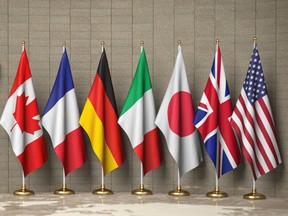
Take a claim that most Canadians have heard: Budget 2025 states that Canada has the lowest net debt-to-GDP ratio in the G7, citing the International Monetary Fund’s figure of 13.3 per cent. This number is calculated by subtracting the government’s financial assets from its gross debt. When you include the Canada Pension Plan’s net assets with its Quebec equivalent, you total more than a quarter of the gap between Canada’s gross and net debt.
And Canada’s ranking changes considerably depending on the measurement used. We’re either best in the G7 or middle of the G7 pack, with a net debt of 13.3 per cent and a gross debt of 110.73 per cent. That’s a significant spread.
At the Macdonald-Laurier Institute, we built a new website called Benchmark Canada to be the resource that aggregates scattered data into one place. It is transparently sourced and comparable, with context and reference points to see how our country is doing relative to our peers using standardized, widely accepted methods for comparison.
The site organizes more than 40 metrics under five pillars. Four measure capacity and whether we can finance, build, govern and secure the nation. The fifth is the test that the other four are put to: is all that capacity elevating the lives of the people that the country exists to serve?
Every metric has its own page, with charts that visualize the data and outline the underlying figures, the full source citations and any caveats that may apply. Each page carries one of three verdicts — “Strong,” “Watch” or “Weak” — that describe where Canada sits within the metric’s peer set, usually the G7 or a wider group of comparable economies. Where an apples-to-apples comparisons are not possible, we use Canada’s own published service standards.
I want to be clear about what Benchmark Canada is not. It is not a partisan endeavour: at its core, this project is about elevating public discourse by cutting through partisan rhetoric to surface objective facts about the state of the nation, and this is reflected in its findings. Some metrics reflect positively on the country, while others highlight where we could do better.
It is also not a policy platform: establishing that Canada is last (or first) in the G7 on a measure is not the same as knowing what to do about it and, frankly, doing so would unnecessarily invite accusations that the project is advancing a special interest or policy agenda.
Lastly, it is not a claim that everything is broken: Canada benchmarks well on a number of measures, and those pages say so as clearly as the weak ones do. A project that only ever concludes that everything is failing would not be an honest benchmarking exercise.
At MLI, we are thrilled to be working with the National Post to launch Benchmark Canada and, over the next 10 weeks, we’ll do a deep dive into a set of metrics each week. Defence is where we are starting, and it is a good demonstration of the project’s various aspects at work.
For the first time since the 2014 pledge at the NATO summit, Canada is meeting its commitment to spend two per cent of GDP on defence. NATO’s latest figures put Canada’s core defence spending at 2.03 per cent of GDP in 2025 and an estimated 2.13 per cent this year. Equipment spending, which is also measured by NATO, tells a similar story: 21.97 per cent of the defence budget in 2025, projected to rise to 25 per cent in 2026 crosses NATO’s modernization guideline for the first time.
These are real improvements and the government of Prime Minister Mark Carney should be applauded for fulfilling a commitment and meeting the guideline that previous governments were unable, or unwilling, to do.
To put these in context, spending at 2.13 per cent ranks Canada 20th of 31 allies, and 25.52 per cent lower than the alliance average of 2.86 per cent. The equipment share ranks 28th of 31, ahead of only Italy, Croatia and Norway, and less than half of Poland’s 55.9 per cent. If we also look at personnel, Canada fields 1.71 military personnel per 1,000 people, ranking us as 30th of 31 allies and last in the G7.
It’s true that Canada is doing better than it was. But it’s equally true that, relative to our allies, we still have a long way to go. Our benchmark rates the spending metric “Watch” and the other two as “Weak.”
For those interested in policy implications, we are engaging experts each week to unpack the data. But that comes second. First, you have to establish, metric by metric, where Canada actually stands.
It’s hard to improve when you don’t know what your deficiencies are. It is even harder when nobody has told you that you have any. Benchmark Canada was created so that Canadians can judge our country the way that any serious organization judges itself — against its peers, on the evidence and starting from the number, rather than the press release.
National Post
Kevin Vuong is the former member of Parliament for Spadina—Fort York. He is a senior fellow at the Macdonald-Laurier Institute, an entrepreneur, investor and military reserve officer.
Join the Conversation
This website uses cookies to personalize your content (including ads), and allows us to analyze our traffic. Read more about cookies here. By continuing to use our site, you agree to our Terms of Use and Privacy Policy.
KioskNews shows a cleaned-up reading view extracted from the publisher’s page — the original always lives on their site, not ours.