Education Bureau defends plan to teach primary pupils Mandarin Pinyin typing

Hong Kong’s Education Bureau has defended a proposal to have primary school pupils learn to type in Chinese using a romanisation system for Mandarin, the language mainly used in mainland China, saying students would not have to learn a new typing method from scratch.

The bureau proposed in its Information and Innovation Technology Curriculum Framework for Primary Schools that pupils should have a preliminary ability to input Chinese characters in Hanyu Pinyin, a phonetic romanisation for Mandarin, when they are in Primary 2.
Cantonese is the primary spoken language of Hong Kong, with over 88 per cent of the city’s residents using it as their usual spoken language, and close to 94 per cent being able to speak it, according to the 2021 Hong Kong Census.
In a Monday blog post, the bureau defended its decision, saying that Pinyin was already taught in Mandarin lessons and students would already have the basic phonetic knowledge needed to use the input method.
Students spared ‘entirely new’ typing method
“Because the primary school Putonghua curriculum already teaches Hanyu Pinyin, students from all backgrounds possess the basic phonetic knowledge needed to recognise English letters on the keyboard,” it said.
It added that, by contrast, students would not have to learn an entirely new typing method based on the breakdown or “character decomposition logic” of Chinese characters, such as Cangjie, “thereby reducing the burden and stress of learning.”
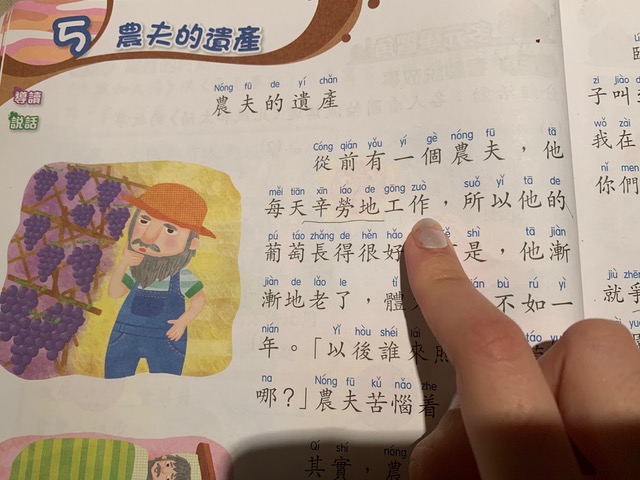
The proposal, made late last month, drew lively debate, with some bemoaning what they understood to be cultural erasure and expressing pride in being able to type in component-based input methods such as Cangjie.
Cangjie is typically used to input traditional Chinese — the script primarily used in Hong Kong, which contains more strokes than the simplified characters used in mainland China.
See also: Prestigious Hong Kong school withdraws unapproved Cantonese ban following controversy
The bureau dismissed Cantonese romanisation input methods, such as Jyutping, saying their “lack of consistency across phonetic systems makes them harder for teachers and students to master.”
Since the 1997 handover from British rule, Hong Kong’s language education policy has been run on the principle of promoting “biliteracy and trilingualism,” referring to reading and writing in written Chinese and English while speaking Cantonese, English, and Putonghua.
“We reiterate that Hong Kong’s ‘biliteracy and trilingualism’ policy remains unchanged. Equipping students with the ability to type on computers (both in English and Chinese) during primary school benefits their future academic and career development,” the bureau’s post read.
The bureau also said that students could learn other input methods later, based on their personal needs, adding that its proposal “allows students to grasp foundational typing and human-machine collaboration skills early, adapting well to the school’s digital learning environment.”
Safeguard press freedom; keep HKFP free for all readers by supporting our team
Support HKFP | Policies & Ethics | Error/typo? | Contact | Newsletter | Transparency & Annual Report | Apps
Make a one-off donation.


James Lee is a reporter at Hong Kong Free Press with an interest in culture and social issues. He graduated with a bachelor’s degree in English and a minor in Journalism from the Chinese University of Hong Kong, where he witnessed the institution’s transformation over the course of the 2019 extradition bill protests and after the passing of the Beijing-imposed security law.
Since joining HKFP in 2023, he has covered local politics, the city’s housing crisis, as well as landmark court cases including the 47 democrats national security trial. He was previously a reporter at The Standard where he interviewed pro-establishment heavyweights and extensively covered the Covid-19 pandemic and Hong Kong’s political overhauls under the national security law.
KioskNews shows a cleaned-up reading view extracted from the publisher’s page — the original always lives on their site, not ours.