Data centre push brings promise and peril
Thailand's push to become a regional data centre hub is attracting investment, but growing concerns over electricity demand, environmental impacts and public participation are raising questions about how the industry should be regulated.
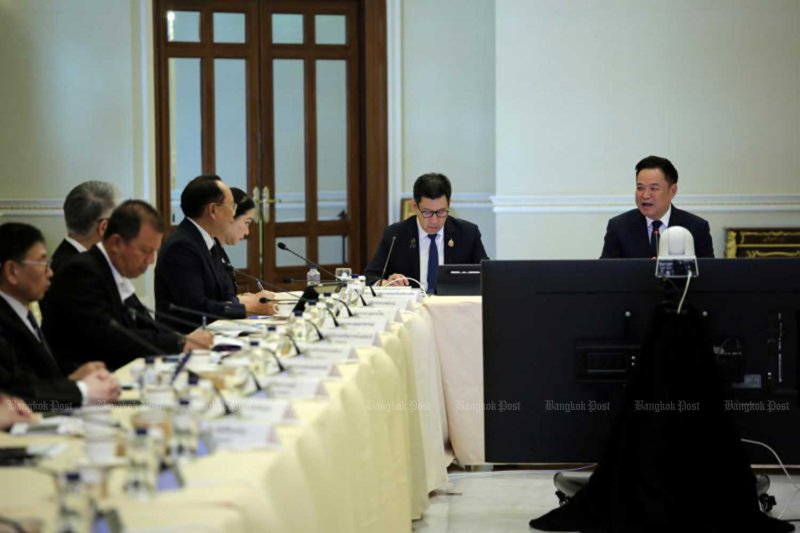
The government has been pursuing data centre development for several years, with momentum accelerating over the past two years. In September it established the 21-member Data Centre Business Policy Committee, tasked with proposing policies and standards for regulatory agencies, monitoring the industry's impact, reporting to the cabinet and overseeing implementation.
The debate over the industry's benefits and costs featured prominently at Singapore International Energy Week (SIEW) 2026 in October, where policymakers, energy experts and businesses examined the growing electricity demands of data centres and the opportunities they could create for the energy sector.
At the opening ceremony on Oct 26, Singapore's Minister for Energy, Trade and Industry Tan See Leng highlighted the growing energy requirements associated with data centres and artificial intelligence (AI).
"But at the same time, there is also a clear need to look at what we can do collectively to decarbonise and do our part in enhancing environmental sustainability. Also, how should we do so in a way that improves energy sustainability, reduces our carbon footprint, and is also efficient, effective and affordable," Mr Tan said.
Reliable power
For energy companies, however, the expansion of data centres represents a significant investment opportunity, particularly as demand for reliable electricity is expected to rise across Southeast Asia.
JERA Co Ltd, a Japanese energy company with investments in energy businesses across the region, including a stake of about 12.3% in Thailand's Electricity Generating Plc (EGCO), expects electricity demand to increase substantially over the next 15 years.
Christopher Starling, chief strategy officer of JERA Asia Pte Ltd, said during a press visit to the company's Singapore office that Thailand's energy demand was projected to grow by at least 3-4% annually, with data centres and digital infrastructure among the main contributors alongside AI-related services.
Speaking separately to the Bangkok Post, Mr Starling said JERA Asia saw considerable potential in Thailand's emerging data centre market, following rapid industry growth in Singapore and Malaysia. He pointed to the draft Power Development Plan (PDP) 2026 of Thailand, which projects electricity demand of 8.8 gigawatts from data centres.
"We talk a lot about speed to power as being important in terms of being able to move quickly to support Thailand in meeting its data centre needs, while ensuring that the power supply is reliable because data centres operate 24/7. So, the short answer is yes: we see it as a market with a lot of potential," he said.
For energy providers, the challenge is not simply generating more electricity but ensuring a stable supply around the clock. Data centres require uninterrupted power, making reliable infrastructure and access to additional energy sources essential to attracting investment.
Local impact
However, Thailand's data centre expansion has raised concerns about regulation and its impact on local communities. In September an oil leak incident in the Rama IX area brought attention to an unauthorised data centre operating within a residential community, prompting the Bangkok Metropolitan Administration to investigate 47 data centres across the capital.
The House Committee on Communications, Telecommunications and Digital Economy and Society has also begun reviewing the regulatory framework for data centres in Bangkok.
Concerns over public participation were also raised at SIEW 2026. Allyson Anderson Book, chief sustainability, government affairs and public policy officer at Baker Hughes, said community engagement was essential, particularly when introducing projects that could affect people's surroundings. Drawing on her own experience of a data centre being installed in her neighbourhood, she said residents had not been adequately informed about the development.
"There is another place where other countries, states, governments can learn from; if you're putting in new projects, especially when they're the first or the second or third of their kind, you do have to -- I don't care if it's democratic or not -- you've got to think about how the public's going to react," Ms Book said.
Her remarks highlighted a wider concern that investment decisions made without adequate consultation could generate public opposition, even when projects promise economic benefits.
Growth or sustainability
For JERA Asia, addressing these concerns requires clearer regulations and closer coordination between government agencies. Izumi Kai, chief executive officer of JERA Asia, suggested specific rules be introduced to manage energy-related concerns arising from data centre development.
Mr Starling said Thailand needed a more coordinated approach to policymaking, given the industry's implications for electricity supply, infrastructure and the environment.
"The broader message is that this needs to be carefully planned and involve all stakeholders, whether it is the Ministry of Energy, Energy Policy and Planning Office (EPPO), Board of Investment (BOI) and the Ministry of Natural Resources and Environment," he said.
Alternative energy sources would be necessary to meet additional electricity demand while reducing the environmental burden. Low-carbon options could provide greater flexibility in responding to potential supply shortages during periods of international tension.
Mr Starling said neither the government nor the private sector could rely on a single energy solution to meet the country's growing needs.
KioskNews shows a cleaned-up reading view extracted from the publisher’s page — the original always lives on their site, not ours.