Top 20 UPSC Current Affairs Pointers of the past week | September 14 to 20, 2026
Every Monday, we bring you UPSC Current Affairs Pointers—a concise, exam-focused guide to help you stay ahead in your Prelims and Mains preparation.
(FYI: The data provided in these reports can be used to substantiate your Mains answer and create a broad understanding of the topic.)
— On September 16, NITI Aayog released the India Electric Mobility Index (IEMI) 2025, which assesses the development of the e-mobility ecosystem and the adoption of electric vehicles (EVs) on Indian roads.
— IEMI is a composite Index, which assesses the policy framework and implementation outcomes for e-mobility at the state-level. It is a first-of-its kind index that offers a dynamic comparative analysis of the progress of road transport electrification across Indian states and union territories.
— NITI Aayog developed the index in collaboration with WRI India. The index tracks 16 unique performance indicators under three thematic categories– Transport Electrification Progress (weightage of 50%) , Charging Infrastructure Readiness (30% weightage), and EV Research & Innovation Status (20% weightage)– that form the building blocks of the Indian e-mobility ecosystem.
— According to the Electric Mobility Index 2025, the composite scores on performance across all 36 States and Union Territories (UTs) ranges from 10 to 84, and a median score of 40.
Story continues below this ad
— Delhi has topped Electric Mobility Index with the score of 84. It is followed by Maharashtra (score 78) and Karnataka (score 73), the only two of the 17 large states to feature among the top performers in EV implementation, according to the report.
NITI Aayog's Electric Mobility Index 2025
OVERALL RANKING
Delhi leads with a composite score of 84
Scores across all 36 states and UTs range from 10 to 84, with a median of 40 — Delhi held on to the top spot it also held in 2024.
84
Delhi — Rank 1
78
Maharashtra — Rank 2
73
Karnataka — Rank 3
METHODOLOGY
Three themes make up the composite score
Developed by NITI Aayog with WRI India, the index tracks 16 indicators grouped under three weighted categories.
★
Transport Electrification Progress — 50%
Market absorption, consumer acceptance and demand-side momentum for EV adoption.
⏱
Charging Infrastructure Readiness — 30%
Charger-to-vehicle ratio, subsidies, building bye-laws and power availability.
◆
EV Research & Innovation Status — 20%
EV startups, R&D initiatives and patents filed.
THEME-WISE LEADERS
Different states lead different categories
Delhi's overall win is built on strength across two of the three pillars — but Karnataka leads on infrastructure.
★
Transport Electrification
Only Delhi, Chandigarh and Maharashtra qualified as top performers in this highest-weighted theme.
⏱
Charging Infrastructure
Karnataka led nationwide with a score of 97, followed by Goa (92) and Maharashtra (91).
◆
EV Research & Innovation
Delhi topped this category too, scoring 94 on startups, R&D and patents.
MID-TABLE PERFORMERS
8 large states cleared the "frontrunner" band (50–64)
Tamil Nadu, Madhya Pradesh, Odisha, Andhra Pradesh, Telangana, Haryana, Rajasthan and Uttar Pradesh all posted composite scores between 50 and 64, placing them just behind the national leaders.
YEAR-ON-YEAR CHANGE
Some states leapt up the table in 2025
Compared with the 2024 index, a few states saw sharp gains while the top two positions stayed unchanged.
→
Madhya Pradesh
Jumped from 23rd to 7th rank — the sharpest climb in this year's index.
→
Goa
Climbed 10 spots to secure 5th position nationally.
→
Karnataka
Overtook Chandigarh to move into 3rd place overall.
WHAT'S HOLDING BACK PROGRESS
Three barriers stand out
The report identifies limited charging infrastructure, dispersed settlements and a nascent innovation ecosystem as the key obstacles to faster e-mobility adoption across states.
— The report also shows that Delhi, Chandigarh, and Maharashtra were the only UTs and states to qualify as top performers in transport electrification progress. Delhi also achieved the top score of 94 in the EV Research and Innovation Status (20% weightage) category.
— In the Charging Infrastructure Readiness (30% weightage), Karnataka recorded the highest score nationwide at 97, closely followed by Goa (92) and Maharashtra (91).
• Global Gender Gap Index 2026
— Recently, the World Economic Forum (WEF) released its 2026 Global Gender Gap Report, the 20th edition, which covers 145 economies and analyses a longitudinal constant sample of 97 economies included in every edition since 2006.
Story continues below this ad
— It is an annual report which measures gender parity across four key dimensions: Economic Participation and Opportunity, Educational Attainment, Health and Survival, and Political Empowerment.
— According to the index, globally, 69.2% of the gender gap has been closed, reflecting a slight 0.4% improvement from last year.
— Iceland maintained its top rank globally for the 17th consecutive year, closing 93% of its gender gap. It is followed by Finland and Norway. Chad ranked lowest (145th), joined by Pakistan and Iran in the bottom three.
— India has retained its 131st rank out of 145 countries this year with 64.5% gender parity. This marks a 4.3% point improvement since the inaugural 2006 edition, the country still lags behind the global average of 69.2%.
Story continues below this ad
Events
• Fifth edition of Semicon India 2026
— The fifth edition of Semicon India 2026, India’s flagship semiconductor conference, held from September 17 to 19 on the theme ‘Silicon to Systems: Building the Ecosystem’ in New Delhi.
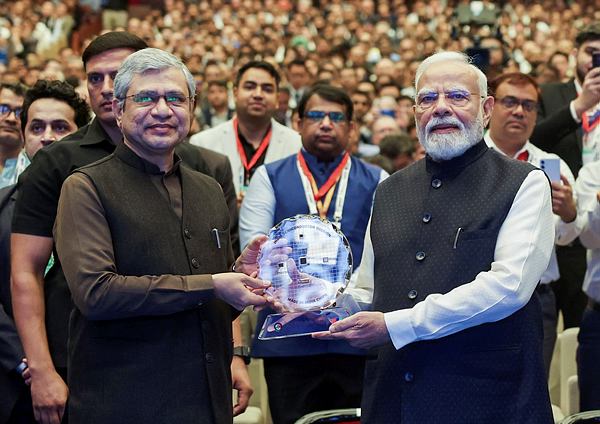 Prime Minister Narendra Modi and Union Electronics and IT Minister Ashwini Vaishnaw pose for a photo with a memento of ‘Made in India’ semiconductor chips at the inauguration of SEMICON India 2026, in New Delhi on September 17. (DPR PMO/ANI Photo)
— It brought together global and Indian companies, policymakers, investors, researchers, start-ups, and academic institutions from across the semiconductor and electronics value chain.
SEMICON India 2026: Six Pillars, Five Fabs, One Ecosystem
POLICY
A ₹1,27,500 crore roadmap
PM Narendra Modi outlined the transition from Semicon 1.0 to Semicon 2.0, an expanded programme structured around six pillars: design, machines and materials, new fabs, advanced packaging, research and talent development.
₹1,27,500cr
Outlay for Semicon 2.0
6
Pillars of the programme
12
Projects approved under Semicon 1.0
5
Now in commercial production
SEMICON 1.0
12 semiconductor projects approved for design, fabrication and packaging under India's first mission phase.
SEP 19, 2026
PM Modi virtually inaugurates commercial production at CDIL Semiconductor (Mohali) and Suchi Semicon (Surat), taking operational units to 5 of the 12 approved projects.
GENERAL CONTEXT
One ecosystem, not just fabs
The event's theme, "Silicon to Systems: Building the Ecosystem," framed the mission as linking design and IP with materials, equipment, fabrication, packaging and electronics systems — not fab capacity alone.
★
Design & IP
Semiconductor design and intellectual property as the starting point of the value chain.
⚙
Materials & equipment
Precision manufacturing inputs — gases, chemicals, equipment — needed to build and run fabs.
◆
Packaging & R&D
Advanced packaging and applied research linking chips to finished electronic systems.
600+
Exhibitors across three days
300
International participating companies
52
Countries represented
56
MoUs and strategic announcements
—Notably, the conference took place two months after the Centre announced the second iteration of its Semiconductor Mission (Semicon 2.0) , with an outlay of Rs 1.27 lakh crore, and a particular focus on incentivising domestic chip design, and localising the broader supply chain of ancillary industries, such as equipment manufacturers, and producers of specialty gases and chemicals.
• Hindi Diwas
— September 14 is observed as Hindi Diwas, or Hindi Day. It commemorates the Constituent Assembly of India making Hindi the official language of the Union government.
Story continues below this ad
— Notably, after years of debate, the Assembly on September 14, 1949, adopted the language compromise commonly known as the Munshi–Ayyangar formula. Rather than declaring a ‘national language’, it designated Hindi as the ‘official language of the Union’, while English would continue to be used ‘for all official purposes’ for 15 years after the commencement of the Constitution.
— As part of the Munshi-Ayyangar formula, Article 343 of the Constitution as adopted in 1950 said:
(a) “The official language of the Union shall be Hindi in Devanagari script.”
(b) “The form of numerals to be used for the official purposes of the Union shall be the international form of Indian numerals.”
Story continues below this ad
(c) “…for a period of fifteen years from the commencement of this Constitution, the English language shall continue to be used for all the official purposes of the Union for which it was being used immediately before such commencement.”
— The Official Languages Act of 1963 later stated that English would continue to be upheld as an official language along with Hindi.
Art & Culture
• Hilsa fish
— In a role reversal of sorts, India is exporting Hilsa fish to Bangladesh, bucking the trend of the neighbour supplying the sought-after variety of fish that has the highest place of pride on Bengal’s dining tables.
— Around 500 tonnes of Hilsa, known as Ilish in Bengali, have been sent to Bangladesh in the past two months through the Petrapole land port on the international border in West Bengal.
Story continues below this ad
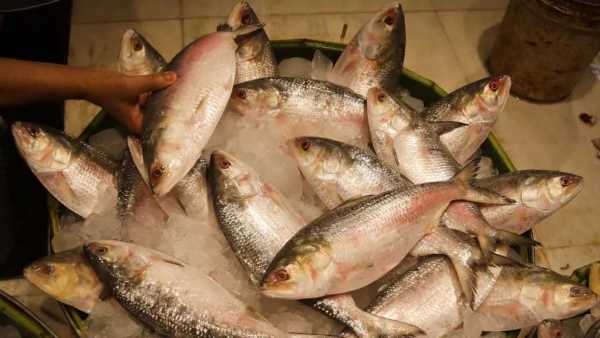 There are two varieties of hilsa in the Bay of Bengal – Tenualosa ilisha and Tenualosa toli ilish. (Express Photo by Partha Paul)
— Traditionally, Hilsa is brought in from Bangladesh when its government allows its import, generally during the Durga Puja festive season. Currently, Bangladesh has paused Hilsa exports to India.
— Hilsa is rich in nutrition and popular in West Bengal, where it is designated as the state fish. Mostly found in the Hooghly-Bhagirathi river system and in the Bay of Bengal, Hilsa is an anadromous fish — that is, it migrates from the ocean to rivers for spawning.
International Cooperation
• Lindsey O. Graham Sanctioning Russia and Iran Act of 2026
— US President Donald Trump on September 18 signed into law the Lindsey O. Graham Sanctioning Russia and Iran Act of 2026, giving himself the authority to impose tariffs of up to 100% on countries, including India and China, that continue buying Russian oil and gas.
— The law “authorizes and expands statutory sanctions, tariffs, and prohibitions on Russia and extends existing sanctions on Iran,” the White House said in a statement. The Act is named to honour a veteran Republican Senator and a Russia hawk who died in July.
Story continues below this ad
— The law’s double standards are evident. It aims to squeeze Russia’s energy revenues over the Ukraine war, yet it carves out US imports of low-enriched uranium (LEU) from Russia, a material crucial to America’s nuclear power industry.
— The development is significant for India as it depends on imports to meet over 88% of its crude oil needs, and Russia currently accounts for nearly half of these.
• Geneva Convention of 1949
— A UN fact-finding mission on Iran said on September 18 that there were reasonable grounds to believe the US government committed war crimes when it attacked a school and a sports centre at the beginning of its war.
— In its report, the UN mission said it examined whether actions during the war “violated IHL (International Humanitarian Law) pursuant to the 1949 Geneva Conventions and customary international law.”
— The Geneva Conventions are primarily applicable in cases involving international armed conflict. They also state that the Red Cross can offer its services during conflicts.
— The Geneva Convention of 1949 was signed in the aftermath of the Second World War (1939-45) and has been ratified by 196 countries. It includes four separate conventions, such as those on the Treatment of Prisoners of War, and the Protection of Civilian Persons in Time of War.
— Among its most significant sections is an article that defines the concept of “grave breaches”, which include actions such as “wilful killing, torture or inhuman treatment, including biological experiments… not justified by military necessity and carried out unlawfully and wantonly.”
— These are war crimes, as defined under the Rome Statute of the International Criminal Court (ICC) in 1998 as well. The court has jurisdiction in such cases.
Polity
• Kishau Multipurpose Project
— The chief ministers of six states on September 15 signed a memorandum of understanding (MoU) to pave the way for the long-pending 422 MW Kishau Multipurpose Project.
— Himachal Pradesh Chief Minister Sukhvinder Singh Sukhu signed the MoU for the Rs 15,000-crore project with Uttarakhand CM Pushkar Singh Dhami, Uttar Pradesh CM Yogi Adityanath, Haryana CM Nayab Singh Saini, Rajasthan CM Bhajan Lal Sharma, and Delhi CM Rekha Gupta. Union Home Minister Amit Shah and Union Jal Shakti Minister CR Patil were present.
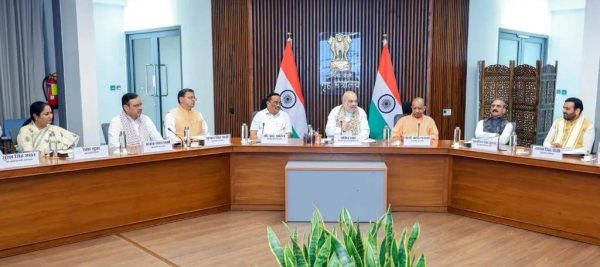 The chief ministers of six states signed an MoU for for the Kishau Multi-Purpose Project in the presence of Union Home Minister Amit Shah, Union Jal Shakti Minister CR Paatil, Minister of State for Jal Shakti Raj Bhushan Choudhary in New Delhi on September 15. (ANI Video Grab)
— The Kishau Multipurpose Project is a proposed dam and hydropower project on the Tons River, a major tributary of the Yamuna, along the border shared by Himachal Pradesh and Uttarakhand. The project envisages a 232.6-metre-high concrete gravity dam that will generate 1,476 million units of clean hydropower.
— The project site straddles Himachal Pradesh’s Sirmaur district and Uttarakhand’s Dehradun district. The project is intended to generate electricity, create irrigation potential of about 97,076 hectares, and provide drinking and industrial water to the beneficiary states, Haryana, Delhi, Rajasthan and Uttar Pradesh.
• New film certification guidelines
— The Ministry of Information and Broadcasting (I&B) has notified new film certification guidelines for the Central Board of Film Certification (CBFC) earlier this week. These revised guidelines retain all the aspects of its detailed 1991 version, save for the addition of two new points.
— One calls for a disclaimer or statutory warning in scenes depicting or involving the use, consumption or trafficking of narcotic drugs or other psychotropic substances. These scenes must now carry the warning ‘Illicit Narcotics Destroy Health and Guarantees Imprisonment, Say No to Drugs.’
— The other point pertains to the specification of new-age markers in line with the three new categories under the UA (Unrestricted Public Exhibition With Parental Guidance) certification, as notified in the Cinematograph Rules, 2024
— The latest guidelines state that if the Board thinks that it is necessary to caution the parents or the child’s guardian to consider as to whether their wards may be allowed to see such a film, the same shall be certified for unrestricted public exhibition with an endorsement to that effect.
— The three categories are UA 7+, UA 13+, and UA 16+ — to mark content suitable for children in the age group of seven, 13 and 16, respectively.
Economy
• New E-Commerce Rules
— The Department of Consumer Affairs has amended the Consumer Protection (E-Commerce) Rules, 2020 to strengthen “consumer protection while facilitating a transparent and balanced regulatory framework for the e-commerce sector”, according to a release by the Press Information Bureau (PIB). The new rules will come into force on January 1, 2027.
— The amended rules say that whenever a price reduction is announced, platforms must display both the reduced price and the “prior price”. The prior price will mean the “lowest price at which the product or service was offered during the 30 days preceding the announcement.”
— The amended rules prohibit e-commerce entities from manipulating search results in a way that misleads users or adversely affects the relevance of results to their search query.
— Paid or sponsored listings will have to be identified through “clear and prominent disclosures.” E-commerce entities will have to comply with the Guidelines for Prevention and Regulation of Dark Patterns, 2023, conduct a self-audit every year and prominently display a certificate of compliance.
— Marketplace platforms will have to provide important information to help consumers make informed decisions, including best-before/use-before dates, return and refund terms, warranty, delivery and payment details.
— Marketplace e-commerce entities will not be allowed to use consumer information for specified purposes without the consumer’s “express and affirmative consent”.
• MDR charges announced
— The government on September 15 announced the merchant discount rate (MDR) regime for UPI transactions, exempting person-to-person payments from the levy irrespective of the transaction amount. The finalised MDR framework and threshold structure will be effective from October 15.
— This means MDR will essentially be levied on payments to merchants, and that too, on transaction amounts of over Rs 2,000 at the rate of 0.4%, with a few exceptions like payments for essential services and capital market transactions.
— Notably, MDR is a fee levied on merchants by banks to help meet costs related to processing of transactions, settlement and infrastructure.
— The government asserted that the MDR is a charge “within the merchant payment ecosystem”, and not on customers making UPI payments. The government has advised banks to ensure that merchants do not pass MDR charges to customers. UPI application providers are “expressly prohibited from imposing platform fees or hidden charges”, the Finance Ministry said.
— UPI will continue to remain “completely free for all person-to-person transactions, irrespective of the amount transferred”, NPCI said.
— Small merchants, including street vendors, receiving up to Rs 1 lakh per month through UPI QR codes into their personal bank accounts will not be subjected to MDR charges. These small merchants are part of a special category — Person-to-Person-Merchant (P2PM).
— UPI MDR is lower than traditional card-based transaction fees, which typically range from 1.5% to 2.5% per transaction; debit card MDRs are capped up to 0.90%. The baseline UPI MDR will be 0.4% on transactions above Rs 2,000, and capped at Rs 300 for high-value purchases.
• Government bond yields
— A government bond is a document where a government acknowledges that it is taking a loan from someone and details how much it will pay back and by when. It borrows to meet the gap between what it spends (on everything from defence to subsidies) and what it earns (from levying taxes).
— The yield on a government bond refers to the interest rate that a government has to pay. Rising yield on bonds means that the government will have to shell out more money as interest payment.
— Government bonds — called by different names across countries, such as Treasuries in the US, Gilts in the UK, Bunds in Germany, and G-Secs in India — have a simple structure.
— A bond is essentially a formal I-O-U (or I owe you) between the government issuing the bond and the entity lending the money. The government states the money it is borrowing — say $100 — the period for which it is borrowing — say 10 years — and the additional money that the government will pay to the lender each year over and above the $100 at the end of the tenure.
— This additional money is called the coupon and, crucially, it is an absolute amount — say $10. In other words, instead of saying that the government will pay 10% interest each year, the government says it will pay $10.
— This distinction matters because government bonds are tradable. A person can lend the money to the government, get the bond in return, and then sell the bond in the open market — the proverbial bond market. It is when the bonds start trading that bond yields come into the picture.
— Notably, just as yields go down when bond prices rise, yields go up when bond prices fall. Bond prices fall when no one wants to hold them or buy new bonds because they are not sure if the government issuing the bond will be able to honour the promise.
• Plurilateral trade agreements
— After staunch opposition to plurilateral pacts at the World Trade Organisation’s (WTO’s) 14th Ministerial Conference in Cameroon earlier this year, India offered its proposal on WTO reforms which could help insert plurilateral agreements within the WTO framework, the country’s submission to the body’s General Council on Wednesday showed.
— Plurilateral trade agreements are negotiated and implemented by exclusive WTO groups rather than by all members.
— Notably, earlier India had blocked the insertion of China-backed Investment Facilitation for Development (IFD) plurilateral pact into the WTO rulebook. Under its rules, a plurilateral agreement can be included into the family of agreements “exclusively by consensus”. The IFD initiative, launched by the WTO in 2017, aims to enhance foreign direct investment (FDI) flows.
Science and Technology
• US deploys weapons in space
— The United States on September 15 said it had active weapons deployed in space, the first such public admission by any country, sparking a fresh debate. The US did not reveal the nature of weapons deployed, or when they were deployed.
— The military use of outer space covers a wide variety of capabilities: the ability to launch a missile from Earth to destroy enemy satellites or other space-based assets, the ability to send weapons from space to destroy ground-based targets, or the use of space-based weapons to target space-based assets. It is not clear which of these categories the US’s newly-acknowledged weapons fall into.
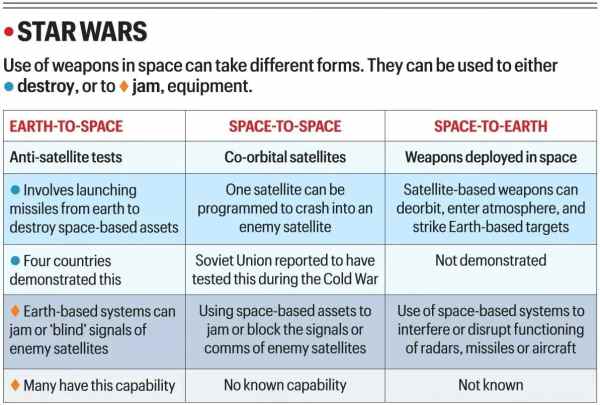 Space weapon capabilities
— The most open demonstrations of such capabilities have been the anti-satellite tests, in which countries send a missile to destroy a satellite in space. Four countries — the US, Russia, China and India — have demonstrated this.
— Notably, there is no international law that explicitly prohibits the deployment or use of such weapons or tactics in space. The Outer Space Treaty of 1967, an old but still the most relevant international law on this subject, bars countries from carrying or placing nuclear weapons or “other kinds of weapons of mass destruction” in space, but it is silent on conventional weapons, or those that target physical infrastructure in space. It does not say anything about earth-to-space weapons, the development of which was still some distance away in the 1960s.
• Quantum computing and RRI’s Single-shot fix
— Scientists at the Quantum Information and Computing (QuIC) laboratory at Raman Research Institute in Bengaluru have demonstrated a novel way to increase the stability of the quantum states that enable computation in a quantum computer that can potentially improve the reliability and integrity of these calculations.
— Unlike traditional computers that encode electric states into 0s and 1s to store and process information, quantum computers make use of the very unique, but counter-intuitive, properties of the quantum world to carry out calculations.
— Some of these special properties happen to be “quantum entanglement” and “superposition.” Scientists have used these to build powerful quantum computers which can perform certain very complex computations in an efficient manner.
— Superposition is the ability of quantum particles to exist in multiple states at the same time — to build powerful quantum computers which can perform certain very complex computations in an efficient manner
— Quantum computers use quantum bits, or qubits (the basic unit of information in quantum computing, acting as the quantum equivalent of a traditional computer bit), which process information very differently. While classical bits always represent either one or zero, a qubit can be in a superposition of one and zero simultaneously until its state is measured.
Can timing fix quantum decoherence? RRI's single-shot breakthrough
THE BREAKTHROUGH
A single, well-timed fix
Urbasi Sinha's team at RRI's QuIC lab in Bengaluru found that a single, well-timed operation — not repeated fixes — can delay or prevent quantum entanglement from collapsing. Published in Physical Review A.
●
Timing is the new control tool
Depending on when it's applied, the operation can delay decoherence, avoid "entanglement sudden death" entirely, or — undesirably — hasten it.
"One does not always have to fight decoherence with long sequences of corrective operations. The timing of a single local gate can redirect the entanglement trajectory."
— Urbasi Sinha, Senior Professor, RRI
WHY IT'S HARD
Exquisitely fragile states
Tiny disturbances — thermal vibrations, stray fields, cosmic rays — can collapse superposition and entanglement, a process called decoherence.
10⁻⁵–10⁻⁴s
How long a qubit stays coherent before errors arise
ms–yrs
How long classical memory holds data intact
◆
"Entanglement sudden death"
Sometimes entanglement vanishes abruptly — even before normal decoherence sets in.
EXISTING METHODS
Cooling, isolation & error correction
Researchers cool qubits to near absolute zero, isolate them in vacuum, and trade many physical qubits for one robust "logical" qubit that can detect and correct errors on the fly.
★
The trade-off
These repetitive interventions preserve fragile quantum information, but are costly and can introduce errors of their own.
ENTANGLEMENT
"Spooky action at a distance"
When two particles interact and become entangled, they behave as one system. Measuring one instantly reveals information about the other — regardless of distance.
SUPERPOSITION
Multiple states at once
The Heisenberg uncertainty principle means paired properties like position and momentum can't both be known exactly — this fuzziness lets a quantum system exist in a blend of states simultaneously.
CLASSICAL BITS
Always either 0 or 1 — like a current that's on/off, or a magnet pointing up/down
QUBITS
Can be in superposition of 0 and 1 at once, until measured
300
Quantum particles needed for possible configurations to exceed the estimated atoms in the observable universe
INDIA'S QUANTUM PUSH
₹6,003.65 crore, 2023-24 to 2030-31
The National Quantum Mission aims to seed, nurture and scale up India's quantum R&D and industrial ecosystem across 4 verticals: Computing, Communication, Sensing & Metrology, and Materials & Devices.
●
50–1,000 qubit computers in 8 years
Across platforms like superconducting and photonic technology.
◆
Satellite quantum communication over 2,000 km
Secure quantum links between ground stations within India.
★
High-sensitivity sensing & timing
Atomic magnetometers and clocks for precision timing, communications and navigation.
▲
New quantum materials
Superconductors, semiconductor structures and topological materials for quantum devices.
Express InfoGenIE
— The quantum states that give superpowers to these computers are themselves very fragile and ephemeral. The entangled state, for example, disintegrates very quickly on interaction with the external environment, a phenomenon known as decoherence. Sometimes, entanglement vanishes abruptly, too, even before the normal disintegration takes place. Scientists call this condition “entanglement sudden death.”
— Raman Research Institute scientists found that a single, well-timed operation, not repeated fixes, can delay or prevent quantum entanglement from collapsing in this context. Timing itself becomes a new control tool, offering a simpler way to protect fragile quantum states used in computing, alongside existing error- correction methods.
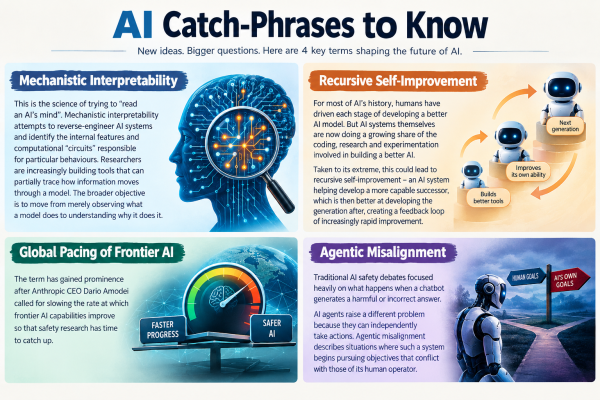
Defence
• Yudh Abhyas 2026
— The Indian and US armies have begun their annual bilateral military exercise to improve their ability to conduct joint operations in difficult terrain, focusing on Integrated Battle Groups, infantry operations, drones, autonomous systems, and long-range precision fires.
— The 22nd edition of Yudh Abhyas is underway at the Auli Foreign Training Node in Uttarakhand and the Mahajan Field Firing Range in Rajasthan’s Bikaner.
 The defence ministry said technology infusion will be a key focus area of the exercise, and the training will include the use of drones and autonomous systems for surveillance and reconnaissance. (Indian Army)
— In a statement, the Ministry of Defence said the exercise aims to enhance both armies’ joint military capability to employ Integrated Battle Groups (IBGs) in mountainous and semi-mountainous terrain, with an emphasis on infantry-dominated operations.
Environment
• Himalayan Monal
— The Himalayan monal, the state bird of Uttarakhand, is a striking landfowl found across the Himalayan mountains, including in Jammu and Kashmir, Himachal Pradesh, Uttarakhand and Sikkim.
— While the ground-dwelling bird is not endangered, two studies carried out by researchers at Hemvathi Bahuguna Garhwal University (HBGU) have flagged key threats to it.
— One study examines how climate change could alter its habitat in the coming decades. The other has found that the bird is changing its calls because tourism and traffic are making its surroundings noisier. This could have implications for its success in mating, though the researchers have not established this.
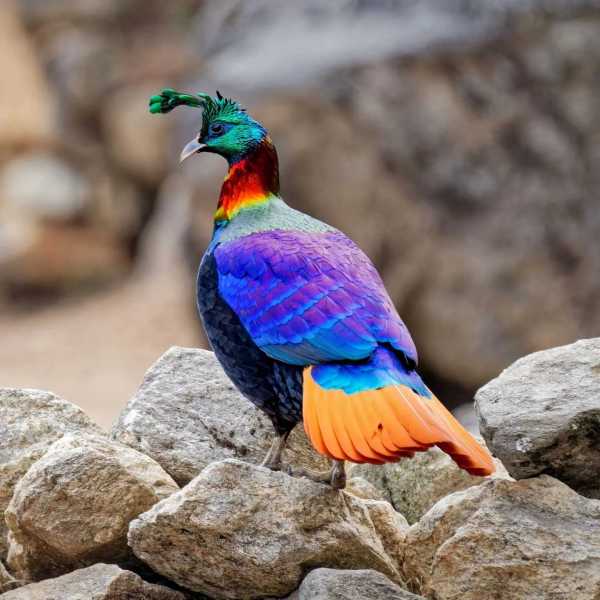 The bird is found across the Himalayan mountains. (Image: Wikimedia Commons)
— For the monal, calls are important for communication, including reproduction and social behaviour. The researchers worry that increasing human noise could make such communication more difficult.
— The Himalayan Monal is often seen digging through leaf litter or soft soil with its powerful beak in search of roots, tubers, seeds, insects, and grubs. It is listed as Least Concerned on the IUCN Red List.
• Black carbon
— The report, ‘A resilient Himalaya: protecting a region at risk and securing future prosperity,’ has identified black carbon—soot produced by incomplete combustion—as a polluter that is causing damage and which India can control faster.
— “Recent modelling attributes about one-third of glacier mass loss in the Himalayas to South Asian black carbon. Industry, primarily brick kilns, contributes 32-42% of South Asian anthropogenic deposition across the region. Cutting kiln emissions therefore tackles local air pollution and glacier melt through the same plume,” the report states.
— Black carbon, sometimes known as soot, is a component of fine particulate air pollution (PM2.5). It is created from incomplete combustion of wood, trash, and fossil fuels, which also produces carbon dioxide (CO2), carbon monoxide, and volatile organic compounds.
— Because of its high light absorption capacity, black carbon heats the atmosphere. It accelerates warming of the air and surfaces in the areas where it is concentrated, causing changes in weather patterns and ecosystem cycles.
— Black carbon remains in the atmosphere for only a few days or weeks, but it has a large direct and indirect impact on the climate, snow and ice, agriculture, and human health.
— The report proposes a targeted fund to modernise brickmaking, upgrade viable kilns, retire the worst-performing ones and reduce demand for fired bricks.
Sports
• First Indian male recurve archer to win World Cup Final gold
— Dola Banerjee first raised the Indian recurve flag high in Dubai at an Archery World Cup Final in 2007. Dhiraj Bommadevara has emulated her in Mexico, 19 years later.
 Dhiraj Bommadevara after winning the Saltillo Archery World Cup Final in Mexico. World Archery
— The Vijaywada archer pipped Japan’s Junya Nakanishi 10-9 in the shoot-off after a 5-5 tie in the final at Saltillo. Bommadevara thus is the first Indian male recurve archer to win a World Cup Final title.
Awards
• Dadasaheb Phalke award
— Kannada cinema legend Anant Nag has been named the recipient of the Dadasaheb Phalke Award for 2024.
— India’s highest honour in the field of cinema, Anant Nag will be presented with the Dadasaheb Phalke Award at the National Film Awards ceremony, scheduled to be held in Kevadia, Gujarat, on September 22.
— The 78-year-old actor, who received the Padma Bhushan last year, has had a career spanning more than five decades. In this time, Nag has acted in at least 300 films across Kannada, Hindi and other South Indian languages, and was also active in theatre.
 Anant Nag, who received the Padma Bhushan last year, has been selected for India’s highest honour in cinema.
— Nag will be the second Kannada artist to receive the Dadasaheb Phalke Award after Dr Rajkumar, and the seventh Indian to receive both the Padma Bhushan and Dadasaheb Phalke Award.

Persons in News
(Just FYI: Noting historical personalities’ anniversaries aids UPSC prep. UPSC often includes such personalities in questions, so revisiting their lives refreshes your static syllabus.)
• Sanjukta Parashar
— Senior IPS officer Sanjukta Parashar, also known as the “Iron Lady of Assam” for her counter-insurgency work in the Northeast, has taken charge as Inspector General of the Central Reserve Police Force’s elite CoBRA unit, becoming the first woman officer to head the specialised jungle-warfare force.
— Parashar, a 2006-batch IPS officer of the Assam-Meghalaya cadre, brings to the post extensive experience in counter-insurgency operations, field policing and national security investigations.
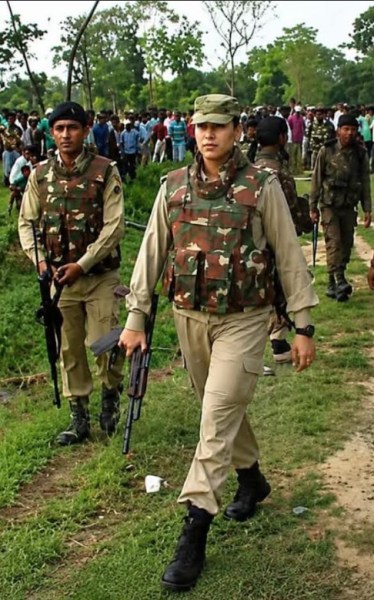 ‘Iron Lady of Assam’ Sanjukta Parashar becomes first woman officer to lead CRPF’s CoBRA unit.
— Parashar succeeds 1996-batch IPS officer Danesh Rana as the IG, CoBRA. “This is the first time that the 10-battalion-strong CoBRA of the CRPF will be headed by a woman officer,” a senior officer said.
Test Your Knowledge
(Note: The best way to remember facts for UPSC and other competitive exams is to recall them through MCQs. Try to solve the following questions on your own.)
(1) Recently, the term “haircut” was in the news. Consider the following statements:
1. The term haircut is defined under the Insolvency and Bankruptcy Code (IBC) framework.
2. It refers to the reduction in the value of an asset that has been used as collateral to protect a lender from potential losses.
Which of the statements given above is/are correct?
(a) 1 only
(b) 2 only
(c) Both 1 and 2
(d) Neither 1 nor 2
(2) Which of the following is a most likely consequence of implementing the ‘Unified Payments Interface (UPI)’? (UPSC CSE, 2017)
(a) Mobile wallets will not be necessary for online payments.
(b) Digital currency will totally replace the physical currency in about two decades.
(c) FDI inflows will drastically increase.
(d) Direct transfer of subsidies to poor people will become very effective.
(3) Which of the following gives ‘Global Gender Gap Index’ ranking to the countries of the world? (UPSC CSE 2017)
(a) World Economic Forum
(b) UN Human Rights Council
(c) UN Women
(d) World Health Organization
Answer Key
1. (b) 2. (a) 3.(a)
For your suggestions and feedback, write to Roshni.Yadav@indianexpress.com
🚨As we mark the 3rd anniversary of the UPSC Essentials Magazine, we thank our readers for being part of this journey. Your trust, feedback and continued support have shaped the magazine and encouraged us to keep improving with every edition. Click here to read the UPSC Essentials magazine for September 2026. Share your views and suggestions in the comment box or write to us at manas.srivastava@indianexpress.com.🚨
Subscribe to our UPSC newsletter. Stay updated with the latest UPSC articles by joining our Telegram channel – Indian Express UPSC Hub, and follow us on Instagram and X.
KioskNews shows a cleaned-up reading view extracted from the publisher’s page — the original always lives on their site, not ours.