‘My generation of novelists is dying’: Rose Tremain on 70 years of writing, and late-life inspiration

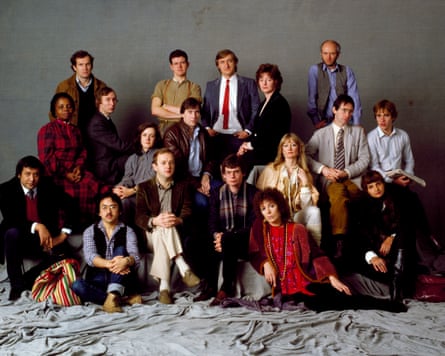
My generation of writers is dying. Of Granta’s fabled list of 20 Best of Young British Novelists, 1983, six are gone, including our most princely satirist, Martin Amis. We’re all approaching birthdays where the cake is too small for the candles. Some of us are wounded: Salman Rushdie by an attacker’s knife, Julian Barnes lives with blood cancer, others with the fatal hurt of being forgotten.
But what’s the likely fate of those of us who are surviving – for now? Do readers still love us? When Barnes announced that he was signing off because of illness, was he also intuiting that the younger generations had heard enough from us old birds and geezers who were young when Sean Connery had dimples, when David Hockney first coloured his hair yellow?
The answer is probably “yes”. But here’s what I believe: contrary to what publishers hope and expect, serious writers don’t think obsessively about readers, or even about sales, royalties and prizes. What we talk to each other about, what we dream of, what we can’t live without is the work itself. When I endured a terrifying procedure for pancreatic cancer in 2019 and contemplated the likelihood of dying in Addenbrooke’s hospital, I spent wide-awake nights mourning not only the people I love and the places that are precious to me, but the end of storytelling. Ideas for stories have peopled my life since the age of 12, when I wrote my first play at boarding school. My existence devoid of these would definitely feel what Amis once called “thin”.
From interviews Hockney gave towards the end of his 88 years, when yellow had turned to white, we gleaned a fine understanding of the elderly artist’s unflagging commitment to a day-by-day engagement with his art. The simplicity of the Hockney philosophy – “I wake up. And I go to work” – enabled him to rival Picasso with the vastness and variety of his output. He lived and breathed painting. The idea that he would suddenly stop doing this he would surely have thought plain stupid, and I’m with him on that. Though there can be a falling-off in the work of artists and writers as they age, this is by no means inevitable; the reasons for keeping on are not too hard to find.
Certainly I’m getting towards the end of my life, but why should what remains of it be stricken by the loss of the one constant that has kept me company for 70 years, since that first little school play? To those who might imagine me in “retirement” tending my garden in Norfolk, existing only through this and through the lives of my daughter and my grandchildren, I need to explain that ideas for novels and stories still arrive in my head all the time, like supplicants at the gate. They beg to be let in. Where would all this clamour go if I shut them out?
This may be delusional, but I don’t believe the work done in the last third of my life is inferior to that done near its beginning. Critical reaction to my later novels – The Gustav Sonata (2016), Islands of Mercy (2020), Lily (2021) and Absolutely and Forever (2023) – was very positive and these books were written on the kind of creative high that I never experienced in my early writing days. In contrast, there were a few writers on the Granta 1983 list who had already foreseen a golden road ahead. Amis and McEwan seemed to arrive on the scene as fully fashioned geniuses, nudging literary fame in their 20s. Rushdie, too, had by then published his Booker sensation, Midnight’s Children, and was clearly a star.
The rest of us lined up in their wake. I’d published only two books and still felt uncertain that I really understood the form of the novel well enough to write anything worth keeping. I retreated back to play writing, this time for the BBC radio drama department, and was surprised to win an award for one of the best radio plays of 1984 for Temporary Shelter, starring the wonderful late Roy Kinnear (Rory’s Dad) as a naive English tourist facing up to the shortcomings of his life on a French campsite.
When, in 1988, I had the idea for my “breakthrough novel”, Restoration, I remember that I drew on one of the themes explored in Temporary Shelter: the protagonist as a shambling man who finds himself in a world he doesn’t understand and who makes a spectacular mess of things until he begins to learn the lessons his own nature is ready to teach him. But by this time I’d begun to learn lessons of my own about what kind of novel I wanted to write.
after newsletter promotion
I inclined towards the epic rather than the miniature. History’s great canvas was a constant lure, yet my opinion on historical research is that it has to be done thoroughly and then almost abandoned, to let the imagination do its essential work. (Kipling described this process as lighting a great fire and then working only with its riddled embers.) Humour had to be part of the storytelling mix and could play a lovely melody above the bass notes of tragedy. Above all, I understood that to live with a work of fiction for the many months that it takes to complete it, one has to love it quite passionately and be comfortable with all its moods and habits, or – as Colm Tóibín puts it with delicious domestic flair – one has to stay for long periods of time in one’s “mental pyjamas”.
My mental pyjamas are on, then, but is it time to put everything to bed? This may be stubborn, but I don’t feel that it is. My latest project brings together both the young playwright that I once was and the elderly novelist I am now. The new book is titled The Housekeeper, and is a reimagining of the inspiration behind Daphne du Maurier’s classic novel Rebecca. It began as a short story in 2014, but I have now brought it to life not only as a novel but also as a screenplay for a film, directed by Richard Eyre and starring Anthony Hopkins and Helena Bonham Carter. I’ve been enthralled by the script work. It takes me back to standing in the wings of the school stage, hearing my own words spoken aloud for the first time.
KioskNews shows a cleaned-up reading view extracted from the publisher’s page — the original always lives on their site, not ours.