NDTV Exclusive: AI Is Too Important Not To Regulate, Says Google DeepMind's Top Voice
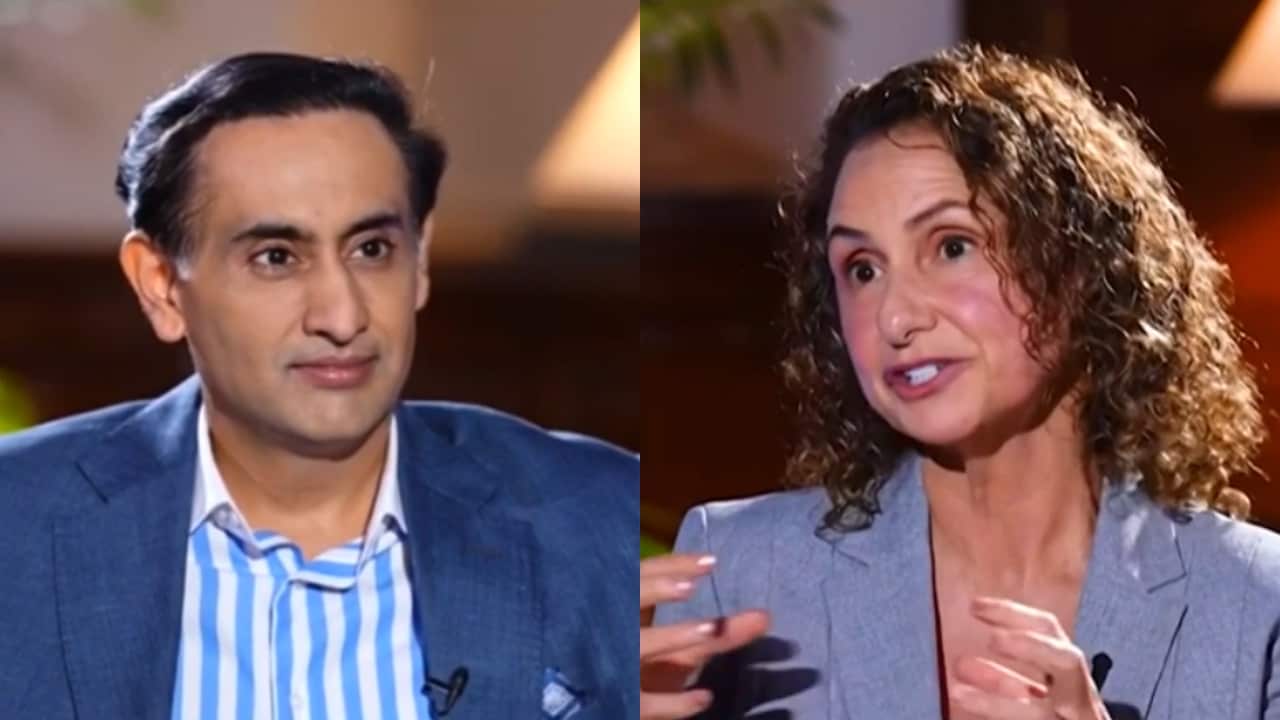
AI is "too important" not to regulate, but the rules must be "right size" so they cut risk without limiting opportunity, Google DeepMind's Chief AI Readiness Officer Lila Ibrahim told NDTV's CEO and Editor-in-Chief Rahul Kanwal in an exclusive interaction.
"That's what we're really focused on. Regulating AI, and doing so such that we minimise the risk, but we also don't limit the opportunity that we have to make an impact and address some of the biggest challenges of our time," Ibrahim said.
US President Donald recently held a luncheon with the who's who of the AI industry including Anthropic CEO Dario Amodei, Meta chief Mark Zuckerberg, Nvidia chief Jensen Huang, and Elon Musk among others, and said the AI companies will self-regulate. This despite AI companies having called for government regulation themselves.
Trump is of the opinion that the US is currently the undisputed leader of the AI race and cannot afford to slow down frontier AI development, else it may lose to China. "Whoever wins AI, wins (the world)," he says
Ibrahim, whose role at Google's AI arm - is to help prepare governments, institutions and society for the impact of increasingly powerful AI systems - called AI potentially the most transformational technology of our time, which demands exceptional care. But when pressed on what "right size" rules look like she didn't spell it out in concrete terms.
Responding to a nudge on who the onus falls on - whether it's the labs, governments or a third-party regulator - Ibrahim said: "It can't be about any one company or any one country."
She said every model release is available worldwide, so regulation needs multi-stakeholder cooperation. Ibrahim highlighted the India AI Impact Summit held earlier this year in New Delhi as an example of such dialogue.
"Now we need to move from conversation to how do we start actioning this," she said.
In fact, Ibrahim referred to DeepMind chief Demis Hassabis' note earlier this year that proposed labs work with governments and Western democracies on regulation and "think about the application of AI, not AI as a standalone technology, but the application specific focus is probably the right approach for us to take."
In July, the DeepMind CEO published a proposal Titled "A Framework for Frontier AI and the Dawning of a New Age," that made the case for a "standards body" modeled after the Financial Industry Regulatory Authority (FINRA), which could test frontier models and develop best practices for their release.
KioskNews shows a cleaned-up reading view extracted from the publisher’s page — the original always lives on their site, not ours.