Vande Bharat train hits 180 kmph during high-speed trial run, more tests ahead
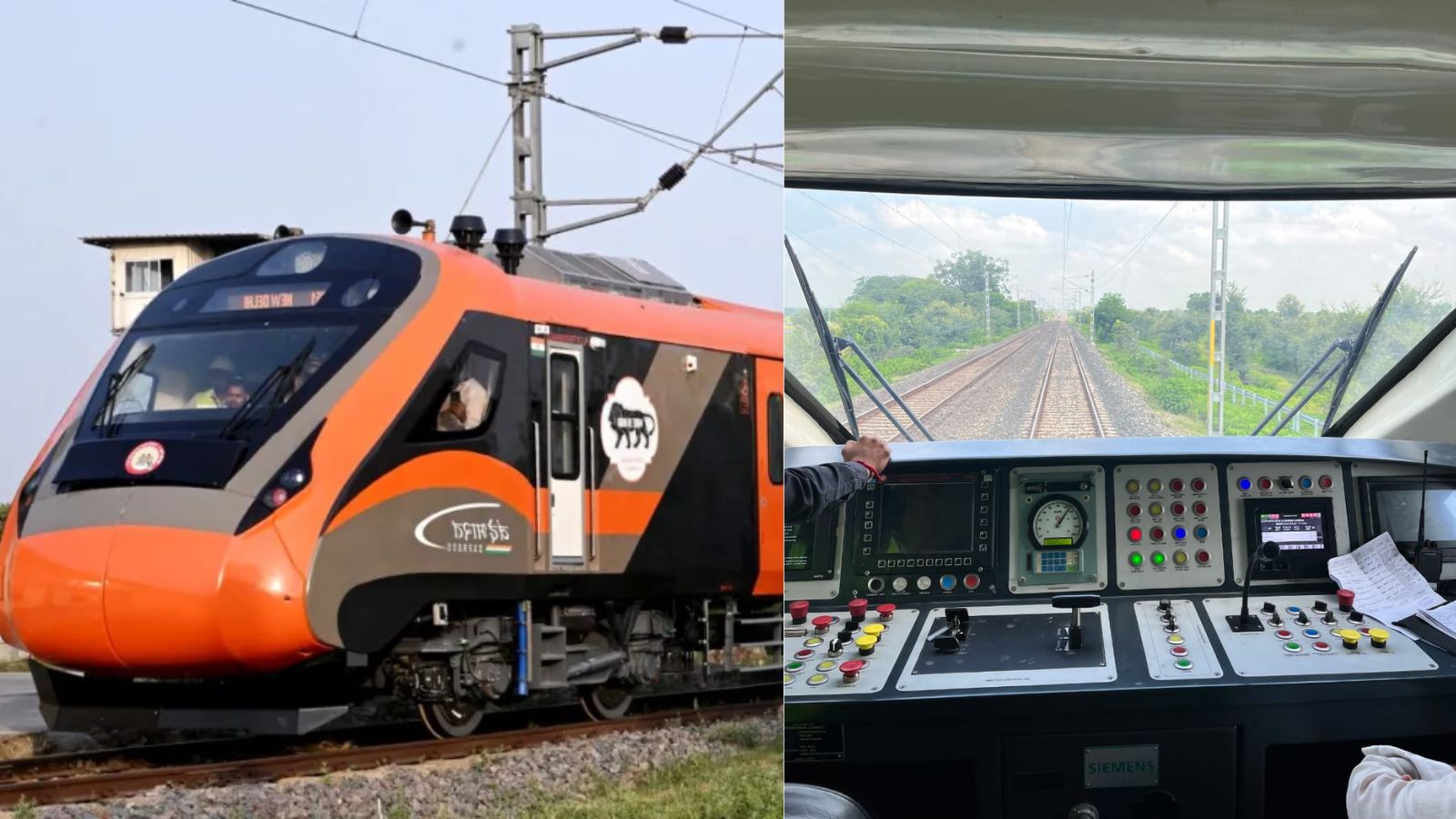
Vande Bharat train trial run: Indian Railways’ new Vande Bharat Chair Car rake has successfully completed a high-speed trial at 180 kmph on the Nagda-Kota-Sawai Madhopur section of West Central Railway (WCR). The trial is part of a series of tests being conducted by the Research Designs and Standards Organisation (RDSO) before the rake receives its final speed certification.
According to a senior railway official, the loaded oscillation trial at speeds of up to 180 kmph has been completed successfully. However, several important tests are still pending before the testing programme is completed.
The trials are being conducted to check how the train performs at high speeds, including its riding quality, stability and safety-related parameters.
The loaded oscillation trial was conducted with the rake carrying the specified load and with its air springs inflated.
The corresponding empty-condition oscillation trial is yet to be conducted.
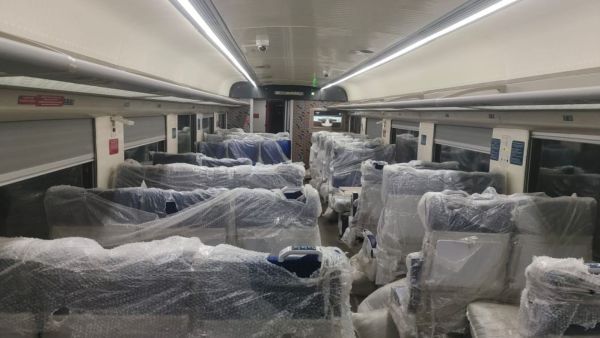 Vande Bharat train hits 180 kmph in high-speed trial, final speed certification yet to come (Image: Special Arrangement)
More tests are still pending
The high-speed testing programme includes three major tests – the oscillation trial, coupler force trial and emergency braking trial. With the loaded oscillation test completed, the rake will still undergo the following tests:
Story continues below this ad
- Empty-condition oscillation trial
- Coupler force trial
- Emergency braking trial
During the coupler force test, engineers will check the longitudinal forces generated between coaches during acceleration and braking. Both tensile and compressive forces on the couplers will be assessed.
The rake will also undergo an emergency braking test at speeds of up to 160 kmph. The test will measure its braking performance and stopping distance after emergency brakes are applied.
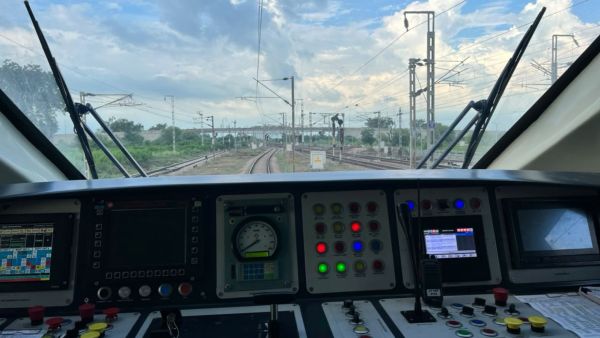 Vande Bharat 180 kmph trial completed, emergency braking test next (Image: Special Arrangement)
RDSO to evaluate the test results
According to a senior railway official, the data recorded during the trials will be examined by RDSO’s testing directorate.
The final speed certificate will be issued only after the prescribed tests are completed and the results are found satisfactory against the required technical parameters. The rake is equipped with a Siemens propulsion system and a Knorr-Bremse braking system.
Story continues below this ad
“Once the prescribed tests are completed, RDSO will examine the recorded data and results against the stipulated technical parameters. The final speed certificate will be issued only after satisfactory completion and evaluation of the entire trial programme,” the railway official said.
Safety features in the Vande Bharat rake
The Vande Bharat Chair Car rake comes with several safety and passenger-focused features. These include Kavach, an indigenously-developed Automatic Train Protection system, CCTV cameras, emergency alarm push buttons and passenger-to-crew talk-back units.
The train also has fire detection and fire suppression systems, centrally controlled automatic plug doors and sealed gangways between coaches.
For passengers, the rake features ergonomically designed seats, upgraded Executive Class seating, air-conditioning with a UV-C-based air disinfection system and facilities for passengers with disabilities.
Story continues below this ad
The rake also uses regenerative braking, which helps feed part of the energy generated during braking back into the electrical system.
What happens after the 180 kmph trial run?
The successful 180 kmph loaded trial is an important stage in the testing programme, but it does not mean that the rake has received final speed certification. The remaining trials will be conducted before RDSO evaluates the complete set of results. The final certification will depend on the satisfactory completion of the prescribed tests and technical evaluation.
KioskNews shows a cleaned-up reading view extracted from the publisher’s page — the original always lives on their site, not ours.