Key UN Climate Talks That Ended In Deadlock Or Failure
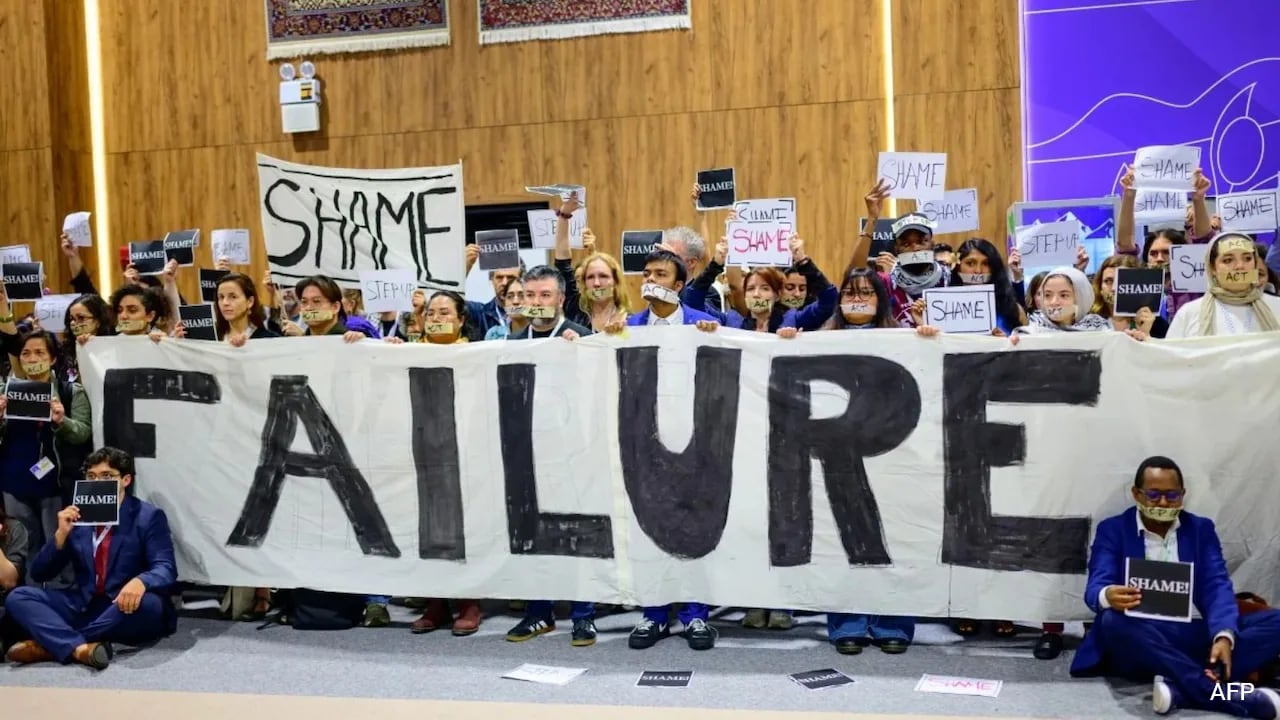
The failure of COP31 climate talks in Antalya is the latest in a string of disappointments at major UN environmental summits since the first Conference of the Parties, or COP, in 1995.
Various previous summits have descended into acrimony or even failed completely over a lack of consensus.
2000: COP6, The Hague
COP6 talks in The Hague in 2000 saw talks suspended altogether before resuming months later in Bonn, the headquarters of the UN Framework Convention on Climate Change.
That year's event came amid disputes over a razor-thin US presidential election, with negotiators uncertain if the next leader of the largest economy would be George W. Bush, a climate sceptic, or Al Gore, who later shared a Nobel Peace Prize for his climate activism.
Paradoxically, the victory of Bushwho soon repudiated the 1997 Kyoto Protocolspurred other countries to push ahead with implementation plans when talks resumed in Bonn.
But former French chief negotiator Paul Watkinson rued an event which ended in "chaos".
2009: COP15, Copenhagen
Expectations were high after the election of US President Barack Obama, but COP15 failed to deliver the binding global climate treaty many had hoped for.
Deep divisions between developed and developing countries, particularly between Washington and Beijing, prevented agreement on mandatory emissions cuts.
The conference ultimately agreed only to "take note" of the non-binding Copenhagen Accord, which included a goal of limiting warming to below 2C and a pledge by wealthy countries to mobilise $100 billion a year in climate finance by 2020.
2012: COP18, Doha
Governments agreed a second commitment period under the Kyoto Protocol, but without participation from major emitters including the United States, Russia and Canada.
Critics said the deal lacked sufficient ambition and covered only a shrinking share of global emissions.
2019: COP25, Madrid
Talks in Madrid ran more than 40 hours over schedulethe same as in Antalya this year.
Countries at COP25 failed to agree rules governing international carbon markets under Article 6 of the Paris Agreement.
The final text disappointed vulnerable countries and environmental groups because it contained no significant increase in emissions-cutting commitments.
2022: COP27, Sharm el-Sheikh, Egypt
Nations agreed to establish a landmark "loss and damage" fund for climate-vulnerable countries.
But negotiators failed to strengthen commitments on phasing down fossil fuels amid criticism by many governments and campaigners who saw inadequate progress on commitments for cutting emissions.
2024: COP29, Baku, Azerbaijan
Talks went into overtime amid sharp disputes over climate finance for developing countries.
Negotiators struggled to bridge divisions between wealthy and poorer nations over the scale of financial commitments.
The meeting ultimately reached a deal, avoiding outright failure, but many developing countries criticised the outcome as insufficient.
2024: COP16 Biodiversity Conference, Cali, Colombia
Talks stretched into an extra night and the Colombian presidency was unable to establish a quorum, with many delegates either asleep or having already boarded return flights.
No agreement was reached on financing measures needed to halt and reverse nature loss by 2030. Discussions resumed in Rome in February 2025.
(Except for the headline, this story has not been edited by NDTV staff and is published from a syndicated feed.)
KioskNews shows a cleaned-up reading view extracted from the publisher’s page — the original always lives on their site, not ours.