Is India On Track To Meet Its Green Energy Goals? A Look At The Progress
Prime Minister Narendra Modi inaugurated the Bharat Renewable Energy Summit on Monday, bringing the Centre's clean energy push in focus as India is actively working toward its goal of installing 500 GW of non-fossil fuel energy capacity by 2030.
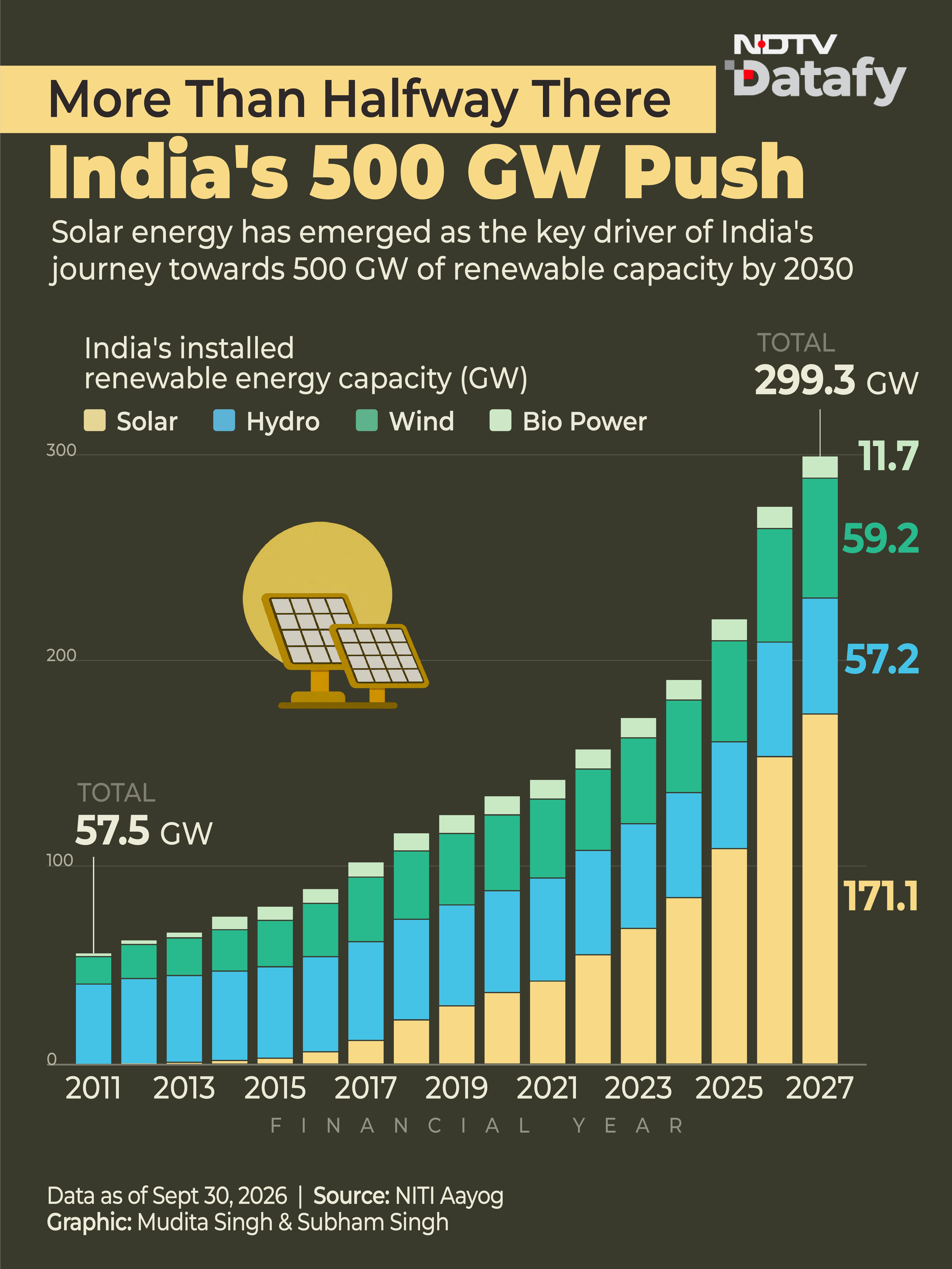
The numbers from the NITI Aayog dashboard show that India has already crossed the halfway mark. The country's installed renewable energy capacity is now close to 300 GW, which means that more than half of the target has already been achieved with four years to go.
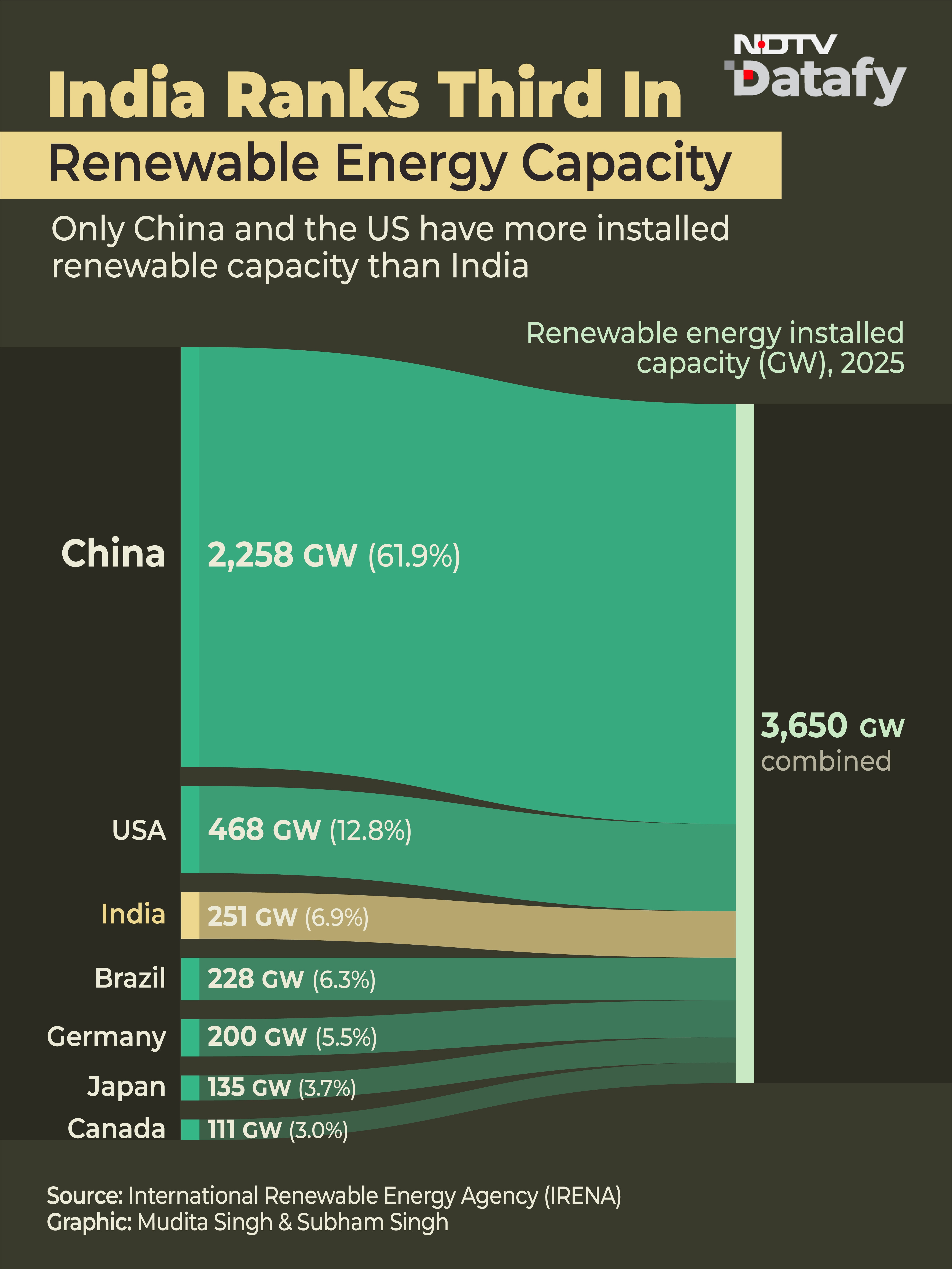
India's renewable push has also elevated its standing globally. With growing installed renewable capacity, the country ranked among the world's largest renewable energy markets in 2025, behind only major economies including China and the United States, as per the International Renewable Energy Agency (IRENA).
Solar power has done much of the heavy lifting. From virtually no contribution a little over a decade ago, solar capacity has now surged to around 171 GW, making it India's largest renewable energy source. In comparison, the country's total renewable capacity stood at just 58 GW in 2010-11, highlighting the pace of expansion over the past decade.
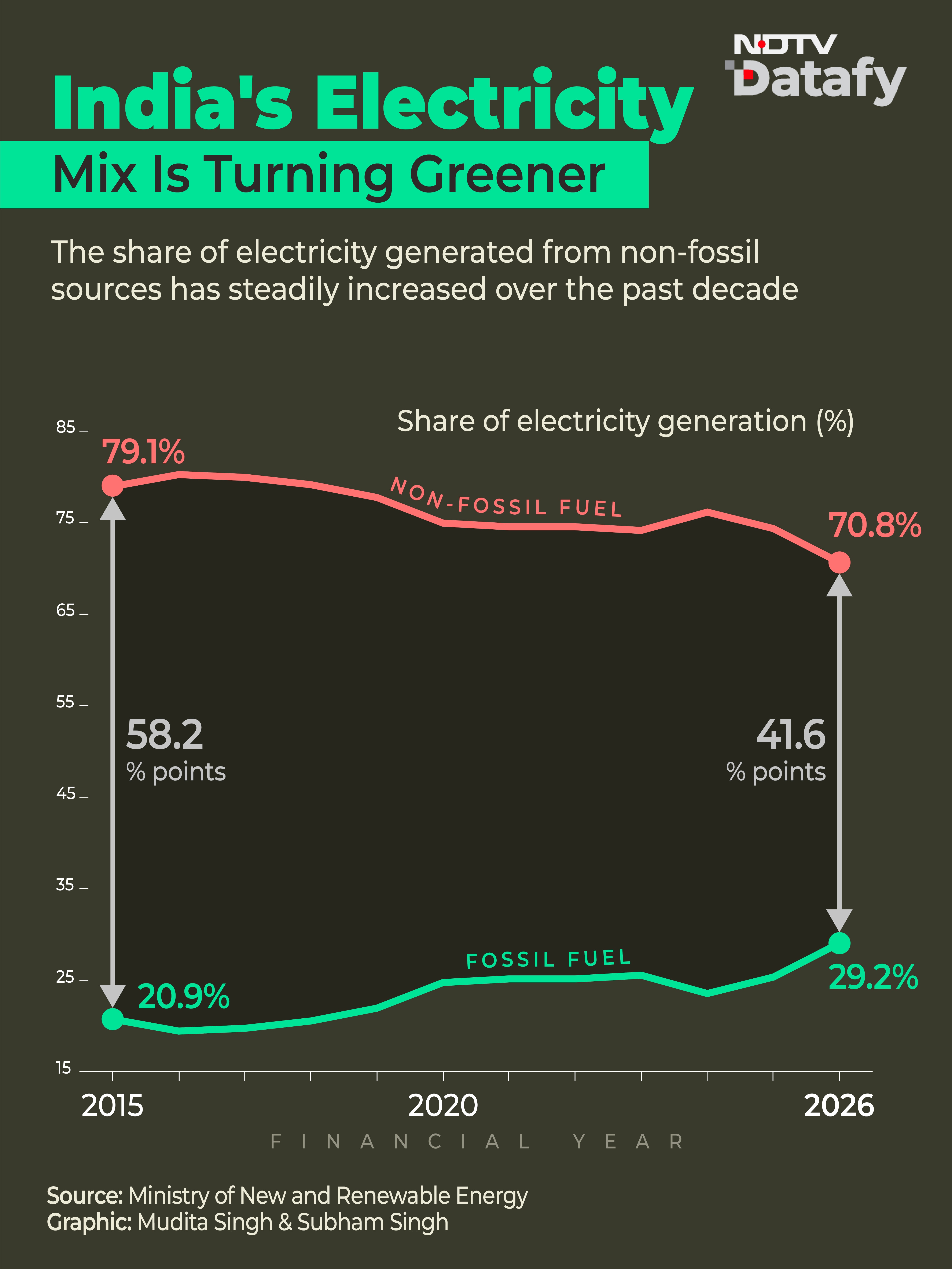
This rapid growth has steadily increased the share of non-fossil sources in India's power system. Renewable energy, hydro and nuclear power today account for a significantly larger share of installed capacity than they did ten years ago, reflecting a gradual shift towards cleaner sources of electricity, as per data by the Ministry of New and Renewable Energy.
Yet capacity is only part of the story. Data from NITI Aayog shows coal continues to generate most of India's electricity despite the rapid growth in renewable installations. While renewables command an increasing share of installed capacity, coal plants remain the backbone of power generation because they can produce electricity round the clock, unlike solar and wind projects that depend on weather conditions.
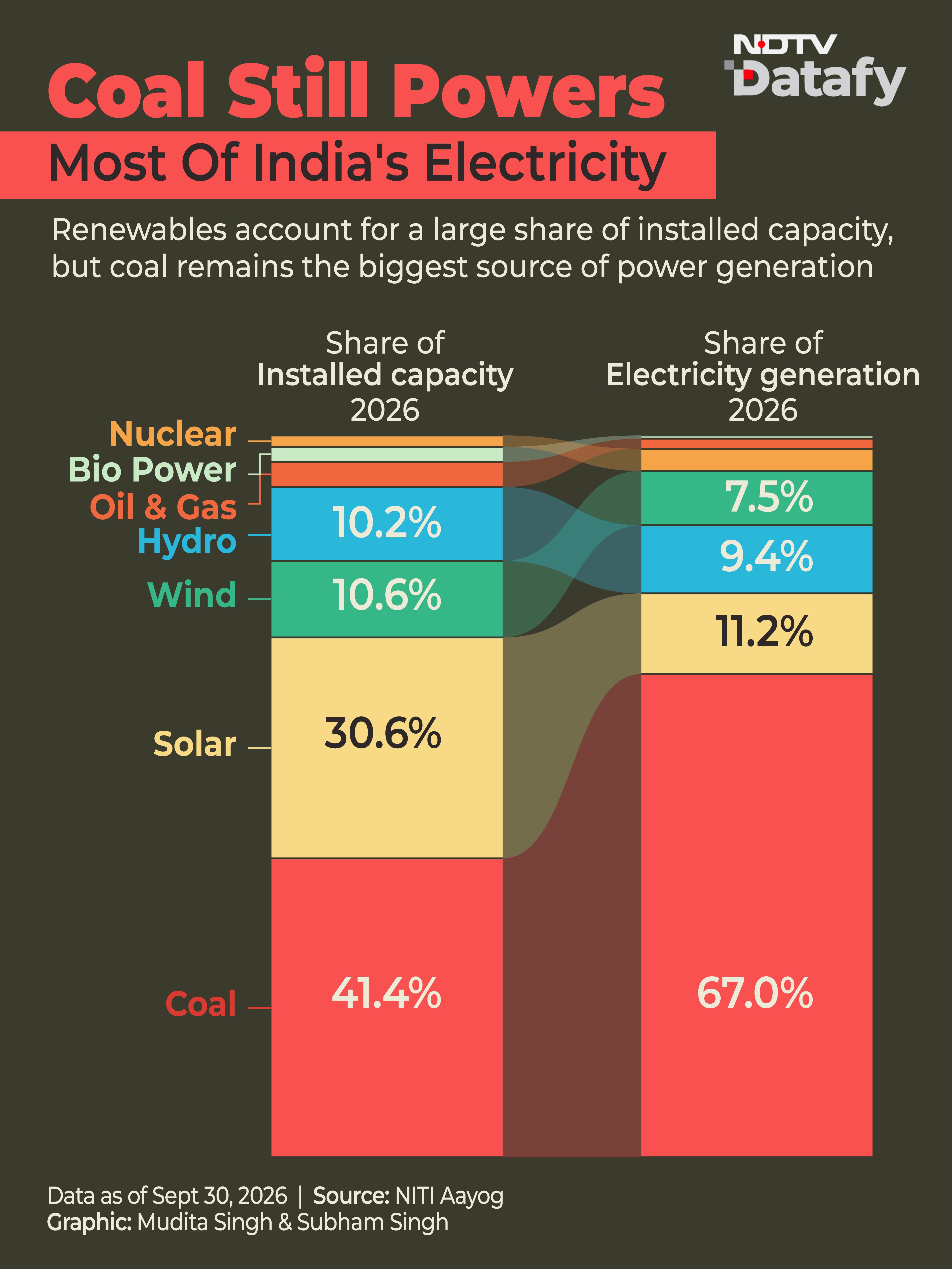
The challenge ahead, therefore, is not just adding renewable capacity but ensuring it generates a larger share of the country's electricity. That will require greater investment, transmission infrastructure and grid integration as India moves toward its 2030 target.
As leaders, policymakers and industry executives gather at the Bharat Renewable Energy Summit & Expo 2026, the data suggests India is firmly on the path towards its 500 GW goal. However, with more than 200 GW still to be added, sustaining the current momentum will be crucial over the rest of the decade.
KioskNews shows a cleaned-up reading view extracted from the publisher’s page — the original always lives on their site, not ours.