Sacred pot, Ek Chala Durga idol: 117 yrs of tradition at iconic Kashmere Gate Puja
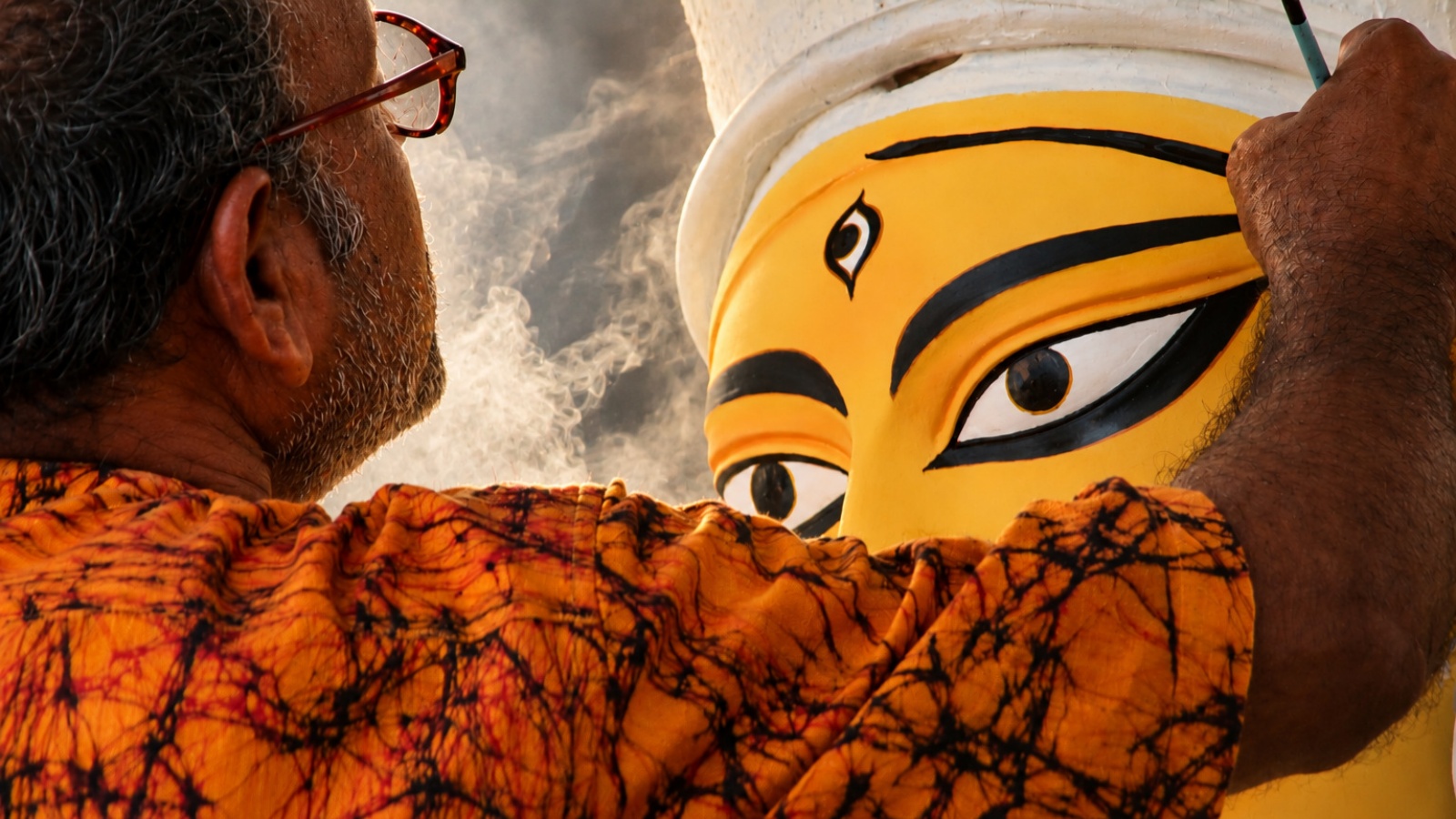
“We are all former students of this very school,” says Arun Roy, 77, standing behind the Durga idol at one of the Capital’s most iconic pandals, celebrating its 117th Durga Puja this year. Since 1968, the Bengali Senior Secondary School in Civil Lines in North Delhi has held what is famously known as Kashmere Gate Durga Puja.
From former PM Indira Gandhi to former Delhi CM Sheila Dixit, many prominent personalities have visited the pandal over the years.
Bengali musicians of the likes of Anup Ghoshal, Mamta Shankar, Saikat Mitra, among others, have performed during the celebrations.
An artist himself, Roy oversees the making of the Durga idol, which has remained largely unchanged since 1912, when the Bengali community in Delhi was still small and the first Puja was organised at Roshanpura Kali Mandir near Nai Sarak.
Down memory lane
Dr Hemchandra Sen, who worked with the Railways, was said to be among those who brought the community together.
For the first two years, there was no idol. Devotees worshipped a sacred pot — the kalash — that is still a key part of the rituals. The idol arrived in 1912, brought from Kashi, now known as Varanasi, with the help of Railway employees, organisers recall. From 1926, the idol began to be made in Delhi, but the idol makers came from West Bengal.
The Puja moved as the city moved — from Roshanpura to Dharamshala ofLala Laxminarayan near Fatehpuri Mosque, where it stayed from 1913 to 1946.
Story continues below this ad
After Independence, it shifted toward Kashmere Gate — first to Delhi Polytechnic, then the Women’s Polytechnic. In 1968, it arrived at the Bengali Senior Secondary School on Shamnath Marg. The Puja is organised by Delhi Durga Puja Charitable and Cultural Samiti
‘One family under a roof’
Arun Ghosal, who is the president of the Puja Committee and the Chairman of the school, has been of immense help, the members say. The students’ classes are taken online when the Durga Puja is on.
The idol is ‘ek chala’, says Roy, which means, “the whole family is there under one roof — Durga with Lakshmi and Saraswati, Ganesha and Kartikeya, all beneath a single arch. At other places, they are positioned separately, but we haven’t changed the unified design since we first started.”
The murti is built in clay and in three layers, while the colours are natural, brought from Bengal. “The lion is white, not yellow, representing the snow lions of Mount Kailash. The demon, Mahishasura, emerges from the severed body of the buffalo, and Durga’s trident pierces the left side of his chest, into the heart,” explains Arun.
Story continues below this ad
Legacy spread over generations
For those associated with the pandal, traditions have been passed from one generation to another. Bhimal Kumar, 35, a farmer from Uttar Pradesh, has been working with the committee for the past 20 years and helping with everything he can. “My father worked here for 35 years. After he passed away, I continued,” he says. His nephew, Atul Kumar, 27, has come for the first time this year. During the six days of the Puja, the school classrooms become their makeshift bedrooms.
Dipayan Mazumdar, Vice President of the Delhi Durga Puja Charitable & Cultural Samiti, has been overseeing arrangements for decades. Its centenary was celebrated in 2009. That same year, sponsors were introduced as costs rose. “The younger generation has taken several initiatives — from collecting funds to contributing funds. What has remained unchanged are the traditions,” he says.“The bhog (community meal) runs for three days, feeding around five thousand people each day. The ingredients are donated by members in kind.”
Monish Mukherjee, General Secretary of both the Bengali Club and the Delhi Durga Puja Charitable and Cultural Samiti, is a fourth-generation member of both these committees. His son is also actively involved in this year’s Puja as the secretary for the Sports department.
On the final day, they will carry the idol to the pond on a bullock cart. “For sixty years, the same man has provided that cart,” says Tushar Kanti Mukherjee, 76, who is the head of the Visarjan Department. Because of pollution guidelines, a pond has been arranged in Burari.
Story continues below this ad
Roy, staring at the workers setting up the decor, says, “The minute visarjan happens is when our next year’s preparation begins, but officially, we start in July.”
“Our Puja is an emotion that lives in every member since childhood. For our elders, the love for this Puja was so deep that their only prayer to Maa Durga on Dashami was, ‘Maa, let me live to see next year’s Puja,’” says Tushar.
KioskNews shows a cleaned-up reading view extracted from the publisher’s page — the original always lives on their site, not ours.