BUSINESS REFLECTION: Day of reckoning — is the AI bubble finally about to burst?
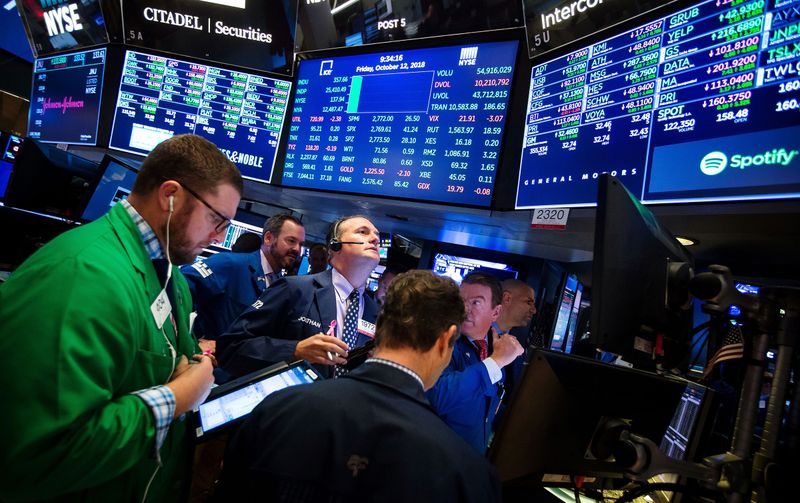
Yet again, technology stocks were hammered last week. It was the third such significant shakeout of recent weeks, and although markets managed a moderate comeback on Friday and early this week, this one felt rather more terrifying than the previous outbreaks of nerves.
Once more, but this time with real conviction, investors are asking the question that has been hanging over global markets for months: Is this the big one? Is the great artificial intelligence (AI) bubble finally bursting?
I cannot claim to know the answer.
Ask again in a week, when perhaps we will have a better idea whether this is the beginning of a much broader collapse or simply another false alarm, followed by the inevitable stampede to “buy the dip”.
But the fact that we keep repeating the question is telling. Markets are becoming increasingly nervous about a party that everyone knows cannot continue indefinitely, even if no one knows when the music will stop.
Catalyst of carnage
Last week, American voters may have finally provided the trigger.
The immediate catalyst was the extraordinary Democratic blue wave that swept through the US in Tuesday’s midterm elections.
It delivered a political humiliation for Donald Trump, but also something potentially more consequential for financial markets: a very public rejection of the enormous infrastructure projects underpinning the AI boom.
Initially investors seemed delighted. Stocks rallied on Wednesday, encouraged by an unambiguous result, with no sign of Trump attempting to contest it.
That relief lasted all of 24 hours.
On Thursday, the entire AI complex was absolutely crushed. The Nasdaq plunged 5.5%, closing ominously at its lows for the day, in a selloff reminiscent of the very worst episodes of market turmoil in the dot com collapse and 2008 Global Financial Crisis.
The Nasdaq is now deep in correction territory, while Japan’s Nikkei has entered a bear market, down more than 20% from June highs. South African equities have proven remarkably resilient. The JSE actually ended last week higher, a striking divergence from the carnage across US and Asian markets.
Breaking the circle
Anyone looking objectively at the AI investment boom can recognise the hallmarks of an increasingly unsustainable party. Extraordinary valuations, enormous borrowing requirements, increasingly imaginative financing structures and a troubling disconnect between imagined future revenues and actual cash flow.
The Bank for International Settlements recently calculated that almost 29% of the value of AI companies’ investments goes into other AI businesses, while more than half of the investment flowing into AI firms comes from other AI firms.
Companies are investing in their customers, who use the money to purchase their products, thereby generating revenues that help justify the original investment.
Some of these arrangements make commercial sense. But they also make it very hard to distinguish between genuine final demand and make-believe demand financed by the industry’s own capital.
None of these vulnerabilities is new. We have been discussing them for months. What has always been missing is the obvious catalyst that might finally bring the whole edifice crashing down.
When the party’s over
American politics may have just provided it. The most significant message from Tuesday’s elections was not simply that voters are fed up with Trump. It is that they are increasingly fed up with the economic consequences of the policies and industries he has championed, chief among them AI.
Across the US, voters were asked whether they wanted the enormous electricity and water guzzling data centres in their neighbourhoods, the products of which would probably be coming for their jobs.
In 40 of the 41 local ballot measures concerning data-centre development, voters unsurprisingly delivered a resounding rejection of Big Tech. It was an astonishing rebuke.
For years, US tech companies have assumed that their seemingly limitless financial resources would translate into an equally limitless ability to construct infrastructure. Politicians, many dependent on the largesse of tech-related donors and lobbies, have been only too happy to oblige.
But voters are starting to rebel. And for an industry increasingly dependent on borrowed money to finance its extraordinary expansion, delays to new projects could rapidly undermine revenue forecasts and the ability to service debt.
The AI trade is increasingly resembling a shark; it must keep swimming to stay alive. The Democrats could be about to sink it.
Research house TS Lombard warned in October that a serious unwinding of the AI boom could knock at least 30% off US equities and generate as much as $200-billion in credit losses, accompanied by a wave of technology-related defaults.
These are hardly implausible estimates. Indeed, the rise in US Treasury bond prices suggests that investors are beginning to seek protection. Yields are down almost 40bps from their highs in October.
Is this because something nasty is around the corner?
What comes next?
What the market will now be hoping for is that there are no further triggers to another market meltdown.
The first potential one surfaced over the weekend, with the bizarre revelation that Nvidia Chief Executive Jensen Huang has had an extramarital relationship with a woman purported to be a Chinese spy.
The affair is more than just a damaging blow to the Nvidia chief, who in recent years has become the face of the AI boom as one of the loudest champions of the technology and who transformed the Silicon Valley group into the first $5-trillion company. He is more than just Nvidia; he is the effective ringleader and central banker of AI financial incest. The problem is that he is, effectively, too big to fire.
The second threat comes from the economy itself. Inflation and employment data over the coming weeks will determine whether the Federal Reserve has any room to avoid further interest-rate increases into 2027. Markets might absorb another hike or two. But any more could prove devastating for an industry whose increasingly extravagant ambitions depend on the continued availability of enormous quantities of relatively cheap credit.
For months, markets have treated every AI selloff as a buying opportunity, reassured by the belief that the extraordinary expansion can continue almost indefinitely. The reaction this week appears to be that the market is treating this selloff no differently.
Perhaps this is another false alarm. But one day, the fire alarm in the AI casino will not be a drill. DM
Natale Labia is a global economics correspondent for Daily Maverick and chief economist at an investment fund. He writes on the global economy, financial markets, politics and the intersection between economic policy and international affairs.
KioskNews shows a cleaned-up reading view extracted from the publisher’s page — the original always lives on their site, not ours.