Balcony solar installations will soon be legal in America's most populous state
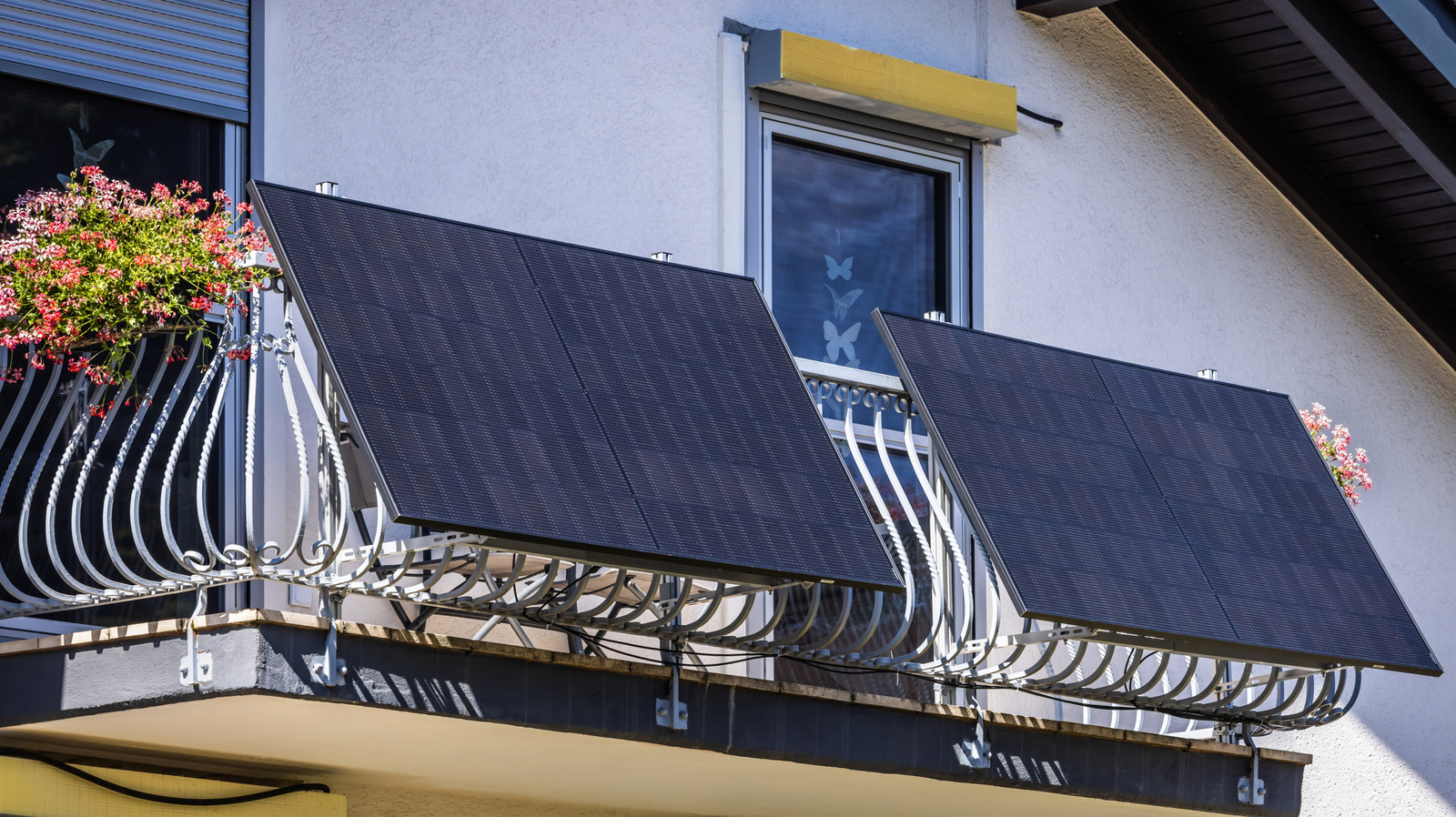
California will allow up to 1,200W installations, but panels must be certified by an outside safety organization.
Ingrid Balabanova/Shutterstock
California has joined nine other US states in approving plug-in solar installations, more commonly known as balcony solar. The Plug and Play Solar Act was passed with overwhelming bipartisan support and signed into law by governor Gavin Newsom on September 30th. "These small, easy-to-use solar panels will give everyone, including renters, the relief they desperately need on our outrageous energy bills," said the bill's author, state senator Scott Wiener. The law goes into effect on January 1, 2027.
Balcony solar kits consist of at least one solar panel and a microinverter to convert DC to 120V AC power, along with a battery backup for those who want power in the evening. They are relatively inexpensive compared to regular rooftop installations as they can be self-installed and (usually) plugged into a standard AC socket.
You won't need to register a plug-in solar system with utilities as is required for rooftop installations. The new process will be relatively simple and free, with immediate approvals. But don't rush out to buy any kit ahead of the law change, as there's a few caveats you need to be aware of.
California has several rules that may limit the tech for now, however. Installations are limited to 1,200W (enough to run a refrigerator and a few small appliances), which is much less than a rooftop installation (6,000+ watts). That number is in line with most other states but less than the 1,920 W maximum allowed in Colorado. California's law also requires UL or equivalent certification, and there is just one of those (UL3700) for plug-in solar so far.
UL3700 requires components to prevent against things like accidental touching of hazardous electrical parts, protection against overloads and prevention of current from flowing in the wrong direction. The defining feature of UL3700, however, is the requirement for a "uniquely configured, non-NEMA plug and receptacle system," PluginSolarUS explains. This would require the intervention of a certified electrician for many installations and make it impractical for renters, despite Senator Wiener's statement.
New balcony solar product innovations may make these systems truly plug-and-play in the future, though. There are currently just a handful of products certified under UL3700 from the likes of Hoymiles, APsystems and Mango. A nonprofit called Environmental Working Group that sponsored the bill expects approval for two more companies by the end of the year, with "products on shelves not long after that in 2027," senior VP Bernadette del Chiaro told The LA Times.
Large state utilities like PG&E and SDG&E opposed the bill, citing safety concerns. Those companies also effectively said the tech may force them to jack up prices, which would pass the extra costs onto users without a solar power option.
KioskNews shows a cleaned-up reading view extracted from the publisher’s page — the original always lives on their site, not ours.