‘A medieval jigsaw puzzle’: rediscovering Coventry cathedral’s ‘stunning’ stained glass windows
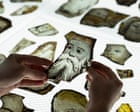
In the decades after Coventry cathedral was destroyed by the Luftwaffe in 1940, the shattered fragments of what had once been its glorious medieval stained glass windows were packed into 30 wooden crates and stored in a cellar.
First smashed during the Reformation and then dismantled for safekeeping before the second world war, the cathedral authorities knew the remnants made up a treasure trove of spectacular 15th-century glass, but not, exactly, what had survived five turbulent centuries.
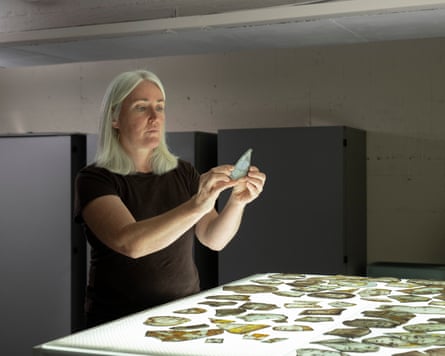
Now, after an ambitious programme to photograph and catalogue thousands of glass fragments, people in Coventry and much farther afield are being offered virtual access to view the “internationally significant” collection of broken windows, for the first time in almost 90 years.
Attributed to John Thornton of Coventry, a master glazier who also created the Great East Window of York Minster, the quality of the artwork is “stunning”, according to Laura Atkinson, a stained glass conservator who led the work to catalogue and photograph thousands of window pieces.
“There are biblical scenes, crucifixion scenes; there are representations of the donors who funded the windows originally and are pictured kneeling and praying,” she said. Other pieces show “whimsical animals and beasts that are absolutely amazing” and representations of precious gems and jewelled fabrics that required immense technical skill from the original glassmakers.
“The medieval glazer has carefully scratched away the surface of the glass to create a hole and then they’ve inserted a coloured piece of glass that will represent the jewel. That would have taken a long, long time and had a high failure rate. This is incredibly expensive, high-end glass. This is the best stuff.”
However she said: “It is the faces that obviously really capture you. You just feel a connection with, I suppose, the painters from the past. You think, oh wow, is this a real person? Is this you? Because [artists] always apparently draw themselves. That’s absolutely amazing.”
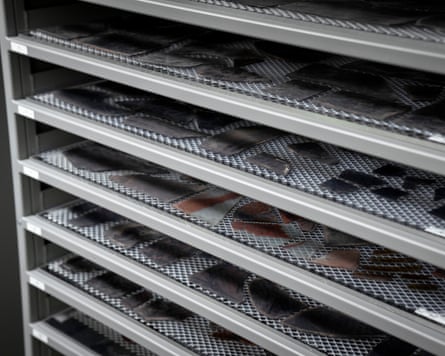
Andrew Hines, head of heritage and interpretation at the cathedral – which was famously rebuilt in the 1960s – said it had been “an open secret” among experts that Coventry was sitting on a world-class archive of medieval glass fragments, “but because of the way in which things were stored, we just didn’t have a sense of the importance of it, of the scale of it”. The project “has allowed us for the first time to think about conservation, research and engagement in a way that we never could have done”.
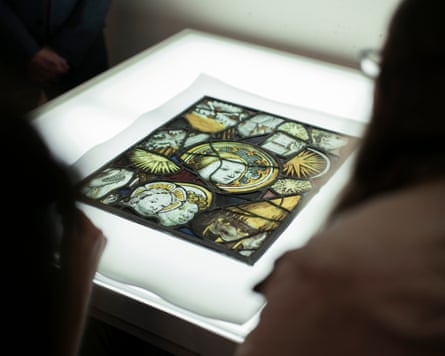
Some of the thousands of pieces are individual, small fragments; others have been reassembled at some point since the Reformation into a panel made up of a jumble of patchworked pieces that only hint at their original scenes – described by Hines as “a medieval jigsaw puzzle”.
Allowing access to the glass archive opens countless potential avenues for further research, said Atkinson, including that AI tools could help reconstruct the themes of the original 15th-century windows. She also said she could recognise parallels in style between the Coventry glass and windows at Westminster Abbey and Canterbury cathedral. “It would be really interesting to be able to see and build up a picture of how the medieval craftspeople moved around and worked in different cathedrals and different phases of work,” she added.
The cataloguing project, completed with the support of the World Monuments Fund, will allow the scanned glass collections to be made available for public browsing via the Bloomberg Connects app. Initially available during November to coincide with Remembrance season, the cathedral plans to establish a permanent digital archive in future.
KioskNews shows a cleaned-up reading view extracted from the publisher’s page — the original always lives on their site, not ours.