Nicholas Hoult’s New Heist Thriller Almost Had a Much Darker Ending
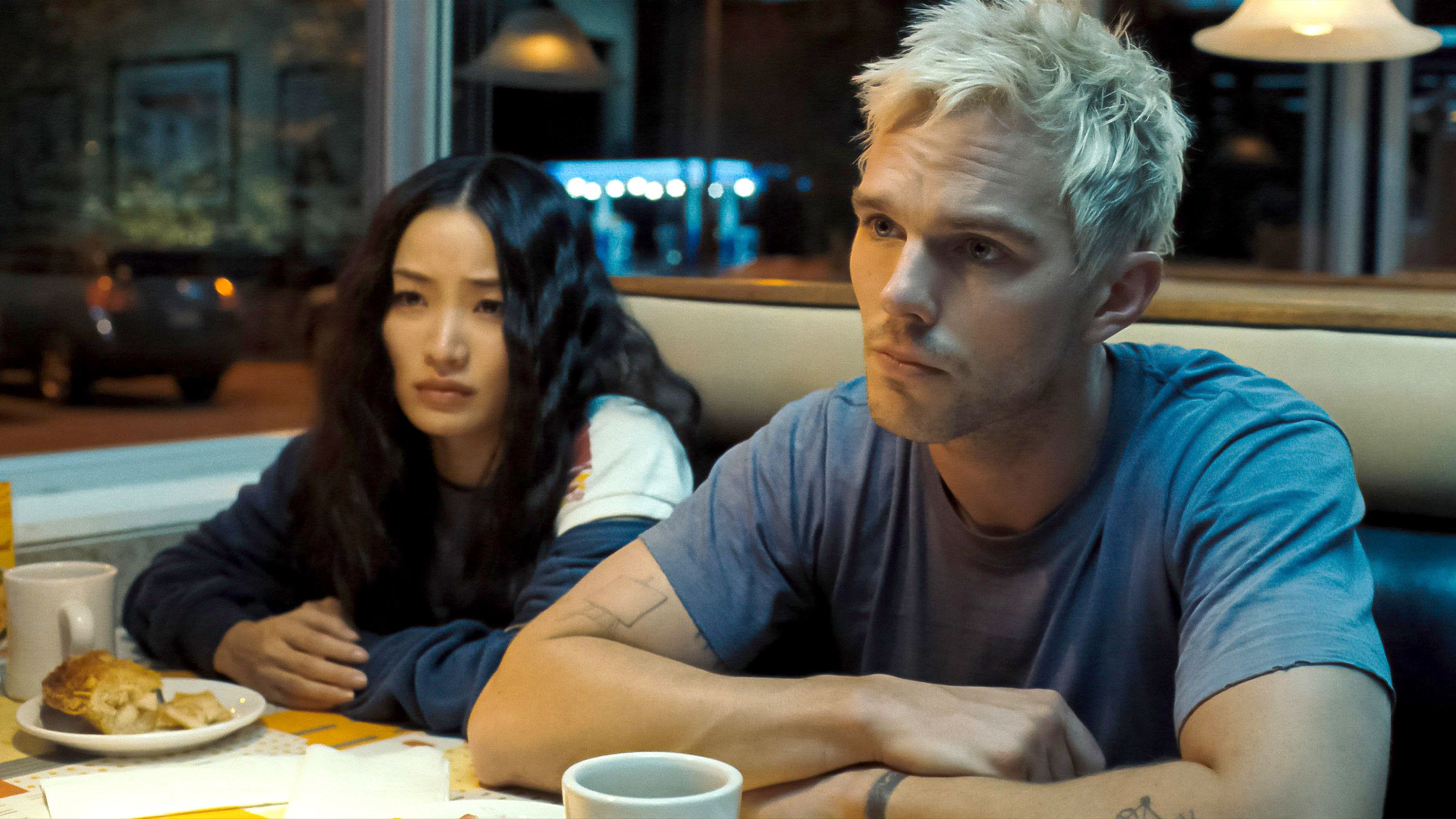
When it comes to the action-comedy genre, few directors are as accomplished and inventive as David Leitch. The former stunt performer/coordinator-turned-filmmaker returns with another high-octane action-comedy, How to Rob a Bank, which releases only in theaters this weekend. The director of thrilling romps such as Deadpool 2, Bullet Train, and The Fall Guy brings an extra punch this outing, as How to Rob a Bank tackles pressing and topical issues dominating the national discourse, particularly the wealth gap and the health care crisis. The 2026 film, starring Nicholas Hoult, Zoë Kravitz, Anna Sawai, Rhenzy Feliz, Pete Davidson, and John C. Reilly, was screened as part of Collider's Screening series, with a Q&A featuring Leitch and his wife and producing partner Kelly McCormick, moderated by Steve Weintraub.
After the screening of How to Rob a Bank, Leitch and McCormick discussed their long creative partnership and the challenges they faced while filming their latest project, as well as getting candid about the state of America's political revolution in the wake of the recent midterm elections. The two reflect on the most difficult stunts they've pulled off throughout their career in Hollywood, with Leitch discussing his time as a co-director of the original John Wick. Leitch and McCormick share the creative process behind How to Rob a Bank, working on a constrained budget, obtaining music rights, blending crowd-pleasing entertainment with biting social commentary, and the film's alternate ending.
Below is a full transcript of the conversation between Leitch, McCormick, and Weintraub, with the full video of the Q&A available above.
David Leitch Reveals Which Cut of 'The Fall Guy' Fans Should Watch
The action filmmaker also shares one of his toughest stunts.

STEVEN WEINTRAUB: For people that have not seen The Fall Guy, do you want them watching the extended cut or the theatrical cut?
DAVID LEITCH: I actually ended up liking the theatrical cut. I'm that rare director that goes through the process, and then realizes, “You know what? This is actually the best version of the movie, and most people will enjoy it.” When I sit back and watch the extended cut, it's like, oh, there's a lot of unicorns that we're missing! I don’t think you can go wrong with more unicorns. I enjoy them both, but I do like the theatrical [cut].
Going back into your stunt career. What's a stunt performed where you look back now and think “I cannot believe I did that?”
LEITCH: There was a time on The Bourne Ultimatum, and it's not the one you're thinking of. There was an explosion in The Bourne Ultimatum, where I'm standing in front of a car and it's like ten feet away. We were on some really long telephoto lenses, so everything feels compressed. I’m at a safe distance, and I'm hooked up to this wire rig, and you're just facing the car, and I literally just got off a plane that day because Dan Bradley [stunt coordinator] had called me to come in and double. I walk onto set, I go through makeup, and I stand in front of this thing that's all rigged. I haven't met this effects crew. It was one of those things where you don't have control over it–you're a passenger, and you haven't seen rehearsals. When I think of that, sometimes you have trust in all the people that make movies, but sometimes it's like as a stunt performer, you have to have a lot of trust. Watching that thing blow up, I'm like, “God, I hope the ratchet takes me away.” And it all worked out, but it was one of those ones where you're like, “Yeah, I signed up for this. That was a bad idea.”
So you spent a lot of time doing stunts and working with a lot of gifted filmmakers. I'm just curious, was there one or two things on a movie set that you sort of said, “I'm stealing this”? This is something that you now use on a daily basis or some lesson that you have applied to your own life from those early days working on all those sets.
LEITCH: There's a ton that gets absorbed. I don't have a lot of specifics that rush to mind, but there's one phrase that [James] Mangold gave me when we were working together on the first Wolverine. He knew I was aspiring to direct, and we had a lot of conversations about directing while I was on that film. I shot a lot of second unit on the first Wolverine. He always said, “You know what? It’s really important to cast the man. Cast the man. If they're halfway to the character already, you're golden.” I thought that was really smart. I think you look at your actors and if you can see something in them, that they could personify that character. There's something in their personality that you think they could pull out and make bigger. It is a good rule of thumb: Cast the man or the woman.
"You need to figure out what's the moment in this film that makes it stand above all these small-budget action films."

I definitely want to touch on Atomic Blonde just real quick. The stairway sequence [is something] people still reference and still talk about. For people that aren't familiar with what really went into that sequence, talk a little bit about how daunting that thing was from a producer standpoint. Did you ever think, “we can’t do this based on our schedule or budget.” What was it like behind the scenes putting it together?
LEITCH: Well, it was actually the opposite in the sense that it was a really small budget movie. Kelly, being the incredible producer that she is, challenged me and she said, “Look, you need to find some distinctive action. You need to figure out what's the moment in this film that makes it stand above all these small-budget action films.” In the past, we’d choreographed oners [shots in one take] and presented them to directors and it. You thought it was logistically hard, but it was really a challenge. I think we went to the stunt team and, ironically, Sam Hargrave, who was the second unit director and stunt coordinator on that.
He was like, “No, we'll never. It's going to be too hard. The actors will never be able to do it, and it's going to be these long takes. I don't want to do this. We're not going to be able to pull it off in the amount of time we have. It's going to take too much training,” and I'm like, “You guys will figure it out.” The choreography team went after it. Kelly and I went in and made a lot of adjustments. And then I had a great production team. Jonathan Sela, who really understood how we could light it and shoot it, and we put together a really amazing sequence for not a lot of money in Budapest. I think it was seven days for that sequence, all in with the car into the water. He didn’t want to do oners, and now that’s his thing. You see the Extraction movies, and the opening scenes are like 30 minutes long.
What do you wish more people knew about being a producer and being a director in Hollywood? I think a lot of people would like to do what you're doing, and what do you maybe wish more people knew or anything you want to share?
KELLY McCORMICK: I don't think anybody wants to be a producer! [Laughs] I don't think I wish anybody anything, to be honest. I do think that one of the things that I do as a producer is that I’m film forward. I can sort of navigate the studios needs, the director's needs, and everybody else's needs based on what the movie needs, if that makes sense. My goal is always everybody signing on to be making the same movie for a moment, go and really sussing out if people aren't on the same page about that as early as possible, to try to get people to understand the movie that we're all making, and then once you do that, then the film will tell us what it needs. We make a lot of different types of things. Movies need a lot of different things, different sizes, budgets, different directors. David's movies are all different in a sense. Following the film as the North Star is one of the things that I do that I think is specifically how I explain the job.
LEITCH: I think that's right, because I think producing is a title that can encapsulate a lot of different things, and everybody makes it their own and can make it their own profession in a way. Kelly has a unique way of working with multiple filmmakers, working with different size budgets, building a company, and then also managing our big films together. There are very few producers in Hollywood that have the ability to do that. Being in the business for 30 years, I haven't seen a producer that's that flexible.
LEITCH: Being a director is awesome. You get to have all these great artists working for you and you get to take their ideas and curate something great. I think the best part about it is being able to create art, entertain people, and then also start a conversation and I hope that's what we did with this film. This was really exciting for me to have this conversation that we're all having in America right now, and we had last Tuesday [Midterm Elections], and it feels like people want change, and so the challenge for me was like, “how can I embed that conversation in a fun action movie?” As a director, I get to do that stuff. I get to take on that challenge and make the art that I find interesting, and then you guys get to take it, enjoy it, comment on it, and go have conversations about it.
McCORMICK: I will say, on hard days, David's like, “okay, you know, do I get a decision today?” It's usually him really handling everyone else's needs the whole day and like trying to get his manipulating everything into what he needs as well.
LEITCH: Yeah, directing is the art of compromise as well. It totally is. You have a vision for something, and it's like a bag of marbles that you hold at the beginning of the day, and they just dump them on the table, and then the rest of the day, you're trying to keep all the marbles. That's directing really, essentially.
Kelly McCormick's Weezer Movie Has Wrapped Filming
Queue the guitar riff.
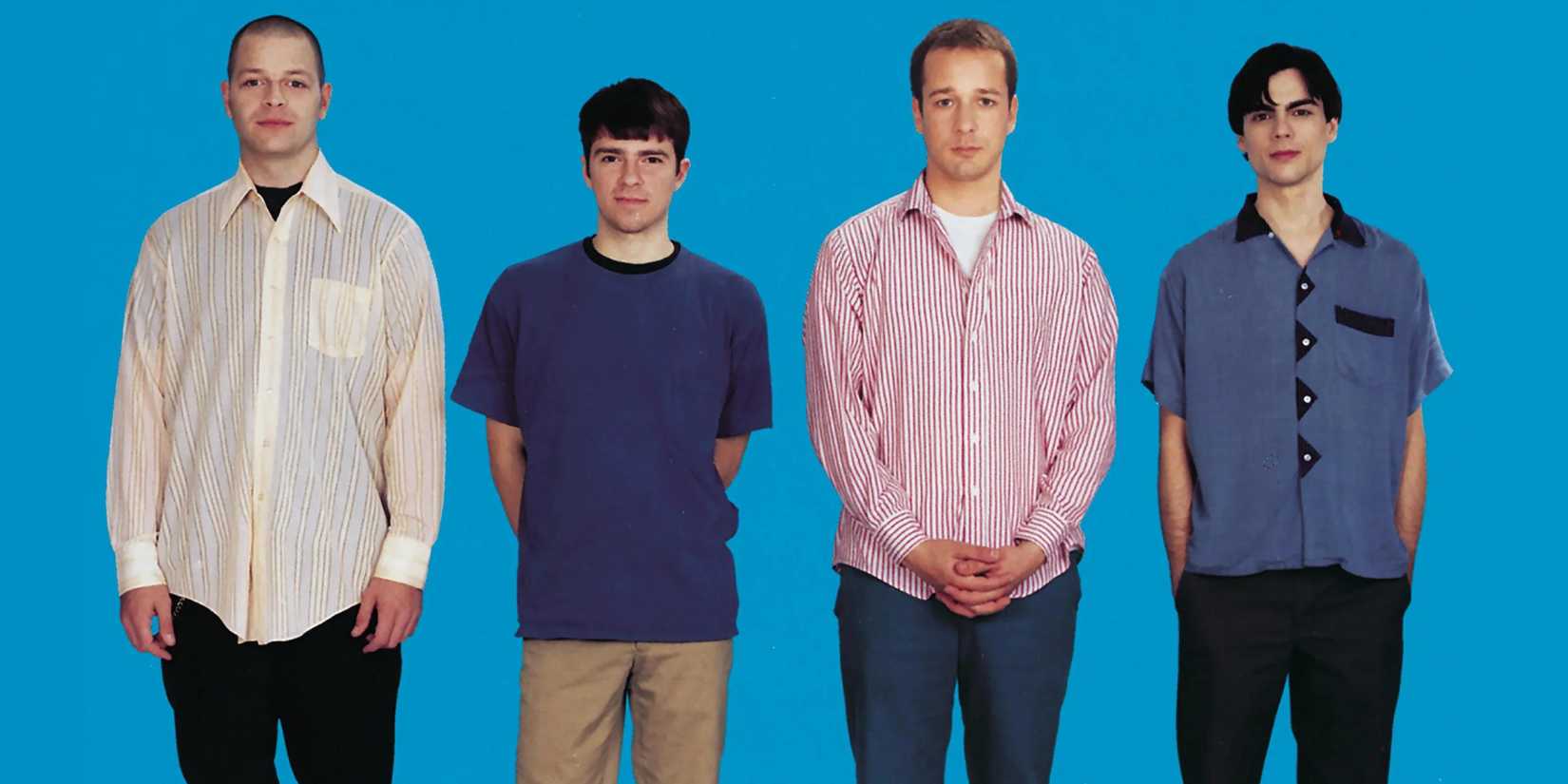
Kelly, I am a huge Weezer fan, and you are producing something called The Weezer Movie. What the f is The Weezer Movie?
McCORMICK: I cannot speak about The Weezer Movie! [Laughs] Not really. If you know Weezer, you know the movie is going to be very “Weezer-y.”
Have you filmed it?
McCORMICK: We filmed it. It's done.
Is it aiming for next year?
McCORMICK: I hope it's aiming for next year, Steven.
What's been the most difficult sequence of your career, and how close did it come to being like, “we can't do this?”
LEITCH: There were a lot of those on The Fall Guy. There were just a lot of practical stunts in that film. We were challenging ourselves to do them for real. We took a lot of time and a lot of prep to get it right. The car jump was scary in the sense that you were making that land on the ground. We were landing it ramp to ramp, but then when you actually put it up two stories in the air and do the same jump, you're just kind of like, “oh.”
McCORMICK: They were testing it near where we were shooting. There was this ramp to ramp, and they kept getting the ramps higher and farther apart as they succeeded every day, basically. The set was actually manmade, but it was also filled with dirt and stuff, and I was just really worried that the wind, the rain, or even the sun would be pushing one side or the other differently than we were expecting. It needed to be exact. I made them do that survey that they do on the streets all the time. Every day, I was like, “Do the survey; just tell me that it's not eroding leading up to it." The crazy part with that stunt was that it was really the speedometer that ended up being problematic. It tripped up and stopped working while he was taking the ramp. It was very programmed exactly how fast he had to go in order to make sure he got to the other side ,and it was wrong, and he was slow, and he felt it, and he punched it, and he got over. In the movie, you can see it.
LEITCH: He clipped the front of it and he hit more of the set than the ramp.
McCORMICK: You can see the set just flying in the movie. That's him barely making the ramp. That one was really intense. That one's one where, if it goes sideways, it's not a good thing. Honestly, some of How to Rob a Bank was stuff that I was like, “Are we going to be able to get it done?” David puts 800 pounds of genius and a 2 pound bag, like no matter what size he's doing. And in this case, it was a modest budget. The needs were still really high. It was all of our guys who worked on, three times, four times the size budget that this was. The film is shot on 35 millimeter, and then on Prosumer, and at the end, it's on digital. There are only 230 extras, which is for the riot, which is like not a lot considering what we're doing. They came up with the most genius ways of stacking the extras. If you saw the shot where John is racing and trying to get to Nick, that's like the way that they shot it, made it look like there were tons of people. There were not tons of people! Some of the scariest parts to me is not being able to have the resources. Weirdly, that's scarier than a stunt to me.
I actually have a question about that. You mentioned you have a limited amount of extras. With the way technology is now, how much do you think about [not using AI], but using technology like CGI to add more people in or do you want real people?
McCORMICK: I mean, it depends on the movie, probably.
LIETCH: CGI wouldn't have looked great, you know. The top shot, at the end, where we crane up, it's the drone shot where Nick is laying out on the pavement. I'll be honest, I added a few people in CGI because we had less extras, and so we made it look like there was more of a group, and CGI worked great there.
McCORMICK: By the way, this movie couldn't afford much CGI either.
David Lietch and Kelly McCormick Originally Passed on 'How to Rob a Bank'
"We were going to look and go into some bigger things, and we just couldn't let it go."
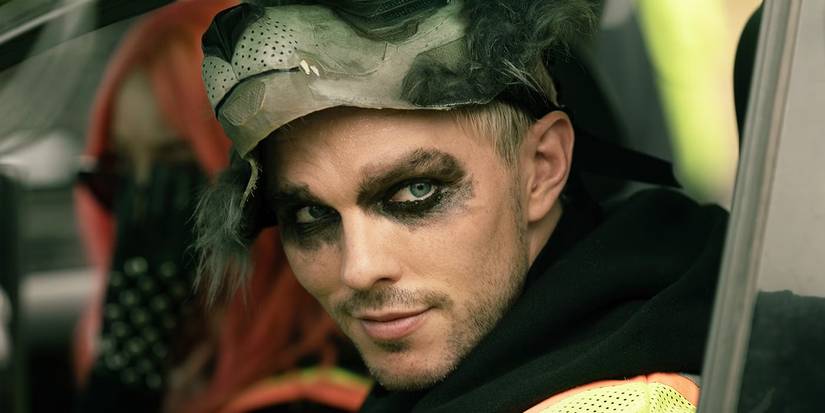
You guys are offered a whole bunch of stuff at this point. What was it about this one that said, “We have to do this”?
LEITCH: The script really spoke to us. What's been going on in the last couple of years and reading this script, it just felt really timely and really relevant. Actually, we passed on it, because of the size, and we were going to look and go into some bigger things, and we just couldn't let it go. A couple weeks later, we reengaged and said, “you know, we really want to do that.” Again, I really wanted to just address the elephant in the room. We have this massive disparity of wealth with young and old. Could I tell that story and be part of the conversation using sort of the 87 North Engin–the David Leitch engine–of action and comedy, and be a little bit more message forward than I normally am, but also make it an entertaining ride and have people enjoy it, but then at the end of it, feel something and maybe there's a call to action for you in your own life to do something for your neighbor or go out and vote and hold your politicians accountable. This originally was going to come out on Labor Day, and I think Amazon had wished for it to go out on Labor Day, and I think the timing wasn't right for marketing, and we found a great slot at the end of the year or so. Every week it gets more timely. It's not like the movie's lost its timeliness. After Tuesday, it’s even more timely. That was the goal with this film. It was to do something provocative and dangerous, but also entertaining.
McCORMICK: It's a subject we're really passionate about, and we wanted to use our platform to join the conversation and to be part of it like a [time] capsule film. There were two other aspects that were really exciting to us. I think David always bends genres or at least adds to the conversation of the genre, and heist movies aren't like this movie, right? The robbers are hiding. They're not trying to hide in plain sight. The message is so forward in this movie in the coolest way that’s almost done with this bravado that they're going to get away with it. It's so Gen Z in that way. They do it for longer than they probably even think, but it's worth it for the message because they're that devoted to what they want people to hear. To try to make change, which was what was cool about it. The second part was to try to find a way to connect with social media and creator storytelling in an authentic way. Everybody’s watching. These creators have such connectivity to their followers. What's the difference? How can you play in both formats? How do they meet? Where do they meet? How do they connect? How do they answer and question each other? We thought that that would be a really fun opportunity for David to play in that space. I haven't really seen a movie that does it in the same way, and I think it's one of the achievements of the film.
I really love the way you did the YouTube stuff with Nick talking to the camera. Talk a little bit about putting together those YouTube clips, because they're very effective and they're dropping truth bombs on the audience. You’re not lying with these numbers.
LEITCH: No, not at all. I think that was one of the fascinating things about the script initially. You read those first numbers. Then you do a little research and you're like, “wow, really?” I think people will be shocked by it. It’s a real motivation to want to rob a bank. The first video was scripted, and there were other videos along the way, but they were really more like The Anarchist Handbook. It was very grounded. Social media doesn't feel like that to me. I mean, the things that I watch are really entertaining and they're engaging and they're crazy. I started to rework those sequences and created the persona of The Wolf that wasn't in the script. We created the gang wearing these colorful masks. The whole social media thing became its own life in the pre-production process. I started to write those edutainment videos so I could drop them in at different places in the scripts to carry the story forward, but also keep the energy going and, again, combine these two storytelling styles. You see in the middle of the second act when they get caught and there's the interrogation scene, those two styles come together, and that's where life really meets social media. Nick is breaking the fourth wall on film, and we're using graphics over film and there's a song playing like you would [hear] if you were watching a YouTube thing, but it's like carrying you through the whole piece. That was an intentional thing. How can we, like Kelly said, bring these to make a modern piece about social media and its power? It’s still grounded in these people's real traumas that have led them to wanting to rob banks.
How Radiohead and Billie Eilish's Songs Made It Into 'How to Rob a Bank'
Lewis Capaldi was also considered for the soundtrack.
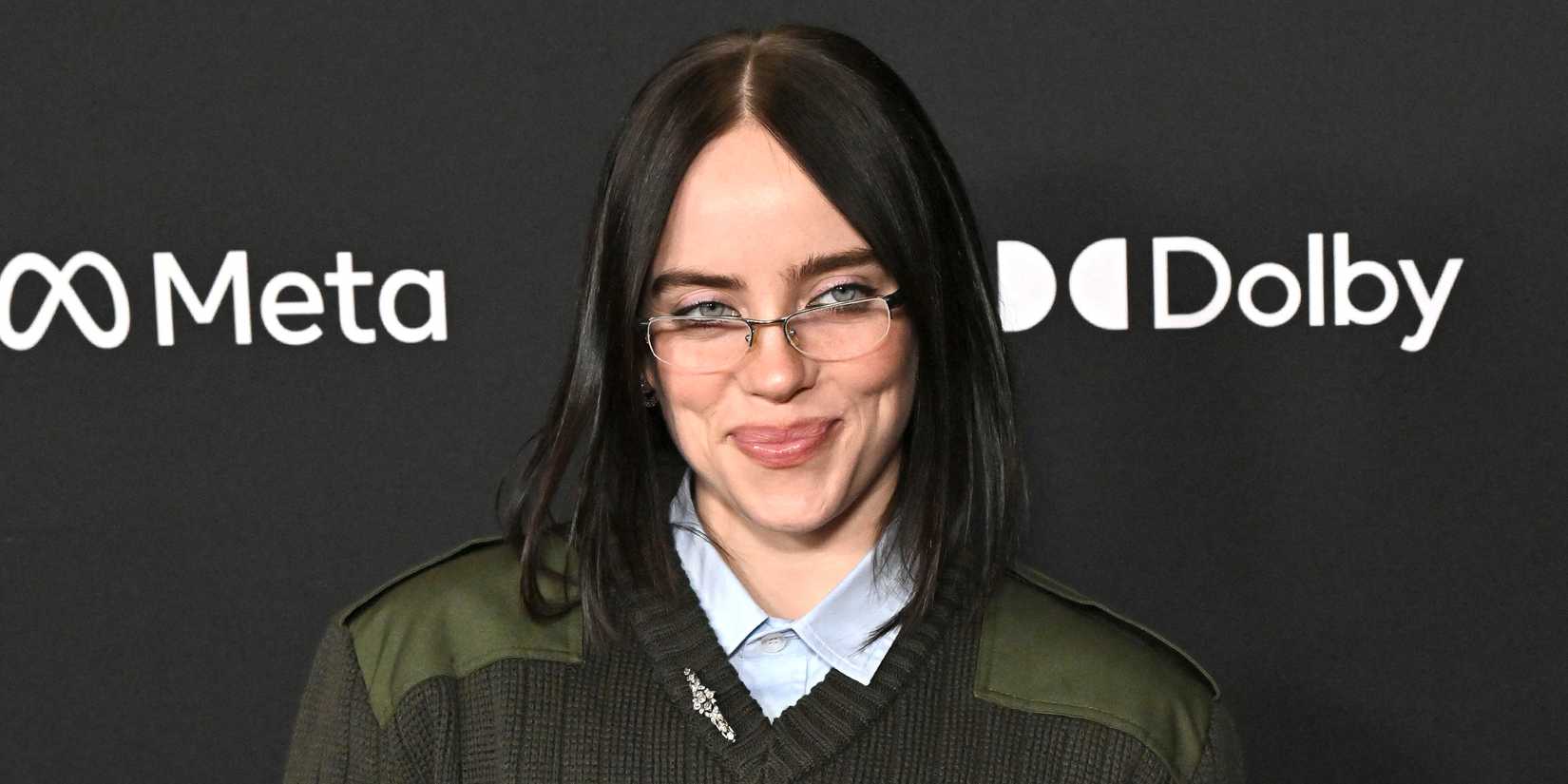
I know you guys made this on a budget, so how the f did you get Radiohead and Billie Eilish? You have some real needle drops in this movie, and they're big songs.
LEITCH: Kelly is always good with me at the beginning when there's a budget and we're looking at line items and you look at your spreadsheet. You realize, “How much am I going to need for Dave’s musical appetite?” We usually set that aside, and it's like, “Wait, that's two days of shooting?!” But we do it because I know it's going to make the film. I know for me, as a storyteller, that's an emotional cheat code. It's shameless, but it's premeditated. I go through the script and there are needle drops that come to mind, and 99% of them stick. And then I formulate my shot sequences around that music. That sequence in the interrogation scene, I knew we were going to use Lily Allen and we were going to use “Fuck You.” I'm shooting it in that way. It’s shot to the music and we know how we're going to edit it. At the end of the movie, with the Billie Eilish song, that did change. That was Lewis Capaldi for the longest time. It used to be “Someone You Loved,” which is also beautiful. We changed it at the last minute, but I still shot that section like a musical piece intentionally.
Why didn’t you get Lewis Capaldi?
McCORMICK: We got sick of it!
LEITCH: No offense to Lewis!
McCORMICK: We loved it so much, and then it was exactly what happened with the playability of that song. Everybody overplayed it, and so did we. Young women actually were testing really high in the film, and they would literally write like, “is there any way to change out that Lewis Capaldi [song]?” They're our biggest lovers of the movie. We got to take care of the ladies!
Billie Eilish works pretty well. Radiohead is pretty selective with what they allow. How tough was it to actually get “Karma Police”?
McCORMICK: We work with this music supervisor named Susan Kent, and she's really awesome. I don't know how she gets the deals that she gets. I just say, “is there any way to get it lower?” And then she says, “yes!” There are times where we write love letters. David wrote a love letter to Billie Eilish. I think you wrote something to [Radiohead] as well. We show them clips of the movie sometimes to show them where it's going to play, which works really well for our films because it's usually a pretty good use, and that sometimes brings the budgets down, but it also just gets you the song sometimes, too.
LEITCH: You know, people believe in it. I think this was a special piece where they knew the material. This movie has a little bit of a message.
McCORMICK: The Billie Eilish [song] I learned is a toxic breakup song. I thought there was something so cool about it in the sense that it's kind of a toxic breakup from the system. We added that component to it, even though it is kind of their love story. At the same time, there's such sorrow to it that I think it kind of works for everything you need to feel.
This isn't really a question. It's more like a statement. I just want to make sure I say out loud that the health insurance industry in America is out to fuck you, and anything that we can do, especially in your movie to get more people talking about this, is very important. That's all I got. I give credit to Amazon for being behind it. It's a huge corporation pointing out some of the bullshit.
McCORMICK: Everybody inside of Amazon is really passionate about the movie. They were so incredibly supportive. You've seen the work that they're doing on social media, especially. These trailers are out of this world, and you could just feel that this is hitting us all, even when you're working there too, you know? It’s pretty interesting to see how much everybody who's been a part of it galvanized around it. One of my favorite stories [was] when we were shooting in the streets of Pittsburgh. If you've ever shot with extras, you know that they barely stick around for lunch, let alone stick around for the full day, let alone if you're shooting nights. They don’t stay all night or come back the next night, forget about that. We shot two weeks of nights in downtown Pittsburgh, and every night there were five more people! They came, and then they brought five friends, and we ran out of masks, costumes, and everything, because it just became this movement in Pittsburgh while we were shooting it. They all came to party. It was like a rave. They made their own signs. It was just so cool and it made us feel like this is what we want people to feel coming out of the movie, too. You don't have to riot, per se, or rob a bank, but together you're stronger. Find your communities, say your truth, let's make a change.
LEITCH: You can be angry and not riot.
'John Wick's Editor Is the Secret Key Ingredient of 'How to Rob a Bank'
Elisabet Ronaldsdottir is a regular collaborator of Leitch's.
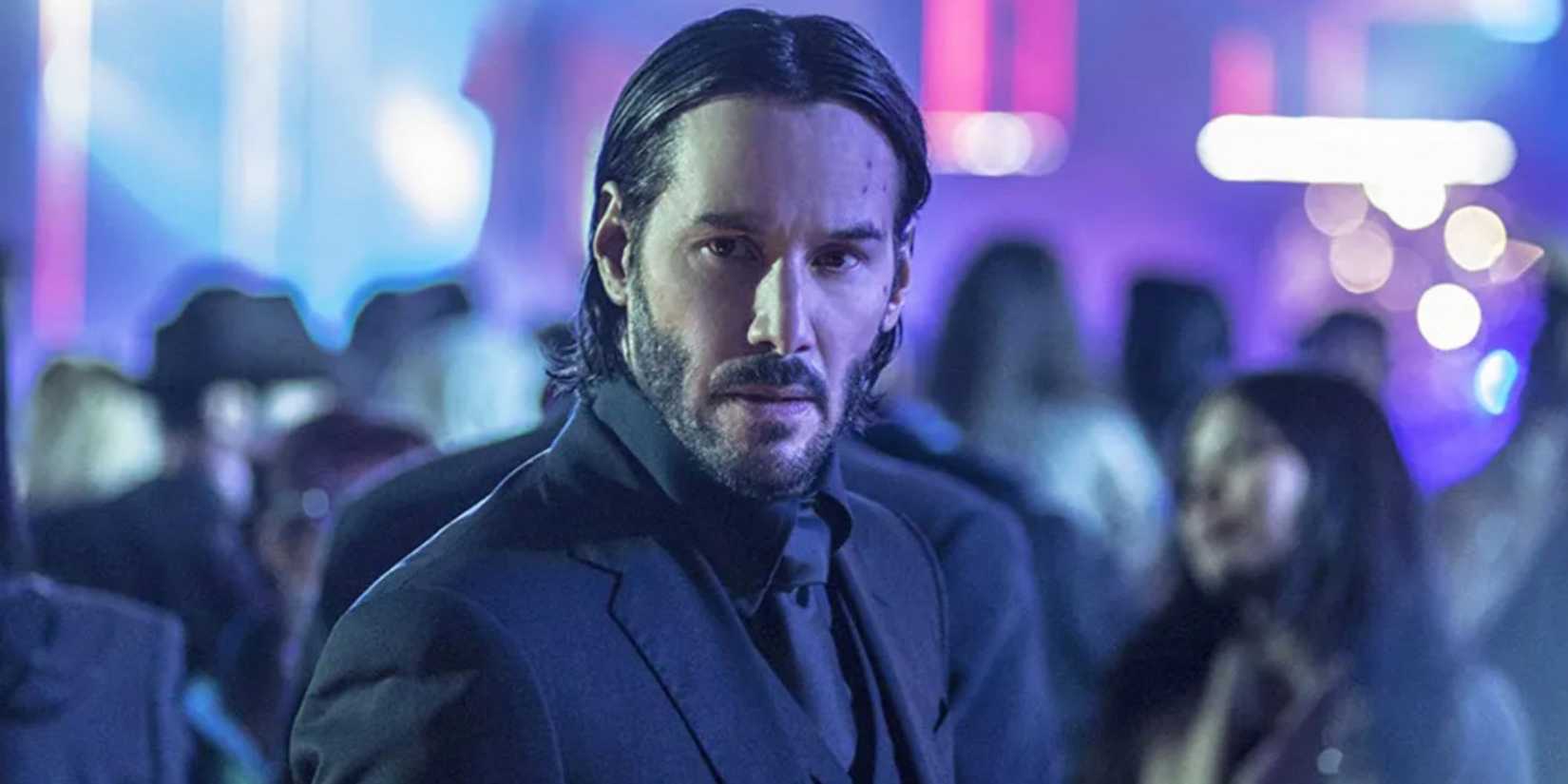
I need to talk about editing, because you guys know I'm fascinated by editing.
McCORMICK: Elisabet Ronaldsdottir crushed this.
LEITCH: The Icelandic genius. She edited the first John Wick and all of our films. She's amazing.
Everyone in this audience knows that I love John Wick. A lot of people don't remember that it was possibly going straight to DVD or straight to Blu-ray. I could be wrong about this, but then Lionsgate picked it up and then it became a thing.
LEITCH: Yeah, that’s pretty much it.
McCORMICK: It’s more complicated, but we should talk about the editing on How to Rob a Bank.
What is it like when you guys are in the editing room and you're putting together the assembly cut, because you've worked on a number of movies. When you're making your assembly cut, which is where you take all the footage and put it together, have you ever wanted to, like, jump out the window when you have an assembly cut? Or do you always have something?
LEITCH: That's a great question, Steve. Wow. You should do this for a living! Sometimes, you see it, and you're like, “what have I done?” I hide it really well! I do try to walk in with positivity, but there are times where I'm like, “oh, my God!” I trust Elisabet, who's amazing, and I trust Kelly. Elisabet has seen a lot of material over the years, and she's really brutally honest, and she pulls no punches. She can look at you and go, “we have a great movie.” If she looks at me like, “we got some stuff to figure out,” and then I’m like, “oh shit, now we really got to go to work.” Post[-production] has become a passion for me. During the first Wick, I didn’t love it. I didn’t understand that letting go amplifies another scene, and as I’ve grown as a filmmaker, post has become one of my favorite places to play. We were meticulous about the editing in this film. We got to play with those video sequences that were edited in a different house, but then [they were] brought in and we re-edited them. Getting the timing just right, playing with the music, adjusting the sound, having a scene in, having a scene out, watching it again. I love that process. I've become really comfortable with letting things go to make for the greater good. I would be bad on an island where you have to pick somebody to go and be like, “it's the greater good. You got to go out.”
For people that don't realize how, how long does it typically take for you guys to edit a film? I don't think people realize that it’s a battle. You are working long hours for many months to put something together.
McCORMICK: We have a pretty short editing schedule. I think it's 27 or 28 weeks.
LEITCH: 28 weeks is a short schedule.
Tell the people, is that like a Monday through Friday? Is it 9 to 5?
LEITCH: Yeah. It's more like a 9 to 7. There’s a lot of things going on. You have your editor who's working on scenes you may be watching, you divide the movie into different reels so you can actually digest it in a way so that you're not rewatching everything all the time. I might be watching a reel doing notes, Elisabet might be working on a second reel. We may have an assistant editor looking for sound or a different take.
McCORMICK: You’re working with your composer, you're working with your visual effects team, you're having meetings all the time on iterations of either music or effects. It’s a lot.
LEITCH: It’s kind of endless. There's so much to do that the day just gets consumed.
McCORMICK: There’s a 10-week period that’s contractual with the DGA. I think people really think that that's a ton of time, and then they run out of time. That happens so often that they didn't have the discipline in those ten weeks, and things go off the rails because it feels like you've got all the time in the world, and then you are out of time so fast.
LEITCH: What I like to do now is to get my first six weeks. I'm super intense and I try to get to the strongest version of the movie that I'm feeling at the moment. I try to get a really strong assembly cut, reduce it down. I bring Kelly in for fresh eyes and then it's like dropping a hand grenade on it! “Damn it, it was good for a second!” Then I have another four weeks to take those ideas and shape them. The movie ultimately becomes better the more you put it under pressure.
McCORMICK: David's director's cuts are really mature, so it's nice, because then the studio can see what the movie is. You're basically testing that cut. He's pretty accepting of notes, if they’re really good, at the director’s cut phase, to do his first preview so that, again, we're making the same movie with the studio. It's not like a split where it's like it's his cut versus theirs. We've never really done that. Then it’s testing it again and really listening to the audience for confusion, for pacing, for jokes, for songs, and then finishing it, which takes forever, too, because it's like three weeks of mixing. It's the slowest process in our high-tech world to have AI taking over our jobs. They have to mix a reel and then match the reel to the edit, and the conforming. It takes forever. I go, “Isn’t there a way to do this faster?!”
LEITCH: You're sliding things around frame by frame to get the sound back to where it was when you make an edit.
McCORMICK: It’s like three weeks of that, going back and forth and then listening again and going back and forth, then it's color.
LEITCH: You can see how much Kelly loves post!
McCORMICK: I actually do! I like it more than production!
Every time I hear from people about what goes on behind the scenes, in terms of making some of these movies, and the bigger the film, the longer it can take and the more meticulous, it's crazy. What was the last thing you cut out before you picture-locked [on How to Rob a Bank]?
LEITCH: Let me say this, because I would be more like the last thing I put in because we were toying with the ending. If you were having the real feels when he's laying on the ground and the camera's moving up, we could have gone to black. That was my first ending of the movie, but I shot all the other endings.
That’s a completely different film.
LEITCH: It leaves a very, very different feel. I wanted this to be a call to action, and I wanted this to be about hope. At the end of the day, I thought it was better to go with the original ending that we shot. I kept watching the film, and I was really moved by that moment.
How did you decide on how to escape prison? When you do something like that, are you in the back of your mind, like, “well, we might want to continue the story”? Or is it like, “we're just going to have fun with this”?
McCORMICK: It actually stemmed from just wrapping, and the hope. Wrapping up Renzi, it worked so well that you knew that he was still doing stuff and like going to hack his way into some more fun videos, and it wrapped up Anna Sawai’s character so well, and then it gave you hope. It wasn't about a franchise play at all. It was just about hope in this case.
LEITCH: Exactly. It was really more of just wrapping up this movie, because I think it was really a one-off about this message.
The best movie title of 2027 is you guys. You own the best title of next year. They made another movie and the title is…
McCORMICK: Jason Statham Stole My Bike.
It's the greatest title of next year.
LEITCH: You're going to love it.
McCORMICK: It’s definitely a palate cleanser from tonight.
You've done a lot of second unit [directing]. How much do you lose your mind having a second unit director on your movie? Because I would imagine you want to shoot absolutely everything, or maybe I'm wrong about this.
LEITCH: I don’t have a lot of second units on my set. I don't push a lot off to the second unit. When I do, I generally have great people that I trust that have been with me for years. On this film, Greg Rementer directed all the heist stuff, and that was the stunt team dressed as the actors, because we're using masks. I just let them go wild.
McCORMICK: There were like a thousand cameras on everyone, prosumer cameras, the drones, and he shot them like they were a play.
LEITCH: We shot it like it was just real life. You're capturing it like a content creator would, right? There's just cameras everywhere, and you're seeing the cameras. There’s a lot of trust with me and the stunt teams, because we go way back, and I've been in that world for so long.
I could ask you guys a million other things, but I'm going to get killed. I've already gone way too far and so on. I'm just going to stop there and say, congrats on the movie.
LEITCH: You’re already going to get killed by the health insurance industry!
Fuck the health insurance industry! I hate them so much. No one should go bankrupt in America for having to go to the doctors.
LEITCH: We agree!
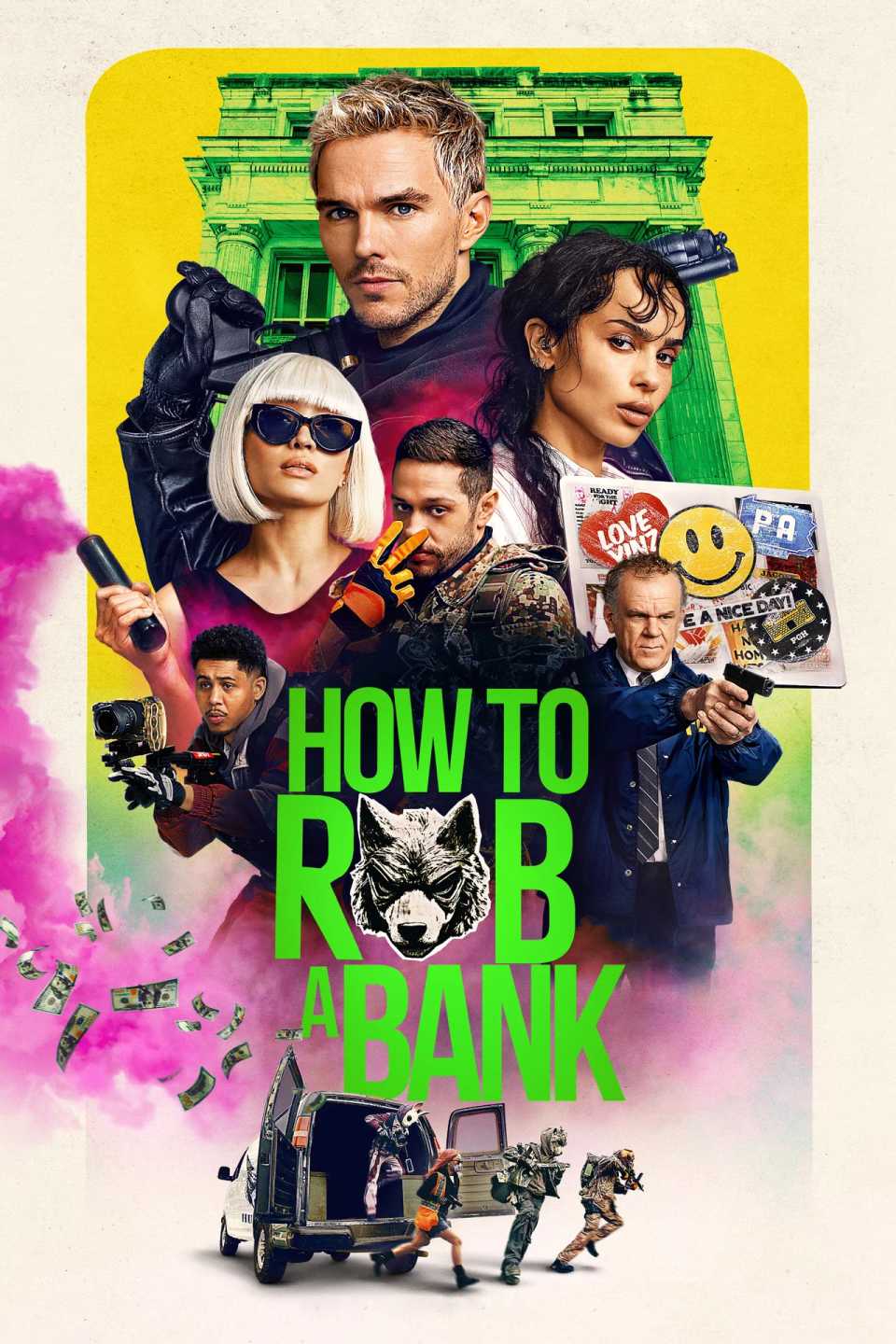
How to Rob a Bank is in theaters now.
- Release Date
- November 13, 2026
- Runtime
- 122 Minutes
- Director
- David Leitch
KioskNews shows a cleaned-up reading view extracted from the publisher’s page — the original always lives on their site, not ours.