Marcos vows better benefits, opportunities for nurses
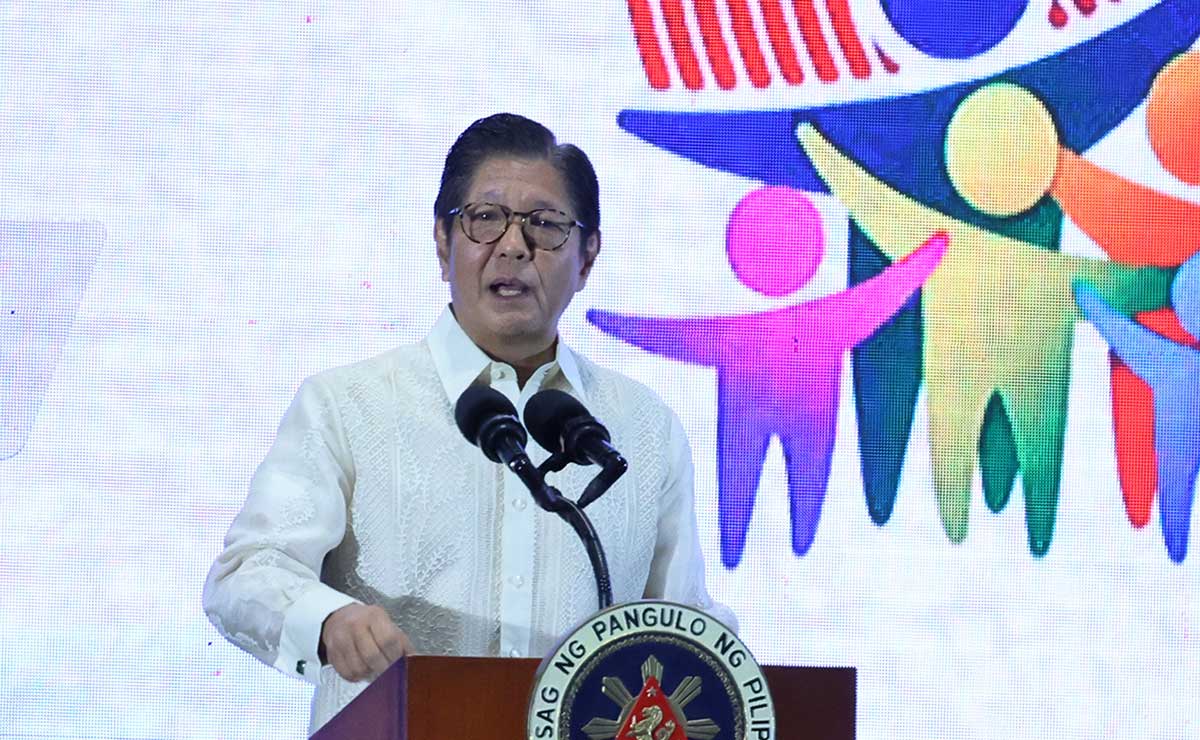
MANILA, Philippines — President Marcos paid tribute to nurses on Monday, thanking them for their service to the country as he also vowed to improve their welfare by providing them with government support, benefits and more opportunities.
He made the commitment during the 2026 national annual convention of the Philippine Nurses Association Inc., which coincided with its 104th foundation anniversary and the 69th Nurses’ Week celebration at SMX Convention Center in Pasay City.
In his speech, the President recognized the vital role of Filipino nurses in providing healthcare not only in the Philippines but also around the world.
Article continues after this advertisement
“Your contributions deserve our recognition and our continued commitment to advance the welfare and professional development of nurses. So we work very, very hard to strengthen our healthcare system now,” he said.
FEATURED STORIES
NEWSINFO
NEWSINFO
NEWSINFO
READ: Why the Philippines must prioritize its nurses
“We must also work toward improving nurse-to-patient ratios, filling vacant positions, and providing more opportunities for our Filipino nurses. All of these is necessary so that our nurses can carry out responsibilities more efficiently and ensure that our healthcare institutions better serve our people,” he added.
Mr. Marcos recalled that in one of his trips abroad, the leader of a “very rich country” acknowledged the importance of Filipino health workers to their healthcare system.
‘You have the switch’
“I won’t tell you which country, but it is a very rich country. When we sat down, he immediately said, ‘Do you realize that in all the ICU hospitals in my country, 60 percent of the nurses and doctors are Filipinos?’” the President said.
Article continues after this advertisement
“So he told me—and this was a king—‘Always please look kindly upon us because you have the switch. If you stop sending us your healthcare workers, then the entire healthcare system in my country will stop,’” he said.
According to the President, the government is coordinating with the Department of Health to improve the working conditions of healthcare workers.
Article continues after this advertisement
It is also working with the Commission on Higher Education and the Technical Education and Skills Development Authority to expand opportunities for healthcare training, he added.
“Our goal is to help more qualified Filipinos enter the profession, strengthen their capabilities and protect the welfare of our nurses to ensure that our healthcare institutions have the workforce that they need to serve our communities,” Mr. Marcos said.
He noted that the government had increased the allocation for the health emergency allowance of public and private health workers from P6.8 billion in 2022 to more than P110 billion in 2026.
“To our nurses: Thank you very much for your wholehearted service. Your expertise, compassion and dedication continue to give hope to our fellow Filipinos and strengthen our healthcare system,” the President said.
“We will continue to work hard to provide you with the support, benefits and opportunities that you deserve,” he vowed.
Shortage problem
The country, however, has been plagued for years by a shortage of nurses due to poor working conditions, among other factors.
Based on current estimates, the Philippines lacks around 127,000 to 160,000 nurses in both private and public hospitals. The World Health Organization, in its State of the World’s Nursing 2020 report, projected a shortfall of 249,843 nurses in the country by 2030, unless the government exerts more efforts to keep them from leaving for more highly paid jobs abroad.
In a hearing in July before the House committee on health, representatives from the Alliance of Health Workers (AHW), the Philippine Nurses Association (PNA) and the Integrated Midwives Association of the Philippines aired their complaints.
Ernesto Bulanagi of AHW noted that 34 years after Republic Act (RA) No. 7305 or the Magna Carta of Public Health Workers became a law, many of its provisions “have not yet been fully implemented.”
He said that public health workers continue to receive lower pay, allowances and hazard pay.
Some public health workers, according to him, remain Salary Grade 1 employees, receiving approximately P14,000 monthly, despite the many patients under their care, the lack of healthcare facilities, and the implementation of the zero balance billing policy in public hospitals.
The issue of understaffed hospitals was also raised at the hearing, with PNA representative Gian Carlo Torres also calling for an increase in salary and plantilla positions.
Torres said that some nurses with 10 to 15 years of service remained in job order positions, receiving around P1,000 per day, or about P20,000 monthly.
He added that the ratio of plantilla positions must likewise improve, noting that some health centers have only one plantilla position but employ more than 20 job order nurses.
“The fact that you need 20 plus nurses means there is a real shortage of staff in the area or in the community,” Torres said.
Your subscription could not be saved. Please try again.
Your subscription has been successful.
Passed into law in 1992, RA 7305 aims to promote the social and economic well-being of the country’s public health workers. /cb
KioskNews shows a cleaned-up reading view extracted from the publisher’s page — the original always lives on their site, not ours.