Africa CDC warns Kenya at risk as DRC Ebola outbreak spreads

Audio By Vocalize
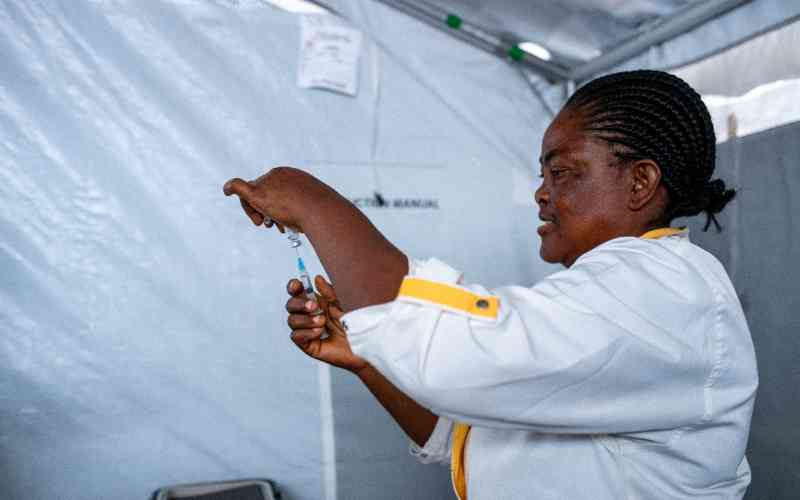
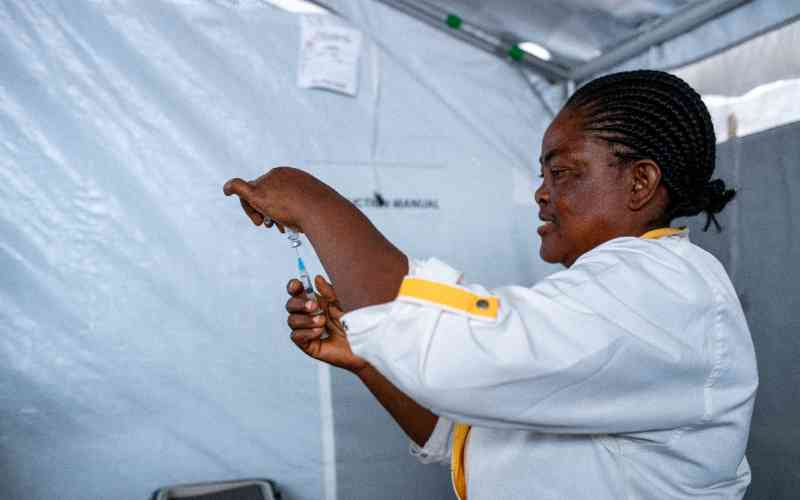
A health worker prepares to administer Ebola virus vaccine at the Provincial Laboratory of Ituri in the DRC on September 19, 2026. [AFP]
Kenya is among 10 African countries identified by the Africa Centres for Disease Control and Prevention as at risk of Ebola as Bundibugyo virus outbreak in the Democratic Republic of Congo approaches 8,000 confirmed cases.
The list, issued by Africa CDC, includes Kenya, Rwanda, Tanzania, Angola, Burundi, the Central African Republic, Republic of Congo, Ethiopia, South Sudan and Zambia.
The warning reflects concern over population movement and cross-border transmission as the outbreak continues to expand in the DRC.
Africa CDC Director-General Dr Jean Kaseya said at the time: “We have 10 countries at risk.”
The countries have been urged to strengthen surveillance, preparedness at points of entry, laboratory capacity and the ability to rapidly isolate and manage suspected cases.
Kenya has not reported a confirmed case of Bundibugyo Ebola, but its position on major regional transport routes has made border surveillance a key part of the preparedness response.
Health authorities have maintained enhanced surveillance at points of entry and strengthened preparedness to detect and respond to a possible imported case.
The regional picture has meanwhile changed, with Uganda lifting out of the immediate outbreak response after completing the required monitoring period without a new case.
That development has prompted the United Arab Emirates to ease Ebola-related travel restrictions on Ugandan nationals.
The UAE introduced the measures on June 6, 2026, suspending the issuance of new visas to nationals of Uganda, the DRC and South Sudan as part of measures to strengthen preparedness against Ebola.
The UAE has now lifted the restrictions affecting Ugandan nationals, while measures relating to the DRC and South Sudan remain in place amid the continuing outbreak.
The change comes as the epidemiological situation in the DRC shows signs of improvement in some indicators, although transmission remains active.
According to the latest assessment, the DRC had recorded 7,911 confirmed Ebola cases and 3,801 confirmed deaths, giving a case-fatality ratio of about 48 per cent.
Stay informed. Subscribe to our newsletter
The outbreak has spread to 63 health zones across seven provinces, with Ituri remaining the main centre of transmission and North Kivu recording a rise in cases.
WHO has also reported continued transmission in Haut-Uélé and Tshopo, while South Ubangi has recorded additional cases after becoming the seventh province affected by the outbreak.
The situation in South Ubangi has drawn particular attention because of the province's border position and high population mobility.
On Saturday, DRC Health Minister Dr Samuel Roger Kamba met national deputies from South Ubangi to review the health situation and the response to Ebola.
The discussions covered surveillance, case detection, treatment, contact tracing and community prevention, alongside other health threats including mpox, cholera, measles and malaria.
The DRC authorities have described South Ubangi as a priority area because of its location and population movement.
Meanwhile, WHO's regional preparedness work continues across countries considered vulnerable to importation.
Africa CDC has separately convened high-risk countries to strengthen preparedness at borders and ensure that health systems can detect and contain an imported infection before it establishes local transmission.
Health officials are also watching the movement of people across borders, the ability to trace contacts and the speed at which suspected cases can be tested and isolated.
KioskNews shows a cleaned-up reading view extracted from the publisher’s page — the original always lives on their site, not ours.