BigBasket Kitchen in PJ Section 14 showcases Hainanese chicken rice with rice balls, ‘nasi lemak’ with a Nyonya twist and handmade Nyonya ‘kuih’
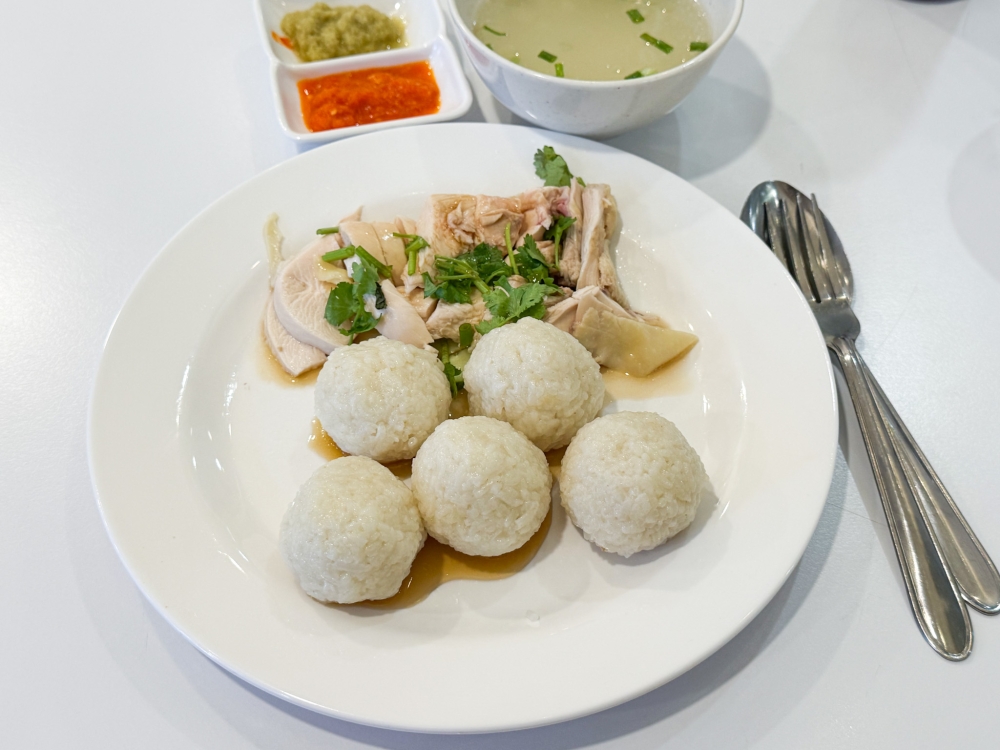

Hainanese Chicken Rice can be ordered with rice balls which are made only upon order. — Picture by Lee Khang Yi
By Lee Khang Yi
First Published: Monday, 19 Oct 2026 9:00 AM MYT
PETALING JAYA, Oct 19 — Our relationships with restaurants are often as complicated as human ones.
We may love one or more dishes at a place that sees us returning many times until the next “flavour of the month” – as my friends call the trending food of the moment – entices us away.
But once we hear their story or connect with them beyond just a perfunctory relationship of placing an order, those invisible threads bind us to them.
You find yourself championing their cause, as it’s not a faceless person behind the restaurant, hired by a big corporation to take your money.
You can find that warmth at BigBasket Kitchen, a family-run place well hidden inside the often forgotten Millenium Square in Petaling Jaya Section 14.
I had once wandered inside the place to try Stand Pie Me when they opened their cafe there. Coincidentally their space was taken over by BigBasket Kitchen.
I first came across an earnest Threads post by the owner’s son (@vincentchin88) that tugged at my heartstrings as the place is run by his septuagenarian Hainanese mother, Margaret, and his Nyonya aunt Abigail Lim who has built her own home catering business for 10 years.
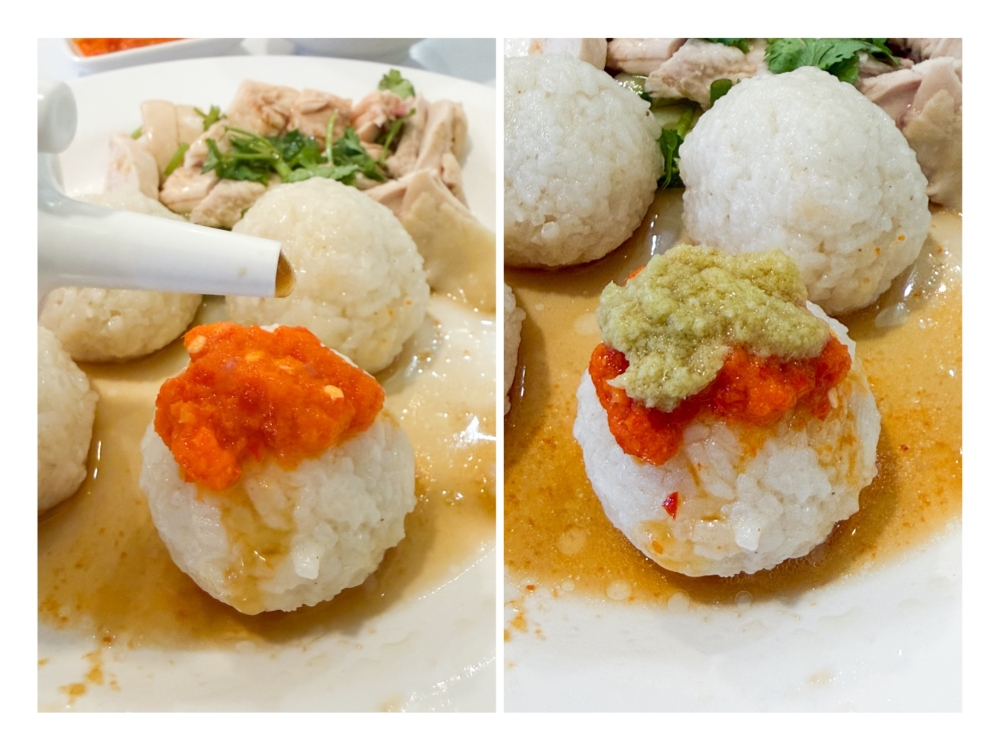
Do not smash down the rice ball, eat by topping it with chilli sauce followed by the blended soy sauce (left). For a final touch, add the ginger paste (right) on top before popping it in your mouth. — Picture by Lee Khang Yi
Fun fact: Lim is also the mother of Rachel who used to work at Stand Pie Me as the cashier — a role she reprises in BigBasket Kitchen with her friendly charm.
At the heart of this cafe is a small curated menu that revolves around family heritage, freshness and traditional techniques.
In this family’s story, the chicken rice reflects their Hainanese heritage, combining poached chicken and homemade rice balls — a dish everyone identifies as being from Melaka.
Those same rice balls, freshly made upon order for their Hainanese Chicken Rice (RM9.50), have a softness even when compressed into a ball shape; they easily come apart when you bite into them.
My closest association with rice balls is the triangular Japanese onigiri, a portable food designed for quick meals on-the-go or picnics.
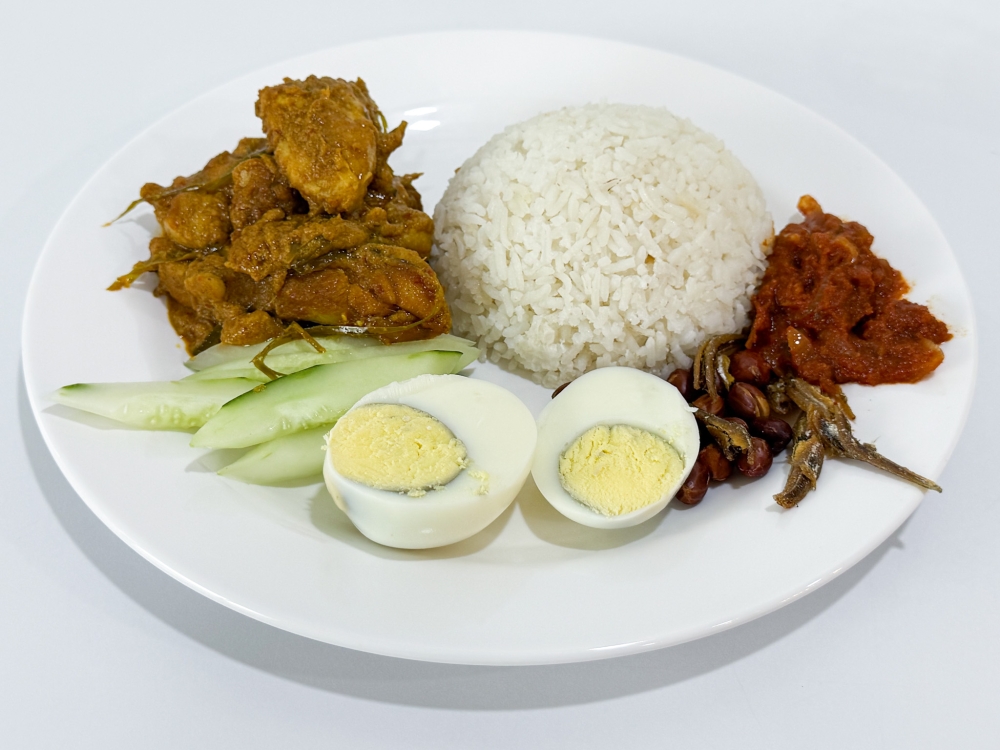
‘Nasi lemak’ features a zingy ‘sambal’ with chicken ‘rendang’ and rice that isn’t too rich. — Picture by Lee Khang Yi
In the Japanese manga Oishinbo, a rice ball showdown featured many flavours, ultimately won by the unforgettable taste of nostalgia: a mother’s warm hands softly creating the rice balls with the right firmness to break up in the mouth, just like how I envision BigBasket Kitchen’s rice balls are made.
You will also be taught how to relish these rice balls, just like how the family enjoys them.
Don’t smash the ball; the point is to relish its fluffy texture. However, my way is to halve the rice ball without crushing it, which makes it easier to eat.
Before relishing the rice balls, dollop a bit of their chilli sauce, followed by their blended soy sauce and finally the ginger sauce.
All sauces are made in-house and the poached chicken is also drizzled with their blended soy sauce.
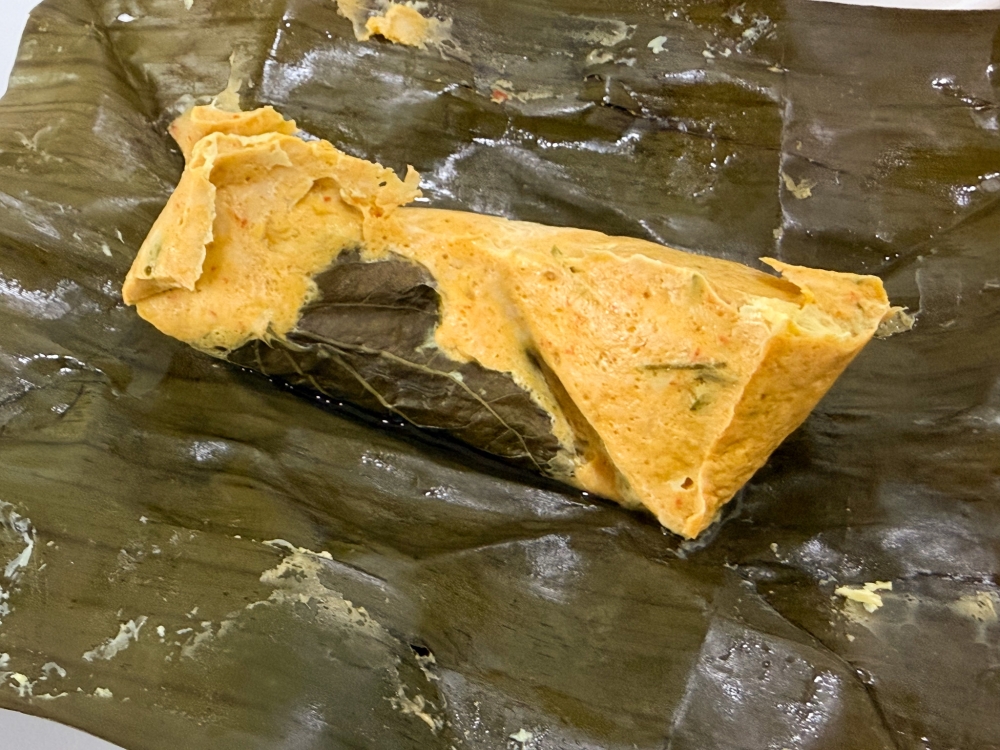
On Fridays, there’s ‘otak-otak’ in all of its rich, creamy glory. — Picture by Lee Khang Yi
It’s been years since I ate rice balls in Melaka and that memory focuses more on the long wait for my meal than on the taste.
To revive that taste, I tried a place in KL that offers Melaka chicken rice for a comparison.
Probably due to time constraints, they prepped the rice balls ahead of time and kept them warm in a rice cooker. This resulted in a slightly harder exterior which compromised the mouthfeel of the rice ball.
You can also enjoy their Hainanese Chicken Rice with a plate of rice if you prefer the conventional way but where’s the fun in that.
Even the poached chicken may be swapped with smoked chicken.
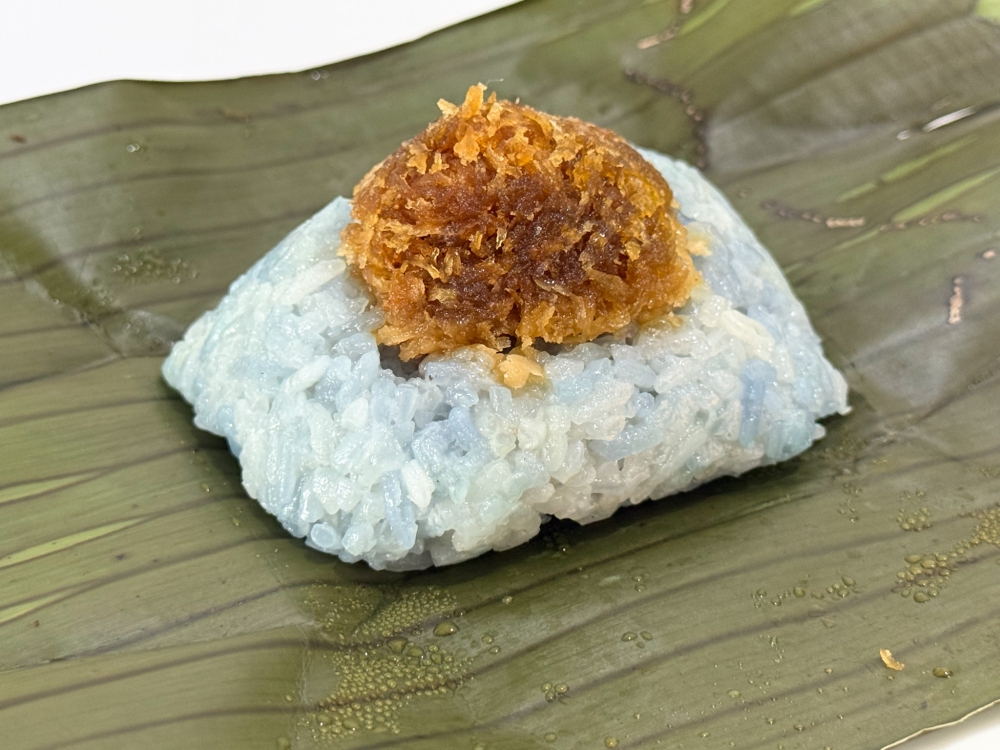
The ‘pulut inti’ is glorious here with blue marbled glutinous rice topped with grated coconut tossed in ‘gula Melaka’ syrup. — Picture by Lee Khang Yi
Nasi Lemak (RM9.50) is also done differently here; the side dishes rotate among kapitan chicken (Monday and Tuesday), chicken rendang (Wednesday and Thursday) and otak-otak chicken (Friday).
Using a brighter red sambal with sliced onions, the flavours are zingy rather than the typical sweet-spicy profile that brightens up the flavours.
The rice isn’t too rich or greasy with santan while the chicken rendang is covered liberally with the rich, creamy gravy and the meat tears easily from the bones.
On Friday, you get the best of both worlds: chicken rendang and otak-otak.
Wrapped in a banana leaf, the rich custard with a daun kaduk is soft and creamy with tender chicken inside. An extra otak-otak is RM7.50.
We all know that food is best relished when it’s freshest. Here, a made-to-order menu allows your Nasi Kerabu or Kerabu Bee Hoon to be prepared a la minute.
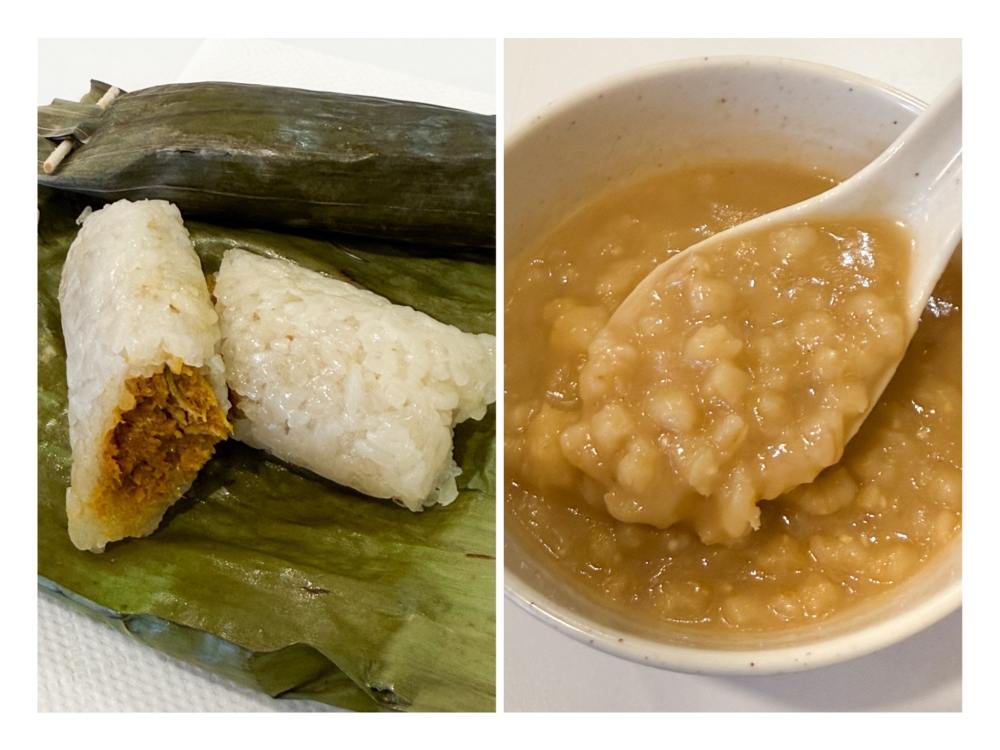
Pulut Panggang (left) features fragrant dried prawns and coconut filling. On certain days (right) there is ‘tong sui’ like ‘mak chuk’ made with wheat pearls to end your meal here. — Picture by Lee Khang Yi
For dessert, there will be one type of Nyonya kuih daily, which rotates from a small list of kuih like Pulut Panggang, Pulut Tai Tai, Pulut Inti, Ang Ku Kueh and Kuih Bingka.
Lim meticulously prepares all these kuih, making each piece a labour of love.
Here, the kuih features a lighter touch of santan, perhaps for our well-being but it makes the glutinous rice slightly drier, which may bother kuih connoisseurs who prefer silkier grains in the mouth.
Pulut Panggang (RM5) was a happy surprise, heightened by the anticipation of unwrapping the cylindrical green parcel secured with toothpicks to discover a roll of glutinous rice.
It looks ordinary but a bite inside reveals a burst of sweet dried prawns mingling with grated coconut and a hint of kaffir lime leaves.
Another time it was a childhood favourite of mine, Pulut Inti (RM2.50), where blue marbled rice is topped with the inti kelapa or grated coconut filling mixed with gula Melaka syrup.
It’s best eaten fresh for the flavours of the soft glutinous rice mingling with the gula Melaka, coconut and the scent of the banana leaf wrapper.
Homemade tong sui (RM3.50) is also available on certain days like a creamy Mak Chuk or bubur gandum where wheat pearls are cooked till soft and scented with gula Melaka and coconut milk.
Occasionally, there may even be a bonus homemade fluffy, golden cake fresh from the oven.
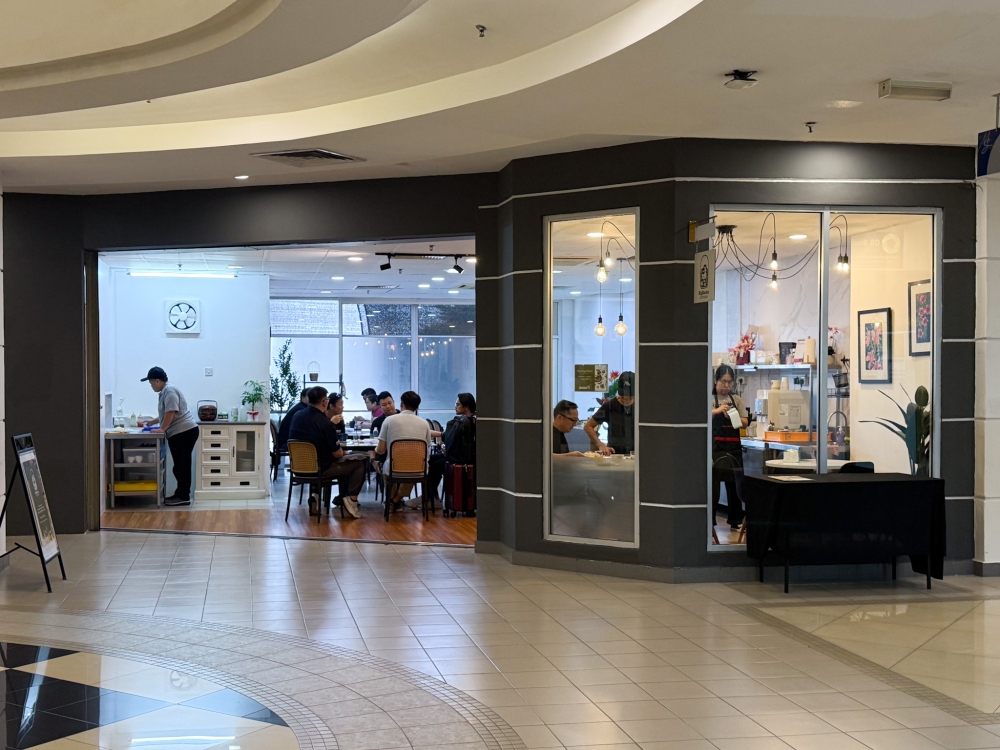
Hidden inside Millennium Square, the restaurant has a bright outlook with regulars who come for their home-style, traditional eats. — Picture by Lee Khang Yi
BigBasket Kitchen
Lot G-052, Ground Floor, Millennium Square
98, Jalan 14/1,
Section 14, Petaling Jaya.
Open on Monday to Friday, 10am to 5pm
Tel: 010-9272387
Facebook: @bigbasketkitchen
Instagram: @bigbasketkitchen
* This is an independent review where the writer paid for the meal.
KioskNews shows a cleaned-up reading view extracted from the publisher’s page — the original always lives on their site, not ours.