The 10 Most Important Rock Albums of All Time, Ranked

Jeremy has more than 2900 published articles on Collider to his name, and has been writing for the site since February 2022. He's an omnivore when it comes to his movie-watching diet, so will gladly watch and write about almost anything, from old Godzilla films to gangster flicks to samurai movies to classic musicals to the French New Wave to the MCU... well, maybe not the Disney+ shows.
His favorite directors include Martin Scorsese, Sergio Leone, Akira Kurosawa, Quentin Tarantino, Werner Herzog, John Woo, Bob Fosse, Fritz Lang, Guillermo del Toro, and Yoji Yamada. He's also very proud of the fact that he's seen every single Nicolas Cage movie released before 2022, even though doing so often felt like a tremendous waste of time. He's plagued by the question of whether or not The Room is genuinely terrible or some kind of accidental masterpiece, and has been for more than 12 years (and a similar number of viewings).
When he's not writing lists - and the occasional feature article - for Collider, he also likes to upload film reviews to his Letterboxd profile (username: Jeremy Urquhart) and Instagram account.
He has achieved his 2025 goal of reading all 13,467 novels written by Stephen King, and plans to spend the next year or two getting through the author's 82,756 short stories and 105,433 novellas.
Sign in to your Collider account
You can look at rock in relatively recent years and feel as though it’s dropped off a bit in terms of influence and popularity, but it’s never truly died. There’s been classic rock, progressive rock, punk rock, alternative rock, and then indie rock, for starters, and all sorts of other sorts. You know it when you hear it. This is the part where there might usually be a definition, but like, come on.
This sort of music did matter even more some decades ago, and also, with those historically important releases, you can look back and see what they influenced, thereby gaining an even greater appreciation for them. So, relating to all that, these are some of the most important rock albums of all time, not always being the best in music history (though some are), but inevitably doing the most for moving rock, as a genre, forward.
10 'Tommy' (1969)
The Who
There’s an argument to be made that The Who released their two best albums in the 1970s (Who’s Next and Quadrophenia), but the stuff they did in the 1960s was also pretty great, especially so when you consider Tommy came out right at the decade’s end. This was an influential rock opera/concept album that also happened to be a double album, and that sense of it feeling so unusual and ambitious for its time is why it’s here, rather than one of those two potentially better The Who Albums.
Narratively, there’s a lot here, since Tommy tells an odd story about one man’s rise to becoming some kind of leader/messiah, dramatized in a way that’s actually not as out-there as the 1975 movie of the same name, which is… well, it’s still kind of interesting and cool. But just considering the music and the album, Tommy is mostly very good, and it’s also hard to deny just how much this was doing as a seminal/early large-scale rock opera.
9 'Never Mind the Bollocks, Here's the Sex Pistols' (1977)
The Sex Pistols
This is probably the most divisive and least “good” in the traditional sense album being included here, but with the topic at hand being influence, Never Mind the Bollocks, Here's the Sex Pistols does have to be here. Its title heralds The Sex Pistols, obviously, but then the band itself barely held together for the recording of one album, and then this debut did ultimately end up being the only studio album from The Sex Pistols.
Still, it heralded a certain kind of punk, and if you hear the term punk rock, you might think of some of the songs here, or just the look of The Sex Pistols, or both. And punk is a part of rock, and there have been so many different kinds of punk music and artists in the decades since Never Mind the Bollocks, Here's the Sex Pistols. So many exceeded this one in terms of quality, but nonetheless, this album is quintessentially punk, so never mind those others, here it is.
8 'London Calling' (1979)
The Clash
With The Clash, there’s a punchiness to the band’s self-titled debut album (the one that feels the most traditionally punk of all their albums), and then a real extravagance and eclectic quality to the fourth album, Sandinista!, and then album #3, London Calling, is a happy medium. It’s also a bit more rock-focused, and then there’s some new wave stuff thrown in alongside the punk rock, and a few other things.
But it doesn’t tackle an overwhelming number of genres like all the songs on the absolutely exhausting Sandinista! Still, anything’s better than their final album, which is like Voldemort, because its name shouldn’t be said. Focus on the good times. London Calling is nothing but good times. Never Mind the Bollocks, Here's the Sex Pistols walked so London Calling could run, fly, do whatever you want, just whatever it was it did, it was a hell of a lot faster than walking.
7 'Doolittle' (1989)
Pixies
It’s hard to know how to label Doolittle beyond saying it’s alternative rock, which is a pretty broad sub-genre that’s meant different things at different points in time. But it’s the best there is here. It’s a bit too late to be classic rock necessarily, though a bit early to be grunge. It doesn’t even really sound super grunge or anything, but Pixies did influence a certain grunge band that’ll be mentioned and talked about more (very) shortly.
Doolittle is wonderfully punchy, because it’s made up of 15 songs, and clocks in at about 38 minutes all up, meaning the average song length isn't much longer than about two and a half minutes. It’s extremely energetic and engaging, and you can also look back on it now and see how it was influential on the kind of indie/alternative rock that would become mainstream (or pretty close to it) in the 1990s, and then a bit further, throughout much of the 2000s.
6 'Nevermind' (1991)
Nirvana
Grunge and the alternative rock of the 1990s more or less signified that classic rock’s dominance was over, and Nirvana was at the center of it, being that previously alluded-to band that took influence from Pixies. The band’s debut was Bleach, and that did technically come out at the very end of the 1980s, but it was Nevermind that really exploded in popularity and made Nirvana one of the most legendary bands of the final decade of the 20th century (even that might be a bit of an understatement).
Nirvana was only active for part of the decade, since Kurt Cobain took his life in 1994, making In Utero the final studio album of Nirvana’s (and it’s the trendier pick for the title of “best Nirvana album,” admittedly). Nevermind is sort of untouchable though, even if some people might want to hit it with an “actually, it’s a bit overrated.” It more or less is the grunge sound condensed into an album, and hey, it became utterly iconic for a reason.
5 'Paranoid' (1970)
Black Sabbath
Since heavy metal is a kind of rock, including something by Black Sabbath here doesn’t feel too outrageous. It might be more outrageous to not include something like Black Sabbath’s Paranoid, honestly. And sure, the heaviness found in this particular album isn't quite as alarming or oppressive nowadays as it might've been 50+ years ago, so you have to take that into account, and think about what this album did so future metal albums could push everything further.
Black Sabbath was groundbreaking and undeniably influential for this type of rock going forward, and Paranoid is the best showcase of what made the band special (well, at least the band during its classic/essential era). Almost every song here is great on its own, then taken together, Paranoid as a whole ultimately flows remarkably well throughout.
4 'The Velvet Underground & Nico' (1967)
The Velvet Underground and Nico
There were some truly massive rock albums released in 1967, so honorable mentions are in order for the likes of The Doors (the self-titled debut) and Sgt. Pepper’s Lonely Hearts Club Band (another album by that album’s artist will be featured later on). Worthiest when looking at influence and importance, 1967-wise, is probably The Velvet Underground & Nico, since so many alternative rock artists since feel influenced by this album in one way or another.
You shouldn't overlook the other Velvet Underground albums, unless that album’s Squeeze. Overlook that one. Those others were important for music going forward, but The Velvet Underground & Nico most of all, you know? It’s one of those albums that’s kind of always been there, but before 1967, it literally wasn’t, which is crazy to think about. Albums from this whole era don’t get much more significant, really.
3 'The Dark Side of the Moon' (1973)
Pink Floyd
It’s inevitable that Pink Floyd is going to get a shout-out when talking about rock, and The Dark Side of the Moon feels the worthiest of praise, out of all their albums, for present purposes. The Wall might be even more ambitious, but not by much, and in any event, The Dark Side of the Moon feels a bit more revolutionary, coming earlier and doing just about everything an album potentially can in 40 minutes while remaining consistent.
And it all just flows so remarkably well, taking on all sorts of difficult topics and addressing them poetically, with everything backed up by some immense and out-of-this-world-sounding instrumentation. The Dark Side of the Moon is an album about the stresses of life, human nature, and some other stuff. It’s challenging thematically but still so easy to listen to from front to back without feeling any sort of temptation to skip a single track.
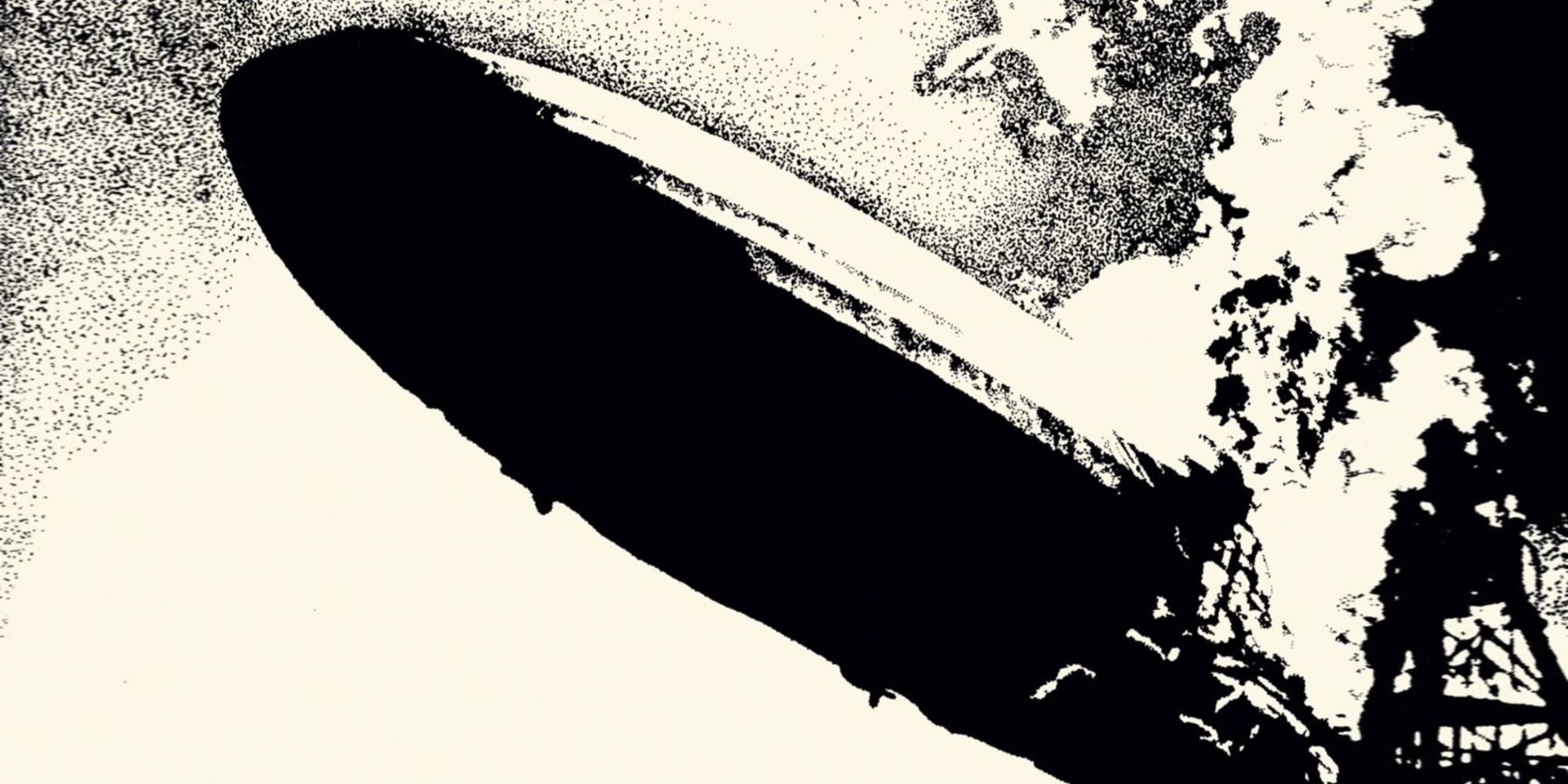
2 'Led Zeppelin I' (1969)
Led Zeppelin
Sure, Led Zeppelin borrowed quite heavily from blues rock, which pre-dated classic rock, technically, but the band did make that sort of rock bigger and louder. Maybe they played a role in reshaping blues rock, which is something. There’s that real hard/classic rock sound that Led Zeppelin played a big role in establishing and perfecting, and you definitely see that in the band’s first self-titled album.
Any of the first six Led Zeppelin albums could go here, but their first is particularly punchy and consistent, and it being the OG makes it feel extra worthy of praise and mention.
All that rock of a blues variety was made harder, so that makes the album undeniably hard rock (as a side note, I almost accidentally typed another word there ending with “ock” that would have changed that sentence tremendously… don’t type while tired, kids). Any of the first six Led Zeppelin albums could go here, but their first is particularly punchy and consistent, and it being the OG makes it feel extra worthy of praise and mention when you're talking about truly important rock albums.
1 'The Beatles' (1968)
The Beatles
It’s a testament to how good The Beatles were that it’s hard to name just one album of the band’s as their undeniable best, but as for most influential? No, that’s also pretty hard, albeit slightly easier, since their self-titled double album sometimes known as The White Album is so huge and influential in all these different ways. It’s almost cheating to pick it, but it’s epic, at over 90 minutes long, and eclectic in a way that still feels mind-blowing.
The Beatles, on The Beatles (1968), had a go at just about every different type of rock they could, and might well have played a role in influencing some new ones (much has been written about “Helter Skelter” being a proto-heavy metal song). This is before getting to “Revolution 9,” which is something entirely other than rock, but still a good indication of how bold this album was willing to be. Maybe some other Beatles albums are better, but none feel as important within the overall history of pop/rock music.

The Beatles Anthology
- Release Date
- 1995 - 1996-00-00
- Network
- ABC
- Directors
- Geoff Wonfor
- Writers
- Bob Smeaton
-

Billy Preston
Self (archive footage)
-
George Harrison
Self
-
George Martin
Self (archival material)
-
John Lennon
KioskNews shows a cleaned-up reading view extracted from the publisher’s page — the original always lives on their site, not ours.