What it's like to spend a night in a Pebble Flow EV RV
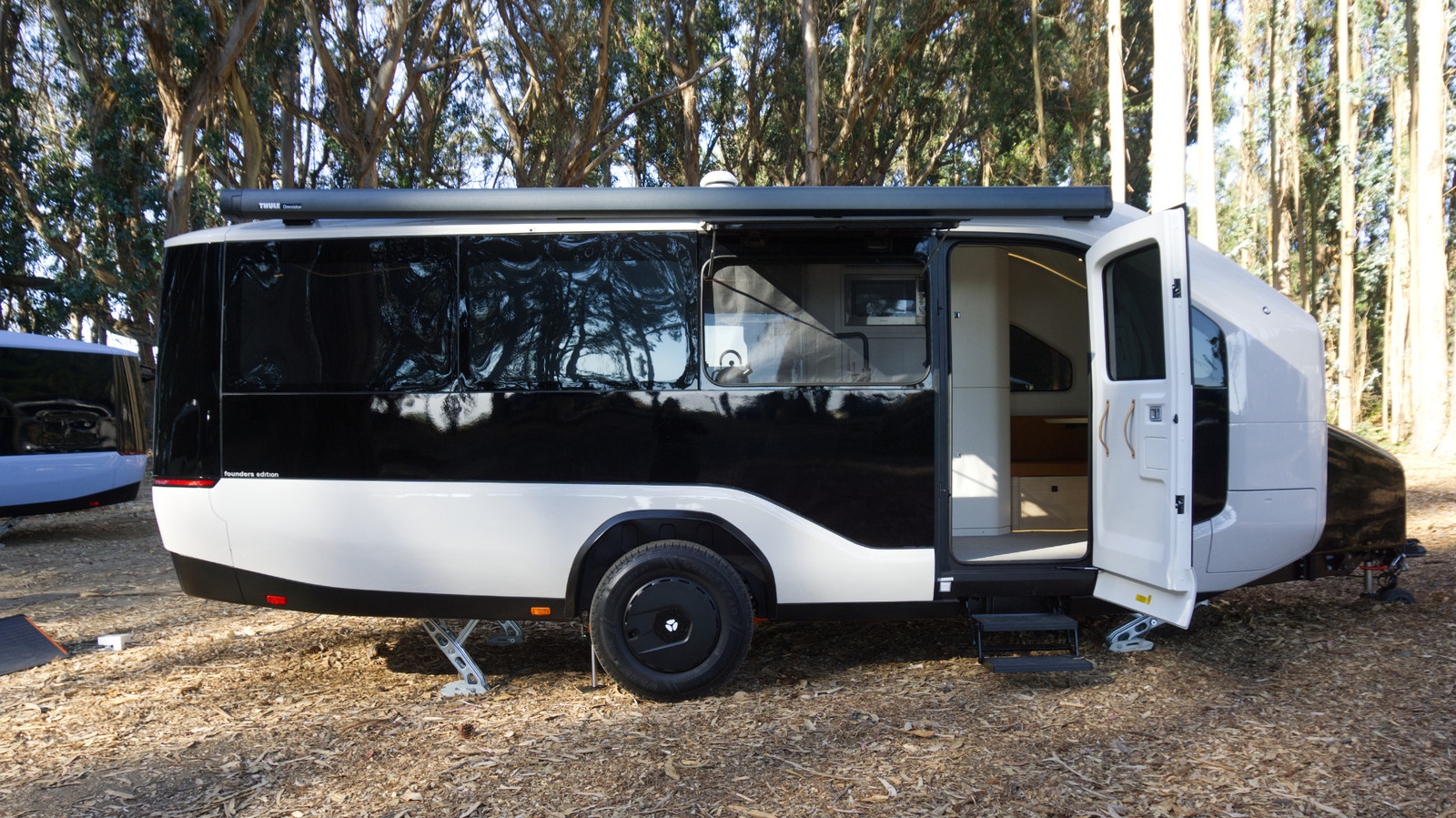
Staying in the tech-infused trailer can kind of feel like being in a spaceship — in a good way.
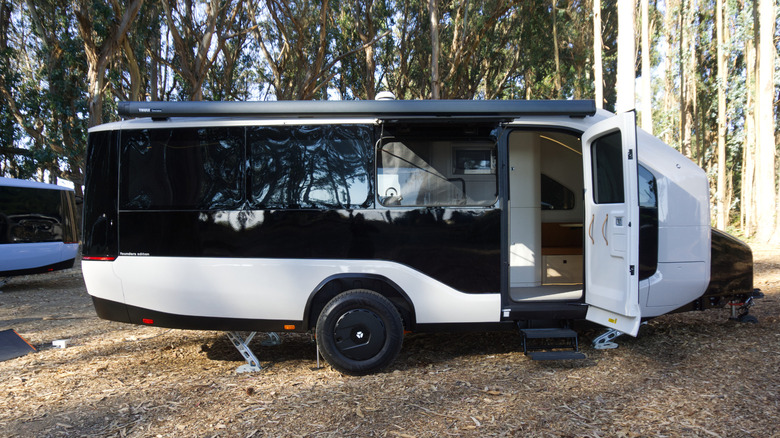
Karissa Bell for Engadget
There's something oddly thrilling (and a little terrifying) about steering a 6,0000-pound trailer around a parking lot with nothing more than touchscreen controls on an iPad. It's also the perfect encapsulation of what makes the Pebble Flow electric trailer unlike any other RV out there.
With integrated solar panels, electric motors and automated hitching, the tech-forward trailer is meant to simplify many of the complexities and annoyances that often come with RV ownership. That's Pebble's promise, anyway.
I've been intrigued by the Pebble Flow since my colleagues first saw it on the CES showfloor in 2024. The futuristic-looking RV has a sleek, minimalist interior, a dedicated workspace and full bathroom. But like any CES veteran will tell you, a carefully orchestrated demo is about as far from real-world conditions as you can get. So when Pebble gave me the opportunity to spend a day (and night) in one of their trailers at an actual campsite, I was very curious to see if the $159,000 RV would feel as luxe as it seemed.
After spending nearly 24 hours in a Pebble Flow, I can confirm that the RV is indeed an incredibly comfy space to work and sleep in. But I was even more impressed with how much tech the company has infused into it.
 Karissa Bell for Engadget
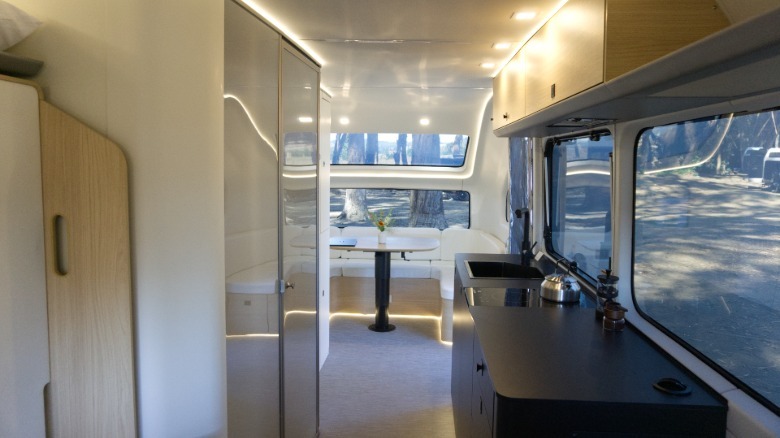
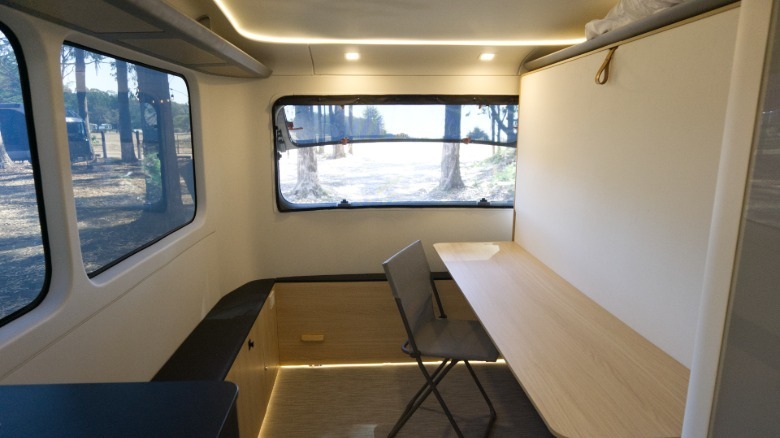
My husband and I stayed in a Flow set up with the same layout we've seen previously from Pebble. There's a dinette at the front end, which can convert into a bed, and a queen-sized Murphy bed in the back that doubles as a desk.
I was worried it might feel cramped with two people working in such a compact space, but we both had plenty of room to stretch out. I spent a few hours with my laptop at both the dinette table and the dedicated desk. I liked the extra comfort of the cushioned bench seats in the kitchen area better, but the table was just wobbly enough to be distracting. The dedicated desk is simple but functional. I don't think it's quite wide enough to set up an external monitor comfortably, but I had plenty of room for my laptop, phones, camera and their respective chargers. The desk also has the advantage of being right next to the back window that can fully open up for fresh air and views.
 Karissa Bell for Engadget
Speaking of the windows, one of the coolest features is that all of the exterior windows are made of electrochromic "smart glass" that can change from clear to frosted with the touch of a button. It's a nice privacy feature, especially if you're in a shared campsite like I was. However, the combination of the interior LED lights and the frosted, light-blocking windows can also give the inside of a Pebble a slightly disorienting feel since you can't easily tell what time of day it is. It wasn't unpleasant, but it felt a bit like being in a bright, if pleasantly lit, spaceship.
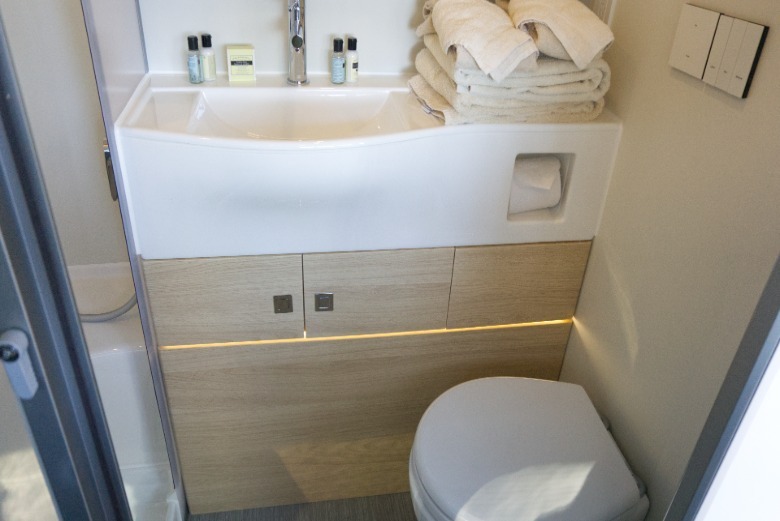
Most of the time, though, my time in the Pebble Flow felt less like a trailer and more like a micro-hotel suite. The bathroom is equipped with a flushing toilet and a separate shower stall. It was easily the nicest bathroom setup I've ever used while camping. The shower was small, but heated up quickly and had good water pressure. The only downside was that the water pump was quite loud while using the sink or shower. If you get up in the middle of the night, the *thud thud thud* of the pump will probably wake up anyone else in the space.
 Karissa Bell for Engadget
Even so, I slept so much better than I expected. The Murphy bed was surprisingly comfortable, and I appreciated that there were outlets easily accessible on both sides of it.
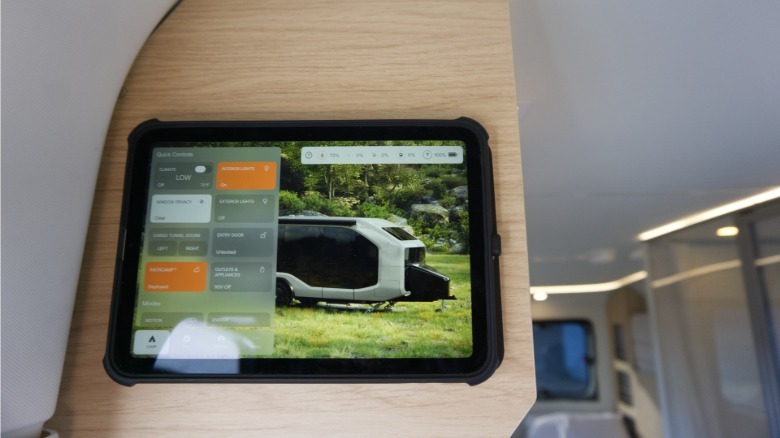
As comfortable as the inside setup was, I was even more impressed with how the Pebble Flow's tech has simplified so many aspects of RV camping and towing. Each trailer comes with its own iPad Mini that functions as the main controller and hub for the vehicle. It's where you adjust the climate control, lights and other functions. It's also a controller for the trailer's automated hitching and remote control features.
 Karissa Bell for Engadget
The hitch on the Pebble Flow is equipped with a camera that's able to detect the position of the ball on the hitch of a towing vehicle. As long as the tow vehicle is within four feet of the front of the trailer, you can engage what's essentially a self-hitching mode, even if the two vehicles aren't perfectly lined up.
I watched this in action several times; the whole process took about 45 seconds. As someone with no prior RV experience, I can't speak to how this compares to the typical setup, but I can say that I was able to guide the trailer onto the hitch of a Rivian parked a couple feet away without doing anything other than pressing a couple buttons on an iPad. I also used the same iPad to maneuver the unhitched trailer around its parking spot. I only felt comfortable moving it a foot or so in either direction, but I watched Pebble reps use the remote to parallel park it and move it around the mulch-covered ground of the campsite.
 Karissa Bell for Engadget
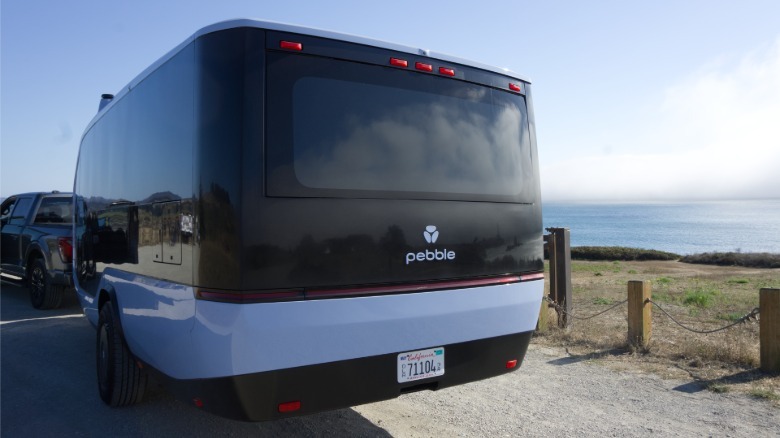
One of Pebble's goals is to streamline the more tedious tasks that can be part of camping with an RV. It has an "instacamp" feature that deploys hydraulic lifts to automatically level and stabilize the trailer when you reach your destination.
Besides being able to remotely control your trailer, the in-wheel motors also help with towing. They provide some added power to help save your gas mileage or EV range a bit. Obviously, I wasn't able to simulate an actual roadtrip, but I was able to experience what it's like to tow a Pebble Flow.
I've never hauled anything bigger than a ski rack, so I was a bit nervous to tow a giant trailer around the campground parking lot and onto Highway 1, but it was actually pretty foolproof. While I was driving, another person held the iPad controller for the trailer — the company advises owners to keep the tablet inside the tow vehicle while you're on the move — and turned the motors on and off. It was an incredibly subtle difference, but it felt stable the whole time.
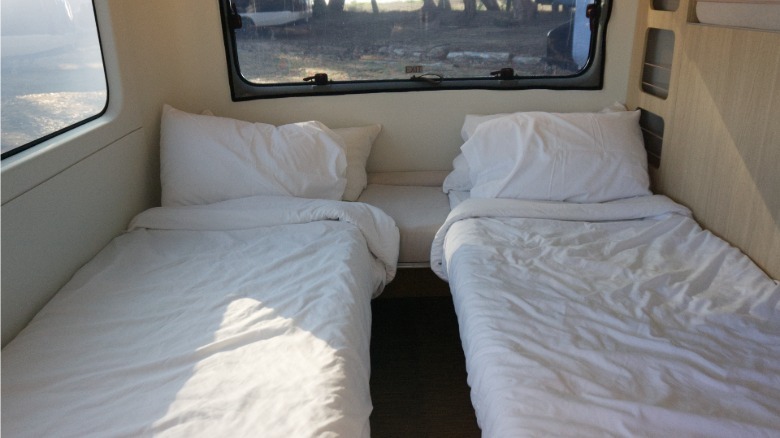
Pebble also brought out one of their new 2027 models, which come with some notable updates, like a new floorplan option. Instead of a queen-sized Murphy bed it comes with dual twin beds. Unlike the Flow I stayed in, this configuration leaves the beds stationary for additional under-bed storage, though the two mattresses can also be pushed together to form a single king-sized bed.
 Karissa Bell for Engadget
The other big upgrade is that Pebble has partnered with solar panel maker Jackery to offer additional solar capabilities. Existing models come with 1.1 KW of rooftop solar panel capacity, but the 2027 models can support up to four additional 500-watt external panels, if you opt for the "self-powered" add-on. This brings the trailer's total input capacity to 3.1 KW, which Pebble says is more than enough to power a "typical day's" energy needs and help juice up the trailer's 45 kWH battery. You might not need all that extra solar if you're mostly planning to stay at campgrounds or close to power sources, but it could really push the Pebble Flow's off-grid potential.
With a starting price of $159,000 (an upgraded "founder's edition" will run $193,000 with the self-powered upgrade) a Pebble Flow is a pretty massive investment. And it's one that won't fit into my life financially or literally (my garage is tiny). But after spending a day staying in one and trying out every feature I could, it feels just as innovative as we hoped it would be when we first saw it two years ago.
KioskNews shows a cleaned-up reading view extracted from the publisher’s page — the original always lives on their site, not ours.