How the government’s digital economy bill aims to reduce cash use in everyday payments
The Mexican government is seeking to change the way everyday payments are made through a proposed new law that would accelerate the use of digital transfers as it gradually reduces reliance on cash.
The Digital Economy Law for Digital and Electronic Payments, submitted to Congress as part of the 2027 economic package, is meant to expand financial inclusion and boost economic activity by facilitating exchange between individuals and businesses
(Facebook)
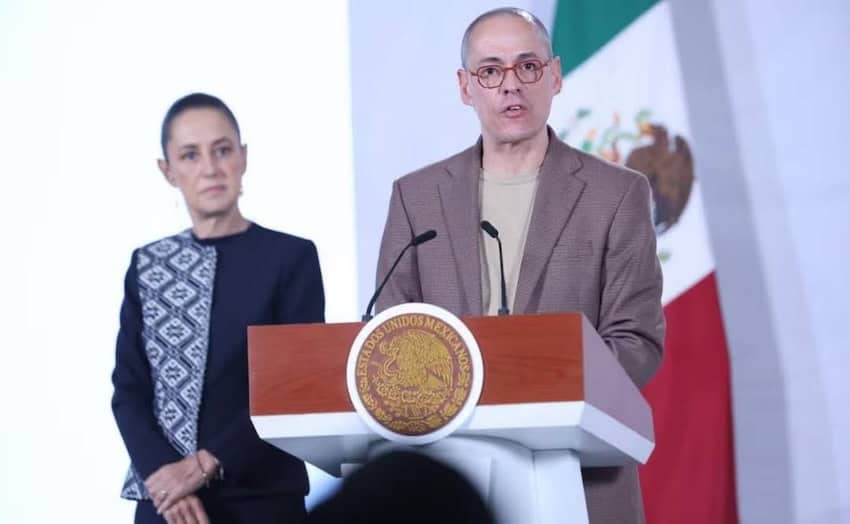
José Antonio Peña Merino, head of the Agency for Digital Transformation and Telecommunications, said Thursday that one of the objectives of the bill is to make it easier for people to make and receive payments via mobile phone, thus leveraging existing infrastructure in Mexico. Those payment methods include the Interbank Electronic Payment System (SPEI) and the Digital Collection (CoDi) program.
A purchase through CoDi would be made via the banking app in three steps: opening the CoDi option, scanning or generating a QR code with the transaction amount, and confirming the transfer.
The Bank of Mexico (Banxico) — directly responsible for the development of the program — estimates transaction time would take between four and five seconds.
The model for small businesses would offer three alternatives: displaying a static QR code at the counter; generating a code on a phone for the specific sale amount; or displaying it on a screen at the time of payment, similar to a supermarket checkout.
The main goal is for the system to enable the acceptance of electronic payments without the need for a bank terminal or transaction fees, as neither SPEI nor CoDi charges for transfers to either the user or the merchant.

One of the key elements of the proposed law is the so-called “N2 Bis” bank account, a new type of small business account that incentivizes digital payments and can be opened remotely using a single form of identification. Currently, it has a cash limit of 25,000 pesos (US $1,410). With the inclusion of digital transfers, that cap would rise to 135,000 pesos (US $7,615).
Peña said that this expansion would particularly benefit small businesses and independent workers, a case in point being the ubiquitous tienditas or even food stalls, which often operate outside the formal banking system.
“This paves the way for accessing financial products and credit — including lower-cost credit — and, of course, steering their operations toward formalization,” Peña said.
The bill also proposes digitizing government payments and gradually reducing cash usage in strategic sectors — initially gas stations and toll roads.
Peña explained that financial institutions would have until December to implement CoDi, noting that some institutions expressed they plan to roll it out before “El Buen Fin” discount weekend in November.
KioskNews shows a cleaned-up reading view extracted from the publisher’s page — the original always lives on their site, not ours.