The Man Who Drew Egypt: The Life and Legacy of Ahmed Toughan
For nearly seven decades, Ahmed Toughan drew Egypt as it saw itself and as it wished it did not; infected with colonial powers and presidents, weary bureaucrats and struggling families, each captured in a few lines that readers could grasp at a glance.
Toughan, one of the country’s most prominent editorial cartoonists, died on 12 November 2014, at 88, after a fight with cancer. He had published more than 50,000 cartoons, and months earlier he had received the Nile Award,Egypt’s highest prize in the arts and social sciences.
His career, which began in 1946, ran through war, revolution and political upheaval, and his satire followed all of it: colonial rule, Arab politics and the daily hardships of ordinary Egyptians. Together, the drawings form a running record of Egyptian public life, and his publisher counts more than 20 books.
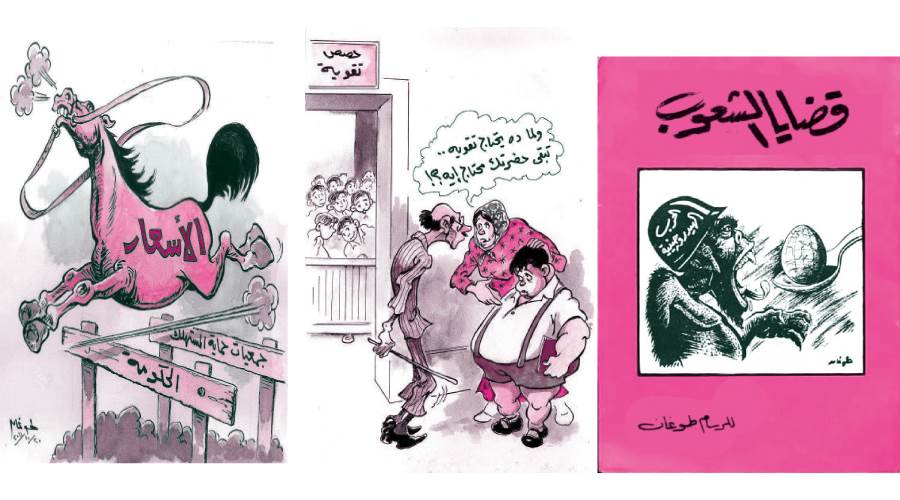
Toughan was born on 20 December 1926, in Minya, in Upper Egypt, and raised in Cairo. In his telling, a primary-school drawing teacher spotted his talent and began bringing him books of paintings and Pharaonic statues. By World War II, he was drawing on walls, urging Egyptians to resist British occupation.
That early defiance became a profession in 1946, when he joined the political weekly Rose al-Yusuf and later moved to Akhbar al-Yom. He said he trained under the cartoonist Rakha, whom he called Egypt’s first cartoonist, and that he became the first to draw for a daily newspaper. That same year, he also met a future president, Anwar el-Sadat, at a friend’s home.
The friendship mattered after the 1952 revolution brought Gamal Abdel Nasser to power. In 1953, Toughan co-founded a new daily, Al Gomhuria, whose first editor-in-chief was Sadat. It became the paper with which he was most closely associated for decades.
Drawing beyond borders
His convictions soon carried him beyond the drawing board. His memoir describes a stay with independence fighters in Algeria’s mountains during the war that began in 1954, and, in the early 1960s, a trip to Yemen with Egyptian forces deployed there. He also said he visited Palestine in the 1960s and afterward held exhibitions on the Palestinian cause.
According to Toughan, Sadat wrote the introduction to his book of cartoons Qadaya al-Shu’ub (Peoples’ Causes, 1957). A review of the memoir says his admiration for Sadat far outweighed his approval of Nasser’s backing of liberation movements abroad.
By the 1980s, Toughan had started the weekly Caricature with the cartoonist Mustafa Hussein and in 1987 received the Head of Arab Cartoonists Award. Under President Hosni Mubarak, he campaigned against the government through cartoons on unemployment, migrants dying in boats, corruption, poor schools, and bribery.
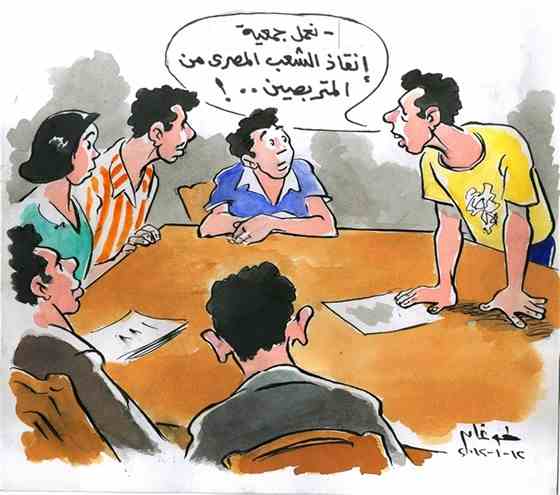
He did not always follow the consensus of his peers, as in June 1995, four Israeli cartoonists visited Cairo and met a near-total boycott from Egyptian colleagues. According to Toughan, he was the only Egyptian cartoonist to attend.
“Peace is inevitable, whether we like it or not,” Toughan told United Press International.
Satire against power
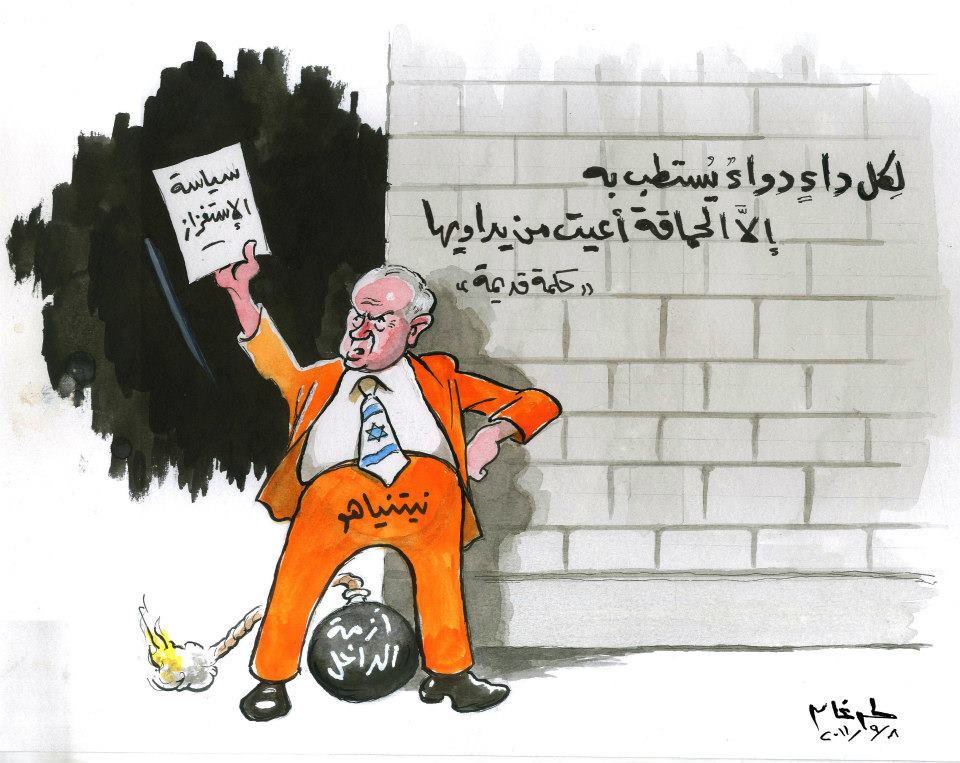
Recognition followed, including the Grand Medal of Fine Art in 1997, and so did controversy. After the fall of Baghdad in 2003, he said Israel accused him of anti-Semitism over his drawings about Iraq.
Toughan held that the cartoon was a political act, not mere entertainment. In an August 2014 interview with Asharq Al-Awsat, he said he waged cartoon campaigns against Hosni Mubarak’s government over unemployment, migrants lost in “death boats,” corruption and bribery. After Mohamed Morsi took office, he drew the president praying to be spared from the Muslim Brotherhood and the Salafists, a drawing Toughan said warned of Brotherhood overreach. He said his drawings on Iraq after the fall of Baghdad led Israel to accuse him of anti-Semitism.
Nonetheless, his last days were full of recognition, as in June 2014, he received the Nile Award, and in August, his 450-page memoir was published. In September, illness kept him from the opening of his last exhibition, before he passed away in November.
A collection of his paintings was published in 2015 after his death, and an archive now holds all his drawings. The American University in Cairo (AUC) has digitized more than 3,000 scans of his papers and original drawings for anyone to check online.
KioskNews shows a cleaned-up reading view extracted from the publisher’s page — the original always lives on their site, not ours.