Hong Kong Baptist University academics create trustworthy AI-driven digital networks
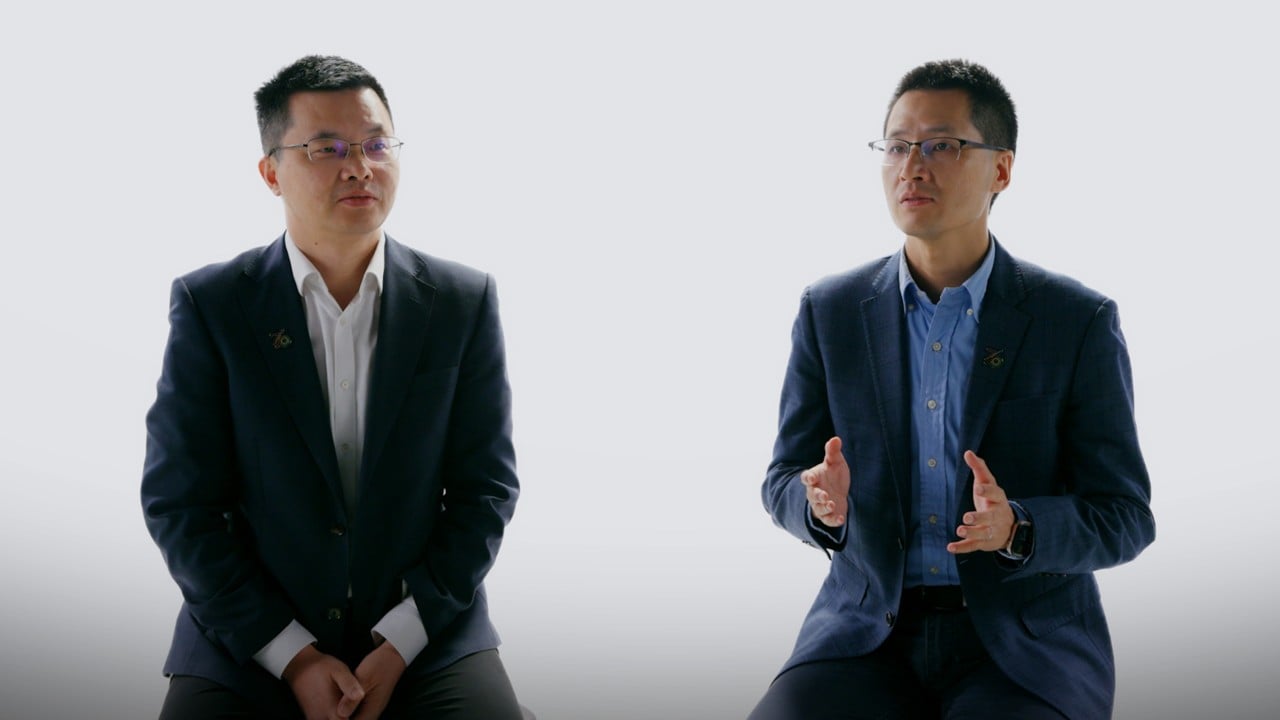
Two Hong Kong-based computer scientists are helping to develop next-generation artificial intelligence (AI)-powered digital systems that are not only efficient and effective to use, but also – just as importantly – help to protect the privacy of users.
Professors Xu Jianliang and Han Bo are carrying out their research at Hong Kong Baptist University (HKBU) and addressing the challenge from different perspectives within their field.
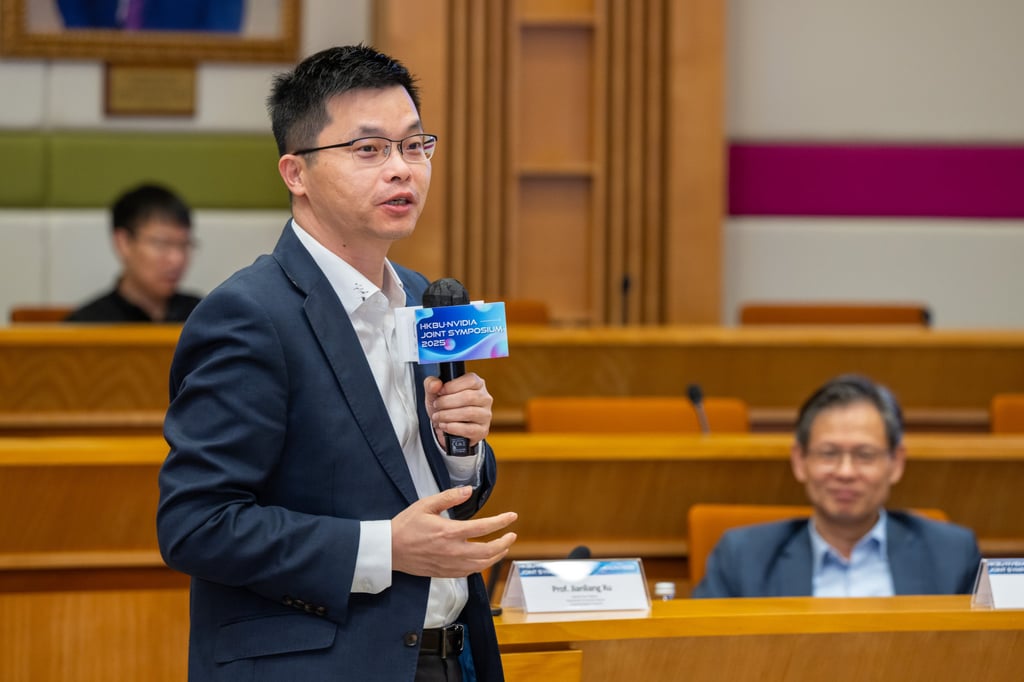
“My research focuses on the foundational layer – managing, verifying and securing the data itself,” says Xu, chair professor and head of the university’s department of computer science, who joined HKBU in 2002.
“I work on database systems, privacy-preserving computing and blockchain technology to keep sensitive information confidential, yet searchable and tamper-resistant across decentralised networks.
“A long-standing challenge in our field is the trade-off between privacy protection and processing performance: stronger protection often makes data harder and slower to query.
“To address this challenge, my team is developing novel, secure indexing techniques and lightweight verification schemes. These enable systems to query data efficiently and verify its authenticity at scale without exposing the underlying raw data.”
Xu is leading two major initiatives funded by Hong Kong’s Research Grants Council (RGC), which both aim to enhance privacy protection function and the reliability of AI-powered systems.
One is centred on the private high-dimensional similarity search for cloud-based retrieval augmented generation, which helps to encrypt or obfuscate raw text; the other involves trustworthy large language models that use a multifaceted strategy for truthfulness, fairness and privacy preservation.
Last year, Xu was elected a fellow of the Institute of Electrical and Electronics Engineers (IEEE) – a global professional association focused on advancing technology.
He says that the IEEE’s recognition reflects his and his team’s sustained contributions to data management and privacy-preserving systems, where data integrity and confidentiality are essential.
The major turning point in his research came in 2020, during the Covid-19 pandemic, when the team developed BU-Trace – the city’s first contact-tracing system built on a strict privacy-first principle. “We wanted to demonstrate that protecting public health need not compromise personal data privacy,” he says.
They designed a decentralised solution using privacy-preserving identifiers and smartphone sensors to record venue visits and automate checkouts locally on each user’s device, without the data being uploaded onto central servers or for use by satellite-based GPS tracking.
The city’s government used the team’s privacy-preserving architecture for its official LeaveHomeSafe app – downloaded more than 9.5 million times up to December 2022 – and integrated its AI-powered checkout function, which had an accuracy of more than 90 per cent, along with its daily real-time “hotspot” maps.
“This work opened new possibilities for high-stakes applications that balance operational needs with personal privacy,” Xu says. “We are applying this privacy technology to support cross-border data analytics, enabling useful insights without unnecessary disclosure of sensitive personal information. Together, these efforts demonstrate how our theoretical research can help address urgent societal challenges.
“Over the next five years, I foresee computer science moving increasingly towards verifiable, privacy-preserving data architectures. AI systems rely on vast quantities of sensitive enterprise and personal data. The central challenge is no longer simply processing throughput; it is also verifying data provenance, authenticity and ownership without compromising confidentiality.”
Han – an associate professor also based at HKBU’s department of computer science – specialises in work focused on trustworthy machine learning.
Earlier this year, he was recognised by the RGC Research Fellow Scheme and secured more than HK$5.6 million (US$660,000) in funding over the next five years. This will help him build a trustworthy and efficient reasoning framework for next-generation AI agents – autonomous software programs that can perceive their environment, make independent decisions and use tools or external systems to achieve multi-step goals.
In recent years, Han has been ranked on the “World’s Top 2% Scientists” list, compiled by Stanford University in the United States. He is also a distinguished speaker for the Association of Computing Machinery, a senior member of the IEEE, and was one of the winners of the IEEE “AI’s 10 to Watch” award in 2024 and the IEEE “Computer Society’s Top 30 Early Career Professionals” award last year.
“My research operates at the intelligence layer – making sure the AI models built on top of that data remain reliable and safe,” Han says. “In the real world, data is rarely pristine. It is often noisy, corrupted, biased, or even maliciously manipulated.
“The major bottleneck we face with deep-learning models is that they tend to blindly memorise noisy data and make catastrophic errors in high-stakes settings.”
He says his team designs noise-tolerant loss functions – specialised mathematical objectives for machine learning – and cooperative learning paradigms, involving computer-based group learning, to effectively train these models, even when the training labels added to data contain errors, corruption, or noise.
“By teaching neural networks [computer systems that mimic the human brain] to filter out contaminated signals and self-correct during training, we ensure that AI remains dependable even in unpredictable, chaotic environments,” Han says.
Solving foundational reliability issues in AI cannot be done with quick, short-term workarounds,” Han says. “This sustained backing from the RGC gives my team the dedicated, uninterrupted focus needed to develop fundamentally resilient AI frameworks and address pressing issues like model hallucination, safety attacks and robustness in foundation models.”
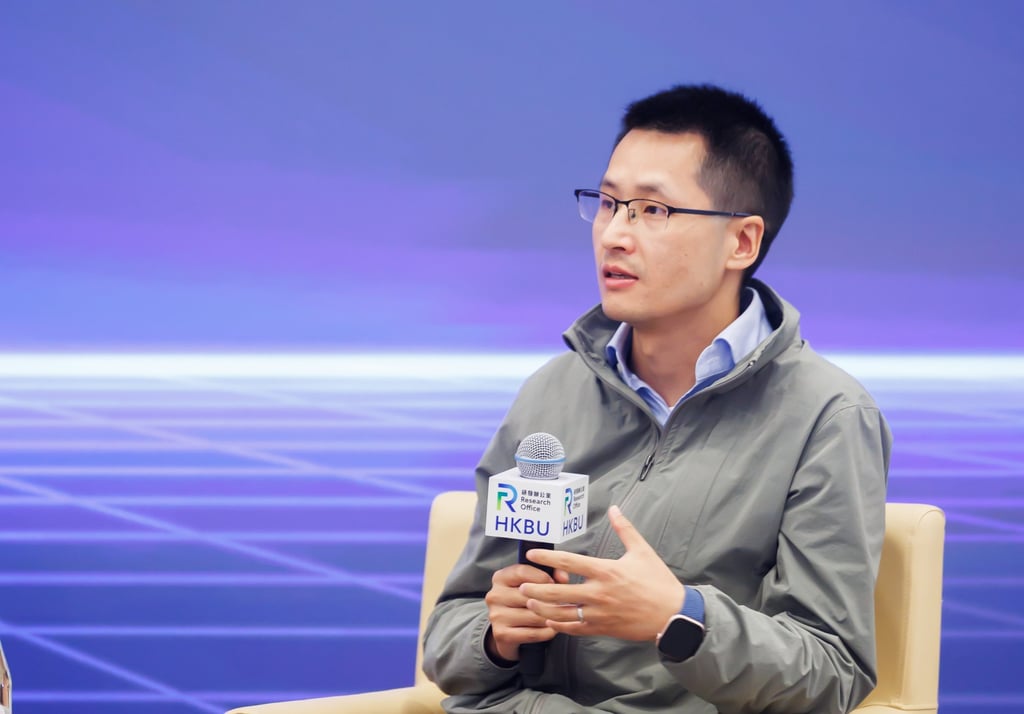
Han believes that within a few years, generative AI models and large language models will be equipped with intrinsic self-verification and reasoning capabilities so they will eventually be able to protect themselves from vulnerability to contaminated data. Once they are proven to be reliable, they will be more widely adopted in mission-critical areas such as medical diagnostics and finance.
Both professors say that HKBU’s openness to cross-disciplinary research collaboration, combined with Hong Kong’s vibrant technology ecosystem and strategic position within southern China’s Greater Bay Area development zone, have provided them with ample resources and opportunities to continue innovating.
Xu says: “As Hong Kong strengthens its position as an international innovation and technology hub, supported by robust intellectual property protection and data standards, HKBU provides an ideal environment for translating our technological breakthroughs into meaningful, lasting societal value.”
Watch the video to learn more about how Hong Kong Baptist University academics’ research projects are making data and machine learning models safer and more reliable.
KioskNews shows a cleaned-up reading view extracted from the publisher’s page — the original always lives on their site, not ours.