Yala seeks to become a ‘GI metropolis’, turning local produce into economic soft power
Yala, Thailand’s southernmost province, is known for its slogan, “The southernmost of Siam, a beautiful border city”. But beneath its mountains, fresh air and fertile land lies a natural advantage that the municipality hopes will help transform its economy.
Mineral-rich soil, clean air and fresh water are among the factors that Yala City Municipality says give local agricultural products their distinctive flavours and characteristics, setting them apart from produce grown elsewhere.
The municipality is now seeking to harness these natural resources through geographical indication (GI) certification, turning local products into economic soft power, improving farmers’ livelihoods and attracting visitors eager to discover what makes Yala unique.
Its vision is to establish Yala as a “GI metropolis”, a city recognised for the diversity and quality of its geographically distinctive products.
Building ‘Yala GI Metropolis’ through local strengths
Pongsak Yingchoncharoen, mayor of Yala City Municipality, explained that GI products depend on specific local environmental conditions, including suitable temperatures throughout the year, fertile soil and clean water.

He said Yala possesses these natural advantages, which give its agricultural produce distinctive characteristics that cannot easily be replicated elsewhere.
Yala’s gross provincial product (GPP) from agriculture was approximately 17 billion baht in 2025, with rubber and durian accounting for much of the value. Although the figure remains relatively modest compared with neighbouring provinces, the municipality believes GI branding could significantly increase the value of local products.
“GI products have distinctive characteristics that arise from the environment, such as climate, soil and water. Yala has advantages in all these areas, which are our natural assets. Our agricultural products therefore have unique characteristics that nobody can copy. This is real soft power,” Pongsak said.
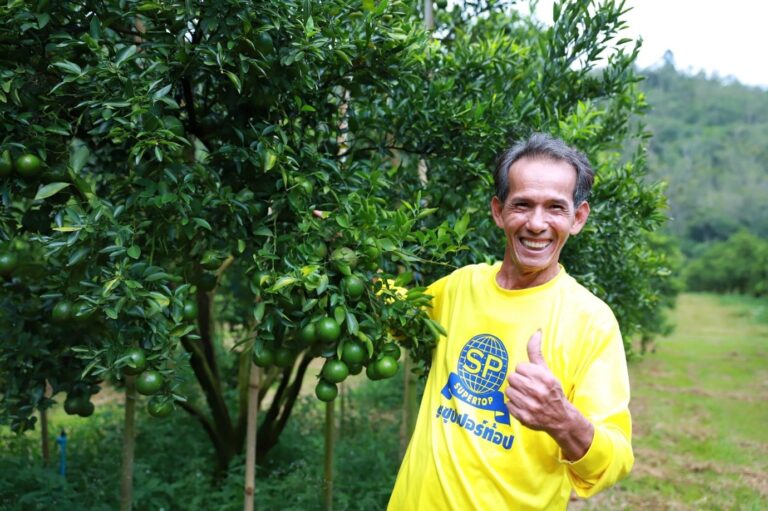
Among Yala’s most prominent GI fruits is Betong Shogun orange, described by the mayor as the most expensive domestically grown orange in Thailand. It can sell for as much as 160 baht per kilogramme, or nearly 30 baht per fruit, and is known for its naturally aromatic fragrance.
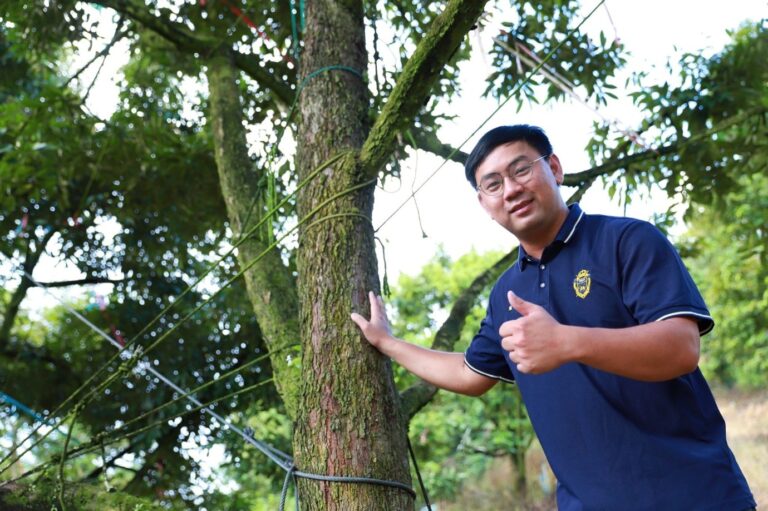
Another signature product is Yala Sadet Nam durian, grown at elevations of at least 300 metres above sea level. Its flesh is characterised by a dry, smooth texture, deep yellow colour, distinctive aroma and rich, balanced flavour.
Other varieties include Kanyao durian and Thorn Black durian, also known as O Chi. Yala has brought together nearly 40 durian varieties and selected eight distinctive types under the name “Eight Durian Masters”.
They are:
- Yao Linchi Betong, from Betong district.
- Khaimuk Betong, from Betong district.
- Thong Labu Yaha, from Yaha district.
- Thong Yoi Chat.
- Kanyao Krong Pinang, from Krong Pinang district.
- Nok Thong.
- Nok Pia.
- Ban Kero, from Krong Pinang district.
Yala is also home to Betong mist-grown mangosteen and Bannang Sata stone banana. According to the municipality, the stone banana develops a firm, chewy texture when grown in Yala’s soil, particularly in Bannang Sata, that is difficult to reproduce elsewhere.
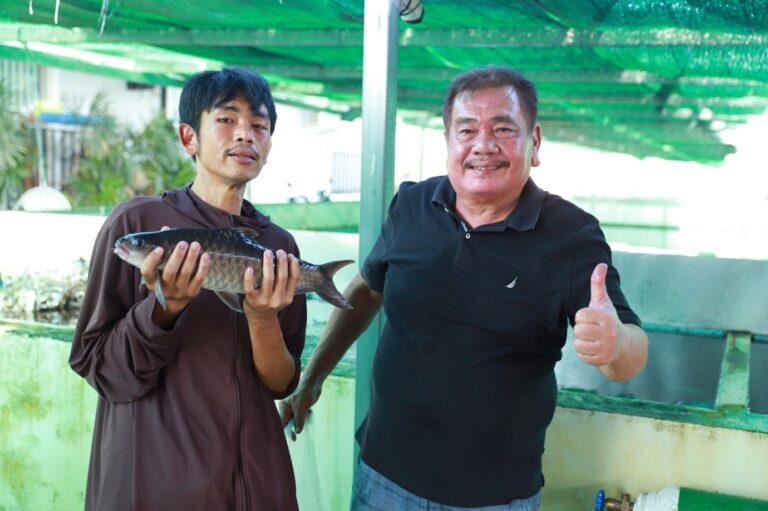
Beyond fruit, the province also has distinctive aquatic products, including Betong flowing-water tilapia and pink carp.
“Yala has many unique GI products, making it one of Thailand’s provinces with the greatest diversity of such products,” Pongsak said.
“When we say ‘Yala GI Metropolis’, we mean that no other city in Thailand has as many GI products as Yala. We have everything from fruit to aquatic products. Other provinces may have only one or two, but in Yala, we can develop GI products across our agricultural sector.”
Premium durian aims for global markets
Yala is a major fruit distribution centre for Thailand’s three southernmost border provinces. It has the country’s sixth-largest durian-growing area, covering more than 100,000 rai.
Durian production in Yala is estimated at around 90,000 tonnes this year and is expected to exceed 100,000 tonnes next year. If produce from neighbouring areas is included, the volume of durian moving through Yala’s markets could reach 200,000 tonnes.
To handle this production, move into the premium market and expand exports to China, the municipality is pursuing a “local to local” approach, connecting local producers with expertise and technology from other parts of Thailand.
Yala City Municipality is working towards an agreement with the Department of Agricultural Technology at Kasetsart University to improve durian quality. It also plans to introduce advanced packaging technology developed by Chiang Mai University to extend shelf life, prevent the flesh from becoming mushy and preserve freshness until the fruit reaches consumers.
“We are currently negotiating and arranging an MOU with the Department of Agricultural Technology at Kasetsart University to improve durian quality. We are inviting specialists to help us develop a model for high-quality durian so consumers can be confident that Yala durian is a quality product. We are also trying to minimise chemical use,” Pongsak said.
Another advantage, according to the municipality, is that many durian orchards are located in mountainous areas, where farmers use relatively little chemical treatment. The municipality says this gives the fruit potential for more environmentally friendly production, although infestations by durian borers remain a concern for buyers and packing-house operators.
To address this problem, the municipality is introducing technologies such as X-ray and computed tomography (CT) scanning to inspect durians before export, helping detect problems and build consumer confidence.
The initiative also supports Yala’s ambition to become a low-carbon city, with an emphasis on environmentally friendly production.
‘Hom Mue Lor’ rice: Reviving abandoned paddy fields
Beyond fruit and aquatic products, Yala is also promoting traditional rice varieties. One example is Hom Mue Lor rice, grown by the pesticide-free traditional rice farmers’ community enterprise in Budi subdistrict, Muang district, Yala.
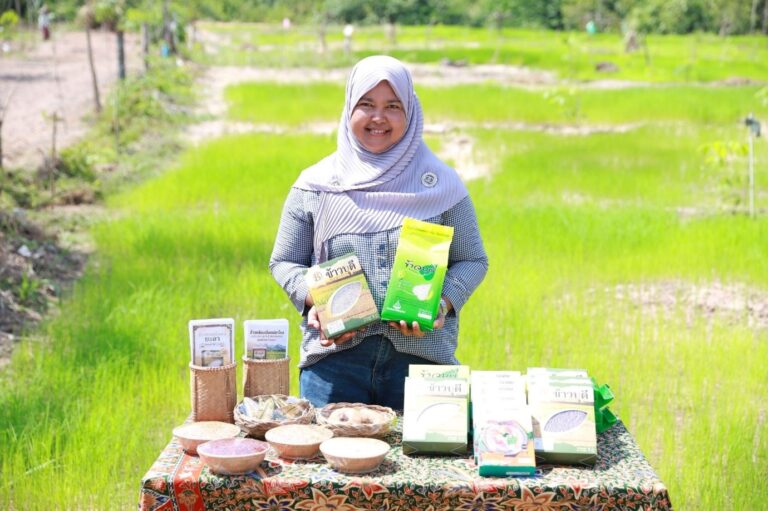
The effort to develop the variety began when Yala City Municipality joined the Rice Department and the Pattani Rice Seed Centre to study more than 20 traditional rice varieties grown in Budi’s paddy fields.
The goal was to purify and stabilise the selected varieties, a process that would normally require around five years of continuous cultivation, monitoring and selection.
However, after only two years, researchers made a discovery that encouraged the project to move forward. Laboratory tests reportedly found that Hom Mue Lor rice had the highest nutritional value among more than 40 southern Thai rice varieties included in the comparison.
“The rice research centre in Nong Chik told us that its findings showed Hom Mue Lor rice had the highest nutritional value compared with the other 40 varieties from several southern provinces,” Pongsak said.
“We then discussed registering Hom Mue Lor as a specific GI product because it is a traditional rice variety native to this area.”
Following the findings, the municipality plans to promote Hom Mue Lor rice to health-conscious consumers and tourists, as well as explore exports to Malaysia. The initiative is also intended to strengthen local food security and revive abandoned farmland.
The rice is currently cultivated across four subdistricts: Budi, Bangoi, Noen Ngam and Lam Phaya, covering approximately 3,000 rai.
The municipality has prepared a research budget and plans to introduce technology to help farmers increase yields from around 300 kilogrammes per rai to 600 kilogrammes per rai without expanding the cultivated area. It also aims to help farmers improve productivity without having to shoulder the financial risks of the investment themselves.
“Hom Mue Lor rice from Yala may not look particularly attractive, as the grains are somewhat short and rounded, but its nutritional value is very good. We would like to invite people to try it,” Pongsak said.
“Besides benefiting their health, buying this rice would encourage farmers who had left their paddy fields abandoned to return to rice cultivation and earn an income. The fields would be put to productive use again, and most importantly, consumers would benefit from healthier food.”
Opening the city through food and tourism
To make GI products more accessible, Yala City Municipality is linking local produce with tourism experiences, particularly during the fruit season from June to September.
The plans include routes showcasing lesser-known natural attractions and travel itineraries connecting Yala with Betong. The municipality is also using major events such as the Yala Marathon to introduce visitors and runners to local produce, including offering free Yala Sadet Nam durian.
The approach is built around the idea that experiencing a product firsthand is more persuasive than simply hearing about it.
“Our biggest challenge is finding ways for people to taste the products themselves. In the durian packing-house industry, everyone acknowledges that Yala Sadet Nam durian is delicious, but we have not been able to communicate that effectively,” Pongsak said.
“GI certification can serve as a guarantee of quality when the fruit reaches the market.”
Five-year ambition to put Yala produce on the global map
Over the next five years, the mayor hopes to see consumers in Thailand and abroad, particularly shoppers at leading department stores in Bangkok and major markets in China, actively seeking out Yala’s signature products.
He wants consumers to ask specifically for Yala Sadet Nam durian and Betong Shogun oranges, confident in their distinctive flavours, rich textures and environmentally friendly production.
“We want consumers in Thailand to try Yala’s fruit and discover how its texture, taste and richness differ from other varieties,” Pongsak said.
“When Thai consumers enjoy the products and share their reviews, international tourists will follow. Our municipality is committed to promoting environmentally friendly produce while improving the quality of life of local farmers, helping them build stronger and more sustainable livelihoods.”
KioskNews shows a cleaned-up reading view extracted from the publisher’s page — the original always lives on their site, not ours.