18 years after 26/11 terror attack, how has India secured its coastal frontier
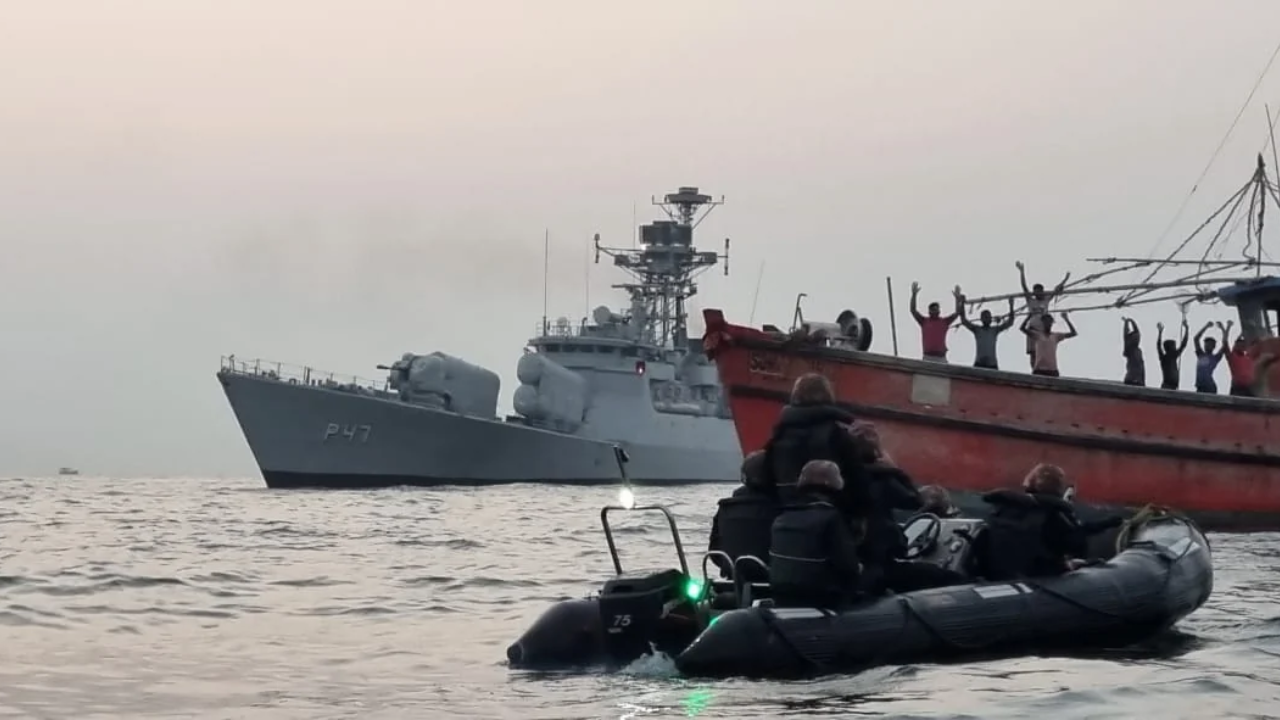
Indian Navy's Marine Commandos in action during Exercise Sea Vigil. (Image credit: Indian Navy)
Eighteen years after the November 2008 Mumbai attacks exposed serious gaps in maritime surveillance and intelligence coordination. The 26/11 attacks saw 10 Lashkar-e-Taiba terrorists reach Mumbai by sea after commandeering the fishing trawler Kuber.
The terrorists had travelled from Karachi, killed the trawler's captain and used inflatable boats to land undetected.
The attacks, which killed 166 people, led to a fundamental rethink. The navy became the lead agency for overall maritime security, including coastal and offshore security. The coast guard was made responsible for coordinating coastal security in territorial waters, while state marine police continued to handle shallow coastal areas.In order to have better response and coordination, the navy has regularly holds exercises such as Sea Vigil-26, which strengthens the coastal security architecture. The fifth edition of the nationwide exercise, held from November 11 to 19, tested the preparedness of the navy, coast guard, coastal police, customs and other agencies responsible for securing the coastline and the Exclusive Economic Zone (EEZ). Fishing and coastal communities also took part, in recognition of their role in spotting suspicious activity at sea.
A key change has been an integrated surveillance and information-sharing network, with the Information Management and Analysis Centre (IMAC), set up in Gurugram in 2014 and run by the navy. The IMAC collects, analyses and disseminates maritime security information. The centre draws on coastal radars, Automatic Identification System (AIS) transmissions, shipping databases, intelligence inputs and international arrangements to build a common operational picture and flag vessels behaving suspiciously.
The Information Fusion Centre for the Indian Ocean Region, established in 2018, extends this by exchanging information with regional and international partners.The coastal surveillance network is another pillar, according to the coast guard, it has static sensor stations with radars, AIS, day-and-night cameras and meteorological systems at 46 locations along the coast and islands. Its second phase envisages 38 more radar stations and eight mobile surveillance systems.
The coast guard also carries out regular boardings to verify the identity and registration documents of fishing vessels and the people on board.Yet surveillance depends on being able to track a vast number of small boats, as many fishing vessels do not carry AIS transponders, which leaves gaps in the maritime picture. A substantial share of the fishing fleet consisted of smaller vessels that don't have transponders.
The government has since tried to expand tracking and distress-alert equipment among fishermen, but ensuring that small boats are registered, identifiable and connected to the network remains a challenge.
AIS also cannot detect vessels that do not transmit or deliberately switch off their equipment.Sea Vigil-26 tested some of these weaknesses, this edition simulated terrorists commandeering fishing boats to reach the shore, attacks on coastal installations, merchant ship hijackings near port limits and drone attacks.
Joint audit teams inspected fish landing centres, coastal police stations, ports and other critical sites. It was the first edition since Operation Sindoor and the first since the coastline was officially remeasured at 11,098 km, up from 7,516 km.
The threat has also evolved since 2008, while infiltration through fishing boats remains possible, but agencies must now reckon with unmanned surface vessels, underwater drones, commercial aerial drones, encrypted communications and potential strikes on ports, offshore energy assets and other critical infrastructure.
Recent conflicts have shown how cheap unmanned platforms can threaten high-value targets.
Coastal defence will therefore need sensors that cover the surface, air and underwater domains, not just conventional vessel tracking.Coordination is the other challenge as the framework involves the navy, coast guard, marine police, intelligence agencies, port authorities, customs and several central and state departments. IMAC and the radar network have improved information sharing, but their value depends on how quickly information reaches the agency that must respond. Coastal police stations, in turn, need adequate boats, communication equipment and trained personnel to work alongside central forces.
KioskNews shows a cleaned-up reading view extracted from the publisher’s page — the original always lives on their site, not ours.