10 Most Universally Loved Thriller Movies Based on Books, Ranked

Diego Pineda has been a devout storyteller his whole life. He has self-published a fantasy novel and a book of short stories, and is actively working on publishing his second novel.
A lifelong fan of watching movies and talking about them endlessly, he writes reviews and analyses on his Instagram page dedicated to cinema, and occasionally on his blog. His favorite filmmakers are Andrei Tarkovsky and Charlie Chaplin. He loves modern Mexican cinema and thinks it's tragically underappreciated.
Other interests of Diego's include reading, gaming, roller coasters, writing reviews on his Letterboxd account (username: DPP_reviews), and going down rabbit holes of whatever topic he's interested in at any given point.
Sign in to your Collider account
It's rare enough to run into a thriller movie so great that it deserves to be called a masterpiece, but a thriller movie so great that it can be said to truly be almost universally loved all across the board? Now, that is when you know we're talking about a truly special icon of the genre. And, unsurprisingly, one of the best ways for a thriller to be loved by pretty much everyone is for it to find inspiration in a book that's almost as highly acclaimed.
Many would argue, however, that these ten exceptional movies are even more universally loved and all-around transcendental than their source material, and that would be a more-than-fair assessment. From animated cult classics like Perfect Blue to modern award-winning gems like No Country for Old Men, the most universally loved thriller films based on books really are a masterclass in how to adapt a thriller novel for the silver screen.
10 'Perfect Blue' (1997)

Based on the awfully underread Japanese light novel Perfect Blue: Complete Metamorphosis by Yoshikazu Takeuchi, Satoshi Kon's Perfect Blue is one of the darkest animated movies of all time, about a former J-pop idol who tries to chase a serious acting career, only to begin feeling like she's losing her mind after the appearance of an obsessive stalker starts to blur the line between reality and delusion.
People who think that animation is in any way lesser to live-action, or that animated thrillers don't deserve to be counted alongside their live-action counterparts when talking about the greatest films in the genre's history, clearly haven't seen the absolute masterpiece that is Kon's directing debut. With far more psychological, narrative, and thematic depth than its source material, this also happens to be one of the best page-to-screen adaptations of the '90s.
9 'Double Indemnity' (1944)
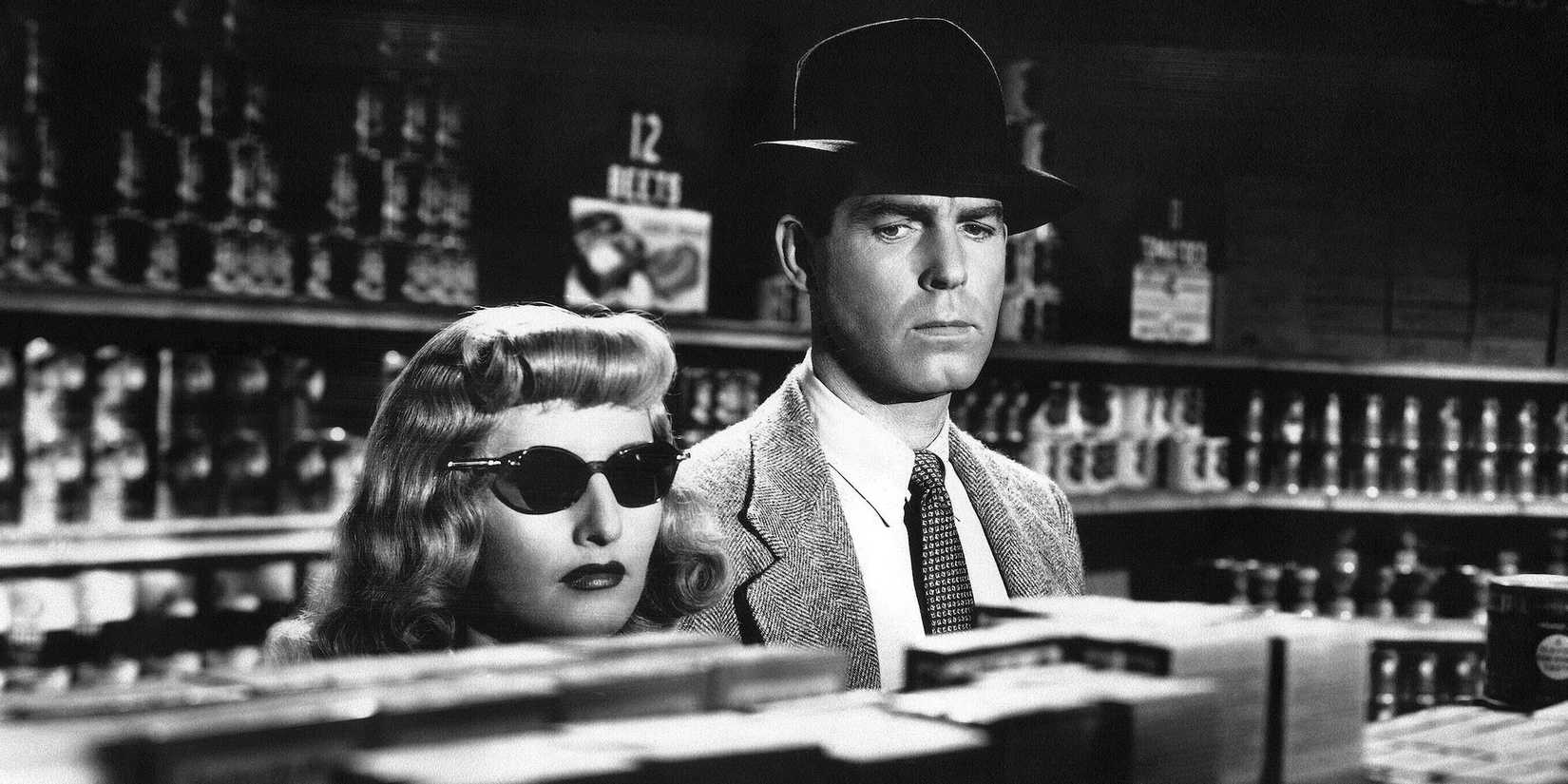
Writer-director Billy Wilder was a true auteur well before the term was even coined, a filmmaker who was constantly pushing the envelope with films like Double Indemnity, based on the hard-boiled novel by James M. Cain. Praised by many as the single greatest noir of Hollywood's Golden Age, this undeniable classic is about an insurance salesman who's seduced by a client's wife into a game of murder, betrayal, and deception.
It's one of the best film noir classics of all time, if not the very best of the best. Co-written by Wilder and hard-boiled mystery novelist Raymond Chandler, it's a murder mystery that's not so much a whodunnit as it is a "whydunnit." Though Cain's novella is also among the best hard-boiled noir novels of the era, most critics and audiences throughout history have agreed that Wilder and Chandler improved upon the material tremendously.
8 'Children of Men' (2006)
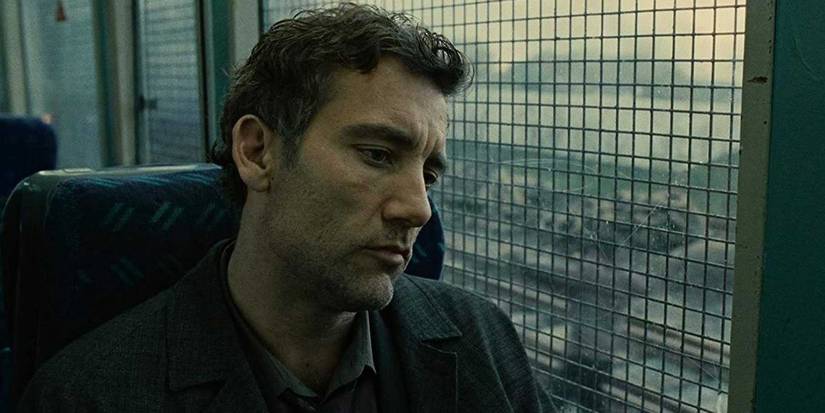
After Mexican filmmaker Alfonso Cuarón established himself as a Hollywood powerhouse in 2004 with Harry Potter and the Prisoner of Azkaban, Warner Bros. gave him the ultimate creative leverage to adapt P. D. James' 1992 novel The Children of Men in the form of 2006's Children of Men. It's one of the best dystopian sci-fi movies of all time, set in a world where a global human infertility crisis has brought civilization to the brink of collapse. It's a disillusioned bureaucrat who has to protect the world's first miraculously pregnant refugee to an offshore scientific vessel.
One of the sci-fi movies with the most interesting characters, Children of Men didn't perform all that well at the box office 20 years ago, but is today widely remembered as one of the best sci-fi films of the 21st century so far. James' novel is a quieter, more philosophical political-religious thriller, but most people tend to prefer the incredible visuals, adrenaline-pumping action, and enveloping world-building of Cuarón's adaptation.
7 'No Country for Old Men' (2007)
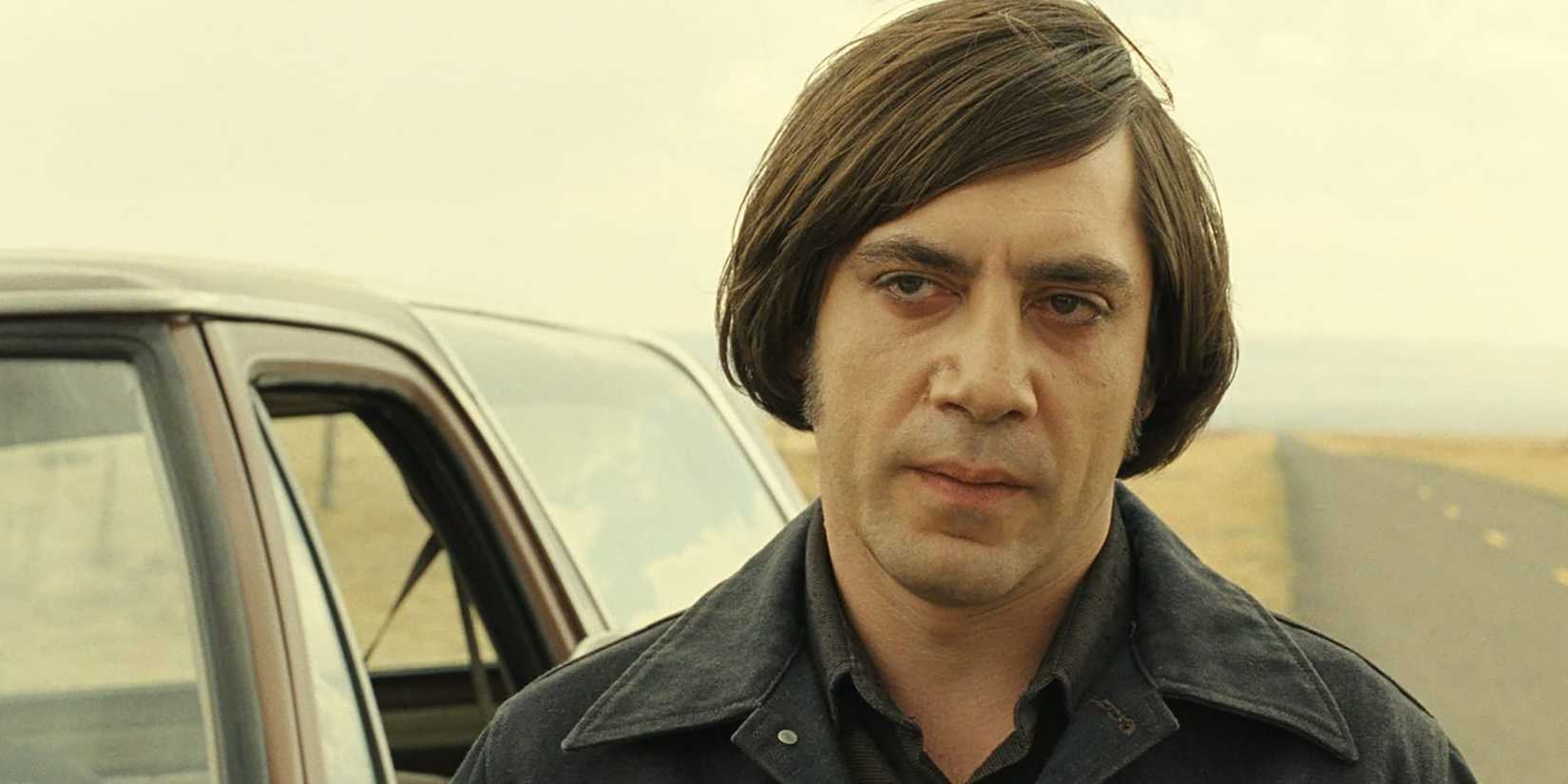
The most recent of the four Westerns that have won the Best Picture Academy Award is the Coen brothers' No Country for Old Men, based on Cormac McCarthy's 2005 novel of the same name. It's one of those Western movies that changed the genre forever, about a man who stumbles upon a botched drug deal and $2 million in cash, triggering a game of cat-and-mouse with a terrifying hitman while an aging sheriff tries to track the case and make sense of all the violence.
McCarthy is far and away one of the most important and influential American authors of his generation, just like the Coens are among the most important and influential American filmmakers of their generation, making No Country for Old Men a match made in heaven. While McCarthy (who originally conceived the story as a screenplay) writes the story with richer subtext and philosophical depth, the Coens tighten the pacing and add a level of tension that simply couldn't have existed on the page.
Collider Exclusive · 8 Questions · 2 Minutes Which Coen Brothers Movie Would You Thrive In? Lebowski · O Brother · Fargo · No Country
Nobody writes people like the Coen brothers. The decent ones. The talkers. The ones who stopped trying years ago. And the ones who can already see how bad this is going to get. Four films, four completely different ways of handling trouble. Eight questions decide which one you would actually walk out of.
🎳Lebowski(1998)
🎸O Brother(2000)
❄️Fargo(1996)
🪙No Country(2007)
01
A bag of money lands in your lap. What happens next? Every Coen film starts roughly here. It never goes smoothly.
02
Somebody is being completely unreasonable with you. How does it go? Coen dialogue is mostly people failing to understand each other.
03
What is your actual relationship with work? Everyone in these films is either working far too hard or not at all.
04
Long drive, bad weather, nobody else on the road. How are you? There is always a drive in these films. It is never a good drive.
05
You are offered a shortcut that is not quite legal. This is the moment where the Coens find out who you really are.
06
The plan has fallen apart completely. What is your move? In a Coen film the plan always falls apart. That is the genre.
07
Which of these sounds most like something you would say? Nobody writes a line quite like the Coens. Which one is yours?
08
How does your film end? Eight questions in, this is the one that decides your movie.
The Verdict Is In Your Coen Film Is…
Four films, four completely different ways of handling money, trouble and other people. This is the one you would survive, why it suits you, and what it would cost you to be there.
The Big Lebowski
You have quietly arranged your life so that very little can get to you, and a surprising number of people find that infuriating. You would be completely at home here.
- The Dude is the only person in the film with no ambition, and the only one who comes out the other side undamaged. That is not an accident.
- You do not chase things. You let situations arrive and you deal with them at your own pace, which is a genuine skill however lazy it looks.
- This is a full crime plot happening around a man who mostly wants his rug back, and that is exactly the energy you would bring to it.
- Everything goes wrong. You abide. The film ends.
O Brother
You talk your way through life and it works far more often than it should. Give you a bad situation and an audience and you will find a way out of both at once.
- Everett never has a plan that survives contact with reality. He has something better, which is the ability to keep talking until a new one turns up.
- You are the optimist in the group, the one who makes a ridiculous idea sound reasonable at two in the morning.
- This is the warmest film the Coens have made. It is a chase, a comedy and a musical at once, and nobody in it is quite beyond saving.
- You would end up famous entirely by accident, and act like you planned it all along.
Fargo
You would survive Fargo because you are the only kind of person who does: patient, decent, and completely unimpressed by anybody trying to be clever.
- Marge Gunderson solves the whole case by being polite, thorough and unhurried while everybody around her panics. That is the entire argument of the film.
- You do the boring parts of the job, which is precisely why you would notice the thing everyone else walked straight past.
- Fargo is about ordinary greed causing enormous damage, and about one person who simply refuses to be corrupted by any of it.
- You would go home at the end of it, have dinner, and sleep perfectly well.
No Country
You do not expect the world to be fair and you stopped being surprised about it a long time ago. That clear-eyed quality is exactly what this film asks for.
- No Country is the Coens at their coldest: a film where being smart, fast and careful might still not be anywhere near enough.
- You plan for the worst, you keep your own counsel, and some part of you is already working out the exit.
- Llewelyn Moss is competent, prepared and resourceful, and the film is honest about whether any of that is ever sufficient.
- You would see it coming. Whether that helps is the one question the film refuses to answer.
6 'Vertigo' (1958)

Alfred Hitchcock is regarded as the Master of Suspense for a reason: We really are talking about the greatest and most important thriller filmmaker in the history of cinema. To understand the reasons why, one only needs to watch Vertigo, based on the French novel From Among the Dead by Pierre Boileau and Pierre Ayraud (written under the pen name of Boileau-Narcejac. In this Hitchcock masterpiece, a retired San Francisco detective falls into a psychological trap after being hired to follow an acquaintance's suicidal wife.
One of those rare psychological thrillers with virtually zero flaws, Vertigo is regarded by many as Hitchcock's greatest film. While the novel is terribly underappreciated, Boileau and Ayraud actually wrote it in the hopes that Hitchcock would direct an adaptation. One can only thank the cinema gods that they did, because Vertigo elevates the source material with a level of artistry and highly meta vulnerability unseen across most of the rest of Hitchcock's oeuvre.
5 'Jaws' (1975)
It was Steven Spielberg who fathered blockbusters with 1975's Jaws, universally accepted by film historians as the very first true blockbuster in film history. Based on the 1974 novel by Peter Benchley, it's one of the best monster movies in film history, about three men who team up to hunt and kill a human-eating shark that's terrorizing their New England resort town.
Producers Richard D. Zanuck and David Brown read Benchley's Jaws and agreed that it was the most exciting thing they'd ever read, publishing the film rights before the novel was even published. The result? Not only one of Spielberg's best movies, but also one of the most important films of the entire New Hollywood movement. As thrilling as Benchley's version of the story is, Spielberg's is almost inarguably the definitive version, with more likable characters, a tighter plot, and a sense of suspense unlike anything else the big screen has ever produced.
4 'High and Low' (1963)

There are many who would confidently say that Akira Kurosawa is not only the greatest Japanese auteur in the history of cinema, but perhaps even the single greatest filmmaker of all time. Regardless of superlatives, one thing is certain: High and Low, loosely based American author Evan Hunter's King's Ransom, is one of the most perfect thriller movies ever made. In it, a wealthy executive is placed in a moral dilemma after his chauffeur's son is mistakenly kidnapped instead of his own.
King's Ransom is a sharp crime novel, but absolutely nothing compares to High and Low, universally recognized as one of the greatest and tensest thrillers ever made. It's masterfully divided into three equally gripping sections: a first third that feels like a highly theatrical single-location thriller, a second third that feels like an engrossing police procedural, and a final third that feels like a quasi-surreal social drama. Throughout it all, it remains equally riveting.
3 'Jurassic Park' (1993)

If there's anyone who knows how to take a great novel and turn it into one of the greatest blockbuster films of all time, it's undoubtedly Steven Spielberg. He learned of Michael Crichton's Jurassic Park when the book was still a manuscript, expressed interest right away, and the rest is history. This is one of the most universally loved sci-fi movies based on books, about a billionaire whose remote park featuring live, genetically cloned dinosaurs malfunctions, forcing a group of visitors to fight to survive and escape the island.
Jurassic Park is almost universally agreed to be the single greatest film ever made about dinosaurs—often imitated, never even remotely close to being matched. Crichton's book is among the best hard sci-fi novels of the '90s, but it's hard to deny that the script he wrote with David Koepp for Spielberg's movie is even better. Fast-paced, suspenseful, and full of compelling characters, 1993's Jurassic Park is a film whose entertainment value is impossible to resist.
2 'The Silence of the Lambs' (1991)

Based on Thomas Harris' 1988 novel, Jonathan Demme's The Silence of the Lambs is the film that has most recently won all Big Five Academy Awards: Best Picture, Director, Actor, Actress, and Screenplay. It's about Clarice Starling, and FBI trainee who seeks the help of imprisoned serial killer Hannibal Lecter to catch another active serial killer who likes to skin his victims.
The result of such a premise is one of the best psychological thrillers of the last 90 years, the one that introduced the world to two of the most iconic characters in the history of the genre. The book may have deeper psychological nuance, as naturally permitted by the literary form. The film, however, is an absolute masterclass in pacing, horror-inducing suspense, and visual storytelling, complete with Jodie Foster and Anthony Hopkins delivering two of the best acting performances of modern cinema.
1 'Psycho' (1960)

Moving away from the supernatural themes he generally wrote about, Robert Bloch made his first incursion into modern psychological horror with 1959's Psycho. The book, about a secretary on the run with embezzled cash who checks into a suspicious remote hotel, was a success. Alfred Hitchcock loved it, and looking to recover from two aborted projects with Paramount, he shot his adaptation of Psycho on a low budget. Quite likely, not even he could have predicted that he was making what would come to be hailed as one of the best horror movies in film history.
There are those who may prefer Bloch's darker, more visceral, and more psychologically nuanced novel; but it's no exaggeration of any sort to say that Hitchcock's movie, often praised as one of the greatest films of all time, has been far more successful and iconic over the years. It's one of the definitive masterclasses in how to adapt a great book into an even greater movie, a nearly-perfect psychological thriller and horror gem whose influences can still be felt across both genres today.

Psycho
- Release Date
- June 22, 1960
- Runtime
- 109 minutes
- Director
- Alfred Hitchcock
- Writers
- Joseph Stefano
KioskNews shows a cleaned-up reading view extracted from the publisher’s page — the original always lives on their site, not ours.