Over 40 years ago, a mystery vigilante released a fungus to control blackberry in Australia. But why?
Over the summer of 1983–84, a fungus called Phragmidium violaceum was introduced to Australia. It was done secretly, deliberately and illegally. And it was done for one purpose: to kill blackberry plants.
I’m a historian, not a detective. My recent research on the illicit introduction of violaceum (also known as ‘blackberry rust’) doesn’t identify a culprit. But it does shed light on one of Australia’s most significant and mysterious breaches of biosecurity over the past half-century.
Like so many other animals and plants, blackberry was deliberately introduced to Australia from Britain. The earliest records date to the 1840s. The plant was valued for its abundance of juicy fruit as well for its uses as a hedge. Few herbivores other than tough-lipped deer and goats can eat the thorny plant. But its delicious berries are prized by all sorts of animals, from foxes to fairywrens.
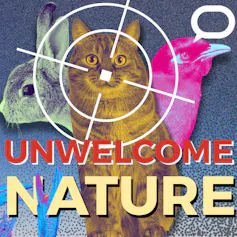
Every Australian knows common mynah birds are bad, rabbits are worse and feral cats kill native animals unchecked.
But how do we decide what makes an introduced species “good” or “bad” – and will we ever concede that some species are here to stay?
With the help of humans and animals, blackberry spread rapidly. By the late 1880s, it was becoming recognised as a serious agricultural weed. Unchecked, it forms dense, thorny thickets which are hard to reclaim as farmland.
When official control efforts began in the 1890s, they had little effect on the tough plant. But agricultural scientists were determined to find a solution – even if it took decades.

From cactus moths to blackberry rust
In the inter-war period, Australian scientists found a neat remedy to a far worse weed – prickly pear, an introduced cactus carpeting vast areas of pasture in New South Wales and Queensland.
In the mid-1920s, the Commonwealth Prickly Pear Board introduced the Cactoblastis moth from Argentina. These moths could kill the cactus while leaving native species untouched. By 1933, it was reported in the journal Nature 80% of the prickly pear “infesting” Queensland and 50-60% in NSW had been “destroyed”.
Cactoblastis is an example of biological control – when humans introduce a predator, parasite or pathogen in order to eradicate a pest. Think of it as weaponising ecology for human ends.
From the late 1960s, scientists at Victoria’s Keith Turnbull Research Institute began investigating blackberry rust as an agent of biological control. The fungus does not kill blackberry plants, but it does slow growth and reproduction.


In the early 1980s, the Institute sent one of their top scientists, Eligio Bruzzese, to a CSIRO laboratory in France to test the fungus. His experiments seemed to show the rust would work well and would not threaten more valued plants. He returned to Australia in early 1983.
But the Institute never got a chance to release the rust. In February 1984, the violaceum fungus was unexpectedly found on blackberry plants near Yarram in south-eastern Victoria.
Within days, more cases of rust were spotted over 100km away on blackberry plants growing in the Dandenong Ranges and in Melbourne’s eastern suburbs.
Science journalist Graeme O’Neill wrote in The Bulletin that the evidence indicated:
somebody visited Europe – probably France – and picked some leaves from rust-affected blackberries, returned with them… and dusted the fungal spores onto the leaves of blackberries […] Department of Agriculture officers actually located that first plant and noted the regular spacing between [other infected] plants
Had someone been prosecuted, they could have been punished with a A$100,000 fine or five years in prison. This was a crime with surprisingly high stakes.
There’s no suggestion Bruzzese was involved. In public statements, the frustrated scientist claimed the strains of violaceum he had hoped to introduce would have been far more effective.

That same year, federal parliament passed laws making it easier for scientists to research biological control.
When the Minister for Primary Industry, John Kerin, spoke in favour of the bill, he referenced the illegal introduction of violaceum as evidence of the need for more transparent regulation.
In 1991, authorities bowed to the inevitable and began releasing further strains of blackberry rust. Despite the controversy, the fungus only had a mild effect on blackberry. Authorities still rely on poison and manual control.
Why was it done?
It may be hard to understand how the humble blackberry could inspire someone to go to such extremes.
Sure, blackberry can be obnoxious from a human perspective. Even with the fungus circulating, the plant remains a nuisance for farmers. It’s listed as a Weed of National Significance. In 2017, authorities estimated it was costing Australia over $100 million annually across production losses and the expenses of “controlling” it.
But many species, introduced and native alike, cause headaches for farmers and other land managers. Not all of them provoke such dramatic responses.
In 1984, authorities assumed a disgruntled farmer was responsible. But this isn’t certain.
Blackberry affects all sorts of people. The plant’s thorns are a persistent nuisance to bushwalkers, cyclists and horseriders. Rampant blackberry blocks off paths and watercourses. It has been deemed an environmental weed, too, although it also provides important food and habitat for native animals such as bandicoots.
In short, there were many reasons why someone might have done it.

Seeing the other side of blackberry
Unlike many weeds, blackberry also has its defenders. Through the 1980s and ‘90s, news stories about violaceum prompted some Australians to write of their fondness for blackberry. Blackberry wasn’t just a British or European plant anymore. Many Australians now had their own cherished memories of picking berries.
Blackberry has now been in Australia close to 200 years. It has become naturalised and – to a degree – normalised.
Unless scientists discover a much more effective method of biological control, it’s probably here to stay. That will mean more valuable pasture lost and more nasty scratches for bushwalkers. But it will also mean more habitat for urban bandicoots and more delicious fruit for the adventurous.
The good might not outweigh the bad, but for the time being, we may have to learn to be more accepting of blackberry where we can.
This whodunnit may never be solved. But the case of the blackberry rust reminds us that weeds – and our responses to them – can be more complicated than they first appear.
KioskNews shows a cleaned-up reading view extracted from the publisher’s page — the original always lives on their site, not ours.