DVS tests 18 dogs following rabies scare in Kedah’s Changlun
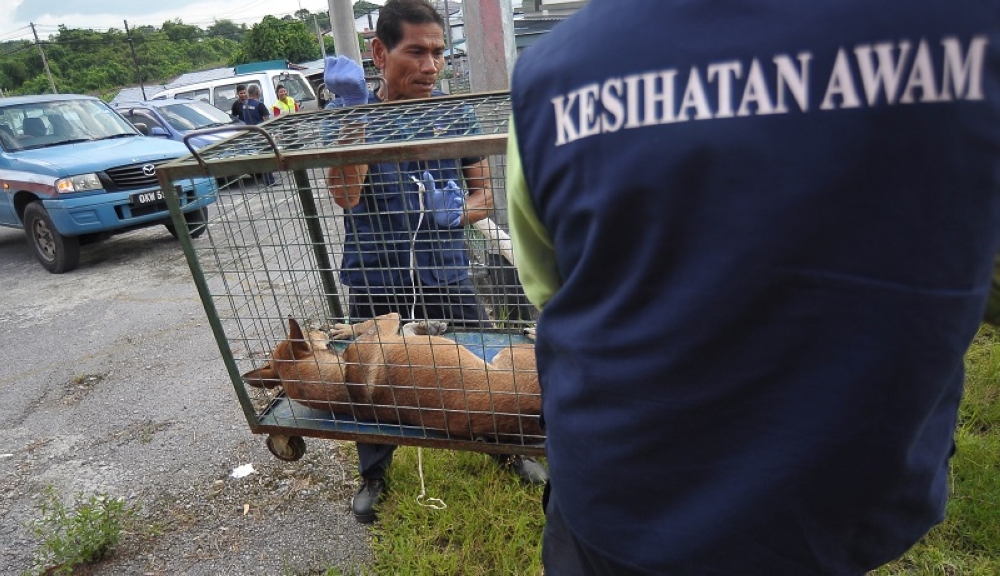

Personnel from the Kuching South City Council lift a cage containing a stray dog during an operation to control the rabies outbreak in Kuching on July 24, 2017. — Bernama pic
First Published: Tuesday, 29 Sep 2026 4:15 PM MYT
PUTRAJAYA, Sept 29 — The Kedah Department of Veterinary Services (DVS) has collected samples from 18 dogs in Changlun, Kedah, and surrounding areas for rabies confirmatory testing as of yesterday, following an incident where a man was bitten by a stray dog in the area.
In a statement today, DVS announced that the case involving the 31-year-old man was reported by the Kedah State Health Department on Sept 24.
Subsequently, Kedah DVS conducted an on-site investigation and carried out operations to capture stray dogs in collaboration with the Kubang Pasu Municipal Council to locate the suspected animal and assess the potential presence of the rabies virus.
“As of Sept 28, samples have been collected from 18 dogs in the vicinity of the bite incident for rabies confirmatory testing. Kedah DVS is continuing its investigation and awaiting laboratory results to confirm the presence of rabies among dogs in Kedah,” the statement read.
DVS noted that Changlun is located within the rabies buffer zone or immune belt which extends 50 kilometres from the Thai border.
“In this area, all owned dogs are required to undergo rabies vaccination under the Animals Act 1953. This measure is implemented to reduce the risk of rabies spreading to other areas. As of August this year, 504 owned dogs in the Kubang Pasu district, and 1,349 owned dogs across Kedah, have received the rabies vaccine,” the statement added.
Meanwhile, Kedah DVS is continuing its rabies surveillance programme across all districts; 164 samples were tested as of August, all of which returned negative results.
Monitoring and sampling activities have also been intensified in areas bordering Thailand to ensure there is no spread of the rabies outbreak into the country.
Rabies affects the nervous system and can be fatal. Infected dogs may exhibit behavioral changes such as becoming aggressive or unusually docile, restless, or withdrawn and may bark or bite without provocation.
Other symptoms include weakness, loss of coordination, difficulty swallowing, excessive salivation, and paralysis, eventually leading to death.
In this regard, DVS advises the public not to approach, touch, or handle stray or abandoned dogs, sick dogs, or any animals displaying unusual behaviour.
DVS further advises individuals bitten or scratched by a dog or other animal suspected of carrying rabies to wash the wound with soap and running water for at least 15 minutes and to seek immediate medical treatment at a health facility, even if the wound appears minor.
“Report any biting incidents to the nearest Veterinary Services Office to enable investigations and follow-up actions to be carried out while also ensuring owned dogs receive rabies vaccinations in accordance with DVS directives and are not allowed to roam freely,” the statement read.
Kedah DVS will continue to collaborate with the Kedah State Health Department, local authorities, and relevant agencies on monitoring, investigations, and the implementation of control measures to safeguard both animal and public health.
Members of the public in Kedah can provide information or lodge reports with the Field Operations Centre at the Kubang Pasu District Veterinary Services Office by calling 04-916 2207, or with the State Operations Centre at 04-702 5336.
Those outside Kedah may submit reports to their nearest Veterinary Services Office or contact the DVS hotline at 03-8870 2041. — Bernama
KioskNews shows a cleaned-up reading view extracted from the publisher’s page — the original always lives on their site, not ours.