‘She was so not regretful about killing her husband’: the Iranian film that shines a light on blood money and retributive justice
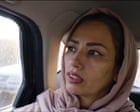
“Even though I was raised here,” says the Iranian-American film-maker Tanaz Eshaghian from her home in New York, “I was brought up with the understanding that there are things that you do and things that you don’t do.” Take her 2006 autobiographical feature, Love Iranian-American Style, about her experience of dating in her 20s, which was, she says, “about how I was supposed to marry a nice Iranian man and stay a virgin”. But by the time she’d graduated from Brown University in Rhode Island “that ship had sailed”, she laughs.

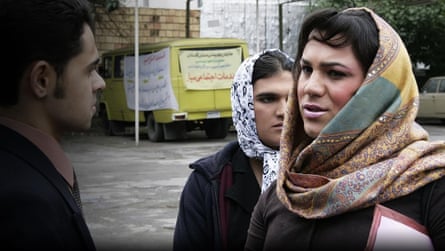
Since Love Iranian-American Style, she has made equally taboo-breaking documentaries about a women’s prison in Afghanistan (Love Crimes of Kabul, 2011), trans people in Iran (Be Like Others, 2008) and disabled teenagers in Pakistan (As Far As They Can Run, 2022). And with each new project, the duality of her heritage (Eshaghian emigrated to the US not long after the Iranian revolution when she was six) has spurred her to focus eastwards, closer to where she was born. “When you’ve been raised in the west you can see how similar the thinking is,” Eshaghian says of the similarities she’s found there: “the conservative thinking, the place of women, what’s allowed, what’s important”.
Such themes of conservatism – and indeed of how some women are treated in society because of it – is something that Eshaghian’s latest film, An Eye for an Eye, homes in on with unblinking clarity. On the face of it this is a narrative about what justice means under sharia law in Iran where, under its penal code, a murder victim’s heirs have three choices when someone is found guilty: an execution (qisas, translated as retaliation in kind or “an eye for an eye”), financial compensation from the offender (diya) or forgiveness (afw). But on closer inspection, Eshaghian and Jafari’s film also raises further fundamental questions not only about domestic abuse in Iran and the patriarchal norms that enable it but also about the pernicious stereotypes many of us still hold (regardless of where we live) about what makes a “perfect victim” (particularly when that victim is a woman) – and what happens when that stereotype is challenged.
“I wanted to do a film in Iran. I was looking for something,” Eshaghian recalls of her introduction in 2022 to her Iranian-based co-director Farzad Jafari, who had been trying to make a documentary about the anti-death penalty activist Farkhondeh Jabarzadegan (who features in this film). “And I thought that was interesting: she tries to stop executions?”
One such execution on Jabarzadegan’s books was the case of a mother of three who, as Eshaghian describes, “was so not regretful” about the killing of her husband in an act of self-defence. Fourteen years later, 47-year-old Taherah is out on bail, and An Eye for an Eye picks her story with the clock-ticking threat of her execution unless she can pay the diya, or blood money, demanded by her husband’s family.
With Jafari on the ground in Tehran and Eshaghian directing remotely in New York, the film flits between private negotiations, public fundraising, legal proceedings and intimate family moments in order to find clarity. Yet the story is muddied by a slew of narrative complications that Eshaghian and Jafari seek to explore: the premeditated nature of the killing (Tahereh strangled Hossein with a scarf and buried his body under the floorboards of her home), the alleged involvement of a man who, the allegations continue, she might or might not have had an affair with, and the detached and dissociative character of Tahereh herself – something Eshaghian suspects may be because of PTSD.
Is Tahereh telling the full truth? Are her children? Does it matter? “There are these incredible lines that Tahereh feels comfortable saying, like: ‘I killed him once, he killed us a thousand times,’” Eshaghian says of Tahereh’s fierce impenitence. Yet there is numbness there too. As Eshaghian powerfully put it during an interview with the journalist Christiane Amanpour last month, Tahereh is a remarkable character “because she breaks so many stereotypes that the west has of women in the Middle East”.
What does Tahereh represent to Eshaghian, I wonder. “I wanted to get at what options a woman from her background in Iran has,” Eshaghian replies. Having endured decades of violence (including a broken skull), she tried to get a divorce, but the court sent her away. She tried to talk to her father, but he wasn’t interested. “What can you do, what do you have access to?” Eshaghian asks of a country in which women’s rights are severely restricted. For Tahereh, the answer to both of these questions is very little when such violence is deemed a “childish” matter by those from whom you seek help.
In a jaw-dropping moment, one investigative reporter proffers: “You could argue that Tahereh would rather be hanged as a murderer than an adulterer” – drawing attention to the fact that in Iran adultery is still punishable by death. “Our laws affirm the patriarchy in life,” Tahereh’s lawyer Gitty Pourfazel says halfway through the 90-minute film – a line that gets to the root of things. “The law is unfortunately suited for men to have an easier life,” Eshaghian muses on Pourfazel’s assessment. “Because the woman is ultimately considered property. Which is where all these laws come from because your property can’t just get up and leave, your property can’t say: ‘I’m not happy.’”
And yet in spite of this power imbalance, this film features an extended cast of strong and self-possessed women. Not just Tahereh but her lawyer Pourfazel, the anti-death penalty activists battling to raise the 1.3bn toman (down from about $30,000 in 2023 to $5,000 now) to free her, and even Hossein’s mother, whose rallying cry – “I hope she bleeds to death through her nose” – places itself in stark contrast with her son and nephew, who, according to Tahereh’s son Mohsen, just see his dad as a bundle of cash.
“More stereotype breaking!” Eshaghian beams when we talk of these women and how independent they are. Exactly four years on from the feminist protest movement Woman, Life, Freedom which was sparked by the death of Mahsa Amini in police custody, I wonder whether Eshaghian has any thoughts on the legacy of that now – and where we’re heading. As a documentarian, she replies, the future isn’t something she feels able to guess at. “I look at what’s happening to people in the moment, to make it as truthful and honest as I can, which in this world right now sounds old fashioned because it seems like there is no truth,” she says. “But that’s where I try to come in: the personality of the person, the world that they’re in – what they want, what they’re navigating, who’s against them – and try to paint a picture.”
The world is becoming more polarised and more binary, she says, which is dangerous – a form of violence, even. “Because it’s the opposite of understanding our common humanity, which I’m hoping this film does, and my previous films did too.”
What all these narratives have in common is: “These are human beings in different societies trying to get their needs met and to live” – just like you or me. Again it comes back to that duality she has always felt as an Iranian-born American. “Because of it, I can add something to the world by bringing some insight into what is happening – not on a news level but on a human one,” Eshaghian says.
“And I push it. I think: I bet I can do this in Afghanistan, I bet I can do this in Pakistan. And you know what?” she adds with a smile. “I can.”
KioskNews shows a cleaned-up reading view extracted from the publisher’s page — the original always lives on their site, not ours.