Hong Kong customs arrests 7, seizes HK$23 million in suspected smuggled drugs
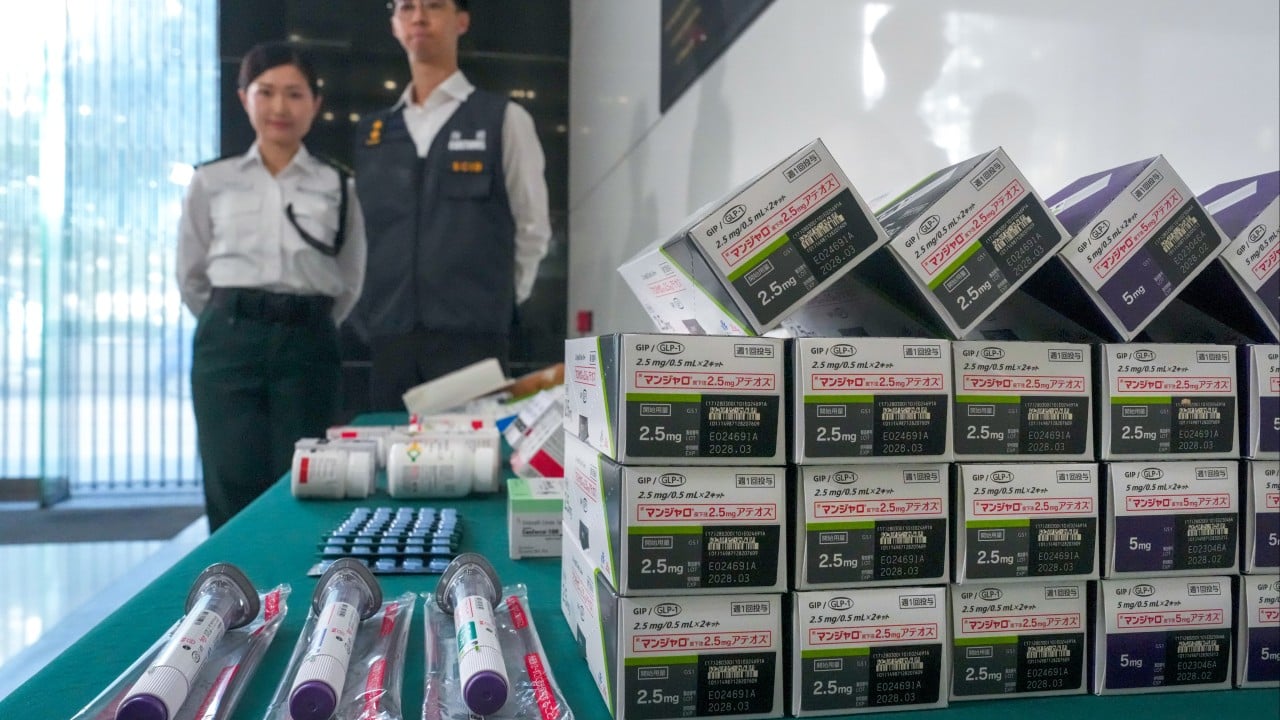
Hong Kong customs officers have arrested seven people and seized about HK$23 million (US$2.9 million) worth of suspected smuggled controlled drugs, including Viagra, cancer medication and slimming injections, in an operation targeting air parcels.
The Customs and Excise Department said on Tuesday it had launched a series of investigations late last month into the smuggling of controlled pharmaceuticals and slimming injections into Hong Kong via air parcels.
The first set of cases involved six parcels sent from Japan to Hong Kong that were falsely declared to contain ballpoint pens, said Ng Sin-yuet, acting senior inspector with the postal clearance division of customs’ airport command.
She said officers selected the parcels for inspection on November 6 and 7 following risk assessments. X-ray scans revealed syringe-shaped objects inconsistent with the declared contents.
Officers subsequently found 64 suspected controlled slimming injections containing substances classified as Part I poisons under local law. The injections had an estimated market value of HK$43,000.
The cases were referred to customs’ syndicate crimes investigation bureau, which carried out a series of controlled delivery operations over the past two weeks.
Officers arrested six suspected recipients – five women and a man – aged between 19 and 55.
In a separate investigation, customs officers identified a suspicious parcel at a post office through intelligence analysis and risk assessments. It was found to contain suspected controlled drugs and cigars.
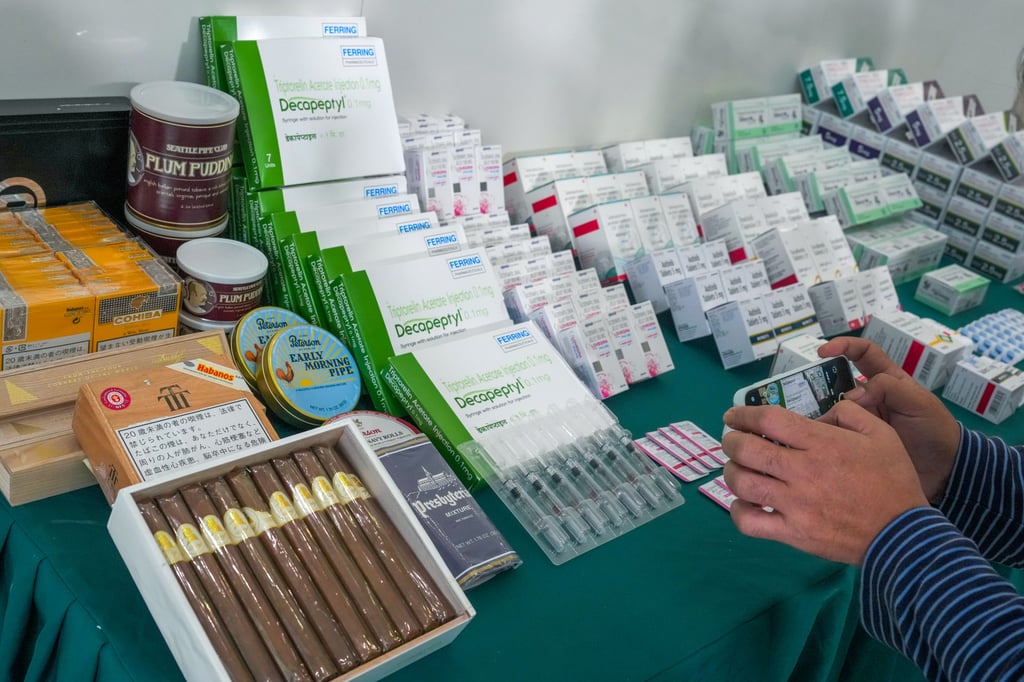
A subsequent controlled delivery operation led officers to a suspected warehouse for smuggled pharmaceuticals. There, they seized about 650,000 suspected controlled pharmaceutical products, mainly erectile dysfunction drugs such as Viagra, fertility medication and cancer drugs, as well as a batch of manufactured tobacco products.
Officers arrested a 40-year-old local man believed to be in charge of the warehouse.
All seven suspects have been released on bail pending further investigation. Customs said the operation was continuing and further arrests could not be ruled out.
Investigators also found that the slimming injections had not been transported or stored under the refrigeration conditions specified by their manufacturers.
Customs said there was no evidence that the seized products had entered the local market.
The seizures came about two months after Hong Kong health authorities arrested a man and a woman linked to a clinic suspected of selling a laboratory reagent as a bogus vaccine purported to treat more than 20 types of cancer.
In that case, authorities said the clinic had allegedly administered injections containing a German laboratory chemical intended solely for research. The substance was not registered as a medicine anywhere in the world. Investigators seized more than 50 unregistered injections classified as Part I poisons.
KioskNews shows a cleaned-up reading view extracted from the publisher’s page — the original always lives on their site, not ours.