Chinese memory-maker CXMT claims DRAM production breakthrough
PLUS: Toyota's robot hiring spree; China's CDNs struggle; India to charge for some UPI payments; and more!
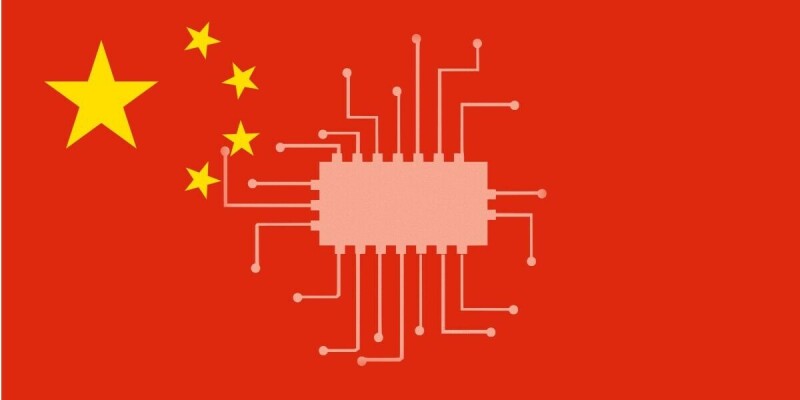
ASIA IN BRIEF Chinese memory-maker CXMT, whose products Apple has reportedly evaluated to use in the iPhone, claims to have made a miniaturization breakthrough.
The company on Sunday posted news that it has started mass production of chips made with a fifth-generation process that essentially doubles memory density, meaning it can cut twice the number of dies for memory chips from a single wafer.
CXMT says its key breakthrough is a high-k dielectric metal gate process – a way of insulating silicon to improve efficiency – adapted to baking DRAM. The company claims its new process puts it on par with rival memory-makers.
REG AD
The proof of the pudding is apparently a pair of LPDDR5X memory modules for smartphones or other high-end consumer electronics. Both products boast 24GB of memory.
REG AD
If CXMT’s claims of improved density and mass production are correct – and the new products aren’t too pricey – it’s good news for Chinese electronics manufacturers who, like their global peers, are struggling to source affordable memory thanks to supply chain crunches caused by demand for AI-related products.
That shortage recently saw Apple hike iPhone prices by $100 and led the GSM Association to warn that rising smartphone prices threaten to slow digital inclusion.
Democratic governments, however, are mostly uncomfortable with allowing their smartphone manufacturers to use Chinese components.
India starts charging fees for instant payments
India’s National Payments Corporation (NCP) last week introduced fees to use its Unified Payments Interface (UPI) for the first time.
UPI is an instant payment scheme provided by India’s government. It allows transfer of funds between participants, which include over 700 local banks and many e-wallet providers. It also allows person-to-person payments.
The scheme is a ubiquitous option even at small retailers across India, and one of the world’s busiest payment schemes with over 24 billion monthly transactions. The scheme is so popular that other payment providers outside India have adopted it so that Indian tourists can use it abroad.
UPI launched in 2016 and has until now been free for shoppers and merchants alike. The NCP last week announced it will soon require merchants to pay 0.4 percent fee for when taking payments above 2,000 rupees (£15; $21).
REG AD
India’s government said the charge is needed to fund the operation of the scheme, the cost of which is currently borne by the nation’s government and participating financial institutions.
The government ordered merchants not to pass on the fee.
China’s online reach is surprisingly short, researcher finds
China’s share of content distribution networks is small, leaving Asian nations largely dependent on US companies.
That’s the key finding of research by Jason Hung, a quantitative sociologist and research fellow at the Internet Society’s Pulse program.
Hung looked up the top 1,000 most popular websites in ten southeast Asian countries (Cambodia, China, Indonesia, Lao PDR, Malaysia, Myanmar, Philippines, Singapore, Thailand, and Viet Nam) using Google’s Chrome User Experience Report (CrUX), then used three different CDN and IP infrastructure lookup approaches to identify the company and jurisdiction serving the content.
“I then used the Herfindahl-Hirschman Index (HHI) to quantify the severity of market concentration (by service provider and by jurisdiction), where a score above 2,500 is considered highly concentrated, and a maximum score (10,000) means a single actor serves an entire market.”
That approach led to the finding that “content delivery in SEA is highly concentrated, with HHI scores ranging from 8,950 to 10,000 across all ten countries.”
REG AD
The researcher found that China-registered companies held no more than 3.9 percent of the CDN market between 2024 and 2026, and that US-registered companies dominated, ranging from 95.9 percent to 99.6 percent.
“These findings go beyond what I expected based on my understanding of China’s control over the Global South, especially in Southeast Asia,” he wrote, and leave organizations across the region highly dependent on US tech companies to expose their content to the wider internet.
Toyota to hire 400,000 robots
Japanese auto-maker Toyota last week told investors it plans to hire 400,000 robots that have two-fingered “hands.”
The Embodied Learning robot for Enhanced Yield, aka “ELEY,” is capable of folding a t-shirt and learning how to perform tasks that require considerable manual dexterity. Apparently, the bots needed two weeks to learn how to fold a tee. Readers who are parents of teenaged children might find that speed interesting.
Toyota plans to deploy the bots alongside human workers in its own factories, where they will be free to move about using either a battery or an extension cord as an energy source. The company hopes its partners will also employ ELEY.
India has five functional fabs
The government of India last week announced that the nation is now home to five functioning semiconductor fabrication plants and said its latest industry promotion scheme has drawn $12 billion of investment.
Minister for Electronics and Information Technology Ashwini Vaishnaw said India hopes to create “a complete semiconductor ecosystem” but offered no information about the nation’s attempts to create indigenous processors for local use.
Vaishnaw last year said work is under way to produce a 7nm processor as part of India’s Shakti project, which aims to enable the country to produce its own servers and even supercomputers. Status updates on that effort are few and far between, and the project is yet to produce a modern microprocessor suitable for use in a personal device or server. ®
KioskNews shows a cleaned-up reading view extracted from the publisher’s page — the original always lives on their site, not ours.