North Korea’s new missile museum: part shrine, part arms bazaar
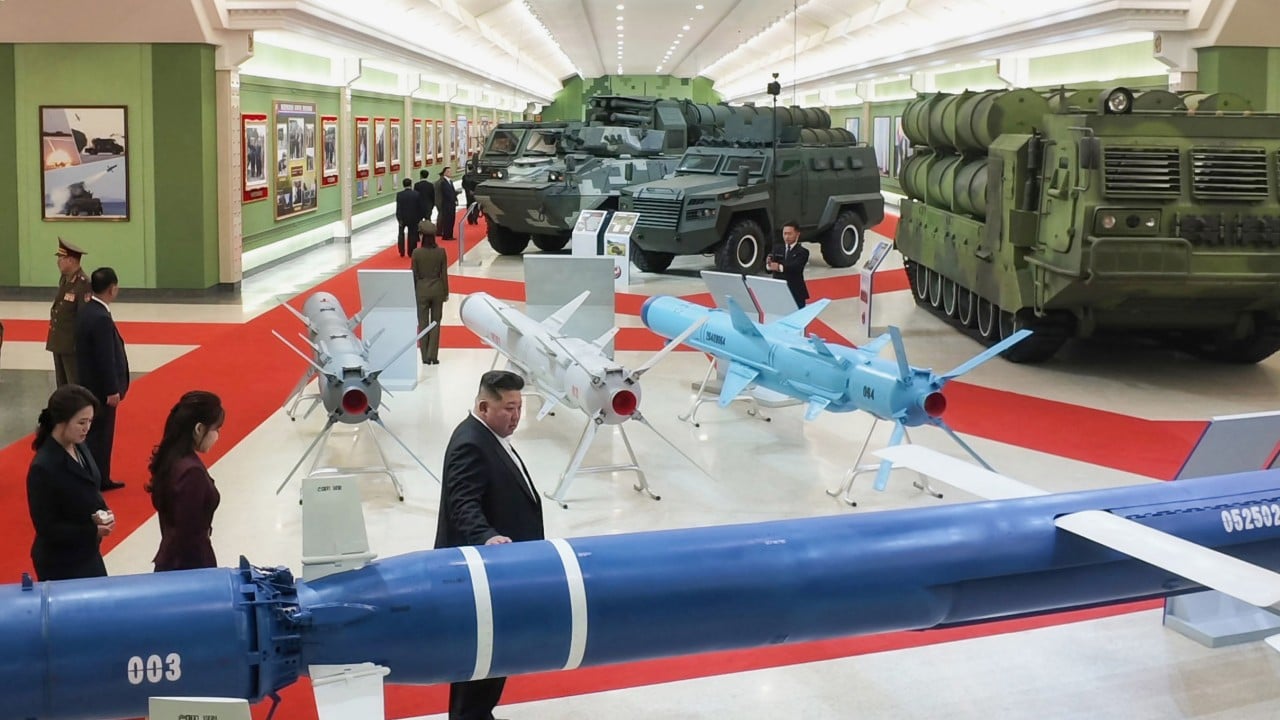
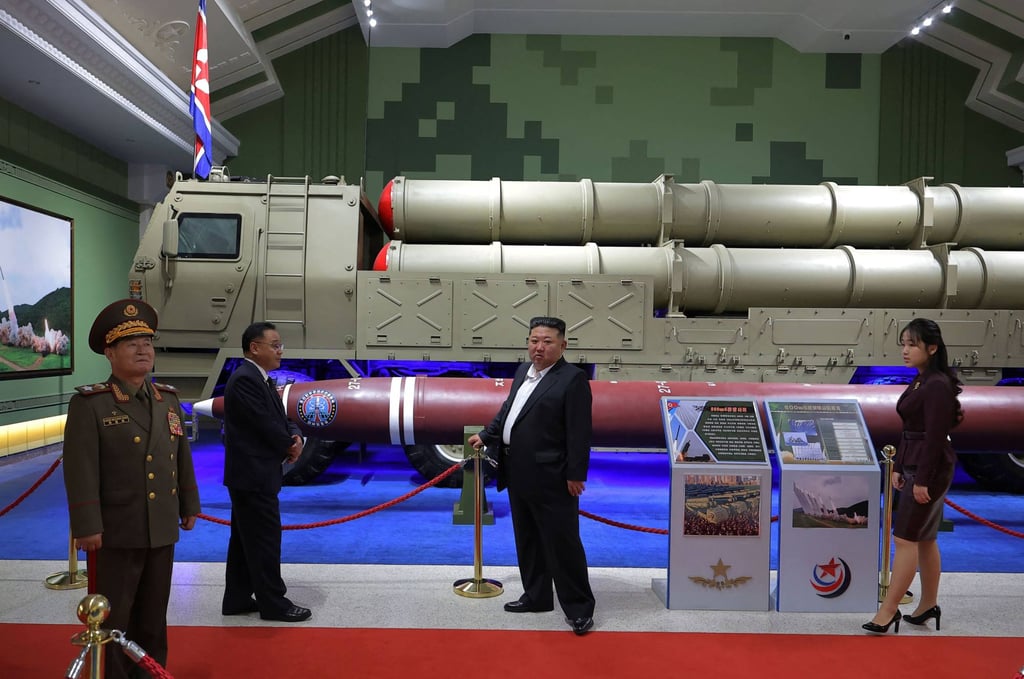
North Korea now has a museum for its bombs. The National Defence Revolution Museum, which opened on Sunday, is the country’s first dedicated exclusively to military hardware, from rifles to intercontinental ballistic missiles (ICBMs).
Observers say it is also intended to send a message to Washington and Seoul, serve as a permanent showroom for the North’s arms exports and visibly enshrine its nuclear programme as an irreversible part of state policy.
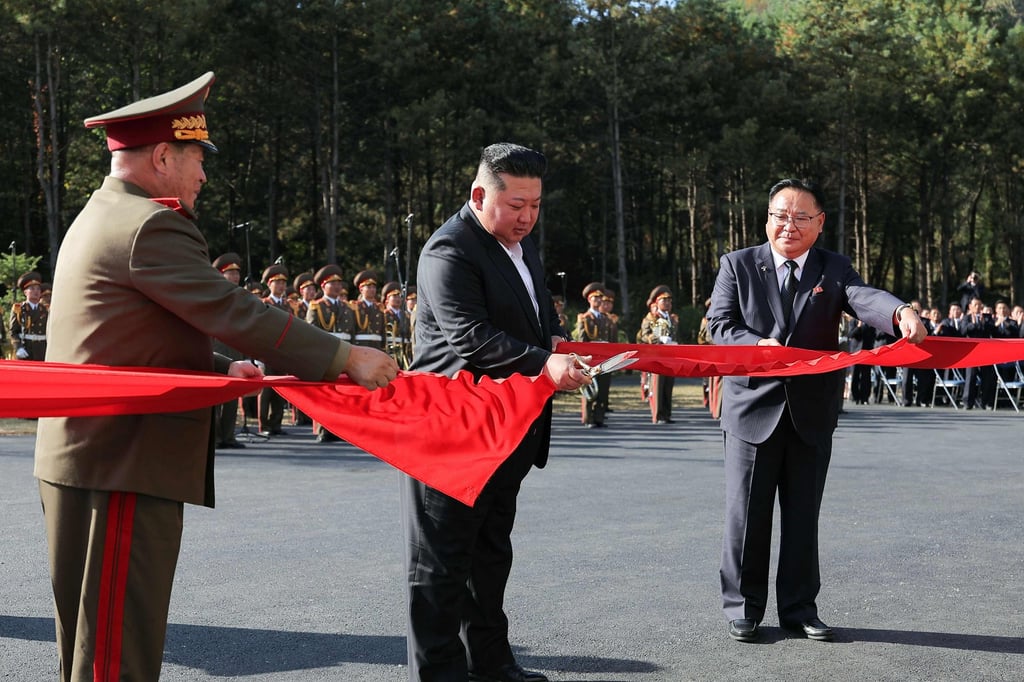
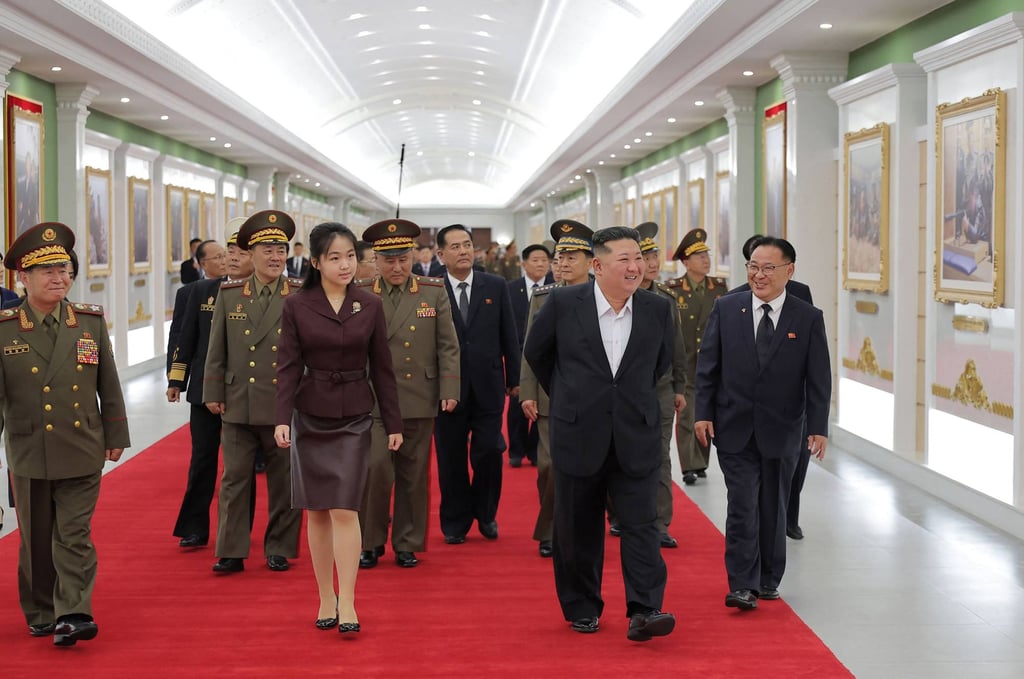
Third-generation ruler Kim Jong-un cut the ribbon to open the museum, then toured the exhibits with his wife Ri Sol-ju and his daughter Kim Ju-ae by his side.
He called the museum an “immortal” repository of the country’s arms development and one of its “national treasures”.
Photographs in the ruling Workers’ Party newspaper, Rodong Sinmun, showed combat kit, drones and ballistic missiles, including the Hwasong-20 ICBM, an untested next-generation system North Korea claims will be capable of striking anywhere in the United States.
Other exhibits include a submarine-launched ballistic missile, a Hwasong-16Ma hypersonic missile, a 600mm super-large multiple rocket launcher and the Bada-suri anti-ship missile.
In front of the Hwasong-20’s display stood diagrams of multiple-warhead technology and a world map illustrating missile strike ranges, from South America to Australia and the Middle East.
In his speech at Sunday’s opening ceremony, Kim said the museum showcased how the “dignity and security” of the state were protected “and how peace on this land has been secured”, according to state media
“The scale and content of the museum will be expanded and enriched day by day,” he added.
Hawking hardware
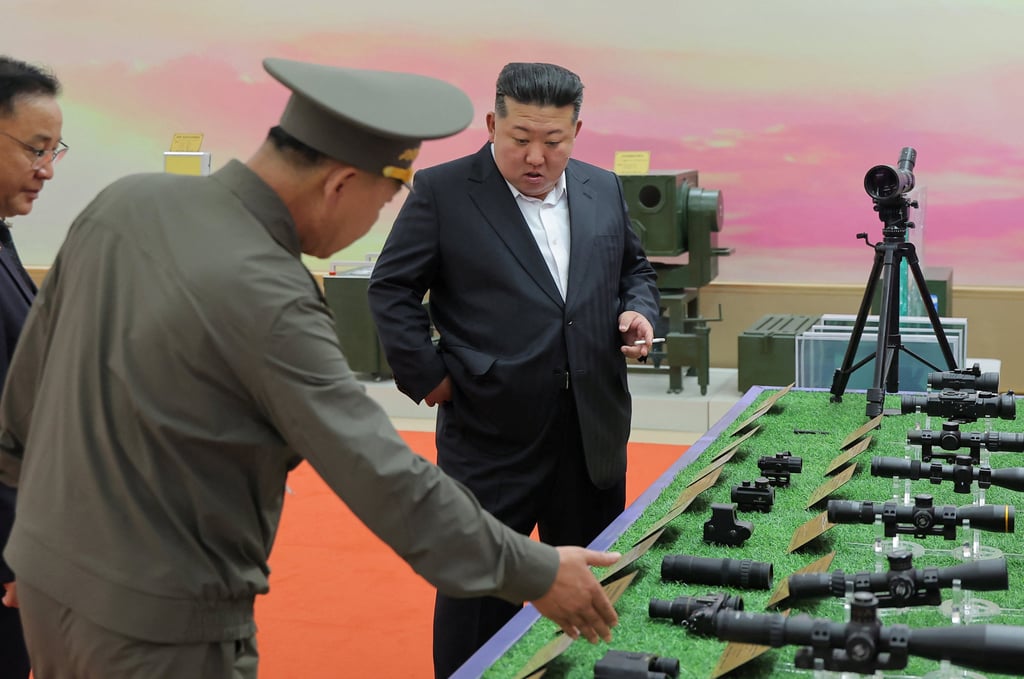
North Korea has been staging regular arms fairs since 2021 to showcase the modernisation of its military, including a weapons expo three years ago attended by Russia’s then defence minister.
Against this backdrop, establishing a permanent museum was “a natural progression” for a leader who pursued projects “intended to burnish his record”, said Lim Eul-chul, a professor at Kyungnam University’s Institute for Far Eastern Studies.
By gathering the weapons built under Kim’s rule, Lim said the regime aimed to show that its defence science programme had reached an advanced stage and to preserve the achievements as part of Kim’s legacy.
Such “a permanent symbolic venue for showcasing the regime’s achievements and promoting its political narrative” also signalled “a strong determination to cement North Korea’s status as a nuclear-armed state … rather than treating its nuclear arsenal as a bargaining chip in future denuclearisation negotiations”, Lim said.
Oh Gyeong-seob, a senior research fellow at the Korea Institute for National Unification, agreed that the museum would make it “all the more difficult to solve the nuclear issue through dialogue” in future.
A permanent museum also suggested that Pyongyang wanted weapons displays to be a routine feature of public life, not something confined to periodic exhibitions and parades, said Yang Moo-jin, a professor at the University of North Korean Studies.
It also appeared designed as a tourist attraction for domestic and foreign visitors, including potential arms buyers from Russia, Iran, Pakistan and the Middle East, Yang said.
But he added a caveat. “The exhibits are believed to comprise a mixture of genuine weapons, replicas and empty shells,” Yang said. “Strategic weapons may have been displayed as empty shells to address safety and security concerns and prevent the leakage of sensitive technology.”
Inheriting the bomb
Domestically, the message was one of endurance. Ju-ae’s presence at the museum’s opening was meant to impress upon North Koreans that Kim’s achievements would endure for generations, Yang said.
Ri’s presence, meanwhile, projected the image of a normal state, he said.
Lim agreed about the symbolism of the family’s attendance, adding that the museum was also meant to burnish national pride and cohesion.
“By emphasising that North Korea has built what it describes as the world’s most powerful defence industry despite economic hardship, the regime seeks to offset public fatigue caused by prolonged economic difficulties, reinforce the perceived necessity of defending the system and strengthen loyalty to the leadership,” he said.
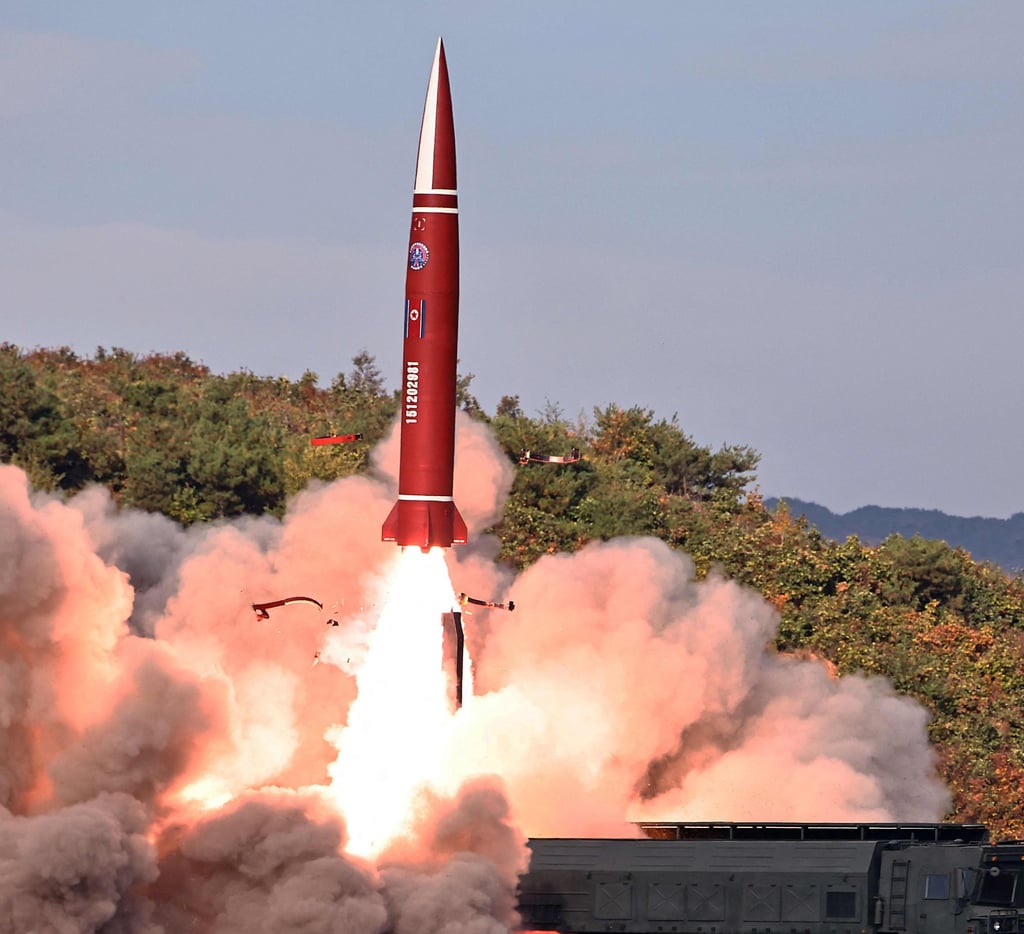
The museum opened as both Koreas continue to expand their military capabilities. On Monday, North Korea test-fired at least one tactical ballistic missile state media said was meant “to confirm the success in the research for the technical upgrading of an important core element”.
The official Korea Central News Agency called the upgrade a “big success” that heralded “an important change” in the performance of the country’s offensive weapons systems, without providing further details.
The test came four days after South Korea had announced the first successful launch of a domestically developed hypersonic glide vehicle, a type of warhead for ballistic missiles that can manoeuvre and glide at hypersonic speeds.
KioskNews shows a cleaned-up reading view extracted from the publisher’s page — the original always lives on their site, not ours.