As Taiwan’s local elections loom, voters want an end to ‘constant confrontation’
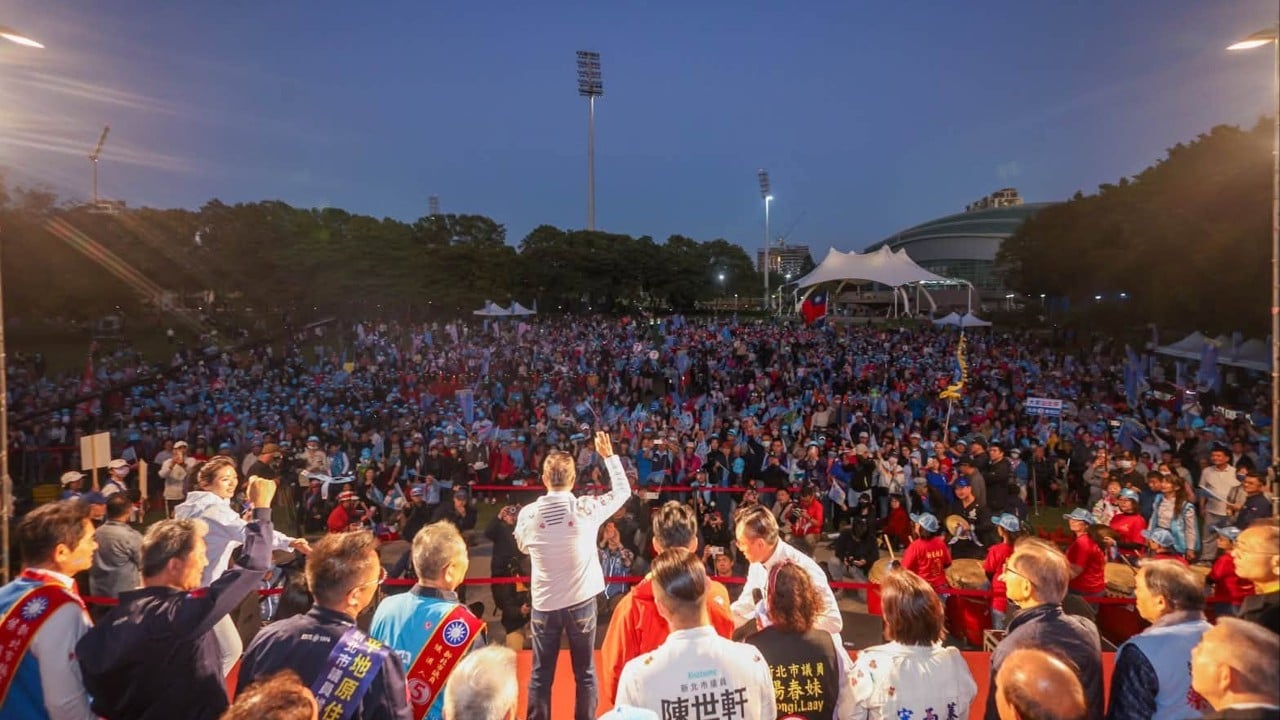
Campaign ads are everywhere on the streets of New Taipei City, Taiwan’s most populous municipality, as local elections loom across the island.
The vote will be a key test of the ruling Democratic Progressive Party’s political strength, but also the unity of the opposition parties. Officials ranging from mayors and county commissioners to councillors and village chiefs will be elected in 22 cities and counties across Taiwan on Saturday.
The most politically significant contests are playing out in New Taipei City and the nearby capital Taipei. The stakes are high, and the results could have big implications for Taiwanese leader William Lai Ching-te and the leader of the main opposition Kuomintang, Cheng Li-wun.
In New Taipei City – home to more than 4 million people – supporters at KMT and DPP campaign events share a common desire for stability in their lives. But they have very different views on how cross-strait relations and the status quo should be handled.
While the KMT has governed the area since 2005, support for the DPP and the KMT is relatively evenly divided in the lead-up to the polls.
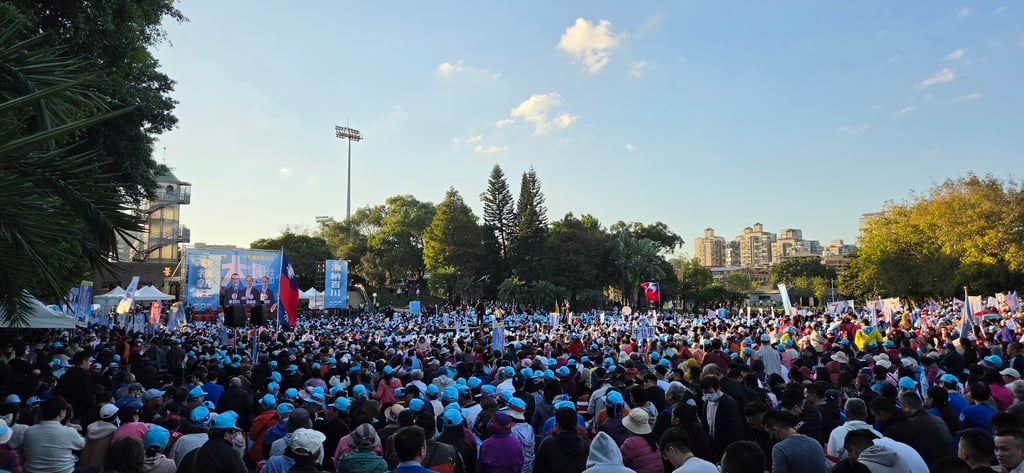
At a KMT rally at a park on Sunday afternoon, an energetic crowd sat shoulder to shoulder on red plastic stools lined up in rows on the grass.
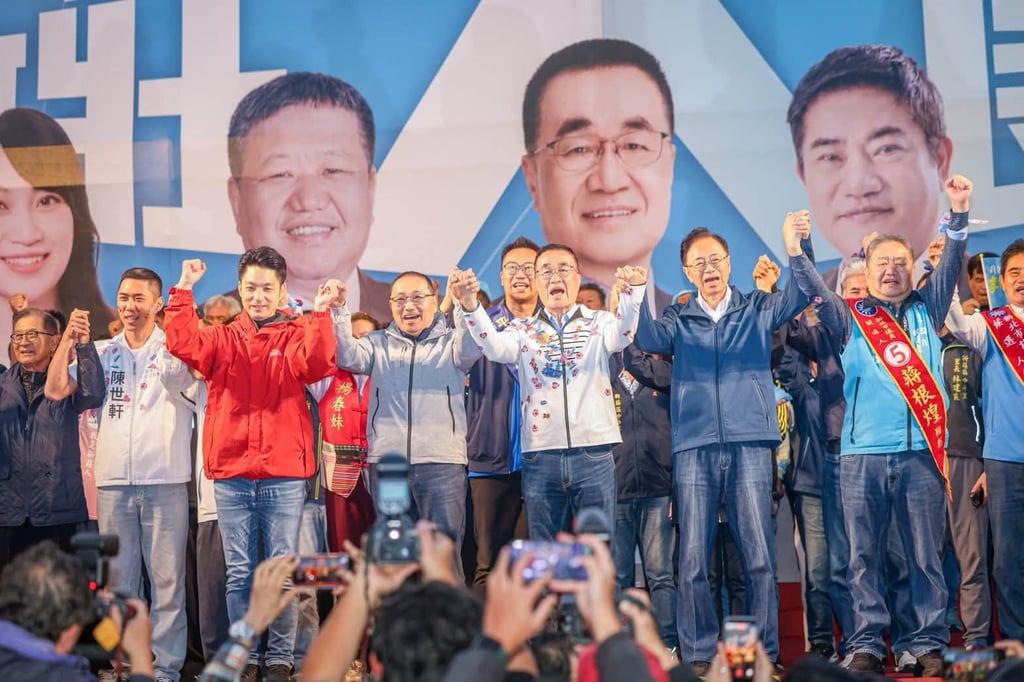
From beneath a sea of blue caps, supporters roared back in unison to call-and-response chants from candidate Lee Shu-chuan, a veteran technocrat and former deputy mayor of Taipei.
He was joined on stage by Taipei mayor Wayne Chiang Wan-an, who is running for a second term against DPP candidate Puma Shen Pao-yang. New Taipei City mayor Hou Yu-ih – who must step down after his second four-year term – was also at the rally, throwing his support behind Lee.
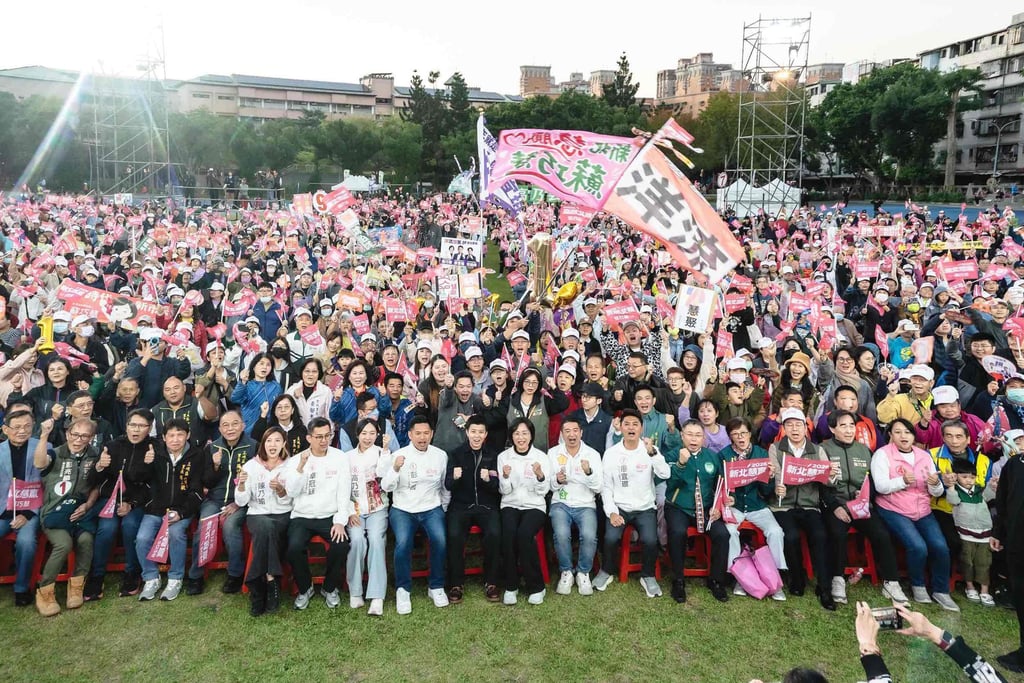
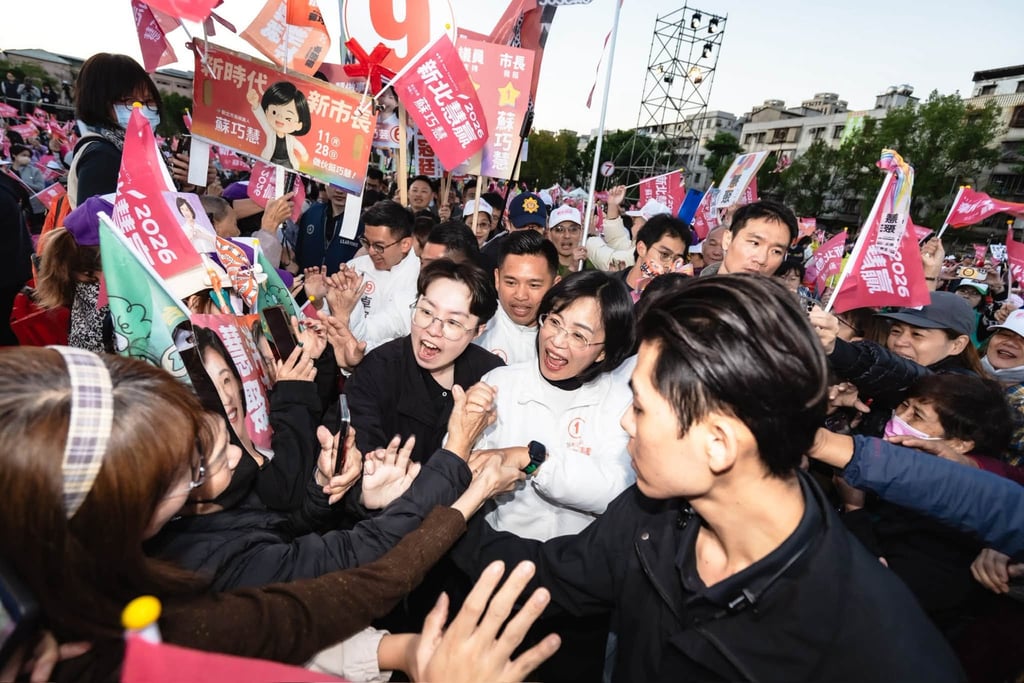
It was a different vibe across town that evening at a DPP campaign event where local musicians performed on a stage by the river. Supporters tied ribbons printed with campaign slogans to their backpacks, shopped for merch at stalls, and handed out badges.
After the show, DPP candidates including Su Chiao-hui – a lawmaker who is in the mayoral race against Lee – addressed the crowd.
Among the supporters at the KMT rally was Jennifer, a New Taipei City resident in her 30s who moved from mainland China and married a Taiwanese man about a decade ago. She said she wanted a stable life with her family and that she supported peaceful cross-strait reunification.
“I hope both sides can deepen exchanges, such as opening up tourism to boost the economy,” she said.
But her family did not know she was at the KMT rally – her in-laws are staunch DPP supporters.
Jennifer said she was not a fan of the DPP, mainly because of its adversarial stance towards Beijing and policies that affected some 369,000 mainland Chinese who – like her – are married to Taiwanese and moved to the island.
She also doubted whether foreign powers such as the US or Japan would intervene to assist Taiwan in the event of a military conflict with Beijing.
“After Lai Ching-te took office, it has been all about constant confrontation with the mainland. He banks on protection from Japan and the United States,” she said. “But the friendly relations the US maintains with Taiwan on the surface are about selling weapons and securing high-end chips from Taiwan.”
Beijing sees Taiwan as part of China, to be reunited by force if necessary. Most countries, including the US and Japan, do not recognise Taiwan as an independent state, but Washington is opposed to any attempt to take the self-ruled island by force and is committed to supplying it with weapons.
Cross-strait relations deteriorated after the independence-leaning DPP came to power in 2016, and the situation has worsened since Lai became the island’s leader two years ago.
Another KMT supporter at the park was 40-year-old Stan, who said he would vote in Taipei for incumbent mayor Chiang, while his mother would back Lee in New Taipei City.
“I think the KMT is more likely to create opportunities for cross-strait peace and exchanges than the DPP. I hope there will be peace and better exchanges across the strait,” he said.
“I see more people travelling to mainland China. As tourists, they can witness the extent of development and progress in mainland China, which is more likely to influence how Taiwanese people perceive the mainland,” he added.
“I have been to [mainland] coastal cities like Shanghai and Xiamen, where the progress of urban development is very obvious. There is a lot for us to learn. Our way of living is very similar, although that of inland cities, like Kunming, could be quite different.”
Asked about his identity, Stan said “we are both Chinese”. “The division into two sides was a result of the civil war,” he said. “The differences in government systems are what people notice most, but culturally speaking we are the same.”
Across town at the DPP rally, security and cross-strait relations were the biggest concerns for 33-year-old Huang Cheng-ci.
“Being in a state of total hostility is certainly not a good thing. After all, nobody wants to get into a full-blown conflict or end up going to war,” he said.
As Beijing continued to pile pressure on Taiwan he said it was “very difficult to stand by indifferently”.
Huang said compulsory military service gave Taiwanese a direct way to connect with defence efforts, pointing to his own four-month stint in the military.
“If a conflict were to break out, having a segment of the male population with the military experience to respond is a favourable state of affairs,” he added.
On security partners like the US and Japan, Huang said international backing fundamentally depended on Taiwan’s own internal resolve.
“Whether others are willing to help is one thing, but we must first show our own determination and self-reliance to friendly countries,” he said.
Sandy Lue, a 56-year-old voter at the DPP rally, was more concerned about Beijing’s pressure campaign than an imminent military conflict.
“We are not worried about a war, but more about our own people slowly selling out Taiwan,” she said, referring to the Beijing-friendly KMT. “[Beijing] might also not favour a war, but take us back step by step.
“For people of my generation, speaking Taiwanese was forbidden back when we were in primary school. We experienced the restrictions imposed by the KMT and were shaped by that experience,” she said.
“However, my children – who are now in their 20s or 30s – never experienced that. They might think Taiwan has been developing well. The younger they are, the less they feel the threat.”
Lue said she hoped for stability. “I hope we maintain the status quo. Everyone wants to get on with their lives and make a living – they earn their money, we earn ours – and we can live together in peace,” she said, adding that trade could benefit businesses on both sides of the strait.

At the KMT rally, development and maintaining the status quo in cross-strait ties were front of mind for Michelle Ko, a 49-year-old mother of two teenage daughters.
“My family is quite neutral. We look at candidates one by one, rather than having a set stance of being Beijing-friendly,” said the New Taipei City resident.
“I would choose a party that leans towards maintaining the status quo,” she said. “With our children in mind, unforeseen changes seem very scary.”
KioskNews shows a cleaned-up reading view extracted from the publisher’s page — the original always lives on their site, not ours.