From judo to MMA – via kurash, jiu-jitsu, reality TV – road to Asiad less taken
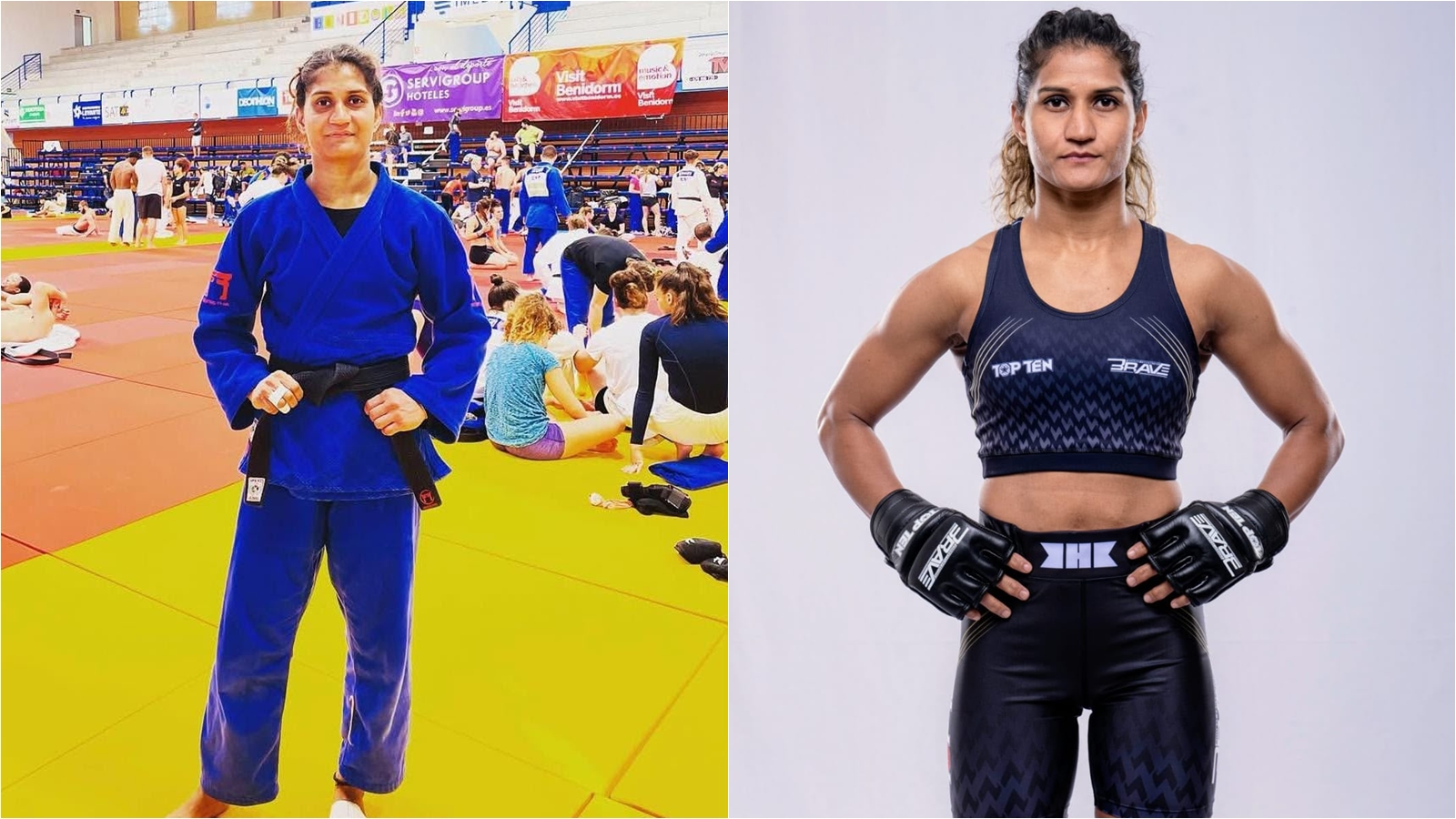
The first time Suchika Tariyal thought seriously about learning to fight was after she found herself unable to.
“I had gone to a unisex salon (in New Delhi) where the barber touched me inappropriately,” she says. “I’m aggressive by nature, but at that moment, I felt so weak, so helpless that I couldn’t do anything. I should have done something, but I couldn’t.”
She was just 10 years old then, but that incident set her off on one of the more unusual journeys in Indian sport.
Tariyal, now 36, competed in judo at the 2022 Commonwealth Games, represented India in kurash at the 2023 Asian Games, won national titles across three different martial arts, appeared on reality shows like MTV Roadies and India’s Ultimate Warrior, and even won a World Championship title in jiu-jitsu.
Over the next fortnight, she will add another discipline – and another chapter – to that list. Tariyal will represent India in Mixed Martial Arts (MMA) at the Asian Games in Nagoya (Japan), starting September 19. She is India’s sole representative in the event, which will make its Asiad debut.
In many ways, Tariyal’s journey began with that afternoon at the salon.
She says she went home and sat quietly, hesitant to tell her family because she feared they may stop her from going out. But she knew she never wanted to feel so powerless again.
Story continues below this ad
“I felt that I should have something for my defence. I should have some fighting skill,” she recalls.
There was an empty house next to the government quarters where she lived. She began doing chin-ups and push-ups there. With a tanker supplying water in the area, she began carrying buckets to her family’s home on the fourth floor. “That’s how I started building core strength,” she says.
A few months later, sometime in 2000, she joined judo classes at the Jawaharlal Nehru Stadium. She soon began winning age-group medals and, within a few years, became a junior national medallist. She went on to become an eight-time national champion in the sport.
Disappointment
But opportunity did not always arrive with success.
In 2018, when Tariyal was in contention for the Asian Games, India did not enter an athlete in her 48kg category. “At that time, her career was at its peak,” says her husband Kapil Hooda. “She went on to win a gold medal at the Commonwealth Championship a year later.”
Her bigger problem, however, was funding.
Story continues below this ad
For years, Hooda says, Tariyal had no financial backing. Participation in ranking tournaments had to be funded from their own pockets. As she reached a higher level, the cost of coaching, training, diet and supplements mounted.
“Until her 2022 journey, she didn’t get any support from anybody,” Hooda says. “There were times when she had to travel for ranking tournaments in judo spending our own money.”
Hooda dipped into his savings and began taking loans. “Right now, I have loans of around Rs 20 lakh pending,” he says.
So, at various points, Tariyal tried to make a career out of fighting in ways that had little to do with the Olympic-style sports she had spent her life pursuing.
Story continues below this ad
She appeared on MTV Roadies and later India’s Ultimate Warrior, taking her combat skills to reality television. The programmes were another way to earn, train and keep the larger sporting dream alive – an unusual detour for an athlete who was still chasing a place at major international competitions.
Tariyal finally got that opportunity at the 2022 Commonwealth Games. She came agonisingly close to a medal, losing the bronze-medal contest in the final seconds.
For an athlete who had spent years struggling to finance her career, that defeat hurt beyond the mat. A medal could have brought government rewards and improved their financial situation. Instead, another opportunity slipped away, narrowly.
“Losing by such a close margin affected her a lot. She kept thinking about it,” Hooda says.
Story continues below this ad
After the Commonwealth Games, Tariyal switched to kurash, partly because the Asian Games route appeared more favourable. Judo had historically been difficult terrain for India at the Asian Games, while kurash, introduced in 2018, had already yielded a silver and a bronze.
There was another reason for her confidence. Pincky Balhara, who won the silver in kurash at the 2018 Asian Games, was also a former judoka – and Tariyal had beaten her before.
From pillar to post
After around a year of training, Tariyal won the selection trials for the 2023 Asian Games in Hangzhou. But her name was initially left out of the contingent, she says.
What followed was another exhausting fight — this time off the mat.
Story continues below this ad
“I even met Anurag Thakur sir, who was the sports minister then. He was supportive,” she says. “But I spent all my energy visiting one office after another in the lead-up to the Asian Games, when I should have been practising.”
Her participation was eventually cleared only days before the opening ceremony. She lost in the preliminary round.
A year later, she switched again, this time to jiu-jitsu, and won a World Championship title. But the financial problems remained. She had hoped to continue in jiu-jitsu and target another Asian Games appearance, but international competition required self-funding.
“Earlier, the federation asked for Rs 1-1.5 lakh for a tournament, and then suddenly, they asked for around Rs 3-4 lakh,” she says. “That was too much.”
Then, in 2025, came MMA.
Story continues below this ad
The Indian MMA federation approached Tariyal with offers of professional fights. For the first time, the switch made both financial and sporting sense.
“You get paid to play in pro fights,” Hooda says. “They were offering her multiple fight deals. We thought it would help us financially, so we accepted it.”
Tariyal began training with MMA fighters Puja Tomar and Himanshu Kaushik. Her years in judo, kurash and jiu-jitsu meant her ground game was already strong. The work now was on striking.
“They said my ground and pound was good, but I needed to work on my striking, kicking and boxing,” Tariyal says. “Now, I just want to end with a medal. After everything I’ve put into this, I don’t want to look back and feel that I achieved nothing.”
KioskNews shows a cleaned-up reading view extracted from the publisher’s page — the original always lives on their site, not ours.