Li Ka-shing funds Asia’s first non-invasive kidney tumour trials in Hong Kong
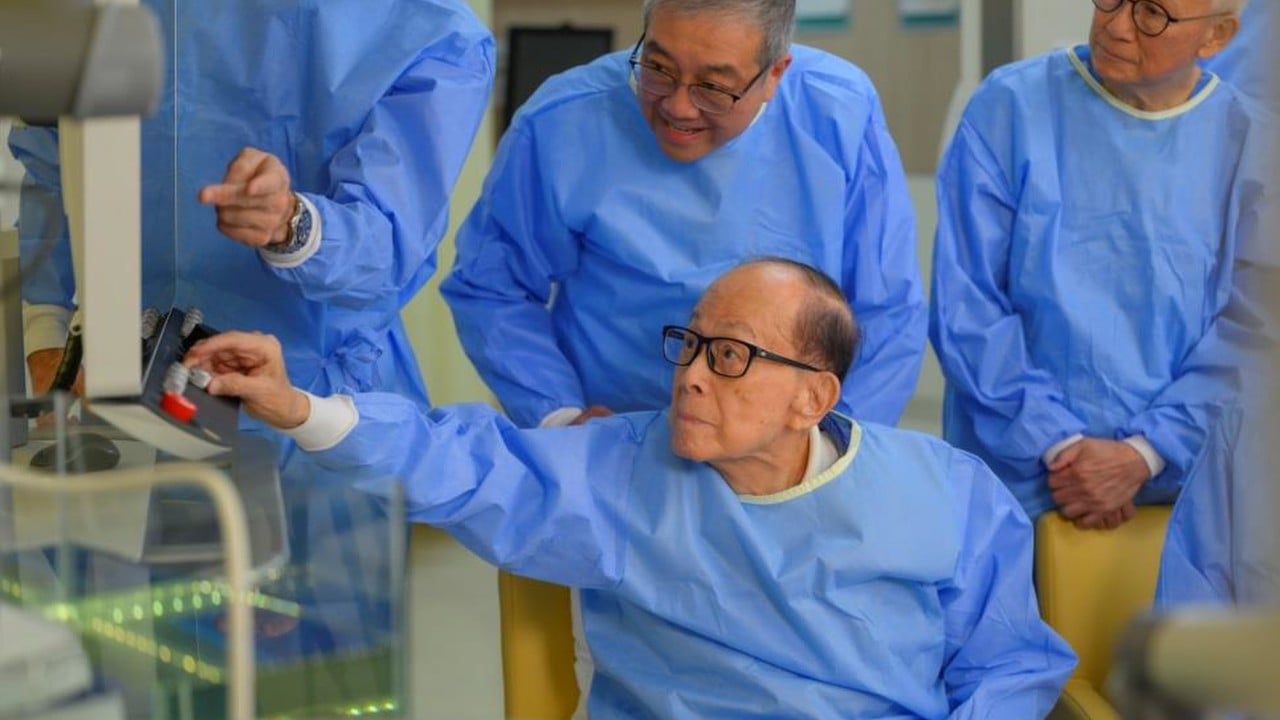
Hong Kong will become the first city in Asia to conduct clinical trials of a non-invasive treatment for kidney tumours, with tycoon Li Ka-shing funding places for 30 patients across three private hospitals.
The Li Ka Shing Foundation announced on Wednesday that CUHK Medical Centre, Gleneagles Hospital Hong Kong and Hong Kong Sanatorium & Hospital would launch the trials using histotripsy, a technology that uses focused sound waves to break apart tumours without surgical incisions.
The trials will assess the safety and effectiveness of the procedure in treating kidney cancer, extending the technology’s use in Hong Kong beyond liver and pancreatic tumours.
More than 400 patients in the city have undergone histotripsy treatment over the past two years, according to the foundation.
Clinical trials involving pancreatic cancer patients are under way at Gleneagles and CUHK Medical Centre. Gleneagles has performed 20 pancreatic tumour procedures since launching its trial on March 31, while CUHK Medical Centre has carried out six since June 3.
The foundation said histotripsy offered another treatment option for pancreatic cancer patients, given the organ’s location deep within the abdomen and its proximity to major blood vessels.
More than 100 pancreatic cancer cases have been treated worldwide through clinical trials and off-label procedures, including those in Hong Kong.
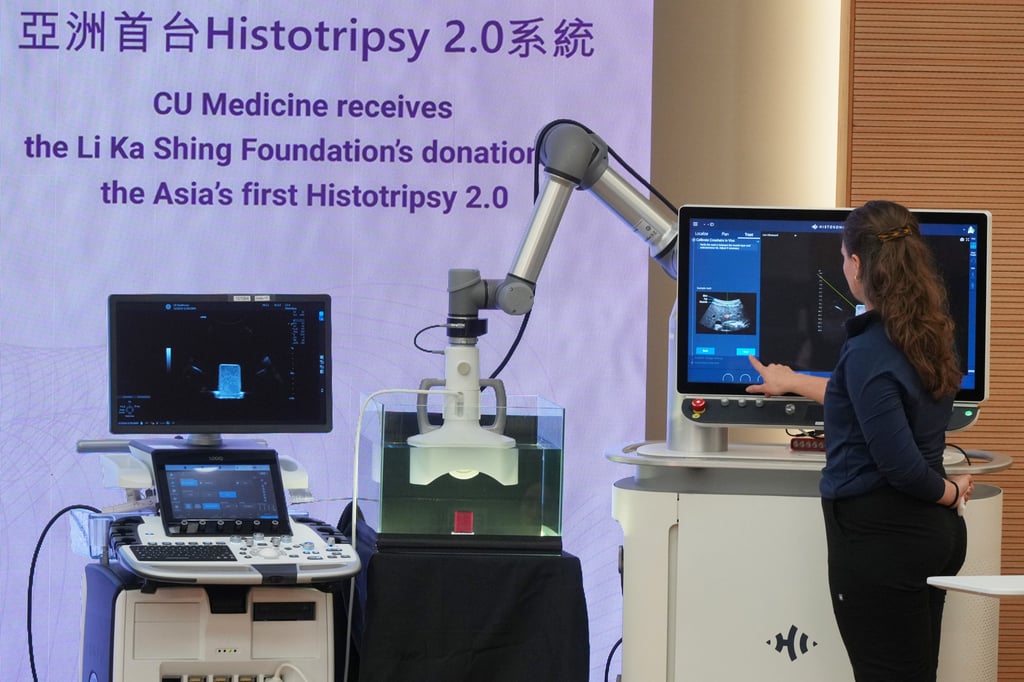
Since 2024, the foundation has donated three histotripsy systems to the University of Hong Kong’s Li Ka Shing Faculty of Medicine, Chinese University’s Faculty of Medicine and Hong Kong Sanatorium & Hospital.
In May, the foundation expanded its “Love Can Help” medical programme to subsidise histotripsy treatment for 200 eligible liver cancer patients over three years, reducing the cost from about HK$260,000 to HK$50,000 (US$6,400). Twenty patients have received treatment under the scheme.
The latest announcement follows international recognition for the technology’s inventor, Professor Zhen Xu of the University of Michigan, who received the 2026 Golden Goose Award from the American Association for the Advancement of Science in September.
The award recognises federally funded research that has delivered significant benefits to science and society. Xu developed the technology through years of research, taking it from laboratory experiments to clinical applications.
The foundation has also funded other medical assistance programmes, including a HK$10 million scheme launched last year to provide one-off living allowances to 200 cancer patients.
KioskNews shows a cleaned-up reading view extracted from the publisher’s page — the original always lives on their site, not ours.