10 Perfect Books You'll Want to Re-Read Immediately

Diego Pineda has been a devout storyteller his whole life. He has self-published a fantasy novel and a book of short stories, and is actively working on publishing his second novel.
A lifelong fan of watching movies and talking about them endlessly, he writes reviews and analyses on his Instagram page dedicated to cinema, and occasionally on his blog. His favorite filmmakers are Andrei Tarkovsky and Charlie Chaplin. He loves modern Mexican cinema and thinks it's tragically underappreciated.
Other interests of Diego's include reading, gaming, roller coasters, writing reviews on his Letterboxd account (username: DPP_reviews), and going down rabbit holes of whatever topic he's interested in at any given point.
Sign in to your Collider account
It's a precious enough rarity to find a book that's genuinely great, but to find one that's downright perfect? That's the sort of thing that tells you that the pages in your hand are truly special. But while many of history's greatest literary masterpieces are so dense that they make re-reads daunting, there are others that, for one reason or another, make the idea of re-visiting their world and characters immediately irresistible.
From mind-bending surrealist masterpieces like I'm Thinking of Ending Things to cornerstones of postmodern literature like If on a winter's night a traveler, these are books that aren't just re-readable: They make you want to start over right after you get to the final period of the story. Whether it's because of plot twists, mind-twisting elements, or simply just a tremendous level of quality, they're the sort of novels that you've only ever fully experienced if you've read them twice.
10 'I'm Thinking of Ending Things' (2016)

Canadian literature has offered plenty of masters and plenty of masterpieces over the years, and recently Iain Reid gave us his remarkable debut novel, the psychological horror thriller I'm Thinking of Ending Things. It follows a young woman who has many doubts about her relationship with her boyfriend, and is specifically structured as a sort of psychological puzzle box that feels like exploring the fractured psyche of a fascinating protagonist.
In spite of its density and undeniably bleak tone, it nevertheless makes an instant re-read irresistibly tempting.
Upon publication, most critics hailed I'm Thinking of Ending Things as one of the boldest, most creative, and most philosophically dense thrillers that bookstore shelves had seen in years—but in spite of that density and its undeniably bleak tone, it nevertheless makes an instant re-read irresistibly tempting. As it slowly moves and then dramatically careens toward its ending, the book keeps recontextualizing itself in all sorts of engrossing ways. By the time it's all over, you practically need a re-visit in order to properly understand everything you've just experienced.
9 'Piranesi' (2020)

People who love books that are structured like puzzle boxes ought to consider Susanna Clarke's Piranesi a must-read. After Clarke wrote her Hugo-winning debut novel, Jonathan Strange & Mr Norrell, she suffered almost two decades' worth of a severe, debilitating case of chronic fatigue syndrome. Powering through her illness, she finally put Piranesi out into the world. Not only was the result worth it: It's one of the best fantasy books published since 2020.
Structured like a journal and following a gentle man living in a seemingly infinite building known as the House, it's such a powerful thematic exploration of memory and identity that its enrapturing emotional atmosphere alone makes it worth a re-read. Add to that some of the most beautifully dreamlike world-building and some of the most memorable prose that the fantasy genre has seen in some time, and you get a book that's bound to be remembered as a 2020s classic a couple of decades from now.
8 'Fight Club' (1996)

Is the book better or is David Fincher's iconic film adaptation better? It doesn't really matter, since the fact of it is that Chuck Palahniuk's satirical novel Fight Club is among the greatest American novels of the '90s. It was Palahniuk's debut novel, and it's about an unnamed insomniac protagonist who finds relief in a series of support groups, where he eventually meets a mysterious man with whom he establishes an underground fighting club.
What at first starts reading as a thrilling story about a weak-willed man and a charismatic nihilist gradually starts revealing itself to be something far more sinister, and the book's iconic twist completely flips everything that came before on its head. Even knowing the reveal beforehand, re-reading Fight Club becomes immediately enticing upon finishing it, all thanks to the engrossing character writing and Palahniuk's punchy, transgressive writing style.
7 'Annihilation' (2014)

Written by American author and critic Jeff VanderMeer, Annihilation is the first book of the Southern Reach series, and it's about a team of women sent into a government-managed, deserted location called Area X to study and survey the land. Winner of the 2014 Nebula Award for Best Novel, this cosmic horror sci-fi gem is an absolute page turner whose 208 pages feel even shorter.
What makes Annihilation so deeply re-readable is a big part of what makes it so special, and it's not just the dreamlike atmosphere and fast-moving pace of VanderMeer's writing. Where many instantly re-readable novels tend to rely on a big twist that shifts the meaning of the whole story, Annihilation's re-readability instead comes from how, on a second visit, you start to gradually notice the exact moments the influence of Area X alters the narrator's perceptions and memories. For how brilliantly written these mysteries are, this is easily one of the best American books of the last 15 years.
6 'The Secret History' (1992)

The first novel written by Donna Tartt, The Secret History has aged beautifully as one of the most acclaimed English-language fiction books of the '90s. A cornerstone of the campus novel and a pioneer of the dark academia genre, it's one of those books that are real page-turners from start to finish, a fresh twist on the tropes of the murder mystery genre which has only gotten better with age.
What makes Secret History so unique and so instantly re-readable is the fact that Tartt structured it as a sort of inverted whodunnit—a whydunnit, if you will. We open by knowing exactly who died and exactly who killed him, and by granting the reader the logistical answers to the crime right off the bat, Tartt makes the whole mystery about why this could have possibly happened. It's a delectably genius creative decision that makes re-visits of The Secret History endlessly rewarding.
5 'If on a winter's night a traveller' (1979)

Postmodernism was born in the Western world right after World War II, rejecting the dogmas of modernism and the Enlightenment as a result of post-war disillusionment. From this movement came several of the greatest masters of 20th century literature, which includes Italian writer Italo Calvino. His If on a winter's night a traveller is one of the best books of the 1970s, and is about an unnamed Reader who buys a new book and discovers that a printing error cuts the story short and repeats the first chapter.
Purposely designed specifically to be re-read, since it's a book that's overtly about the physical and psychological act of reading.
This genius piece of masterful metafiction is pretty much entirely and purposely designed specifically to be re-read, since it's a book that's overtly about the physical and psychological act of reading. The book's final sentence loops directly back to complete the structure of page one, and as such, no reading of If on a winter's night a traveller could ever be comprehensive without at least two read-throughs. The best part? This is one of those postmodern classics that feel not at all like a chore, but like a proper delight to experience.
4 'Peace' (1975)

Gene Wolfe was one of the most respected and acclaimed speculative fiction authors of modern times, perhaps best known for his magnum opus, the tetralogy The Book of the New Sun. Since that science fantasy epic is such a perfect masterpiece, it often overshadows the rest of Wolfe's masterpieces—which definitely includes Peace, a ghost story about a man from a small Midwestern town who narrates various memories from different parts of his life.
Neil Gaiman once famously called Peace "a gentle Midwestern memoir the first time you read it, and a horror novel the second time." Instead of feeding you the big twist that makes the novel instantly re-readable, Wolfe forces you to do the detective work yourself, finding the contextual clues that reveal you've been reading a ghost tale all along. As such, it's impossible to finish reading Peace and not want to pick it back up for another go instantly.
3 'Gone Girl' (2012)
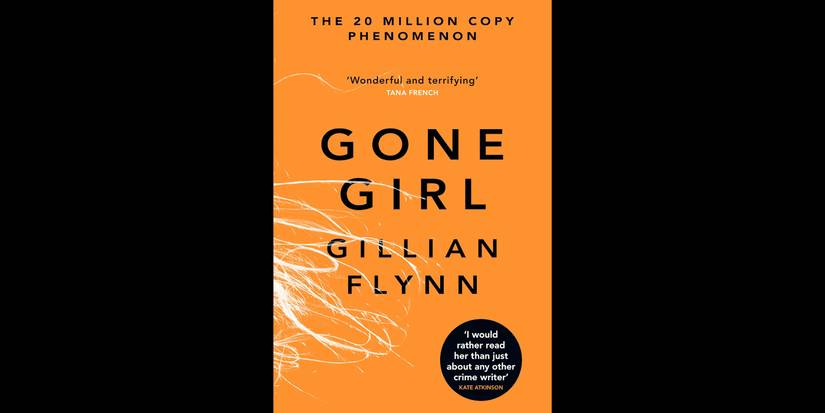
Gillian Flynn's Gone Girl, one of those mystery book masterpieces that became the blueprint for the genre going forward, altogether revolutionized the domestic thriller genre by shattering its usual tropes. It's a psychological thriller about a husband who becomes the prime suspect of his wife's mysterious disappearance. The suspense then comes from wondering whether the husband actually is or isn't behind the disappearance, and it makes for one of the most riveting reading experiences that any thriller from this century has had to offer.
You don't have to wait too long to find out what's really going on, and that earth-shattering midpoint twist not only makes your recollection of everything you've read up to that point collapse into itself, but also makes a re-read pretty much mandatory. On a re-read, Gone Girl's thought-provoking themes and intricately-plotted story become even more worthy of admiration.
2 'The Sound and the Fury' (1929)

William Faulkner was one of the definitive architects of early 20th-century American literature, a radically revolutionary writer who unsurprisingly won the Nobel Prize in Literature in 1950. That prize would have most likely never come, however, were it not for how unprecedentedly groundbreaking the modernist Southern Gothic masterpiece The Sound and the Fury was. Written quite experimentally as a sort of stream of consciousness, it's about the collapse and moral decay of a once-aristocratic family in Mississippi.
Though it wasn't commercially successful, the book started growing in popularity after the publishing of Faulkner's 1931 novel Sanctuary. Today, it's widely regarded as one of the top contenders for the title of The Great American Novel. It's one of those books that may feel like a true test of patience on one's first read-through, but as Faulkner gradually starts to make everything feel clearer as the novel goes on, a second read-through immediately becomes a must.
1 'Pedro Páramo' (1955)

Between the 1960s and 1970s, Latin America became the epicenter of world literature, and Mexican writer Juan Rulfo was one of this cultural wave's most important writers. He was far and away one of the most critical and foundational voices in the history of modern magical realism, largely thanks to what's universally recognized not just as his magnum opus, but at times even referred to as the greatest Mexican book of all time: Pedro Páramo, about a man who travels to a desolate ghost town to fulfill the promise he made to his dying mother: that he'd find his estranged father and demand what he is owed.
Everything that ensues from that fascinating premise makes Pedro Páramo one of the best book masterpieces of the 20th century. Rather than a linear story, it's a remarkably challenging collection of echoes that doesn't quite become entirely clear even after one's nth reading—and that impenetrability is an essential part of the book's timeless charm. It may sound cheesy, but Pedro Páramo is a book to be experienced, not understood. Decoding the many nuances of the story of the town of Comala is something that takes several re-visits.
Collider Exclusive · Universe Personality Quiz Which Iconic Universe Do You Belong in the Most? Star Wars · Lord of the Rings · Harry Potter · Game of Thrones · Star Trek
Five legendary universes. Five completely different visions of what the world could be — or already was. One of them is the world your instincts, your values, and your particular way of existing were built for. Eight questions will tell you which one.
🚀Star Wars
💍Lord of the Rings
🧙Harry Potter
👑Game of Thrones
🖖Star Trek
01
What gives your life its deepest sense of meaning? Every universe is built around a different answer to this question.
02
Which kind of world do you most want to inhabit? The environment shapes who you become. Choose carefully.
03
How do you prefer your conflicts resolved? The shape of a world's conflicts tells you everything about its soul.
04
Who do you want beside you when things get difficult? Your ideal companions reveal the world you were made for.
05
What is your relationship with power? How you seek, wield, or resist power is the map of who you are.
06
How does your universe treat good and evil? A world's moral architecture tells you more about it than any map.
07
What role would you naturally fall into? Every universe has archetypes. Which one fits you without trying?
08
What do you ultimately believe about the future? The answer to this is the clearest window into which universe already lives inside you.
Your Universe Has Been Chosen You Belong In…
Your answers point to the iconic universe your values, your instincts, and your particular way of seeing the world were built for. This is where you would find your people — and your purpose.
Star Wars
You believe in the cause — in the idea that freedom is worth fighting for even when the odds are impossible and the empire is vast.
- You are drawn to the moral clarity of a universe where hope itself is a form of resistance.
- You'd find your people in the Rebellion — a ragtag coalition of true believers held together by conviction more than resources.
- Star Wars is fundamentally a story about ordinary people choosing to matter in an extraordinary conflict — and that is exactly your kind of story.
- The Force may or may not be with you. But the will to use it for something larger than yourself certainly is.
Lord of the Rings
You understand, in the deepest part of yourself, that the journey matters as much as the destination — and that the world's beauty is worth protecting even at great cost.
- Middle-earth is a world of ancient wonder, deep friendship, and a darkness that only retreats when enough small acts of courage accumulate.
- You would thrive here because you value the fellowship more than the glory — the road more than the arrival.
- Tolkien's universe rewards patience, loyalty, and the willingness to carry something heavy across a very long distance.
- Those are not burdens to you. They are simply how you move through the world.
Harry Potter
You believe that love, loyalty, and doing what's right are not naive sentiments — they are the most powerful forces in any world, magical or otherwise.
- The Wizarding World is a place of wonder hidden in plain sight, where learning is transformative and the bonds you form at school follow you into every battle.
- You would flourish here because you take both the magic and the friendships seriously — and you understand that one without the other is incomplete.
- Harry Potter's universe ultimately rewards those who choose to stand for something even when standing is terrifying.
- That choice — made quietly, without guarantee — is something you understand completely.
Game of Thrones
You see the world clearly — its power structures, its hypocrisies, its brutal arithmetic — and you are not paralysed by that clarity. You use it.
- Westeros is a world that rewards intelligence, adaptability, and the willingness to understand that every alliance is also a negotiation.
- You would survive here — possibly thrive here — because you don't confuse the world as it is with the world as you'd like it to be.
- Game of Thrones is a story about what happens when the idealists and the realists collide. You are sharp enough to know which one lasts longer.
- Winter always comes. You are already prepared.
Star Trek
You believe the future is worth building — that curiosity, cooperation, and the expansion of understanding are not just ideals but the most practical path forward for any civilisation.
- Star Trek is a universe where the questions matter as much as the answers, and where encountering something utterly alien is cause for wonder rather than fear.
- You would belong here because you are fundamentally optimistic about what intelligence and decency can achieve — while being honest about how hard that achievement is.
- The Federation is the universe's most ambitious thought experiment: what if we actually got better?
- You don't just hope that's possible. You think it's the only thing worth working toward.
KioskNews shows a cleaned-up reading view extracted from the publisher’s page — the original always lives on their site, not ours.