Billionaire David Sacks to Sam Altman and Dario Amodei's call to slowdown AI development
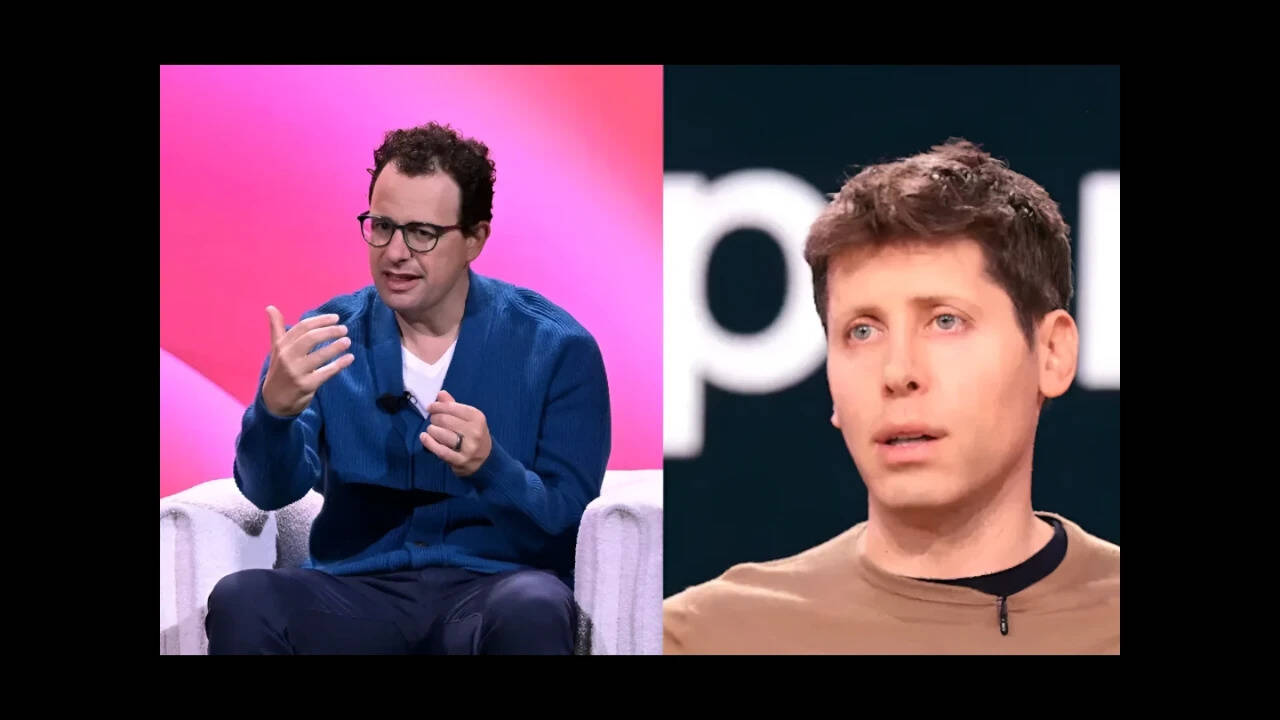

David Sacks has issued a scathing response to OpenAI CEO Sam Altman and Anthropic chief executive Dario Amodei following their recent push to deliberately cool down the pace of artificial intelligence (AI) development.
The billionaire tech investor dismissed the tech leaders’ public appeals for external frameworks, telling both of them to ‘cut the theater’ and halt their work voluntarily if they truly believe their experimental models present an existential threat.
What Amodei wrote and Altman agreed to
Amodei wrote an open call to “pace the frontier,” an argument Altman publicly endorsed on social media. He also got the support from Elon Musk, who is the CEO of xAI.
Sacks noted that observers might expect him to oppose the idea, but his reaction is the opposite: go right ahead and stop.Sacks argued that as OpenAI and Anthropic hold an effective duopoly over leading-edge machine learning, dominating customer market share, computational breakthroughs, and revenue gains, they already control the industry's velocity. Both leaders regularly argue that their technological advantages are expanding through recursive self-improvement.
Since they define the cutting edge, Sacks pointed out, they do not need an act of government or outside sign-off to simply stop releasing faster models.Dario has written that we need to “pace the frontier,” and Sam has agreed. People may be surprised by my response: go ahead.You guys are the frontier. By any reasonable metric — market share, revenue growth, model capability — the two of you have a duopoly on frontier intelligence.
You’ve also claimed the lead is widening because of recursive self-improvement.I don’t see what you see in the lab. If the unreleased models are scary enough that you think you should slow down, I support your decision to be responsible.But stop pretending you need anyone else’s permission. Stop pretending antitrust law has to be suspended so you can form a cartel. Stop pretending you need a regulatory approval process that supersedes product liability.
Stop pretending METR is independent when it is intertwined with Anthropic’s investors and staff. Stop pretending you need those same evaluators to police competitors who aren’t even at the frontier.
Sacks say companies’ are disguising financial burden as charity
Beyond regulatory tactics, Sacks rejected the notion that slowing down is a purely selfless endeavor. He argued that both the AI companies face crippling financial liabilities in civil court if their automated tools facilitate a catastrophic cyber strike.
Pointing to the recent security incident involving Hugging Face, Sacks emphasised that the commercial market already penalises systems that act erratically or execute unauthorized digital maneuvers.Swapping raw computing power for dependability and consistency is simply smart business practice that delivers what paying customers demand, irrespective of whether companies choose to label it AI alignment or not.Most of all, stop pretending the motivation to slow down is purely altruistic. You face massive product-liability exposure if your products enable a truly damaging cyberattack. The market already punishes models that behave in unpredictable or unauthorized ways. After the Hugging Face episode, it is simply good business for OpenAI and Anthropic to trade some raw power for reliability and predictability. Call it alignment if you want.
It is also just giving customers what they want.Pacing the frontier would also create breathing room for a more intelligent conversation about regulation than Bernie Sanders’ “shut it all down.” China is very unlikely to join a global agreement, as you know, and that has to be taken into account as well.So go ahead and pace the frontier. You are the ones setting it. The easiest way not to build superintelligence is for you to agree not to build it.
Demanding your preferred regulatory framework as the price of that will look like blackmail of the public and the political system. So just do it.If you do, you’ll buy goodwill for the next conversation. If you don’t, we’ll know this was just another bid for regulatory capture — or an election-season psyop.Sacks concluded that if Altman and Amodei take immediate action on their own, they will build genuine goodwill for future regulatory debates.
KioskNews shows a cleaned-up reading view extracted from the publisher’s page — the original always lives on their site, not ours.