Hunk – or ‘unc’? What magazine covers of Michael B Jordan and Tom Cruise tell us about manhood
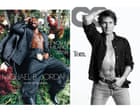
Tom Cruise and Michael B Jordan share many similarities as box-office powerhouses known for their death-defying action hero stunts. But this week the two stars went head-to-head, or more accurately chest-to-chest, on magazine stands.
In one corner there’s 64-year-old Cruise on the cover of GQ, his first for the magazine in 20 years. Posing in an unbuttoned shirt, one hand running through his tousled hair, the other gripping his belt buckle, this is Cruise playing the role of sexy Cruise.
Despite his efforts, and Cruise previous having been crowned the sexiest man alive, the internet, usually a place of deep division, has unanimously agreed that the resulting image is deeply unsexy.
“Never sharing Tom Cruise GQ cover because I have compassion for others,” reads one comment on GQ’s Instagram. “What horrors did I do to get this in my algorithm,” adds another. Others have nicknamed him “unc” – internet slang for someone out of touch.
Meanwhile, 39-year-old Jordan makes his Vogue debut (the sixth man to be given a solo cover) lying down and laughing on a bed of flowers, the blazer of his suit unbuttoned to showcase his many, many abs and a flash of his right nipple.
Most of the comments are NSFW (not suitable for work). An example from the tamer offerings: “I aspire to be a flower.”
The covers land at a time when masculinity is increasingly dominating headlines. From toxic masculinity to looksmaxxing and performative males, the conversation is being driven by increasing concerns over the manosphere and what exactly being a man means and looks like today. Cruise is a boomer. Jordan is a millennial. Both have added further fuel to the masculinity fire.
Dr Ashley Morgan, a masculinities scholar at Cardiff Metropolitan University, says despite there being “a massive range of masculinities”, people tend to focus on one type: the white male patriarch.
“That is what Cruise is selling on this cover,” she says. In contrast, “Jordan presents a range of masculinities including ideas around Black masculinity. He’s wearing a suit but it’s very suggestive. His cover is more universally attractive to men, women and others.”
For Andrew Groves, director of the menswear archive at the University of Westminster, there is a clear fashion distinction. “Everything in the Cruise image is constructed to make it appear sexy, yet somehow it isn’t,” he says. “Cruise is given clothes rather than fashion. The worn shirt and old Levi’s belong to a masculine language of work and labour. Jordan is allowed fashion, decoration, jewellery, and softness. His masculinity is constructed through a much wider set of codes.”
When Adam Baidawi was named the new editor of GQ last year, he said he wanted to restore the magazine to “its rightful place as the North Star of masculinity”, and that GQ would be “a magazine for and about men”.
His debut cover in September featured the actor Jeremy Strong wearing a hoodie and holding a steel archery bow. It chimed heavily with what Baidawi’s predecessor, Will Welch, set out to do. One of his most popular issues was “The New Masculinity” edition in 2019, which starred Pharrell Williams on the cover in a gown-like coat.
after newsletter promotion
A year later, Harry Styles appeared on the cover of Vogue wearing a dress. Six years on, Styles has ditched his signature sequined jumpsuits for suits and ties on his world tour while Trump’s Maga movement is being driven by tech bros and a model of manhood that champions traditional patriarchy.
Alona Pardo, who previously curated an exhibition exploring masculinities in photography at the Barbican in London, says the two latest covers highlight “how the media continues to codify and reinforce normative ideals of manhood”. Pardo says the image of Cruise defying ageing is particularly reductive as it reinforces “the standard that a man’s worth is linked to physical vigour and perpetual dominance”.
Jessa Crispin, author of What’s Wrong with Men, says Cruise’s cover reflects his role as “the dad of Hollywood”. In the accompanying interview he talks about teaching young actors how to navigate the business, including giving actor Glen Powell a six-hour instructional film. “It’s a very kind of traditional man-as-steward masculine role” Crispin says. She compares the “tame” Jordan cover to Cary Grant, “masculine with a sense of humour, and not really anything revolutionary”.
Pardo says both are disappointing. By using the visual language of virility they reassert “traditional patriarchal authority”. Framed against social movements including #MeToo, Pardo says the images “function as a reactionary bid for male solidarity” and ultimately reassert “traditional patriarchal authority in direct opposition to movements challenging systemic power dynamics”.
KioskNews shows a cleaned-up reading view extracted from the publisher’s page — the original always lives on their site, not ours.