‘Is death necessary?’: why Peter Greenaway’s assisted dying drama is stuck in post-production hell
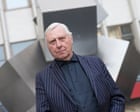
Peter Greenaway’s new movie was supposed to mark a glorious swansong for him and his lead actor Dustin Hoffman, the Oscar-winning star of The Graduate and Tootsie. Both men were in their 80s when shooting began in Lucca, Tuscany, in late 2023. Neither knew the storms ahead or that this was going to turn into arguably the most troublesome project in Greenaway’s career.
Turn the clock back to 2023 and Greenaway, who has been based in the Netherlands for the last 20 years, could hardly conceal his excitement during a Q&A at International Documentary Film Festival Amsterdam (IDFA) in the huge art deco Tuschinski theatre in Amsterdam in November 2023, after receiving a lifetime achievement award from the festival. He told the audience that he would be flying to Italy the next morning “and that, all being well, we will start shooting seriously in the next couple of days”.
The film was then called Lucca Mortis, and Greenaway explained that it explored death. He said he had already made “quite a number of films” about sex (“Eros”) “but the other thing was Thanatos (death). There are, and have been, some extremely good films made about old age. I am thinking of [Ingmar] Bergman’s Wild Strawberries, for example, but not that many.”
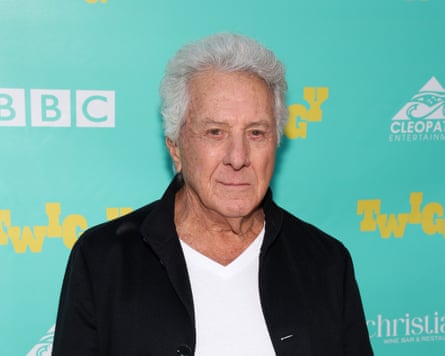
“Our film is really about notions of death and it asks the rather absurd and ridiculous question – is death necessary? The popular media is absolutely covered now in considerations about assisted death, about euthanasia, about the legitimacy of suicide. I believe that we must take death more seriously.”
Greenaway’s pitch was that Lucca Mortis isn’t a horror picture “full of coffins and skulls and macabre activities”. Instead, it a drama about a New York writer contemplating his mortality; a man who wants to round off his life in the neatest, most elegant way possible. Jacob Zucchine (Hoffman) was adopted as a kid and eventually grew up in the US. He returns to Lucca in Tuscany in search of his Italian roots. The film is set around the time of 9/11. Like New York, Lucca is dominated by looming towers and these inspire the author to write stories but also to feel that death is stalking him.
Ominously, Lucca Mortis encountered difficulties right from the outset. In late 2023, the director and his crew arrived in Lucca but the lead actors weren’t yet there. Dozens of trucks filled with technical gear turned up from Rome: sets were built and the crew sat waiting for several weeks for work to begin – but it never did and they were eventually sent home. It appeared that the production had already hit cashflow problems.
Such a delay, though, is not unusual in film production. It is often a mad scramble to complete the financing for an ambitious independently funded film such as this. Production finally got under way in early 2024 – and this time with actors. The trade press reported that Lucca Mortis had a €15m (£12m) budget and that it would use 25 locations in Lucca. The city threw itself behind the movie. Many of the locals were involved and the Tuscan press reported a carnivalesque atmosphere during shooting akin to that on a Fellini movie, with the Livorno-based publication Il Tirreno saying: “For a few months, Lucca became an open-air film set, with the citizens acting as unwitting extras and the historic centre crisscrossed by cameras, dolly shots and familiar faces.”
However, the charm soon wore off as constant delays ate up large chunks of the budget. Produced by Facing East (whose previous credits include Robbie Williams biopic Better Man and Liam Neeson thriller, In The Land of Saints and Sinners) the budget for the film came mainly from private financiers Jumpy Cow Pictures in Switzerland. There was extra support through Italian and Dutch tax rebates.
When most of the shooting was completed, Greenaway and Saskia Boddeke (his Dutch wife and creative partner) set to work with their team. A first draft assembly of the film was delivered in late 2024 and was reportedly warmly received. However, it was at this point that tensions threatened to reach breaking point. Sources close to Greenaway have said that the director’s contract gave him final cut, but that the producers subsequently decided to make their own, more “commercial” cut without the director’s involvement. Their position was that they were entitled to intervene because the film had gone over budget. Facing East has not responded to requests for comment.
The net result is that there are two different versions of the film in circulation, neither of them fully completed (although the producers’ cut is said to be more advanced). There is also an ongoing row about who controls the rights to the movie – which is now stuck firmly in limbo.
And the citizens of Lucca are not happy. Three years on from the start of production, there is still no sign of the movie made in their back yard and which they embraced with so much enthusiasm and affection. Lucca councillor Remo Santini commented earlier this week: “We’re disappointed because, as a municipality, we’ve spent time and energy making this film. We even had a sneak preview of it, months ago, and it really made a great impression on us. Yet, despite filming having wrapped over two years ago, all is quiet. Unfortunately, this stalemate isn’t our fault.”
The city says it has made repeated requests to the production and the director for explanations about what has happened to the movie, “and no one has contacted us since”. This, then, clearly wasn’t a smooth or happy shoot. Even the title is proving contentious. Partly because the city of Lucca isn’t keen to be associated with death, the film is now called Tower Stories.
The irony is that those who have seen the two cuts say they are not that different. Whichever way the film is edited, it is still based on the same dense and digressive Greenaway screenplay, which takes the philosopher Ludwig Wittgenstein’s gnomic observation “death is not an event in life; we do not live to experience death” as its starting point. Some have talked admiringly of the picture’s visual splendour, lush musical score, operatic set-pieces and narrative intricacy. Hoffman is said to give a very poignant performance as the elderly writer, a character who appears to be partially based on Greenaway himself.
“It’s a great legacy for Greenaway and not only for him, but for Dustin – a great performance. It’s a movie that needs to be finished and needs to be released,” one frustrated member of the production crew told me last week.
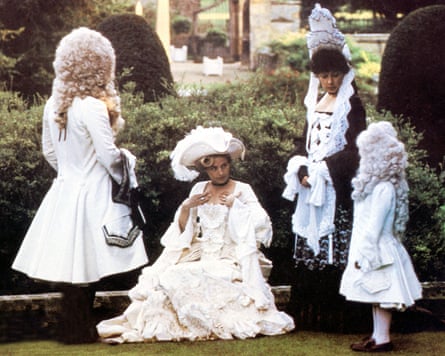
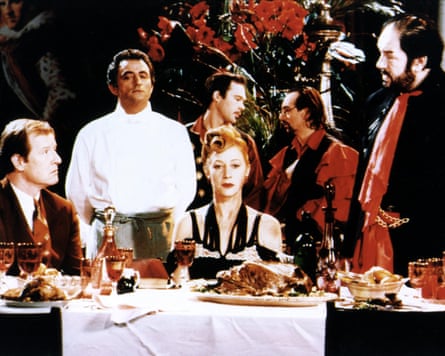
There is, though, something quixotic about the very idea of Lucca Mortis. Greenaway is the grand old visionary of British cinema. He has dozens of credits to his name, shorts, features and documentaries, all with his firm authorial imprint. Whether he is dealing with cannibalism (The Cook, The Thief, His Wife & Her Lover), Shakespeare (Prospero’s Books) or garden design (The Draughtsman’s Contract), his approach remains the same: magical realism, obtuse ideas, puns, and plenty of visual flamboyance.
This could be Greenaway’s final feature, but whether it will be seen in the way he intended is now in serious doubt. The longer it is stuck in postproduction purgatory, the less chance that its director, 84, and its star, who turned 89 last month, will be fit and able enough to promote it properly. There are also obvious questions over whether distributors and festivals will accept a Greenaway film over which the director hasn’t had the final say.
The talk is now of trying to protect the “dignity” of Lucca Mortis. For that to happen, everyone involved will need to accept what surely should have been obvious from the outset, namely that when you commission Peter Greenaway to make a film, that’s exactly what you are going to get – a Peter Greenaway film – and you risk disaster if you try to turn it into something else.
KioskNews shows a cleaned-up reading view extracted from the publisher’s page — the original always lives on their site, not ours.